Category Archives: ~ politics petitions pollution and pop culture

Henrietta Lacks: another hidden story of history on c-cpan 2010


A c-span(video 2010) story that we cannot continue to ignore, deny or shove under the rug, c-span interviews the author of a book about Henrietta Lacks, Rebecca Skloot; 2010 .

An update needs to be included as the Lacks family, after years of litigation, did receive an agreement

NIH makes privacy agreement with Henrietta Lacks’ family http://usat.ly/1esA2JK via @usatoday ~ 2013

Henrietta’s story starts in 1920 her birth and ends sometime in the early fifties, this story seems only to be coming into the light of day and while i cried again while watching this, it is sad, might be unacceptable by some, even after several children, after years of reports, publicity and whatnot the Lacks family seems to be the only one who didn’t benefit from the story of this woman whose cells were used to create a cell line for medical research but got nothing in return.   I first heard about the Lacks story in 2010 while in a coffee shop, then we all heard Oprah and some associates decided to make a movie…hopefully some of the revenue will be given to the family.

It is a story that makes you gasp, gets you upset, mad and it will make you cry and wonder how the science community got away with not paying Henrietta Lacks and or her family for her contribution.   If I understood the interviewer the Lacks family has recently gotten more PR about their Mother’s story but it’s unclear if anyone paid money for all the stories and or tv programs about her. It is a story that  appears on the surface a story of unintentional theft of her cells then used by a scientist who did not tell her or her family even after it was evident that the cells were unusual, that they were used and what effect they would eventually have on science today.

I understand that back then, technology may not have been as advanced but it did advance and still if the reports are correct, the science community gave Henrietta nothing or her family. It happened in a time when minorities were treated very poorly and even if the reports state that standard procedure was this that and the other .. .the 70″s gave way to new ways to handle science technologies; it’s time to pay Henrietta Lacks and her family back.

Just some things to remember … 4/22/2017 Premieres on HBO at 8pm

1982 – NASA named Guion S. Bluford Jr. as the first African-American astronaut.


Guion Stewart Bluford Jr. is an American aerospace engineer, retired U.S. Air Force officer and fighter pilot, and former NASA astronaut, who is the first African American and the second person of African descent to go to space. Before becoming an astronaut, he was an officer in the U.S. Air Force, where he remained while assigned to NASA, rising to the rank of colonel. He participated in four Space Shuttle flights between 1983 and 1992. In 1983, as a member of the crew of the Orbiter Challenger on the mission STS-8, he became the first African American in space as well as the second person of African ancestry in space, after Cuban cosmonaut Arnaldo Tamayo Méndez.

Source: wiki

astroreality.com

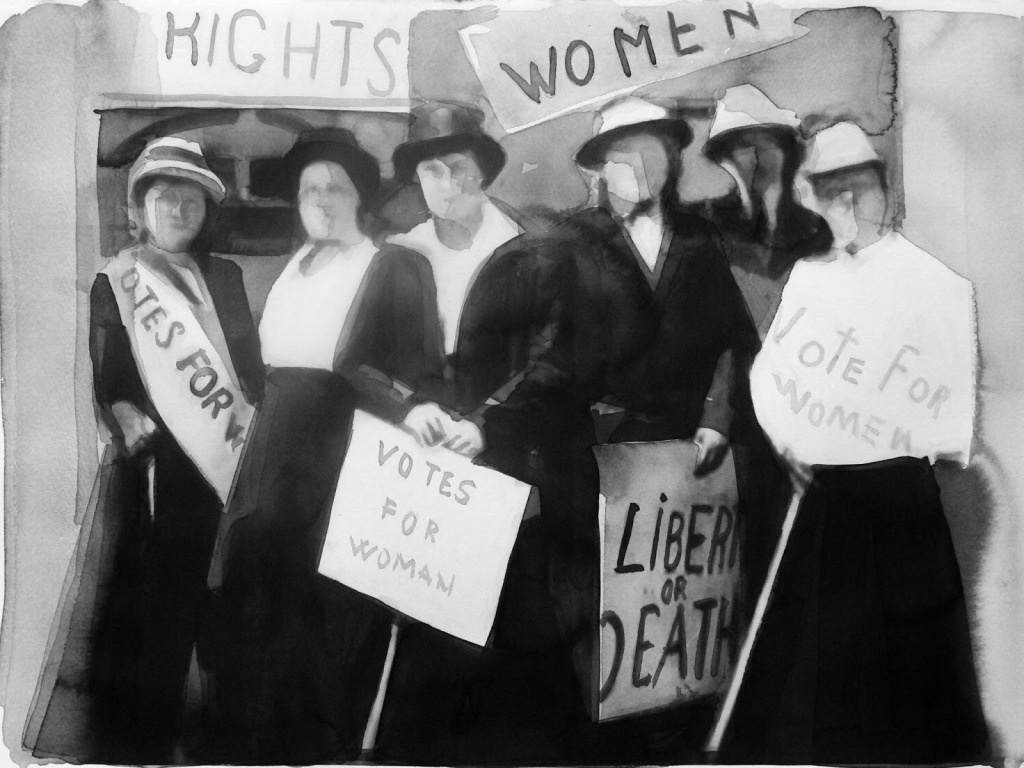
Protesting –


Protesting is a form of assembly, protected both by the U.S. Constitution and international human rights law. It involves publicly voicing opposition to perceived injustices and advocating for action. 

However, there are limits to this right, and it applies specifically to public spaces, not private property1.

Here’s what the Constitution says about the right to peaceful protest:

  1. First Amendment Protections:
    • The First Amendment safeguards various forms of freedom of expression, including the right to peaceful assembly and freedom of association.
    • It protects freedom of speech, religious expression, and the press.
    • Specifically, it prevents Congress from “prohibiting … the right of the people peaceably to assemble, and to petition the Government for a redress of grievances.”
  2. Supreme Court Cases and Changes:

Remember, any peaceful protest is lawful under the First Amendment, but breaking the law during demonstrations—such as engaging in violence or blocking traffic—is not tolerated2. 🗽📜

Emancipation Day in the United States


Emancipation Day is a holiday in Washington, DC to mark the anniversary of the signing of the Compensated Emancipation Act, which President Abraham Lincoln signed on April 17, 1862.

It is held annually.

Emancipation Day
Emancipation Day marks the signing of the Compensated Emancipation Act in 1862.
©iStockphoto.com/Felix Möckel

What Do People Do?

A wide range of events are arranged in Washington DC to mark Emancipation Day. These are spread throughout the month of April and include exhibitions, public discussions, presentations of historic documents, the laying of wreaths, concerts, and poetry readings. The events aim to educate a broad spectrum of people about the history of the municipality of the District of Columbia in general and slavery in particular. Attention is also paid to the African origin of many slaves and racial issues in modern American society.

Public Life

April 17 is a legal holiday in Washington DC. Local government offices are closed and many public services do not operate. However, many stores and businesses are open and there are no changes to public transit services. In some years, Emancipation Day may be the reason to extend the deadline for filing an income tax return (Tax Day). In 2007, the observance Emancipation Day in Washington DC had the effect of nationally extending the 2006 income tax filing deadline from April 16 to April 17. This 2007 date change was not discovered until after many forms went to print.

In all other areas of the United States, April 16 is a normal day and public life is not affected.

Background

Formal slavery was legal until 1865 in most of the area that is now the United States. Many slaves were of African origin and many slave owners were of European descent, although some other groups also had slaves. By 1860, there were about four million slaves in the United States. On April 17, 1862, Abraham Lincoln, who was the US president at the time, signed the Compensated Emancipation Act, which freed more than 3000 slaves in the District of Columbia. However, slavery did not officially end in the rest of the United States until after the American Civil War, which lasted from 1861 until 1865.

The Thirteenth Amendment to the United States Constitution formally ended slavery in the US. It was proposed on January 31, 1865, and ratified by 30 of the then 36 states in the same year. However, it was only ratified in Mississippi in 1995. Slavery and the racial divisions, upon which it was based, have had and continue to have huge implications for individuals and American society as a whole.

Emancipation Day in Washington DC marks the anniversary of the signing of the Compensated Emancipation Act. On January 4, 2005, legislation was signed to make Emancipation Day an official public holiday in the District of Columbia. Elsewhere in the United States, the emancipation of slaves is celebrated in Florida (May 20), Puerto Rico (March 22) and Texas (June 19). There are also similar events in many countries in the Caribbean, including Anguilla, Bahamas, Bermuda, Barbados, Guyana, Jamaica, Trinidad and Tobago and the Turks and Caicos Islands. Many of these events occur during the first week of August as slavery was abolished in the British Empire on August 1, 1834.

timeanddate.com

1862 – In the U.S., slavery was abolished by law in the District of Columbia.


See the source image

On this day in 1862, President Abraham Lincoln signed into law a bill ending slavery in the District of Columbia. Congress, acting in the second year of the Civil War, also provided compensation to former slave owners.

In signing the legislation, Lincoln wrote: “I have never doubted the constitutional authority of Congress to abolish slavery in this district, and I have ever desired to see the national capital freed from the institution in some satisfactory way.” It took nine more months for Lincoln to sign the Emancipation Proclamation.

The statute created an Emancipation Claims Commission, which hired a Baltimore slave trader to assess the value of each freed slave. It awarded compensation for 2,989 freed slaves. The 1860 census enumerated 11,131 free blacks and 3,185 slaves then living in the nation’s capital.

See the source image

For the complete article go to: politico.com