Korla Pandit believed he had it all. A beautiful home, white wife, two children, and a successful career. However, Pandit had a deep dark secret which he was keeping from everyone.
Pandit was known as the pianist “Godfather of Exotica.” Also with his style and flair for clothing, he was considered the ‘Indian Liberace’ of his time. During the 1950s, he had his own show, “Korla Pandit’s Adventures in Music.” On television, he appeared wearing bedazzling jewelry, a silk jacket, and turban. His appearance caught the eye of people of all races and ages.
Unknown to everyone during Pandit’s time, the ‘Indian Liberace’ was putting on one of the greatest performances of his life. One that would not be discovered until after his death, 10/2/1998
Legend has it, Korla was born in New Delhi, India. He was a child prodigy born to a father who was a Brahmin priest and French opera singer mother. He arrived in the United States to receive training at the University of Chicago after spending time in England.
In actuality, Redd was born a light-skinned black man from St. Louis, Missouri. He was one of seven children born to a father who was a Baptist minister, and mother who was of Creole ancestry. However, his musical capabilities were all true, he was indeed a muscial child prodigy. At another time in Redd’s life, he played Latin tunes under the name “Juan Rolando,” which during this time he passed as being Mexican.
Korla’s career calmed in the 1960s, he began playing at supermarkets and pizza palaces, teaching piano, and speaking as a spiritualist. Redd died on October 2, 1998.
Korla Pandit (September 16, 1921 – October 2, 1998),[1][2][a] born John Roland Redd, was an American musician, composer, pianist, and organist. After moving to California in the late 1940s and getting involved in show business, Redd became known as “Korla Pandit”, a French-Indian musician from New Delhi, India. However, Redd was actually a light-skinned African-American man from Missouri who passed as Indian. A pathbreaking musical performer in the early days of television, Redd is known for Korla Pandit’s Adventures In Music; the show was the first all-music program on television. He also performed live and on radio and made various film appearances, becoming known as the “Godfather of Exotica“. Redd maintained the Korla Pandit persona—both in public and in private—until the end of his life.
It’s a call to action after hearing the volume on stupid being turned up about as high, if not more, than any real American should have to put up with. We in the Democratic Party helped President Obama give Tea Publicans the boot in 2012. Now, It is up to the 81 Million plus to end the insane behavior of the Republican branches including Tea-Publicans, Freedom Caucus, and MAGARs on both the State and Federal levels. The Democratic Party in this 21st Century may disagree with each other. Still, WE need to stop the madness instead of beating up on each other and the President, get on the same page, do the people’s business, and make sure voters know that the new Republican Party, aka the MAGARs, have done nothing but run both Chambers of Congress into the ground. If you are keeping up with what is going on in the House of Representatives, which seems to be about legislating against their own government. They must have met and decided that making it more difficult for the President would give them an edge and hope that Americans are stupid enough to think this is the American Way. FYI, it is not. We, as voters, see that working for progress has been replaced with revenge and some engage in inciting violence. In addition, unless you have been living under a rock the President’s efforts to move the Country into the 21st Century for better standing, or status are slow if not next to nil. We must not forget when Rep. McConnell said, that his job is to make President Obama a One-Term President, which is also what most MAGARs push when they get the media to pay them attention, false impeachment reports, or use Hunter to hurt President Biden.
This man has wanted to be POTUS since he was a kid and has studied the job, changed, and evolved over time. President Biden is the epitome of the average Joe voter who with the help of friends and family pulled himself up by the bootstraps even while facing loss, pain, and hate. The Media hasn’t made the effort to give airtime to the good or great things that #BidenHarrisAdmin have done, their focus is on the extreme right and some feel they have given them a platform to pass on disinformation to poorly informed voters. While that is not lost on us, and yes controversy is good for ratings, we the people must make sure that “the media” fact-checks the extremist candidates who seem to be spewing lies, and not only about the Biden family but the current state of our democracy which is definitely at risk, but it’s due to the possibility of an Authoritarian wannabe such as trump, and btfw we the people don’t want that as a U.S. President. The media continually points out the problems for D’s and treats some Rs as if they are not only privileged but more interesting to talk to. There are quite a few controversial possibly misinformed right-leaning politicians from the MAGARs Party running for office in various states who are not just unqualified but exhibit nutty behavior and that might be interesting fodder for the media, but they should not be allowed to hold prestigious positions of power in Congress on the state or federal level.
Reminder…
This is not the year of the Woman, but who can be the most discriminatory or racist then add in Women have no right to make their own decisions when it comes to abortion… The fact is that a lot of women in the Republican Party are against the right to choose, which, if we listen, means giving up Autonomy; well the definition of Autonomy is as follows, and like we all know Words matter right.
So, read what errian-Webster.com says …
The Origin of Autonomy:
1)the quality or state of being self-governing, especially:
2: self-directing freedom and especially moral independence
personal autonomy
3: a self-governing state
Most, if not all conservative evangelical, Christians are against gays and some feel women in the Military is definitely a no no. To say these conservative family values are against the way real families live their lives is like saying we don’t have noses on our faces. They are folks who live different lives than the rest of us, and they intend to push their personal ideologies on Americans and continue to legislate them as well. En masse … Voters deserve and need to demand the freedom some on the right believe the 2nd Amendment gives them… the difference between having Autonomy means many things … Vs what an AR15 can do to families.
I certainly didn’t imagine having these kinds of people in Congress, let alone vying for the position of President. Yet, they seem far worse than anyone believed and IMO probably why paul ryan fled, now, reports are that he is seemingly all in. We must all GOTV against a group of social conservatives that obviously are not our parents’ conservative opponents who may not share the Democratic view but, were able to come together to solve a lot of our country’s problems as Americans, putting party affiliation aside. Republicans, have taken risks since the midterm elections and are now setting their sights on the White House again like it should be part of constituent life. The idea of an American POTUS governing by religion is a big problem for me because I see religion as personal, which I would never force, push, or demand others to practice or legislate. We have freedom of religion but what the right and maybe others seem to be pushing is just wrong, it is offensive, and against the whole separation of church and state… right?
As right-leaning Tea publicans, now MAGARS , try to out -extreme each other, we all need to be aware of their lack of real substance, solutions, or plans that would be good for ALL Americans. I am no expert when it comes to individual rights, but it is apparent that folks on the right feel Americans get too many entitlements like Social Security, Medicare, and Medicaid. The impression is, that they intend to take some if not all the individual rights from people of colour. The behavior of these so-called women on the right should be addressed on so many levels, they are helping to take Autonomy away. It continues to embarrass the rest of us, as they open up their mouths to say things that have moved from nasty sarcasm to extreme ideology to seemingly overt racism. The notion that any public figure or anyone who wants to call themselves a Public Servant and or Representative of the People should be speaking and representing one nation under god, not just a select few which if you listen closely, representing a “select few” is all I get from the conservative extreme right that support trump. The new Republicans, want Americans to accept a new way of life, which they call limited government. Unfortunately, that means and includes a ban on women’s rights, book bans, people cannot love or marry whom they want, people of colour and Muslims should not be trusted, and religion or church and state are inseparable. Our founding fathers were opposed to it.
Apparently, the new Republican Party is now against most of what our forefathers put on paper.
I don’t know about you, but if MAGARs take our government, it sounds like the end of the only Pledge that should matter to all Americans … the Pledge of Allegiance.
These laws aim to address various social, educational, and environmental issues in the state. If you have any specific questions about these laws or need more details, feel free to ask!
FOR IMMEDIATE RELEASE – Foster City, Calif., September 20, 2024 – Gilead Sciences, Inc. (Nasdaq: GILD) today announced it is issuing a voluntary recall of one lot of Veklury® (remdesivir) for Injection 100 mg/vial, to the consumer level. Gilead received a customer complaint and confirmed the presence of a glass particle in the vial during the company’s investigation. Risk Statement: The administration of an injectable product that contains glass particles may result in local irritation or swelling in response to the foreign material. The glass particulate can potentially travel, through the blood vessels, to various organs and block blood vessels in the heart, lungs or brain which can cause stroke and even lead to death. To date, Gilead has not received any reports of adverse events related to this recall.
** USDA Launches Assistance Network to Support Financially Distressed Farmers and Ranchers -FSA helps America’s farmers, ranchers, and forest landowners invest in, improve, protect, and expand their agricultural operations through the delivery of agricultural programs for all Americans. FSA implements agricultural policy, administers credit and loan programs, and manages conservation, commodity, disaster recovery and marketing programs through a national network of state and county offices and locally elected county committees. For more information, visit fsa.usda.gov.
Officials in Maine have issued a recall for eggs from Rainbow Farm because of an outbreak of infections from Salmonella.
The recall by the Maine Department of Agriculture, Conservation and Forestry comes as the state’s Center for Disease Control and Prevention has identified the eggs as the source of the…Continue Reading
FOR IMMEDIATE RELEASE – September 17, 2024 – Princeton, NJ, Bionpharma Inc. is voluntarily recalling (1) single Batch (2310083) of Atovaquone Oral Suspension, 750mg per mL to the consumer level. The product was manufactured by CoreRx, Inc. in Clearwater, FL and distributed by Bionpharma Inc. The product was found to be contaminated with Cohnella bacteria.
Risk Statement: In the population most at risk, immunocompromised population, there is a reasonable probability that microbial contamination of Atovaquone Oral Suspension can result in disseminated, life threatening infections such as inflammation of the heart and permanent damage to soft tissue. To date, Bionpharma has not received any reports of adverse events related to this recall.
We take these findings seriously and are taking immediate action to address the situation. We have initiated a recall of the (1) affected batch listed below and are implementing enhanced quality control measures with our manufacturer, CoreRx, Inc. to prevent recurrence. Our priority remains the safety and well-being of our consumers, and we are committed to transparency throughout this process. This product is a quinone antimicrobial drug indicated for prevention of pneumocycstis jirovecii pneumonia (formerly known as PCP for pneumocystis carinii pneumonia) in adults and adolescents aged 13 and older. The affected batch of product was manufactured at CoreRx, Inc. and shipped nationwide to our customers between December 21, 2023 and June 20, 2024 and distributed through wholesalers and retailers.
Montvale, NJ, September 19, 2024 — Dynarex Corporation is recalling 62 cases of item number 4875, Dynacare Baby Powder, Batch Number B 051, because it has the potential to be contaminated with asbestos. Asbestos is a naturally occurring mineral that is often found near talc, an ingredient in many cosmetic products. Asbestos, however, is a known carcinogen and its health risks are well-documented. During talc mining, if talc mining sites are not selected carefully or steps taken to purify the talc ore sufficiently, the talc may be contaminated with asbestos.
The product was sent to distributors on or after March 11, 2024, by direct delivery in the following states: AL, AR, CO, IL, KY, NC, NJ, PA, TN, FL, WA, WI and sold online on Amazon (Amazon.com).
The 4875 Baby Powder is packaged in 14 oz. plastic bottles, 24 bottles to a case, identified as batch/lot number B051, Expiration Date 2026/12/28 (located on the bottom of the bottle).
There have been no illnesses or adverse events reported to date.
A Costco supplier has recalled Kodiak brand waffles because some have been found to be contaminated with pieces of plastic film.
The manufacturer, Kodiak Cakes LLC, initiated the recall, which includes waffles that do not expire until Jan. 10, 2026. There is concern that consumers may have the waffles in…Continue Reading
A business in England has been fined for selling counterfeit Wonka chocolate bars with incorrect labeling and undeclared nut allergens.
Mayank Soneji, director of SP Wholesale Limited, appeared at Luton Crown Court in September. After pleading guilty to food safety and trademark offenses, Soneji was fined £5,265 ($6,940), while the…Continue Reading
We are now beyond six years from the date that the NICD announced the association between Tiger Brands’ polony products and the outbreak, and the work done by all parties has only generated more evidence that the NICD’s and Tiger Brands’ conclusions are…Continue Reading
Eagle Produce LLC of Scottsdale, AZ is recalling 224 cases of whole cantaloupe because of potential Salmonella contamination.
The recall is the result of routine sample testing conducted by the State of Michigan which revealed the presence of Salmonella in cantaloupe sold at retail.
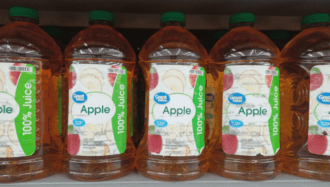
Refresco Beverages US Inc. of Tampa, FL, has expanded their recall of Great Value Apple Juice to include 133,500 cases of multiple other brands, including Market Basket, Nature’s Nectar, Nice!, Solevita, Urban Meadow, Weis and Wellsley Farms. The recall was initiated because the products contain inorganic arsenic above the action…Continue Reading
By News Desk on Sep 09, 2024 12:01 am The Food and Drug Administration sends warning letters to entities under its jurisdiction as part of its enforcement activities. Some letters are not posted for public view until weeks or months after they are sent. Business owners have 15 days to respond to FDA warning letters. Warning letters often are… Continue Reading
Eagle Produce LLC Scottsdale, AZ is initiating a recall of 224 cases of whole cantaloupe because they have the potential to be contaminated with Salmonella. Salmonella is an organism which can cause serious and sometimes fatal infections in young children, frail or elderly people, and others with weakened immune systems. Healthy people may experience fever, nausea, vomiting, diarrhea (which may be bloody), and abdominal pain. In rare cases the organism can get into the bloodstream and produce more severe illness such as arterial infections (i.e. infected aneurysms), endocarditis and arthritis.
The cantaloupe subject to the recall include:
Brand
Item Description
UPC Number Code
Lot Code
Kandy
Whole Cantaloupe
4050
846468
The products were distributed between August 13th – 17th in Michigan, Missouri, Ohio, Texas and Virginia and sold in various retail supermarkets. The cantaloupes are identified with a red and white sticker with KANDY across the top and UPC number code, 4050 No other products or lot code dates are affected by this recall.
** Niitakaya USA Inc. of Montebello, CA, is recalling All Best By dates of its 5.2 ounce (147 gram) packages of #3700 Shiso Katsuo Ninniku /#3701 Miso Katsuo Ninniku because they may contain undeclared Allergen of Fish (Bonito). People who have allergies to fish run the risk of serious or life-threatening allergic reaction if they consume these products.
The recalled #3700 Shiso Katsuo Ninniku /#3701 Miso Katsuo Ninniku were distributed nationwide to retail stores and through distributors.
The product comes in a 5.2 ounce (147 grams), clear plastic package marked with Niitakaya logo on the top. The product images are below. The Best By date will be located in the top back part of the package.
No illnesses have been reported to date.
The recall was initiated after it was discovered that product containing Fish (Bonito) was distributed in packaging that did not reveal the presence of “Containing allergen: Fish (Bonito)”.
Distribution of the product has been suspended until the company is certain that the problem has been corrected.
Consumers who have purchased 5.2 ounce (147 grams) packages of #3700 Shiso Katsuo Ninniku and #3701 Miso Katsuo Ninniku are urged to return them to the place of purchase for a full refund, if allergic to fish. Consumers with questions may contact the company Monday to Friday 7AM-3PM PDT at 323-720-5050.
ALB-USA Enterprises, Inc. of Bronx, NY is recalling ALB Flavor brand Cinnamon Powder, because it potentially contaminated with elevated levels of lead. Short-term exposures to very low levels of lead may not elicit any symptoms. It is possible that increased blood lead levels may be the only apparent sign of lead exposure. Additional signs and symptoms of lead exposure are more likely to be acute exposure to higher levels of lead or chronic exposure to lead. While lead can affect nearly every bodily system, its effects depend upon the amount and duration of lead exposure and age/ body weight. If a child is exposed to enough lead for a protracted period of time (e.g., weeks to months) permanent damage to the central nervous system may occur. This can result in learning disorders, developmental defects, and other long-term health problems. For adults, chronic lead exposure is associated with kidney dysfunction, hypertension, and neurocognitive effects.
Advance Food International, Inc. of Maspeth, NY is recalling Shahzada brand Cinnamon Powder in 7oz packing, because it has the potential to be contaminated with elevated levels of lead. Short term exposures to very low levels of lead may not elicit any symptoms. It is possible that increased blood lead levels may be the only apparent sign of lead exposure. Additional signs and symptoms of lead exposure are more likely with acute exposure to higher levels of lead or chronic exposure to lead. While lead can affect nearly every bodily system, its effects depend upon the amount and duration of lead exposure and age/ body weight. If a child is exposed to enough lead for a protracted period of time (e.g., weeks to months) permanent damage to the central nervous system may occur. This can result in learning disorders, developmental defects, and other long-term health problems. For adults, chronic lead exposure is associated with kidney dysfunction, hypertension, and neurocognitive effects.
Asli Fine Foods of Woodridge, IL is recalling Asli Cinnamon Powder 7 oz, because it has the potential to be contaminated with Lead, Short term exposures to very low levels of lead may not elicit any symptoms. It is possible that increased blood lead levels may be the only apparent sign of lead exposure. Additional signs and symptoms of lead exposure are more likely with acute exposure to higher levels of lead or chronic exposure to lead. While lead can affect nearly every bodily system, its effects depend upon the amount and duration of lead exposure and age/ body weight. If a child is exposed to enough lead for a protracted period of time (e.g., weeks to months) permanent damage to the central nervous system may occur. This can result in learning disorders, developmental defects, and other long- term health problems.
Eagle Produce LLC Scottsdale, AZ is initiating a recall of 224 cases of whole cantaloupe because they have the potential to be contaminated with Salmonella. Salmonella is an organism which can cause serious and sometimes fatal infections in young children, frail or elderly people, and others with weakened immune systems. Healthy people may experience fever, nausea, vomiting, diarrhea (which may be bloody), and abdominal pain. In rare cases the organism can get into the bloodstream and produce more severe illness such as arterial infections (i.e. infected aneurysms), endocarditis and arthritis.
The cantaloupe subject to the recall include:
Brand
Item Description
UPC Number Code
Lot Code
Kandy
Whole Cantaloupe
4050
846468
The products were distributed between August 13th – 17th in Michigan, Missouri, Ohio, Texas and Virginia and sold in various retail supermarkets. The cantaloupes are identified with a red and white sticker with KANDY across the top and UPC number code, 4050 No other products or lot code dates are affected by this recall.
Hickory Hollow Jerky, a Eufaula, AL, establishment, is recalling 6,229 pounds of ready-to-eat jerky products that were produced without the benefit of federal inspection, the U.S. Department of Agriculture’s Food Safety and Inspection Service (FSIS) announced today.
The beef jerky and bacon jerky products were produced on various dates between…Continue Reading
By News Desk on Sep 05, 2024 07:04 pm Humboldt County Department of Health & Human Services Public and Environmental Health officials are advising community residents who attended a dinner at the Elks Lodge in Eureka, CA, on Wednesday, Aug. 28, that they may have been exposed to Shigella. Attendees experiencing gastrointestinal (GI) issues should contact their primary care… Continue Reading
By Coral Beach on Sep 06, 2024 12:05 am Additional patients have been identified in an outbreak of illnesses traced to Diamond Shruumz brand edibles. FDA testing has shown that more of the company’s products are contaminated with harmful chemicals. There are now 158 confirmed illnesses in the outbreak, according to the Food and Drug Administration. The sick people… Continue Reading
By News Desk on Sep 06, 2024 06:23 pm Milo’s Poultry Farms LLC of Bonduel, WI, is recalling all “Milo’s Poultry Farms” and “Tony’s Fresh Market” branded eggs, including organic eggs, because these eggs have the potential to be contaminated with Salmonella. The recall was initiated after the Food and Drug Administration informed the company that environmental samples tested… Continue Reading
By Coral Beach on Sep 07, 2024 12:05 am Investigators from the FDA have discovered a new outbreak of infections from Salmonella Enteritidis. According to the Food and Drug Administration’s notice, the outbreak has already sickened 66 people. The agency has not reported the patients’ ages or locations. FDA investigators have begun onsite inspections and sample testing, but the… Continue Reading
By News Desk on Sep 04, 2024 07:37 pm Public health officials in Southern Nevada are alerting the public about illegal sales of unpasteurized, raw milk. The Southern Nevada Health District posted the alert on Sept. 4 after discovering raw milk on store shelves. “The sale of raw milk, and its products, is illegal in Clark County due to… Continue Reading
** Continuous Glucose Monitoring Sensor Recall: Abbott Diabetes Care Inc. Issues Recall for Certain FreeStyle Libre 3 Sensors due to Risk for Inaccurate High Glucose Readings
Abbott Diabetes Care Inc. is recalling certain FreeStyle Libre 3 sensors after finding that a small number of FreeStyle Libre 3 sensors may provide incorrect high glucose readings, which if undetected may pose a potential health risk for people living with diabetes.






You must be logged in to post a comment.