

** Aldi recalls jalapenos, green peppers and green beans over Listeria concerns
By News Desk on Jul 29, 2024 09:13 am
In cooperation with Wiers Farm, Inc. and R.S. Hanline Co Inc., ALDI Inc. (“ALDI”) is recalling Freshire Farms jalapenos, green peppers and green beans. The affected product from Wiers Farm, Inc. and R.S. Hanline Co. Inc. is being recalled because of potential Listeria monocytogenes contamination. The affected product was sold… Continue Reading
** Rice recalled in seven states over foreign object of ‘rodent-origin’ in product
By News Desk on Jul 18, 2024 09:26 am
Wehah Farms of Richvale, CA is recalling 4600 cases of Lundberg Family Farms Sustainable Wild Blend Gourmet Rice because the product may contain a foreign object that appears to be of rodent origin. According to the details posted online by the Food and Drugs Administration (FDA), the recall was initiated… Continue Reading
Boar’s Head Provisions Co., Inc., a Jarratt, Va., establishment, is recalling all liverwurst product produced by the establishment that is currently available in commerce because it may be adulterated with Listeria monocytogenes, the U.S. Department of Agriculture’s Food Safety and Inspection Service (FSIS) announced today. The company is also recalling additional deli meat products that were produced on the same line and on the same day as the liverwurst and, therefore, may be adulterated with L. monocytogenes. The company is recalling approximately 207,528 pounds of products.
** 020-2024, Al-Safa US LLC Recalls Frozen Ready-To-Eat Chicken Products Due to Possible Listeria Contamination (Jul 5, 2024)
** Eye Injection Kit Recall: Bausch + Lomb/Synergetics Inc. Removes Certain I-Pack Injection Kits Due to Potential Non-Sterility
Bausch + Lomb and its subsidiary, Synergetics, Inc. is recalling certain lots of I-Pack Injection Kits after being unable to verify that the products were fully sterilized. This recall involves removing devices from where they are used or sold.
The U.S. Food and Drug Administration (FDA) has identified this as a Class I recall, the most serious type of recall. This recall involves removing certain devices from where they are used or sold. If this device continues to be used, it may cause serious injuries, serious health consequences, or death.
** TOPIC: Umary Acido Hialuronico, Suplemento Alimenticio by Main Products: Recall – Due to the Presence of Undeclared Drug Ingredients: Diclofenac and Omeprazole
AUDIENCE: Consumer, Health Professional, Pharmacy, Pain Management, Gastroenterology
ISSUE: Main Products is recalling all lots of “Umary Acido Hialuronico, Suplemento Alimenticio – 30 Capletas de 850 mg” because FDA laboratory analysis confirmed that UMARY has been found to be tainted with the drug ingredients, diclofenac and omeprazole. Products containing diclofenac and omeprazole cannot be marketed as dietary supplements. Umary is an unapproved new drug for which safety and efficacy have not been established and, therefore, subject to recall.
Risk Statement: Diclofenac is a non-steroidal anti-inflammatory drug (commonly referred to as NSAIDs). There is a reasonable probability that consumption of high levels of undeclared diclofenac could result in serious adverse events that include cardiovascular, gastrointestinal, renal, and anaphylaxis in patients taking concomitant NSAIDs and/or anticoagulants, such as Warfarin, in those who have allergies to diclofenac, or those with underlying cardiovascular, gastrointestinal, renal, and hepatic illnesses.
Consumers that have Umary which is being recalled should stop using and return to place of purchase. Consumers may return the products to the address below via mail: Main Products, Inc., 1551 Glenwood Springs Ave., Chula Vista CA, 91913.
** JFE Franchising, Inc. Recalls A Limited Number of Products Because Of Possible Health Risk
Houston, TX (July 25, 2024) – JFE Franchising, Inc. of Houston, TX, is recalling a limited number of products because they may be contaminated with Listeria monocytogenes.
Listeria monocytogenes, an organism which can cause serious and sometimes fatal infections in young children, frail or elderly people, and others with weakened immune systems. Although healthy individuals may suffer only short-term symptoms such as high fever, severe headache, stiffness, nausea, abdominal pain and diarrhea, Listeria infection can cause miscarriages and stillbirths among pregnant women. There have been no illnesses or consumer complaints reported to date. This recall is in connection to a previous recall released by Wiers Farm, Inc. dated July 22, 2024. Products involved in this recall were packed between July 6-19, 2024.
Batavia, Ill. (July 22, 2024) – In cooperation with Wiers Farm, Inc. and R.S. Hanline Co Inc. and out of an abundance of caution, ALDI Inc., (“ALDI”) recalls Freshire Farms jalapenos, green peppers and green beans. The affected product from Wiers Farm, Inc. and R.S. Hanline Co Inc is recalled due to a potential listeria monocytogenes contamination. The full product details include:
| Product Name: | Package Description | UPC Code |
| Jalapeno | 8 oz. bag | 4099100087680 |
| Green Pepper | 16 oz. (3 pack) bag | 4099100087598 |
| Green Beans | 16 oz. bag | 4099100087826 |
The affected product was sold at select ALDI stores in Kentucky, New York, Ohio, Pennsylvania and West Virginia.
** More imported cinnamon recalled because of high levels of lead
By News Desk on July 26, 2024
ALB-USA Enterprises Inc. of Bronx, NY is recalling ALB Flavor brand Cinnamon Powder, because it potentially contaminated with elevated levels of lead.
Short-term exposures to very low levels of lead may not elicit any symptoms. It is possible that increased blood lead levels may be the only apparent sign of…Continue Reading
** FDA Issues public health alert for ground cinnamon products due to elevated lead levels
By News Desk on July 25, 2024
Following increased scrutiny of cinnamon products after the discovery of elevated lead levels in applesauce products in the fall of 2023, the Food and Drug Administration has issued a public health alert for ground cinnamon products distributed by El Servidor Corp. of Elmhurst, NY, and sold through Mannan Supermarket Inc. Continue Reading
FOR IMMEDIATE RELEASE – July 18, 2024 – East Windsor, New Jersey. Aurobindo Pharma USA, Inc., on behalf of AuroHealth, is voluntarily recalling one lot (refer table below) of Healthy Living Migraine Relief, Acetaminophen 250mg, Aspirin (NSAID) 250mg & Caffeine 65mg tablets, to the consumer level as sold through Amazon to known within the US market due to the product missing the manufacturer label.
| NDC No. | Product Name, strength, and pack | Lot number | Expiry |
| 58602-882-21 | Acetaminophen 250mg; Aspirin 250mg; Caffeine 65mg tablets – 100ct bottles | AC2523005A | June-2025 |
Risk Statement: Amazon customers having purchased the above product will have a white unlabeled bottle from the Manufacturer (AuroHealth) bearing only an Amazon identifying sticker, as shown below. As a result, the product lacks the required Over the Counter (OTC) labeling information, drug facts and patient usage information. There is significant risk of misuse which could result in permanent liver damage if consumers exceed the recommended dose, combine use with excessive consumption of alcohol or are allergic to the active ingredient which could be life-threatening. To date, Aurobindo has not received any reports of adverse drug events that are confirmed related to this recall.
** One dead in Montana in E. coli outbreak linked to ground beef
By Coral Beach on July 24, 2024
A deadly outbreak of E. coli O157:H7 infections is under investigation in Montana.
At least 13 people have been sickened and one has died, according to the Flathead City-County Health Department. The last known date of consumption of ground beef implicated in the outbreak was July 14.
The officials investigating…Continue Reading
** Second person dies in edibles outbreak; recall initiated but products still available
By Coral Beach on July 24, 2024
Another person has died in the outbreak of illnesses tied to Diamond Shruumz edibles, which are sold nationwide.
As of July 22, 2024, a total of 74 illnesses had been reported from 28 states. Sixty-two of the 74 people have reported seeking medical care, 38 have been hospitalized, and there…Continue Reading
** Maine officials report outbreak of Campylobacter infections traced to oysters
By News Desk on July 25, 2024
An outbreak of Campylobacter infections has spurred the Food and Drug Administration to issue a public warning.
The warning is for recalled oysters from Maine, which are sold under the Recompense Cove brand. The oysters were harvested between June 19 and July 16 from harvest areas CAS RC2 and CAS…Continue Reading
** St. Jerome cheese recalled after testing finds Listeria
By News Desk on July 25, 2024
Kenny’s Farmhouse Cheese of Austin, KY is recalling certain St. Jerome cheese because of potential Listeria monocytogenes contamination.
The potential for contamination was noted after routine testing by the Kentucky Department of Public Health revealed the presence of Listeria monocytogenes in a package of St. Jerome batch 231129.
The recalled…Continue Reading
** Mint recalled in Ontario because of E. coli contamination
By News Desk on July 25, 2024
Rambrich Farms Inc. is recalling Rambrich Farms brand Mint because of generic E. coli contamination.
According to the Canadian Food Inspection Agency (CFIA), the recalled products were distributed in Ontario, Canada.
About E. coli infections
Anyone who has eaten any of the recalled product and developed symptoms of E. coli…Continue Reading
** Stutz Packing Co. Recalls Walnut Product Because of Possible Health Risk
Stutz Packing Company of Indio, CA is voluntarily recalling it’s 1-pound packages of Shelled Walnuts, because it has the potential to be contaminated with Listeria monocytogenes, an organism which can cause serious and sometimes fatal infections in young children, frail or elderly people, and others with weakened immune systems. Although healthy individuals may suffer only short-term symptoms such as high fever, severe headache, stiffness, nausea, abdominal pain and diarrhea, Listeria infection can cause miscarriages and stillbirths among pregnant women. These Walnuts were distributed to food bank warehouses in Texas and Arizona which further distribute to other distribution centers that can go to consumers, or smaller foods banks, school lunch programs, shelters, or prison food systems.
The U.S. Department of Agriculture’s Food Safety and Inspection Service (FSIS) is issuing a public health alert for ready-to-eat meat and poultry products that were illegally imported from the Philippines. The Philippines is a country not eligible to export meat and poultry products to the United States. FSIS is continuing to investigate how these products entered the country.
** Food Recalls
Two dead in Listeria outbreak in Canada linked to Silk and Great Value brand plant-based milk
Walnuts recalled after product sampling finds Listeria
Baby food sold nationwide in Canada recalled after testing finds Cronobacter
Meatballs recalled in Canada after testing finds Listeria contamination
** Queso fresco cheese recalled in Texas after Listeria found in product
By News Desk on July 11, 2024
Productos La Hacienda LLC is recalling Queso Rico La Hacienda brand queso fresco cheese because it was found to contain Listeria monocytogenes
Testing found Listeria monocytogenes in a sample with an expiration date of 6/2/24 on sticker.
According to the details posted online by the Food and Drugs Administration, the…Continue Reading
Out of an abundance of caution, Reser’s Fine Foods is voluntarily recalling Hill Country Fare Mustard Potato Salad 48oz (3LB) with a Use By Date of JUL/26/24 due to the possibility of pieces of hard plastic foreign material in the package. No injuries have been reported.
This item was produced at a regional facility by Reser’s Fine Foods and distributed to H-E-B and Joe V’s Smart Shop locations in Texas only All impacted product has been removed from the shelf. Consumers who purchased this product may return it to the store for a full refund or discard the item.
**AB World Foods US, Inc. Recalls Al’Fez Natural Tahini Because of Possible Health Risk
July 12, 2024—AB World Foods US, Inc. of Oakbrook Terrace, Illinois, is voluntarily recalling Al’Fez Natural Tahini in 5.6oz glass jars because it has the potential to be contaminated with Salmonella, an organism which can cause serious and sometimes fatal infections in young children, frail or elderly people, and others with weakened immune systems. Healthy persons infected with Salmonella often experience fever, diarrhea (which may be bloody), nausea, vomiting and abdominal pain. In rare circumstances, infection with Salmonella can result in the organism getting into the bloodstream and producing more severe illnesses such as arterial infections (i.e., infected aneurysms), endocarditis and arthritis. The recalled Al’Fez Natural Tahini was distributed nationwide in retail stores beginning 05/26/23. The recalled Al’Fez Natural Tahini was sold in 5.6oz glass jars, UPC 711464506778, and with a “BEST BEFORE” of “2024 JL 11” or later. The specific codes being recalled are: Lot Numbers “3031”, “3080”, “3270”, “3297” with corresponding BEST BEFORE: “2024 JL 31”; “2024 SE 09”; “2025 MR 27”; “2025 AL 04”. The recall only applies to these codes, the codes are located on the back of the jar as depicted in the pictures below.
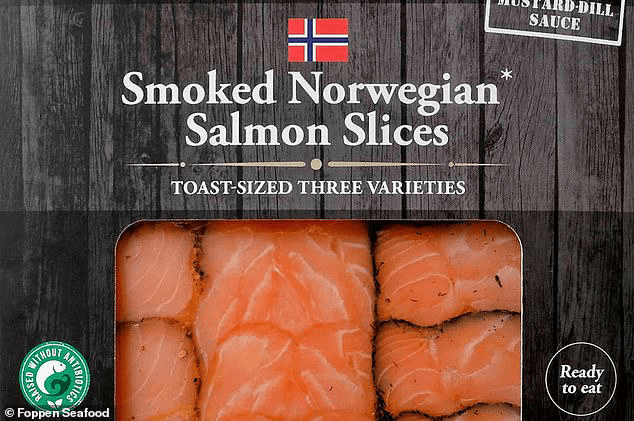
** A mass recall has been issued for salmon slices sold in Kroger and Payless grocery stores across fifteen states over concerns they may be contaminated with listeria. Foppen Seafood’s ‘Smoked Norwegian Salmon Slices’ have been recalled from some supermarkets by the company after Listeria monocytogenes was found in their lot during routine testing.
The bacteria can cause listeriosis that can be fatal to the elderly, young children and the immunocompromised.
The voluntary recall notice was published by the the Food and Drug Administration (FDA) on Tuesday.
The potentially infected items are ‘toast sized’ salmon slices sold in 8.1-ounce packages with lot number ‘412’ and UPC code ‘8 40137 10000 2.’
**** Four dozen sick, one dead in an outbreak traced to micro-dosing edibles
Drug Emporium Yogurt Flavored Pretzels recalled over potential Salmonella contamination
** The following products are subject to recall: The frozen ready-to-eat chicken products were produced in Canada on June 5, 2024, and imported to the U.S. on June 13, 2024, and June 21, 2024.
12.1-oz. cardboard box package containing “Al Safa Halal Charcoal Grilled Chicken Seekh Kebab Grilled, Minced, Chicken Patty Kebab” with “NOV 30 25” and “0605404” printed on a sticker on the outside of the package.
14.11-oz. cardboard box package containing “Al Safa Halal Fully Cooked Chicken Chapli Kebab Seasoned Chicken Patty” with “NOV 30 25” and “0605416” printed on a sticker on the outside of the package.
The products bear the establishment number “866” inside the Canadian mark of inspection. These items were shipped to retail locations nationwide.
The problem was discovered after FSIS performed routine product testing, which indicated that the product may be contaminated with Listeria.
Al-Safa US LLC Recalls Frozen Ready-To-Eat Chicken Products Due to Possible Listeria Contamination
Al-Safa US LLC, the importer of record located in Mississauga, Ontario, Canada, is recalling approximately 2,010 pounds of imported frozen ready-to-eat chicken products that may be adulterated with Listeria monocytogenes.
** Untreated water was found to be a source of the Salmonella outbreak that has sickened hundreds.
By Coral Beach on Jul 03, 2024 12:06 am
According to the Food and Drug Administration, Bedner Growers Inc., of Boynton Beach, FL, is the source of cucumbers implicated in an outbreak of Salmonella infections. According to FDA investigators, untreated canal water is the most likely source of the pathogen. The outbreak, which involves two strains of Salmonella … Continue Reading
Urban River Spirits is issuing a voluntary recall of the products listed below due to additional shelf stability testing requirements from the Oregon Department of Agriculture. This recall is being conducted due to a potential safety concern. To date, we have not received any reports of illnesses related to these products. Customers who may have purchased this product on or before 07/02/2024 are urged to return the product for a full refund to Urban River Spirits, LLC at 2114 Main St. Forest Grove OR, 97116, destroy the product, and may contact Michelle Garner Monday – Friday from 8 am to 5 pm at (503) 475-9765 with any questions or concerns. Our goal is to have the testing completed swiftly and timely. We apologize for any inconvenience this may cause; we want to be transparent with our customers and will do what we can to ensure your safety, which is always our top priority.
** The FDA urged the public to watch out for the product by identifying the main label and lot number printed on the bottom of the back panel on the packaging, which contains a green background with the purple and white Great Value logo and a wooden spoon on the front in front of the small black seeds. It noted that the products were sent to Walmart for nationwide distribution.
The packages are 32 ounces, and the lot code was listed as 24095 C018, with an expiration date of October 30, 2023. The UPC number is 078742300665. Anyone in possession of the product is being urged to throw them away. They can then contact National Sourcing International, which will provide a replacement product if proof of purchase is shown. Customer service can be reached at 1-818-405-9705, with office hours Monday through Friday from 9 a.m. to 4 p.m. ET. The company can also be emailed at customerservice@organically-simple.com.
** Urban River Spirits is issuing a voluntary recall of the products listed below due to additional shelf stability testing requirements from the Oregon Department of Agriculture. This recall is being conducted due to a potential safety concern. To date, we have not received any reports of illnesses related to these products. Customers who may have purchased this product on or before 07/02/2024 are urged to return the product for a full refund to Urban River Spirits, LLC at 2114 Main St. Forest Grove OR, 97116, destroy the product, and may contact Michelle Garner Monday – Friday from 8 am to 5 pm at (503) 475-9765 with any questions or concerns. Our goal is to have the testing completed swiftly and timely.
** Yellowfin Tuna recalled in California over high histamine levels
By News Desk on Jun 27, 2024 08:58 am
Fresh Catch Inc of Los Angeles, CA is recalling certain Fresh Catch Inc. Yellowfin Tuna because of high histamine levels. According to the details posted online by the Food and Drugs Administration (FDA), the recall was initiated on June 12, 2024, and is ongoing. The recalled product was distributed in… Continue Reading
** Spinach and spinach products recalled after testing finds Listeria monocytogenes contamination
By News Desk on Jun 28, 2024 09:59 am
Solata Foods LLC of Newburgh, NY, is recalling its “Fresh Spinach” listed below because it may be contaminated with Listeria monocytogenes. The brands listed in the recall include Solata, Gaia, Full Circle, Farmer Direct, Uncle Vinny’s, Bogopa and Bulk. The contamination was discovered after sampling by New York State Department… Continue Reading
**Macadamia nuts recalled because of Salmonella contamination
By News Desk on Jun 28, 2024 05:51 pm
Sunco and Frenchie LLC of Pine Brook, NJ, is recalling Terrafina brand macadamia nuts packed in 6-ounce plastic containers because they have the potential to be contaminated with Salmonella. The Terrafina brand macadamia nuts were distributed in New York through retail stores. Oak Foods LLC was the distributor. Brand name… Continue Reading
**Prophet Premium Blends Recalls Diamond Shruumz Products Because of Possible Health Risk
Prophet Premium Blends of Santa Ana, California is recalling Diamond Shruumz Infused Cones, Chocolate Bars, and Gummies (Micro- and Mega/Extreme-Dose), because such products contain Muscimol, a chemical found in mushrooms of the genus Amanita; Muscimol could be a potential cause of symptoms consistent with those observed in persons who became ill after eating Diamond Shruumz products. Reported symptoms have included those linked to seizures, agitation, involuntary muscle contractions, loss of consciousness, confusion, sleepiness, nausea and vomiting, abnormal heart rates, and hyper/hypotension. Diamond Shruumz Infused Cones, Chocolate Bars, and Gummies (Micro- and Mega/Extreme-Dose) were distributed nationwide through retail stores and mail orders via https://diamondshruumz.com/shop/ or https://diamondshruumz.com/wholesale. All lots or best buy dates and all flavors of Diamond Shruumz Infused Cones, Chocolate Bars, and Gummies (Micro- and Mega/Extreme-Dose) are included in this recall, and in the event the product is missing lot information or best buy dates, all flavors of Diamond Shruumz Infused Cones, Chocolate Bars, and Gummies (Micro- and Mega/Extreme-Dose) product are still included in this recall.
** Costco Chocolate Chunk Frozen Cookie Dough, Net Wt. 33lb (14.97kg), 1.6 oz more…
Reason for Recall:
Potential Salmonella contamination
Product Quantity:
29,019 Cases (Total all products)
Recall Number:
F-1300-2024
Code Information:
4109N1 4110N1 4106N3 4107N3 4108N3 4109N3 4110N3 4116N1 4117N1 4109N4 4110N4 4115N1
Classification:
Class II
Routine testing has revealed the presence of Listeria monocytogenes in the specified lot 412. Listeria monocytogenes is a type of bacteria that can cause listeriosis. Symptoms vary depending on the severity of the illness, symptoms may last from days to several weeks. Mild symptoms may include a fever, muscle aches, nausea, vomiting, and diarrhea. If the more severe form of listeriosis develops, symptoms may include headache, stiff neck, confusion, loss of balance, and convulsions. Some people are more vulnerable to listeria infections, including older people, pregnant women and their unborn babies, babies less than one month old and people with weakened immune systems. Harderwijk, The Netherlands, June 22, 2024* — Foppen Seafood is recalling Smoked Norwegian Salmon Slices – Toast sized, 8.1 oz, identified by lot number 412, sold in Kroger and Payless Supermarkets across 15 states in the USA. This action is being taken due to the contamination with Listeria monocytogenes.
** Food Recalls
** The United States has paused safety inspections for avocados and mangoes from Mexico after an incident reportedly threatened the safety of U.S. Department of Agriculture (USDA) staff, according to several local news reports. Per Reuters, two staff members were held against their will and physically assaulted during a protest concerning police pay in the municipality of Paracho.
**
** E. coli concerns prompt cheese curd recall in Iowa
By News Desk on June 18, 2024
Moore Family Cheese LLC of Maquoketa, IA is recalling Moore Family Farms and Creamery Cheddar Cheese Curds because of high coliform and generic E. coli count.
According to the details posted online by the Food and Drugs Administration (FDA), the recall was initiated on May 23, 2024, and is ongoing. Continue Reading
** TOPIC: Suntegrity Impeccable Skin Sunscreen Foundation (Multiple Shades) by Suntegrity Skincare: Recall – Due to Microbial Contamination
AUDIENCE: Consumer, Health Professional, Dermatology, Pharmacy
ISSUE: Suntegrity Skincare is recalling nine lots of Suntegrity Impeccable Skin Sunscreen Foundation (Multiple Shades) based on its discovery of a higher than acceptable microbiological mold count (Species: Aspergillus sydowii) in some tubes of Lot 115BU that developed post-release and over time in a recent test. Out of an abundance of caution while investigating the situation, the company has decided to voluntarily recall these additional lots: 107IV, 107NU, 109NU, 117BU, 113SA, 114SA, 106BR, and 101MO even though all original and recent test results received have come back clear.
By News Desk on Jun 14, 2024 08:57 am
Grande Cheese Company of Fond Du Lac, WI is recalling 1,726,910 pounds of whey and dairy products because of potential Salmonella contamination. According to the details posted online by the Food and Drugs Administration (FDA), the recall was initiated on May 1, 2024, and is ongoing. The recalled products were… Continue Reading
**
** CDC says new Salmonella outbreak has been traced to bearded dragons
By News Desk on Jun 14, 2024 04:50 pm
The Centers for Disease Control and Prevention is reporting that at least 15 people in nine states have been sickened with Salmonella linked to pet bearded dragons. Four people have required hospitalization, but no deaths have been reported. New York has reported four cases, Ohio and California have each reported… Continue Reading
** Meat Warning Issued in Two States he following products are affected by the warning.
- Packages purchased by weight at the retail counter containing “Farmstead local house smoked bacon” with sell-by dates between May 2 and June 27, 2024
- Packages purchased by weight at the retail counter containing “Farmstead butcher block buck board bacon” with sell-by dates between May 2 and June 27, 2024
- Packages purchased by weight at the retail counter containing “Farmstead butcher block pork jowl whole house smoked” with sell-by dates between May 2 and June 27, 2024
- Packages purchased by weight at the retail counter containing “Farmstead butcher block house smoked beef bacon” with sell-by dates between May 2 and June 27, 2024
- Approximately 1 pound packages containing “Clark Farms Smoked Pork Jowl Bacon” with the lot code H130RH.
- Approximately 1 pound packages containing “Clark Farms Smoked Pork Bacon” with the lot code H130RH.
- Approximately 1 pound packages containing “Clark Farms Smoked Pork Shoulder Bacon” with the lot code H130RH.
- Approximately 1 pound packages containing “Farmstead Butcher Block Smoked Pork Jowl Bacon” with the lot code H81AB.
- Approximately 1 pound packages containing “Farmstead Butcher Block Smoked Pork Bacon” with the lot code H81AB.
- Approximately 1 pound packages containing “Southwinds Cattle Company Smoked Beef Belly Bacon” with the lot code B237AB.
Several other warnings and recalls involving meat have occurred in recent weeks. Earlier in June, a meat importing company recalled more than 20,000 pounds of beef products that were not inspected when entering the U.S. Meanwhile, Publix Super Markets also recently issued a voluntary ground beef recall on some products.
** Pineapple juice recalled in Canada because of mold
By News Desk on June 11, 2024
Puresource Corporation is recalling Just Juice Organic brand 100% Pure Juice – Pineapple because of microbial contamination, specifically mold.
According to the Canadian Food Inspection Agency (CFIA), the recalled products were distributed nationally in Canada.
About mold in food
According to the United States Department of Agriculture (USDA), mold in…Continue Reading
** Arugula sold at Publix recalled after testing finds Salmonella
By News Desk on June 10, 2024
Green Life Farms of Lake Worth, FL, is recalling one lot of its 4-ounce containers of Baby Arugula because of potential Salmonella contamination.
The potential for contamination was noted after routine testing by the company revealed the presence of Salmonella in a single harvest of Baby Arugula.
The recalled products…Continue Reading
** More cookie dough types recalled as part of 30,000 case recall
By News Desk on June 10, 2024
Rise Baking Company, doing business as South Coast Baking, of Springdale, AR, is recalling Costco Chocolate Chunk Frozen Cookie Dough, Member’s Mark Chocolate Chunk, Panera Chocolate Chipper Cookie, Rise Baking Jumbo Chocolate Chunk and Mini Chocolate Chip Cookie cookie doughs because of potential Salmonella contamination.

These products are part of…Continue Reading
** Listeria prompts recall of sandwiches
By News Desk on Jun 11, 2024 05:18 pm
Classic Delight LLC of St. Mary’s, OH, recalls individually wrapped sandwiches because of potential contamination with Listeria monocytogenes. Products subject to the recall were shipped to Arkansas, California, Maryland, Missouri, Ohio, Pennsylvania, and Texas distributors. Products may end up in food service distribution, convenience stores, and vending. Items were produced… Continue Reading
** Dairy Manufacturers Inc., of Prosper, TX – 6/3/24, is notifying consumers about a safety issue associated with a product that is an extension of an ongoing voluntary recall (https://www.fda.gov/safety/recalls-market-withdrawals-safety-alerts/dairy-manufacturers-inc-issues-voluntary-recall-products-due-non-compliance-requirements-under-21). D-M initiated a voluntary recall on 05/24/24. Crecelac Infant 0-12 with an expiration date of 08/2025 was manufactured at D.M. Mexicana Sa De Cv in Monterey, Mexico and is part of this ongoing recall. D-M is now alerting consumers that a sample of this product has tested positive for Cronobacter spp.Crecelac 12.4 oz containers were distributed primarily in March, April, and May of 2024. The product was distributed through retail stores in the state of Texas only. The recalled product is labeled as infant formula and packaged in a 12.4 oz. cardboard and aluminum can.
Only the lot listed below had samples containing Cronobacter spp.
| PRODUCT | UPC | LOT CODE | EXP. DATE |
|---|---|---|---|
| Crecelac Infant 0-12 | 8 50042 40847 6 | 24 039 1 CHE 352-1 | 08/2025 |
The recalled product can be identified by the batch code on the bottom of the can.
There have been no reports of injuries or adverse reactions due to consumption of these products.
Consumers who have purchased Crecelac Infant 0-12, should discontinue use of the recalled product and return it to the place of purchase for a full refund. Anyone concerned about an injury or illness should contact a healthcare provider.
Consumers with questions may contact the company at 1-972-347-2341 (Monday to Friday, 9:30 a.m. to 5 p.m. EST).
** As of June 7, 2024, a total of eight confirmed illnesses have been reported from four states including AZ (4), IN (2), NV (1), and PA (1). All eight people have reported seeking medical care; six have been hospitalized. No deaths have been reported. FDA is working to determine the cause of these illnesses and is considering the appropriate next steps. More information will be provided as it becomes available.
Symptoms reported by people who became ill after eating Diamond Shruumz-brand Microdosing Chocolate Bars include a variety of severe symptoms such as seizures, central nervous system depression (loss of consciousness, confusion, sleepiness), agitation, abnormal heart rates, hyper/hypotension, nausea, and vomiting.
For more information, click on the red button Read Alert below.
BACKGROUND: Diamond Shruumz- brand Microdosing Chocolate Bars can be purchased online and in person at a variety of retail locations nationwide including smoke/vape shops, and at retailers variety of retail locations nationwide including smoke/vape shops, and at retailers that sell hemp-derived products such as cannabidiol (CBD) or delta-8 tetrahydrocannabinol (delta-8 THC).
RECOMMENDATIONS:
- Consumers should not eat, sell, or serve any flavor of Diamond Shruumz-brand Microdosing Chocolate Bars, and should discard them.
- Consumers should check their homes and discard these products if found.
- This product may appeal to children and teenagers as it is marketed as a candy. Parents and caregivers should consider discussing the information in this advisory with their children and take extra care to avoid this product being consumed by younger people.
- Retailers should not sell or distribute Diamond Shruumz-brand Microdosing Chocolate Bars and should hold the product in a secure location until additional instructions can be provided on how to return or safely dispose of the product.
If you become ill after consuming these chocolate bars, please contact your healthcare provider and/or call the Poison Help Line at 1-800-222-1222. Let them know you have recently consumed the Diamond Shruumz-brand Microdosing Chocolate Bars.
** Cronobacter is a bacterium that can cause bloodstream and central nervous system infections, such as sepsis and meningitis, respectively. Complications from Cronobacter infection in infants can include brain abscess, developmental delays, motor impairments, and death.

Grocery giant Wegman’s announced Friday that it was recalling pepperoni in stores across eight states due to ‘possible metal foreign material’ contamination.
The affected product, sold as the Wegmans Italian Classics Uncured Pepperoni, was packaged with the UPC code 2-07939-00000-6 and best by dates of August 28, 2024 and August 29, 2024.
It was sold at more than 100 stores throughout the country including in the District of Columbia, Delaware, Maryland, Massachusetts, New Jersey, New York, North Carolina, Pennsylvania and Virginia.
Those who purchased the pepperoni can return it to the customer service desk for a full refund.
** Beef imported from Uruguay recalled over lack of USDA inspection
** Fresh Start Produce Sales Initiates Recall of Whole Cucumbers Because of Possible Health Risk
FOR IMMEDIATE RELEASE- May 31, 2024 – Fresh Start Produce Sales Inc. of Delray, Florida, is recalling whole cucumbers shipped to certain states from May 17th through May 21st, 2024, due to the potential to be contaminated with Salmonella, an organism that can cause serious and sometimes fatal infections in young children, frail or elderly people, and others with weakened immune systems. Healthy persons infected with Salmonella often experience fever, diarrhea (which may be bloody), nausea, vomiting and abdominal pain. In rare circumstances, infection with Salmonella can result in the organism getting into the bloodstream and producing more severe illnesses such as arterial infections (i.e., infected aneurysms), endocarditis and arthritis. The recalled cucumbers were shipped in bulk cartons from May 17th through May 21st, 2024, directly to retail distribution centers, wholesalers, and food service distributors in Alabama, Florida, Georgia, Illinois, Maryland, North Carolina, New Jersey, New York, Ohio, Pennsylvania, South Carolina, Tennessee, Virginia, and West Virginia.
** A manufacturer out of Dallas distributes two such on the market that the US Food and Drug Administration (FDA) reports are being recalled. ARG Laboratories, Inc. has executed a Class II recall of multiple varieties of each Golden Tiger Natural Pain Relieving Cream and Pain Wizard Natural Relief for Muscular and Arthritic Pain.
Varieties of Golden Tiger and Pain Wizard contain the following product specification detailsall were “distributed nationwide in the USA” and sold through retailers such as Walmart and Amazon:
- Pain Wizard Natural Relief for Muscular & Arthritic Pain
- (Camphor 3%, Menthol 3%)
- Enriched with Capsaicin, Camphor, Menthol & MSM
- Bottle with pump, NET WT 16 fluid oz / 473.17 m
- Lot: 18723C3, Exp 06/30/2025
- GOLDEN TIGER NATURAL PAIN RELIEVING CREAM,
- (Camphor 3%, Menthol 3%)
- Enriched with Capsaicin, Aloe Vera, Willow Bark & MSM
- Gallon Jug 128 fl. oz. (3776 ml)
- Lot: 01823C2, Exp 01/31/2025
- Pain Wizard, Natural Relief for Muscular & Arthritic Pain
- (Camphor 3%, Menthol 3%)
- Enriched with Capsaicin, Camphor, Menthol & MSM
- Tube, NET WT 8 oz (226.79g)
- Lots 19823C4, EXP 07/31/2025; 01623C1, Exp 01/31/2025
- Pain Wizard, Natural Relief for Muscular & Arthritic Pain
- (Camphor 3%, Menthol 3%)
- Enriched with Capsaicin, Camphor, Menthol & MSM
- Tube NET WT 4oz (113.39g)
- Lot 06023C1, Exp 01/31/2025
- NATURAL PAIN RELIEVING CREAM, GOLDEN TIGER
- (Camphor 3%, Menthol 3%)
- Enriched with Pump Capsaicin, Aloe Vera, Willow Bark & MSM, Bottle with Pump
- NET WT 32 fl. oz (946.33ml)
- Lot 01823C2, 01823C1, Exp 01/31/2025
- GOLDEN TIGER NATURAL PAIN RELIEVING CREAM
- (Camphor 3%, Menthol 3%)
- Enriched with Capsaicin, Aloe Vera, Willow Bark & MSM
- Tube 4 oz (113.39 g)
- Lot 01623C1, Exp 01/31/2025
- Pain Wizard, Natural Relief for Muscular & Arthritic Pain
- (Camphor 3%, Menthol 3%)
- Enriched with Capsaicin, Camphor, Menthol & MSM
- Roll-On 3 fl oz (88.7ml)
- Lot 17323C3, Exp 06/30/2025
- GOLDEN TIGER NATURAL PAIN RELIEVING CREAM
- (Camphor 3%, Menthol 3%)
- Enriched with Capsaicin, Aloe Vera, Willow Bark & MSM
- Roll-On NET WT 3 fl. oz. (88.7ml)
- Lot 17323C3, Exp 06/30/2025
The amount of propylene glycol used in the recalled formulations is not clear. The FDA alerts do not specify how the company is remedying the situation, and it does not appear Golden Tiger has social accounts nor a customer service contact. If you purchased any of the affected Pain Wizard products, you may consider reaching out to customer service at the company or calling the number published on their site: 877-765-4093.
** On June 1, 2024, the Costco leadership team announced to Costco members in a letter from their chief supply chain officer that they were recalling a product sold at Costco between May 9 and May 31, 2024:
“Through standard food safety and quality processes, Tillamook has identified a very small quantity of gray and black plastic pieces that may be present in a limited quantity of Monterey Jack Cheese that is included in the 32 oz. package of Tillamook Monterey Jack and Tillamook Colby Jack cheese slices, with a ‘Best If Used By’ date of October 22, 2024.”
** More Than 2,000 Products Recalled by Popular Meal Delivery Service
A Popular Yogurt Brand Has Been Recalled in at Least One State
2 Over-the-Counter Pain Creams Recalled Nationwide
More Than 200,000 Kitchen Appliances Recalled by 2 Major Brands
More Than 300 Bags of Name-Brand Pet Food Recalled in 4 States
What Is a Recall, and Why Do They Happen? An Expert Explains
Originally Published: June 03, 2024
** Two recalled ice cream products have been reclassified by the U.S. Food and Drug Administration more than a month after consumers were first notified.
The 3-ounce Creamy Creations Chocolate Ice Cream (12-pack) and the 3-ounce Creamy Creations Ice Cream Lime/Orange Combo (12-pack), produced by San Antonio based H-E-B, were both recalled in April due to potential metal contamination. The products have the UPC codes of 4122062948 and 4122081930 respectively and were distributed in grocery stores in Texas only.
UBC Food Distributors in Dearborn Michigan is recalling the Ground Black Pepper under the Baraka brand name in 7oz plastic containers 7oz * 10 With UPC code 8 22514 26626 6 because it has the potential to be contaminated with Salmonella, an organism which can cause serious and sometimes fatal infections in young children, frail or elderly people, and others with weakened immune systems. Healthy persons infected with Salmonella often experience fever, diarrhea (which may be bloody), nausea, vomiting and abdominal pain. In rare circumstances, infection with Salmonella can result in the organism getting into the bloodstream and producing more severe illnesses such as arterial infections (i.e., infected aneurysms), endocarditis and arthritis.
The recalled “black pepper” were distributed nationwide in retail stores. The product comes in a 7 ounce, clear plastic package marked with expiration date of January 2026 on the back of the label.
** Fresh Start Produce Sales Initiates Recall of Whole Cucumbers Because of Possible Health Risk
FOR IMMEDIATE RELEASE- May 31, 2024 – Fresh Start Produce Sales Inc. of Delray, Florida, is recalling whole cucumbers shipped to certain states from May 17th through May 21st, 2024, due to the potential to be contaminated with Salmonella, an organism that can cause serious and sometimes fatal infections in young children, frail or elderly people, and others with weakened immune systems. Healthy persons infected with Salmonella often experience fever, diarrhea (which may be bloody), nausea, vomiting and abdominal pain. In rare circumstances, infection with Salmonella can result in the organism getting into the bloodstream and producing more severe illnesses such as arterial infections (i.e., infected aneurysms), endocarditis and arthritis. The recalled cucumbers were shipped in bulk cartons from May 17th through May 21st, 2024, directly to retail distribution centers, wholesalers, and food service distributors in Alabama, Florida, Georgia, Illinois, Maryland, North Carolina, New Jersey, New York, Ohio, Pennsylvania, South Carolina, Tennessee, Virginia, and West Virginia.
**




You must be logged in to post a comment.