3,000 megawatt Wyoming wind energy project and Rhode Island, Massachusetts Wind Energy Area take key steps forward
07/02/2012
Contact: Adam Fetcher (DOI) 202-208-6416
Theresa Eisenman (BOEM) 202-208-5387
Serena Baker (BLM) 307-212-0197
WASHINGTON, D.C. – As part of the Obama Administration’s commitment to developing the nation’s vast renewable energy resources, Secretary of the Interior Ken Salazar today announced that two major wind energy initiatives have completed important environmental reviews, clearing the way for public comment and final review.
Onshore, Salazar announced the release of final environmental impact statements for a proposed wind power complex in Wyoming that would generate up to 3,000 megawatts of power, making it the largest wind farm facility in the U.S. and one of the largest in the world.
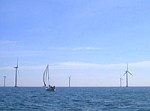
Offshore, Salazar announced the publication of an environmental assessment for commercial wind leases and site assessment activities on the Outer Continental Shelf (OCS) offshore Rhode Island and Massachusetts. Today’s step puts Interior in position to offer this area as one of the nation’s first offshore competitive lease sales before the end of the year.
“When it comes to wind energy, we’re making significant progress both onshore and offshore to diversify our nation’s domestic energy portfolio and stand up a clean energy economy,” Salazar said. “Today, as we take the next steps toward realizing what could be the largest wind energy project in the world and holding a competitive offshore wind lease sale, we are really at the forefront of a renewable energy revolution.”
The proposed Chokecherry and Sierra Madre Wind Farm would contain up to 1,000 turbines and generate enough power for up to 1 million American homes. The project would be built on public, private and state land in Carbon County, Wyoming. The Bureau of Land Management (BLM) is reviewing the proposed wind project, as well as a proposed amendment to the Rawlins Resource Management Plan to accommodate the facility. For more information on the proposed project, click here and for a map, click here.
“Wyoming has incredible wind resources and this proposed wind energy project has potential to generate jobs and bring a record amount of clean power to market throughout the West,” said Acting BLM Director Mike Pool. “We look forward to hearing from the public as we work to ensure that this proposal, if approved, would be built in the right way and in the right place to minimize environmental impacts.”
The proposed wind energy project is under consideration as part of Interior’s initiative to advance smart development of renewable energy on public lands. Since 2009, Interior has approved 31 utility-scale wind, solar, and geothermal projects that, if built by the companies, will provide approximately 7,200 megawatts of power to communities across the West, or enough to power nearly 2.5 million homes. These achievements build on the historic expansion of renewable energy under President Obama, with energy from sources like wind and solar doubling since the President took office.
The environmental assessment for the Rhode Island/Massachusetts Wind Energy Area will be used by the Bureau of Ocean Energy Management (BOEM) to inform future leasing decisions as part of the Administration’s “Smart from the Start” offshore wind energy initiative. The Wind Energy Area (WEA) comprises approximately 164,750 acres within the area of mutual interest identified by the two states. BOEM leadership will host public information sessions on July 16 and 17 to further engage stakeholders and consider public comments on the environmental assessment in determining whether to issue a Finding of No Significant Impact, or conduct additional analysis under NEPA in order to hold a lease sale for commercial offshore wind development. For more information, click here.
“This environmental assessment is the first of its kind in the northeast and is based on thorough scientific and technical analysis and substantial stakeholder input to identify the most suitable location for commercial wind energy activities in this area offshore Rhode Island and Massachusetts,” said BOEM Director Tommy Beaudreau. “We will continue to seek public participation in our process, including comments on this environmental assessment as we move forward with an innovative, targeted leasing approach to offshore wind.”
In November 2010, Salazar launched the “Smart from the Start” wind energy initiative for the Atlantic Outer Continental Shelf to facilitate the siting, leasing and construction of new projects. A critical piece of the strategy includes the identification of Wind Energy Areas, done in consultation with BOEM’s intergovernmental renewable energy task forces and other federal agencies, and the development of the environmental assessment to simplify the leasing process.
Salazar launched the competitive leasing process for the Rhode Island/Massachusetts Wind Energy Area with a Call for Information and Nominations in August 2011 that invited developers to identify locations within the area of mutual interest in which they seek commercial leases for wind projects.



You must be logged in to post a comment.