0037 – The Roman Senate annuls Tiberius’ will and proclaims Caligula emperor.
1123 – The first Latern Council (9th ecumenical council) opened in Rome.
1190 – Crusaders killed 57 Jews in Bury St. Edmonds England.
1532 – The English parliament banned payments by English church to Rome.
1541 – Hernando de Soto observed the first recorded flood of the Mississippi River.
1583 – Dutch States General & Anjou signed a treaty.
1673 – Lord Berkley sold his half of New Jersey to the Quakers.
1692 – William Penn was deprived of his governing powers.
1766 – Britain repealed the Stamp Act.
1813 – David Melville patented the gas streetlight.
1818 – The U.S. Congress approved the first pensions for government service.
1834 – The first railroad tunnel in the U.S. was completed. The work was in Pennsylvania.
1835 – Charles Darwin left Santiago Chile on his way to Portillo Pass.
1850 – Henry Wells & William Fargo founded American Express.
1865 – The Congress of the Confederate States of America adjourned for the last time.
1874 – Hawaii signed a treaty giving exclusive trading rights with the islands to the U.S.
1881 – Barnum and Bailey’s Greatest Show on Earth opened in Madison Square Gardens.
1891 – Britain became linked to the continent of Europe by telephone.
1899 – Phoebe, a moon of the planet Saturn, was discovered.
1900 – Ajax (Amsterdam Football Club) was formed.
1902 – In Turkey, the Sultan granted a German syndicate the first concession to access Baghdad by rail.
1903 – France dissolved the Catholic religious orders.
1906 – In Morocco, it was reported that France and Germany were in a deadlock at the Algeciras Conference.
1909 – Einar Dessau of Denmark used a short wave transmitter to become the first person to broadcast as a “ham” operator.
1910 – The first opera by a U.S. composer performed at the Met in New York City.
1911 – Theodore Roosevelt opened the Roosevelt Dam in Arizona. It was the largest dam in the U.S. at the time.
1911 – North Dakota enacted a hail insurance law.
1913 – Greek King George I was killed by an assassin. Constantine I succeeded him.
1916 – Russia countered the Verdun assault with an attack at Lake Naroch. The Russians lost 100,000 men and the Germans lost 20,000.
1917 – The Germans sank the U.S. ships, City of Memphis, Vigilante and the Illinois, without any warning.
1919 – The Order of DeMolay was established in Kansas City.
1920 – Greece adopted the Gregorian calendar.
1921 – Poland was enlarged with the second Peace of Riga.
1921 – The steamer “Hong Koh” ran aground off of Swatow China. Over 1,000 people were killed.
1922 – Mohandas K. Gandhi was sentenced to six years in prison for civil disobedience in India. He served only 2 years of the sentence.
1922 – Princeton and Yale played the first intercollegiate indoor polo championship.
1931 – Schick Inc. displayed the first electric shaver.
1937 – More than 400 people, mostly children, were killed in a gas explosion at a school in New London, TX.
1938 – Mexico took control of all foreign-owned oil properties on its soil.
1938 – New York first required serological blood tests of pregnant women.
1940 – The soap opera “Light of the World” was first heard on NBC radio.
1940 – Adolf Hitler and Benito Mussolini held a meeting at the Brenner Pass. The Italian dictator agreed to join in Germany’s war against France and Britain during the meeting.
1942 – The third military draft began in the U.S. because of World War II.
1943 – The Reich called off its offensive in Caucasus.
1943 – American forces took Gafsa in Tunisia.
1944 – The Russians reached the Rumanian border in the Balkans during World War II.
1945 – 1,250 U.S. bombers attacked Berlin.
1945 – Maurice “Rocket” Richard became the first National Hockey League (NHL) player to score 50 goals.
1948 – France, Great Britain, and Benelux signed the Treaty of Brussels.
1949 – The North Atlantic Treaty Organization (NATO) was ratified.
1950 – Nationalist troops landed on the mainland of China and capture Communist held Sungmen.
1952 – In Philadelphia, PA, the first plastic lenses were fitted for a cataract patient.
1953 – An earthquake hit West Turkey killing 250 people.
1954 – RKO Pictures was sold for $23,489,478. It became the first motion picture studio to be owned by an individual. The person was Howard Hughes.
1959 – U.S. President Eisenhower signed the Hawaii statehood bill.
1962 – French and Algerian rebels agreed to a truce.
1963 – “Tovarich” opened at the Broadway Theater in New York City for 264 performances.
1963 – France performed an underground nuclear test at Ecker Algeria.
1963 – The U.S. Supreme Court handed down the Miranda decision concerning legal council for defendants.
1965 – Cosmonaut Alexei Leonov became the first man to spacewalk when he left the Voskhod II space capsule while in orbit around the Earth. He was outside the spacecraft for about 20 minutes.
1966 – The government of Indonesia was formed by General Suharto.
1966 – Scott Paper began selling paper dresses for $1.
1968 – The U.S. Congress repealed the requirement for a gold reserve.
1969 – U.S. President Nixon authorizes Operation Menue. It was the ‘secret’ bombing of Cambodia.
1970 – The U.S. Postal Service experienced the first postal strike.
1970 – The NFL selected Wilson to be the official football and scoreboard as official time.
1971 – U.S. helicopters airlifted 1,000 South Vietnamese soldiers out of Laos.
1971 – A landslide in Lake Yanahuani, Chungar Peru, killed 200.
1974 – Most of the Arab oil-producing nations ended their five-month embargo against the United States, Europe and Japan.
1975 – Saigon abandoned most of the Central Highlands of Vietnam to Hanoi.
1975 – The Kurds ended their fight against Iraq.
1977 – Vietnam turned over an MIA to a U.S. delegation.
1979 – Iranian authorities detained American feminist Kate Millett. The next day she was deported.
1980 – The Vostok rocket exploded on the launch pad killing 50.
1981 – The U.S. disclosed that there were biological weapons tested in Texas in 1966.
1986 – Buckingham Palace announced the engagement of Prince Andrew to Sarah Ferguson.
1986 – The U.S. Treasury Department announced that a clear, polyester thread was to be woven into bills in an effort to thwart counterfeiters.
1987 – The U.S. performed nuclear tests at a Nevada test site.
1990 – Thirteen paintings were stolen from the Isabella Stewart Gardner Museum in Boston. The value was $100 million making it the largest art robbery in history.
1989 – A 4,400-year-old mummy was discovered at the Pyramid of Cheops in Egypt.
1990 – The first free elections took place in East Germany.
1990 – The 32-day lockout of baseball players ended.
1990 – In Tampa, FL, a little league player was killed after being hit with a pitch.
1992 – Leona Hemsly was sentenced to 4 years in prison for tax evasion.
1992 – White South Africans voted for constitutional reforms that would give legal equality to blacks.
1994 – Zsa Zsa Gabor filed for bankruptcy.
1997 – A Russian AN-24 crashed killing 50 people.
2003 – China’s new president, Hu Jintao, announced that his country must deepen reforms and raise living standards of workers and farmers.
on-this-day.com



 0037 – The Roman Senate annuls Tiberius’ will and proclaims Caligula emperor.


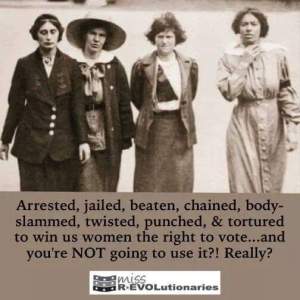 The 19th Amendment to the Constitution, guaranteeing women the right to vote, is ratified by Tennessee, giving it the two-thirds majority of state ratification necessary to make it the law of the land. The amendment was the culmination of more than 70 years of struggle by woman suffragists. Its two sections read simply: “The right of citizens of the United States to vote shall not be denied or abridged by the United States or by any State on account of sex” and “Congress shall have power to enforce this article by appropriate legislation.”


 Be a Seed for Change
You must be logged in to post a comment.