Category Archives: ~ politics petitions pollution and pop culture

Discrimination Beyond Marriage


By

Despite Victory At The Supreme Court, Discrimination Remains Beyond Marriage

It has been less than two weeks since the Supreme Court handed down its landmark decision in Obergefell v. Hodges, granting same-sex couples the freedom to marry nationwide. But despite our progress on marriage equality, LGBT discrimination persists. In 28 states, same-sex couples can now be legally married one day, and then legally fired from their jobs, evicted from their homes, denied credit, or refused services or goods simply because of their sexual orientation. Similarly 31 states lack explicit protections from discrimination based on gender identity in employment, housing, credit and public accommodations. Check out this infographic below for more details. To find out more about the need for nationwide, explicit protections from discrimination for LGBT Americans, check out the infographic below and this report from the Center for American Progress.

BOTTOM LINE: The Court’s decision was a huge step forward for LGBT rights, but the fight is not over. All Americans deserve the opportunity to live free from fear of discrimination.

The 14th amendment – Adopted on July 9,1868


The 14th Amendment to the United States Constitution was adopted on July 9, 1868, as one of the Reconstruction Amendments.

Often considered one of the most consequential amendments, it addressed citizenship rights and equal protection under the law and was proposed in response to issues related to former slaves following the American Civil War. The amendment was bitterly contested, particularly by the states of the defeated Confederacy, which were forced to ratify it in order to regain representation in Congress.

The amendment, particularly its first section, is one of the most litigated parts of the Constitution, forming the basis for landmark Supreme Court decisions such as Brown v. Board of Education regarding racial segregation, Roe v. Wade regarding abortion, Bush v. Gore regarding the 2000 presidential election, and Obergefell v. Hodges regarding same-sex marriage. The amendment limits the actions of all state and local officials, and also those acting on behalf of such officials.

Source: Wiki

if you see an error, please advise

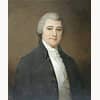
1797 1st US senator (William Blount of Tennessee) expelled by impeachment


William Blount (March 26, 1749 – March 21, 1800) was an American statesman and land speculator who signed the United States Constitution. He was a member of the North Carolina delegation at the Constitutional Convention of 1787 and led the efforts for North Carolina to ratify the Constitution in 1789 at Fayetteville.

He then served as the only governor of the Southwest Territory and played a leading role in helping the territory gain admission to the Union as the State of Tennessee.

He was selected as one of Tennessee’s initial United States Senators in 1796. Born to a prominent North Carolina family, Blount served as a paymaster during the American Revolutionary War. He was elected to the North Carolina legislature in 1781, where he remained in one role or another for most of the decade, except for two terms in the Continental Congress in 1782 and 1786.

Blount pushed efforts in the legislature to open the lands west of the Appalachians to settlement.

As governor of the Southwest Territory, he negotiated the Treaty of Holston in 1791, bringing thousands of acres of Indian lands under U.S. control. An aggressive land speculator, Blount gradually acquired millions of acres in Tennessee and the Trans-Appalachian West. His risky land investments left him in debt, and in the 1790s, he conspired with Great Britain to seize the Spanish-controlled Louisiana in the hope of boosting western land prices.

When the conspiracy was uncovered in 1797, he was expelled from the Senate and became the first federal official to face impeachment. However, Blount remained popular in Tennessee and served in the state senate during the last years of his life.

Source: wiki

if you see an error please comment

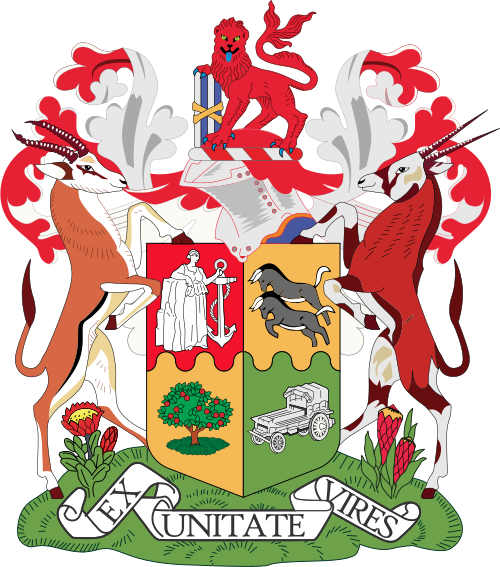
1949 South Africa’s Prohibition of Mixed Marriages Act commences, prohibiting marriage or a sexual relationship between White people and people of other races


See the source image
image from wiki

On this day in history, the South African government passed the Prohibition of Mixed Marriages Act (to go into effect as of July 8, 1949), making marriages between whites and non-whites illegal. Even though between 1946 and the enactment of this law, only 75 mixed marriages had been recorded, compared with some 28,000 white marriages, the government felt the possibility was a sufficient threat and affront to legislate against it. In 1950 the law was amended to ban even sexual relations between white and black South Africans.

To facilitate enforcement, the Population Registration Act of 1950 required South Africans to register as members of one of four racial groups as set out in the Population Registration Act of 1950. The four groups were White, Coloured, Indian and Black. Subsequent to the passing of this legislation, a number of people were arrested and charged for breaking its provisions.

The law also nullified interracial marriages of South Africans that occurred outside of the country.  

For the complete article and Source:

legallegacy.wordpress.com

1797 – First Impeachment of a U.S. Senator


For the first time in U.S. history, the House of Representatives exercises its constitutional power of impeachment and votes to charge Senator William Blount of Tennessee with “a high misdemeanor, entirely inconsistent with his public duty and trust as a Senator.”

In 1790, President George Washington appointed Blount, who had fought in the American Revolution, as governor of the “Territory South of the River Ohio,” now known as Tennessee. Although he was a successful territorial governor, personal financial problems led him to enter into a conspiracy with British officers to enlist frontiersmen and Cherokee Indians to assist the British in conquering parts of Spanish Florida and Louisiana. Before the conspiracy was uncovered, Blount presided over the Tennessee Constitutional Convention and in 1796 became the state’s first U.S. senator.

The plot was revealed in 1797, and on July 7 the House of Representatives voted to impeach Senator Blount. The next day, the Senate voted by a two-thirds majority to expel him from its ranks. On December 17, 1798, the Senate exercised its “sole power to try all impeachments,” as granted by the Constitution, and initiated a Senate trial against Blount.

Source: for the complete article history.com