Category Archives: ~ politics petitions pollution and pop culture

a letter to your member of Congress


Subject: Please Act to Protect Our Rights and Our Constitution

Dear [Representative/Senator] [Last Name],

I’m writing because I’m worried about the direction of our country. It feels like the Constitution is being pushed aside — especially the 14th and 15th Amendments — and that voting rights, equal protection, and basic benefits for the poor are being weakened.

I’m also concerned about unelected people speaking and acting like they have government authority. That’s not how our system is supposed to work.

I’m asking you to:

• Stand up for voting rights

• Protect SSI, SNAP, and other essential programs

• Push back against unelected influence in government • Make sure Congress is doing its job and apply constitutional checks and balances

I want to see my government working for the people again.

Thank you for listening.

[Your Name] [City, State]

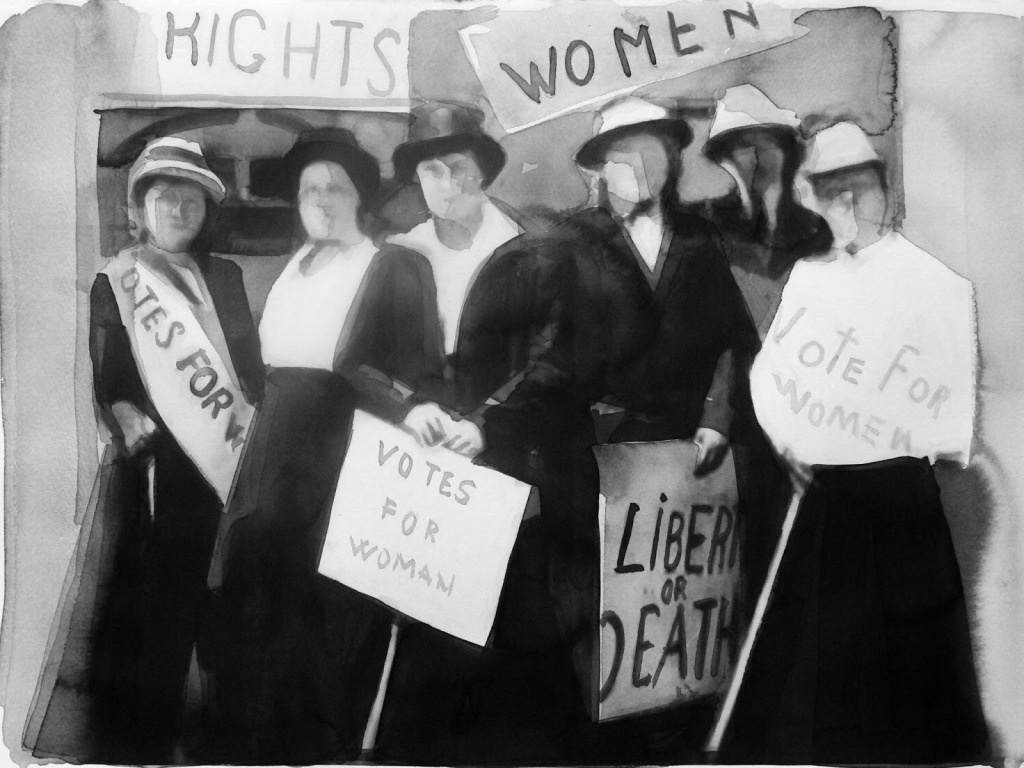
1919 – Congress passes the 19th Amendment, giving Women the right to vote


On May 21, 1919, the House again passes what would become the 19th Amendment, popularly known as the Susan B. Anthony Amendment.

The Senate follows suit on June 4 by a narrow margin (just over the two-thirds requirement), and it goes to the states to be ratified. Ratification requires 36 states, or three-quarters of those in the Union at the time.

The 19th Amendment to the U.S. Constitution, granting women the right to vote, was passed by Congress and sent to the states for ratification.

The women’s suffrage movement was founded in the mid-19th century by women who had become politically active through their work in the abolitionist and temperance movements.

In July 1848, 240 woman suffragists, including Elizabeth Cady Stanton and Lucretia Mott, met in Seneca Falls, New York, to assert the right of women to vote. Female enfranchisement was still largely opposed by most Americans, and the distraction of the North-South conflict and subsequent Civil War precluded further discussion. During the Reconstruction Era, the 15th Amendment was adopted, granting African American men the right to vote, but the Republican-dominated Congress failed to expand its progressive radicalism into the sphere of gender.

Source: history.com

June 4, 1989 ~ Tiananmen Square, Beijing


June 4, 1989 – The Chinese government ordered its troops to open fire on unarmed protesters in Tiananmen Square in Beijing. The protest had started on April 16 as about 1,000 students marched to mourn the death of Hu Yaobang, a pro-reform leader within the Chinese government. Despite government warnings, pro-reform and pro-democracy demonstrations continued for a month drawing ever-larger crowds of young people, eventually totaling over a million persons. On May 13, three thousand students began an eight-day hunger strike. The government imposed martial law on May 20 and brought in troops. On June 2, in their first clash with the People’s Army, demonstrators turned back an advance of unarmed troops. However, in the pre-dawn hours of June 4, the People’s Army, using tanks, machine-guns, clubs and tear gas, opened fire on the unarmed protesters. Armored personnel carriers then rolled into the square crushing students still sleeping in their tents. The Chinese government later claimed only 300 died in the attack. U.S. estimates put the toll at over 3,000. Following the massacre, over 1,600 demonstrators were rounded up and jailed, with 27 being executed.

1989~June 4 ~ Tiananmen Square


June 4, 1989 – The Chinese government ordered its troops to open fire on unarmed protesters in Tiananmen Square in Beijing. The protest had started on April 16 as about 1,000 students marched to mourn the death of Hu Yaobang, a pro-reform leader within the Chinese government. Despite government warnings, pro-reform and pro-democracy demonstrations continued for a month drawing ever-larger crowds of young people, eventually totaling over a million persons. On May 13, three thousand students began an eight-day hunger strike. The government imposed martial law on May 20 and brought in troops. On June 2, in their first clash with the People’s Army, demonstrators turned back an advance of unarmed troops. However, in the pre-dawn hours of June 4, the People’s Army, using tanks, machine-guns, clubs and tear gas, opened fire on the unarmed protesters. Armored personnel carriers then rolled into the square crushing students still sleeping in their tents. The Chinese government later claimed only 300 died in the attack. U.S. estimates put the toll at over 3,000. Following the massacre, over 1,600 demonstrators were rounded up and jailed, with 27 being executed.

a Solstice Quiz


Written By:Catherine Boeckmann, Executive Digital Editor and Master Gardener

Summer is Calling … image is from a Sprint

Summer Solstice Quiz

See how much you know about the summer solstice with these 10 questions!

  1. How often do solstices happen?
  2. Where does the word solstice come from (hint: Latin words)?
  3. Does the solstice occur at the same time or at different times across the world?
  4. Is the June solstice always on June 21?
  5. Is the June solstice the first day of summer in the Northern Hemisphere?
  6. On the solstice, is Earth the closest or farthest from the Sun?
  7. Does the earliest sunrise happen on the summer solstice?
  8. Is it the longest day of the year everywhere on Earth?
  9. On the summer solstice, the Sun reaches its northernmost position in the sky. What is this called? (Hint: Tropic of ?).
  10. Why isn’t the summer solstice the hottest day of the year?

Bob Berman will fill you in on things to know about the June solstice below (or skip and scroll to the bottom for the quiz answers)!