history… april 10


1741 – Frederick II of Prussia defeated Maria Theresa’s forces at Mollwitz and conquered Silesia.

1790 – The U.S. patent system was established when U.S. President George Washington signed the Patent Act of 1790 into law.

1809 – Austria declared war on France and its forces entered Bavaria.

1814 – Napoleon was defeated at the Battle of Toulouse by the British and the Spanish. The defeat led to his abdication and exile to Elba.

1825 – The first hotel opened in Hawaii.

1849 – Walter Hunt patented the safety pin. He sold the rights for $100.

1854 – The constitution of the Orange Free State in south Africa was proclaimed.

1862 – Union forces began the bombardment of Fort Pulaski in Georgia along the Tybee River.

1865 – During the American Civil War, at Appomattox, General Robert E. Lee issued his last order.

1866 – The American Society for Prevention of Cruelty to Animals (ASPCA) was incorporated.

1902 – South African Boers accepted British terms of surrender.

1912 – The Titanic set sail from Southampton, England.

1916 – The Professional Golfers Association (PGA) held its first championship tournament.

1919 – In Mexico, revolutionary leader Emiliano Zapata was killed by government troops.

1922 – The Genoa Conference opened. The meeting was used to discuss the reconstruction of Europe after World War I.

1925 – F. Scott Fitzgerald published “The Great Gatsby” for the first time.

1930 – The first synthetic rubber was produced.

1932 – Paul von Hindenburg was elected president of Germany with 19 million votes. Adolf Hitler came in second with 13 million votes.

1938 – Germany annexed Austria after Austrians had voted in a referundum to merge with Germany.

1941 – In World War II, U.S. troops occupied Greenland to prevent Nazi infiltration.

1941 – Ford Motor Co. became the last major automaker to recognize the United Auto Workers as the representative for its workers.

1944 – Russian troops recaptured Odessa from the Germans.

1945 – German Me 262 jet fighters shot down ten U.S. bombers near Berlin.

1953 – Warner Bros. released “House of Wax.” It was the first 3-D movie to be released by a major Hollywood studio.

1953 – Actress Hedy Lamarr became a U.S. citizen.

1959 – Japan’s Crown Prince Akihito married commoner Michiko Shoda.

1960 – The U.S. Senate passed the Civil Rights Bill.

1961 – Gary Player of South Africa became the first foreign golfer to win the Masters Golf Tournament in Augusta, Georgia.

1963 – 129 people died when the nuclear-powered submarine USS Thresher failed to surface off Cape Cod, MA.

1967 – The 13-day strike by the American Federation of Radio-TV Artists (AFTRA) came to an end less than two hours before the 39th Academy Awards presentation went on the air.

1968 – U.S. President Johnson replaced General Westmoreland with General Creighton Abrams in Vietnam.

1971 – The American table tennis team arrived in China. They were the first group of Americans officially allowed into China since the founding of the People Republic in 1949. The team had recieved the surprise invitation while in Japan for the 31st World Table Tennis Championship.

1972 – An earthquake in southern Iran killed more than 5,000 people.

1972 – The U.S. and the Soviet Union joined with 70 other nations in signing an agreement banning biological warfare.

1973 – In Switzerland, 108 people died when a plane crashed while attempting to land at Basel.

1974 – Yitzhak Rabin replaced resigning Israeli Prime Minister, Golda Meir. Meir resigned over differences within her Labor Party.

1980 – Spain and Britain agreed to reopen the border between Gibraltar and Spain. It had been closed since 1969.

1981 – Imprisoned IRA hunger striker Bobby Sands was elected to the British Parliament.

1981 – The maiden launch of the space shuttle Columbia was cancelled because of a computer malfunction.

1984 – The U.S. Senate condemned the CIA mining of Nicaraguan harbors.

1988 – On Wall Street, 48 million shares of Navistar International stock changed hands in a single-block trade. It was the largest transaction ever executed on the New York Stock Exchange.

1990 – Three European hostages kidnapped at sea in 1987 by Palestinian extremists were released in Beirut.

1992 – A bomb exploded in London’s financial district. The bomb, set off by the Irish Republican Army, killed three people and injured 91.

1992 – Outside Needles, CA, comedian Sam Kinison was killed when a pickup truck slammed into his car on a desert road between Los Angeles and Las Vegas.

1992 – In Los Angeles, financier Charles Keating Jr. was sentenced to nine years in prison for swindling investors when his Lincoln Savings and Loan collapsed. The convictions were later overturned.

1993 – South African Communist Party leader Chris Hani was assassinated.

1994 – NATO warplanes launched air strikes for the first time on Serb forces that were advancing on the Bosnian Muslim town of Gordazde. The area had been declared a U.N. safe area.

1996 – U.S. President Clinton vetoed a bill that would have outlawed a technique used to end pregnancies in their late stages.

1997 – Rod Steiger received a star on the Hollywood Walk of Fame.

1998 – Negotiators reached a peace accord on governing British ruled Northern Ireland. Britain’s direct rule was ended.

1999 – The http://www.June4.org web site was launched by Chinese dissidents and human rights activists to promote their campaign for democracy in China.

2000 – Monitors from the Organization for Security and Cooperation in Europe (OSCE) reported irregularities in the voting in Georgia’s presidential election on April 9. President Eduard Shevardnadze was reelected to a new five-year term.

2000 – Ken Griffey Jr. became the youngest player in baseball history to reach 400 home runs. He was 30 years, 141 days old.

2001 – Jane Swift took office as the first female governor of Massachusetts. She succeeded Paul Cellucci, who had resigned to become the U.S. ambassador to Canada.

2001 – The Netherlands legalized mercy killings and assisted suicide for patients with unbearable, terminal illness.

2002 – Former Israeli Prime Minister Benjamin Netanyahu spoke before the U.S. Senate as a representative of the Israeli government. He warned that suicide bombers would spread to the U.S. if Israel was not allowed to finish its military offensive in the West Bank. Netanyahu also cited the goals of dismantling the terror regime and expelling Arafat from the region, ridding the Palestinian territories of terrorist weapons and establishing “physical barriers” to protect Israelis from future Palestinian attacks.

2009 – In Fiji, President Josefa Iloilo suspended the nation’s Constitution, dismissed all judges and constitutional appointees and assumed all governance in the country.

on-this-day.com

1866 – Representative Henry Raymond – The Civil Rights Bill passed! President Andrew Johnson’s veto overridden.


Historical Highlights
The Civil Rights Bill of 1866
April 09, 1866
The Civil Rights Bill of 1866
Image courtesy of Library of Congress
A New York state politician for more than a decade, Representative Henry Raymond served only one term in the House of Representatives

April 09, 1866

On this date, the House overrode President Andrew Johnson’s veto of the Civil Rights Bill of 1866 with near unanimous Republican support, 122 to 41, marking the first time Congress legislated upon civil rights.

First introduced by Senate Judiciary Chairman Lyman Trumbull of Illinois, the bill mandated that “all persons born in the United States,” with the exception of American Indians, were “hereby declared to be citizens of the United States.” The legislation granted all citizens the “full and equal benefit of all laws and proceedings for the security of person and property.” To Radical Republicans, who believed the federal government had a role in shaping a multiracial society in the postwar South, the measure seemed the next logical step after the ratification of the 13th Amendment on December 18, 1865 (which abolished slavery).

Representative Henry Raymond of New York noted that the legislation was “one of the most important bills ever presented to this House for its action.” President Johnson disagreed with the level of federal intervention implied by the legislation, calling it “another step, or rather a stride, toward centralization and the concentration of all legislative power in the national Government” in his veto message.

The Civil Rights Bill of 1866 proved to be the opening salvo of the showdown between the 39th Congress (1865–1867) and the President over the future of the former Confederacy and African-American civil rights.

history.house.gov

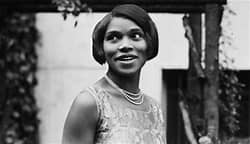
1939 – Marian Anderson sings on the steps of the Lincoln Memorial


At the height of the civil rights movement in 1963, these famous words were spoken from the steps of the Lincoln Memorial in Washington, D.C.: “I have a dream that one day this nation will rise up and live out the true meaning of its creed: ‘We hold these truths to be self-evident, that all men are created equal.’” But Martin Luther King Jr., was not the first to raise his voice from those steps with a message of hope for America’s future. That distinction belongs to the world-famous contralto Marian Anderson, whose performance at the Lincoln Memorial on April 9, 1939, made a compelling case for the transformative power of music, and in a place typically associated with the power of words.

Source: history.com

history… April 9


0193 – In the Balkans, the distinguished soldier Septimius Seversus was proclaimed emperor by the army in Illyricum.

0715 – Constantine ended his reign as Catholic Pope.

1241 – In the Battle of Liegnitz, Mongol armies defeated the Poles and the Germans.

1454 – The city states of Venice, Milan and Florence signed a peace agreement at Lodi, Italy.

1667 – In Paris, The first public art exhibition was held at the Palais-Royale.

1682 – Robert La Salle claimed the lower Mississippi River and all lands that touch it for France.

1770 – Captain James Cook discovered Botany Bay on the Australian continent.

1833 – Peterborough, NH, opened the first municipally supported public library in the United States.

1838 – The National Galley opened in London.

1865 – At Appomattox Court House, Virginia, General Robert E. Lee surrendered his Confederate Army to Union General Ulysses S. Grant in the parlor of Wilmer McClean’s home. Grant allowed Rebel officers to keep their sidearms and permitted soldiers to keep their horses and mules. Though there were still Confederate armies in the field, the war was officially over. The four years of fighting had killed 360,000 Union troops and 260,000 Confederate troops.

1866 – The Civil Rights Bill passed over U.S. President Andrew Johnson‘s veto.

1867 – The U.S. Senate ratified the treaty with Russia that purchased the territory of Alaska by one vote.

1869 – The Hudson Bay Company ceded its territory to Canada.

1870 – The American Anti-Slavery Society was dissolved.

1872 – S.R. Percy received a patent for dried milk.

1900 – British forces routed the Boers at Kroonstadt, South Africa.

1905 – The first aerial ferry bridge went into operation in Duluth, MN.

1912 – The first exhibition baseball game was held at Fenway Park in Boston. The game was between Red Sox and Harvard.

1913 – The Brooklyn Dodgers’ Ebbets Field opened.

1914 – In London, the first full-color film, “The World, The Flesh & the Devil,” was shown.

1916 – The German army launched it’s third offensive during the Battle of Verdun.

1917 – The Battle of Arras began as Canadian troops began a massive assault on Vimy Ridge.

1918 – Latvia proclaimed its independence.

1921 – The Russo-Polish conflict ended with signing of Riga Treaty.

1928 – Mae West made her debut on Broadway in the production of “Diamond Lil.”

1940 – Germany invaded Norway and Denmark.

1942 – In the Battle of Bataan, American and Filipino forces were overwhelmed by the Japanese Army.

1945 – National Football League officials decreed that it was mandatory for football players to wear socks in all league games.

1945 – At Bari, Italy, the Liberty exploded and killed 360 people. The ship was carrying aerial bombs.

1947 – 169 people were killed and 1,300 were injured by a series of tornadoes in TexasOklahoma and Kansas.

1950 – Bob Hope made his first television appearance on “Star-Spangled Review” on NBC-TV.

1957 – The Suez Canal was cleared for all shipping.

1959 – NASA announced the selection of America’s first seven astronauts.

1963 – Winston Churchill became the first honorary U.S. citizen.

1965 – “TIME” magazine featured a cover with the entire “Peanuts” comic gang.

1965 – The Houston Astrodome held its first baseball game.

1967 – The first Boeing 737 was rolled out for use.

1968 – Murdered civil rights leader Martin Luther King Jr., was buried.

1976 – The U.S. and Russia agreed on the size of nuclear tests for peaceful use.

1981 – The U.S. Submarine George Washington struck and sunk a small Japanese freighter in the East China Sea. The Nissho Maru’s captain and first mate died.

1983 – The space shuttle Challenger concluded it first flight.

1984 – Nicaragua asked the World Court to declare U.S. support for guerilla raids illegal.

1985 – Japanese Premier Nakasone urged Japanese people to buy foreign products.

1986 – It was announced that Patrick Duffy’s character on the TV show Dallas would be returning after being killed off.

1987 – Dikye Baggett became the first person to undergo corrective surgery for Parkinson’s disease.

1988 – The U.S. imposed economic sanctions on Panama.

1989 – 16 civilians were killed during rioting in Soviet Georgia.

1989 – Hundreds of thousands marched past the White House in support of the right to abortion.

1991 – Georgia voted to secede from the U.S.S.R.

1992 – Former Panamanian ruler Manuel Noriega was convicted in Miami, FL, of eight drug and racketeering charges.

1998 – The National Prisoner of War Museum opened in Andersonville, GA, at the site of an infamous Civil War camp.

1998 – More than 150 Muslims died in stampede in Mecca, Saudi Arabia, on last day of the haj pilgrimage.

1999 – In Djibouti, Ismail Omar Guelleh of the ruling Popular Rally for Progress and the Front for the Restoration of Unity and Democracy was elected president.

1999 – In Niger, President Ibrahim Baré Maïnassara was assassinated. Daouda Malam Wanke was designated president two days later.

2000 – CBS-TV aired “Failsafe.” It was the first live full-length show to by aired by CBS in 39 years.

on-this-day.com

Suzan-Lori Parks ~ 2002 – Suzan-Lori Parks became the first African-American woman to win a Pulitzer Prize


2002 – Suzan-Lori Parks became the first African-American woman to win a Pulitzer Prize for drama for her play “Topdog/Underdog.”Suzan-Lori Parks

born 1963-

By: Mariana Brandman, NWHM Predoctoral Fellow in Women’s History | 2020-2022

Though a high school teacher discouraged her from writing because of her poor spelling, Suzan-Lori Parks went on to become one of the most successful playwrights in the United States. The first African-American woman to win the Pulitzer Prize for Drama (2002) and a pioneer of historically conscious and linguistically complex theater, her work is now taught at drama schools across the country. 

Parks was born on May 10, 1963 at Fort Knox in Kentucky to Donald and Francis McMillian Parks. Her father was a colonel in the United States Army, and Parks spent her early childhood in Odessa, Texas while her father served in Vietnam. The distinctive dialect she soaked in during her years in West Texas would influence her dialogue when she began writing for the stage. In 1974, Parks moved with her family to Germany where her father was stationed. She and her siblings attended local schools and became fluent in German. An early love for stories from mythology and folklore made Parks dream of becoming a writer, but after her high school teacher dissuaded her, she turned her focus to science. 

Source: womenshistory.com

politics,pollution,petitions,pop culture & purses