State-Sponsored Discrimination


The Progress Report Banner

Pursuing LGBT Equality In The Wake Of Orlando

In the early hours of Sunday morning, a shooter entered Pulse, a gay nightclub in Orlando and killed 49 people. But in the immediate aftermath of the shooting, as politicians offered thoughts and prayers for the victims, most neglected to mention the fact that vast majority of the victims were LGBT people of color. Since then, some lawmakers have even gone as far as to deny the fact that the LGBT community was targeted at all.

By refusing to acknowledge that Sunday’s shooting was an act of hate meant to terrorize the LGBT community, these lawmakers are refusing to acknowledge that Orlando was far from an isolated act of violence or discrimination against LGBT Americans. LGBT Americans experience violence at a disturbing rate. And the fact that the majority of lives taken in yesterday’s attack were LGBT people of color gives devastating weight to the fact that LGBT people of color are most likely among LGBT people generally to experience violence.

Not only are LGBT Americans more likely to experience violence, a majority of states still lack explicit legal protections against discrimination on the basis of sexual orientation and gender identity. That means that an LGBT survivor of Orlando could still be at risk of being fired from her job, refused service from a business, denied housing, or more just because of who she is.

And it’s not just that LGBT Americans don’t have the same basic protections as every other American. Conservative-led states have been able to pass harmful laws, often in the name of religious freedom, that amount to state-sponsored discrimination against the LGBT community. Below are just a few examples of bias against LGBT Americans being reflected in state laws:

  • North Carolina: North Carolina’s HB2, which erased all existing discrimination protections for the LGBT community within the state and prevents transgender people from using public bathrooms that correspond with their gender identity. The law was passed in an emergency session after Charlotte, NC adopted an LGBT-inclusive non-discrimination ordinance. Two other states—Tennessee and Arkansas—have passed similar laws preempting local non-discrimination ordinances.
  • Mississippi: This Spring, Mississippi passed a bill that allows for discrimination against the LGBT community. The bill exclusively protects people with anti-LGBT religious beliefs and it lists in detail the kind of discriminatory situations it would enable. In a piece of good news: earlier this week Jackson, Mississippi unanimously passednondiscrimination protections in opposition to the state law.
  • Indiana: Last year, Indiana Governor Mike Pence, under the guise of protecting religious liberty, passed a so-called “Religious Freedom Restoration Act” (RFRA) far broader than the one currently in federal law. In effect, Indiana’s RFRA gives the government, businesses, and individuals a license to discriminate against LGBT Hoosiers along with other residents.

Those are just three of the most prominent recent instances of state-sponsored discrimination against the LGBT community that highlight the need for both federal and state comprehensive nondiscrimination protections. The Equality Act, which was introduced in Congress last summer would do just that. It’s on Congress to act to prevent discrimination against LGBT people and address the epidemic of gun violence in our country.

BOTTOM LINE: Orlando served as a devastating reminder of the fear and danger that follows far too many LGBT Americans. While it may be impossible to prevent every act of hate, we can strive to eliminate hate and bias from our legal system. No American should have to live in fear of being fired from their jobs, refused service at a restaurant, or kicked out of their homes just because of who they are. It’s time for comprehensive nondiscrimination laws.

a message from Gerald Torres


Gerald Torres
June 3, 2016
A Message from our
Board Chairman
Gerald Torres
“We are at a crossroads. There was a certain euphoria we felt when the climate agreement was signed on Earth Day. But the reality after that signing is actually dawning on us. Because what we need in order to make that agreement a reality is to reach beyond the commitments people made when they signed it and engage everyone in the struggle against climate disruption to bring the kind of policy changes we need to address climate change. Earth Day has always been focused on that specific problem.”
Learn More →

Billion Acts of Green


Around Earth Day Network
Earth Day 2017
Earth Day 2017
Billion Acts of Green
Together we’ve reached 2,023,283,812 Acts of Green. Help us reach 3 billion!
Learn More →
Earth Day Network
June 17, 2016
Did you know?
The “father” of Earth Day, former Senator Gaylord Nelson, would have been 100 years old this year. After witnessing the ravages of the massive 1969 Santa Barbara oil spill, Nelson came up with the idea for a national day to focus on the environment. Honor your father and give back to the environment by making a donation to EDN today!
DONATE NOW →

NextGen Climate acts politically to prevent climate disaster and promote prosperity for every American.


A CLEAN ENERGY ECONOMY THAT IS FAIR AND JUST FOR ALL

We know the facts: A clean energy economy will create millions of jobs while fighting climate change and saving Americans money. And as we reduce our reliance on fossil fuels, we must ensure that this transition is fair and just for all.

President Obama knows we can’t abandon the workers and communities whose hard work has powered our nation’s economy for the last century. His administration’s POWER+ program will help coal workers transition to high-quality clean energy jobs, invest in health and retirement benefits for workers, and accelerate cleanup of hazardous abandoned mines.

By signing this pledge, I support President Obama’s POWER+ program to fight for the communities who have done so much for our country.

Public Health Emergency Weekly Report


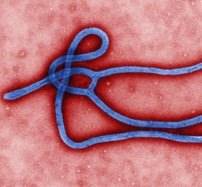
HHS selects regional Ebola treatment center for southwestern U.S.

HHS chose the final piece in its network of Ebola treatment centers. Now, each of HHS’s ten regions has a designated treatment center that can handle Ebola and other special pathogens. This regional network of facilities can treat severe, highly infectious diseases and is vital to improving national health security.  Learn More >>

Ebola

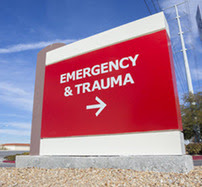
From the ASPR Blog: When active shooters invade safe spaces, having a plan matters

This week, we saw the deadliest mass shooting in the U.S. history. When many people in the community talk about Pulse, the gay night club that was the scene of the attack, they say the same thing: “this was a safe place.  The same can be said for hospitals:  we think of them as safe places. Yet according to a study in the Annals of Emergency Medicine, there were 154 hospital-related shootings from 2000-2011. So what steps can hospitals take to keep people safe when an active shooter strikes?  Find out >>

Emergency room sign

Psychological First Aid

This week, the nation was stunned by the shooting at the Pulse nightclub in Orlando, Florida.  Learning to help people cope with a disaster before one strikes means you are more prepared to act when people need support. Psychological First Aid is an evidence-informed approach for helping children, adolescents, adults, and families in the aftermath of disaster and terrorism. By taking the time to learn about Psychological First Aid now, you might be ready to help those around you when disaster strikes. Learn More >>

adult and child holding hands

Post-Mass Shooting Programs and Resources Overview

Many communities are trying to recover from the tragic shooting in Orlando, Florida.  ASPR Technical Resources, Assistance Center, and Information Exchange (TRACIE) has gathered information on programs and  resources that are available to help communities cope with the disaster and answer tough questions as they recover.  Learn More >>

Latino man on the phone

Guidelines for Travelers Visiting Friends and Family in Areas with Chikungunya, Dengue, or Zika

When you visit friends and family in areas with chikungunya, dengue, or Zika, you may be at risk of getting those diseases. When you are staying with friends and family, it can be easy to forget to take precautions, especially if you are staying for a long time.  But taking steps to protect yourself from mosquito-borne diseases is critical to your health.  Learn more about these diseases, how to protect yourself from them, and who is most at risk from an infection.  Learn More >>

Women on vacation

politics,pollution,petitions,pop culture & purses