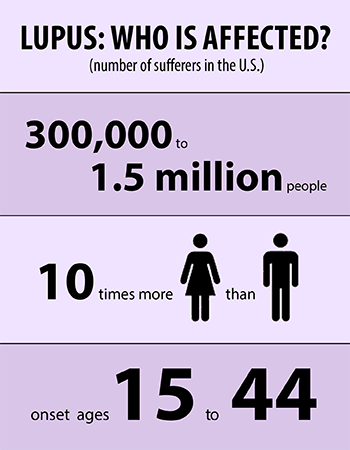
May is National Lupus Awareness Month, a good time to think about lupus and the challenges it presents to patients. Learn about this chronic, autoimmune disease and the promise of future therapies.
Read the Consumer Update to learn more.


Read the Consumer Update to learn more.
|
||
|
by Aaron Severn
Director, Grassroots and Federal Legislative Affairs
American Wind Energy Association
 |
I wanted to loop you in on the latest updates on American wind power. The American Wind Energy Association (AWEA) recently released its Annual Market Report for 2013, as well as its First Quarter 2014 Market Report.
So what’s new?
The U.S. wind industry did not install much wind power capacity in 2013, reflecting the impact of the policy uncertainty that the wind industry faced throughout 2012.
 |
The numbers were small:
In total, though, wind power is making impressive contributions to the U.S. electricity supply:
 |
As you may recall, Congress allowed the PTC to expire at the end of 2012. Then, our legislators extended the credit in early January 2013, allowing projects that started construction by the end of 2013 to qualify for the credit (rather than requiring that they be operational by the end of 2013, as required in the past). The uncertainty throughout 2012 caused wind project development to come to a halt, and manufacturing orders to cease, resulting in little development and significant job loss as noted above.
How’s this year looking so far?
The PTC extension in 2013 allowed developers to put plans back in motion. As a result, 2014 is off to a great start:
 |
Is there a catch?
Yes – federal policy for the wind energy industry is still uncertain. The PTC expired again, at the end of 2013. Without an extension, the wind industry is looking at the prospect of near-term downturns in project development, and job layoffs as well.
The Senate Finance Committee has acted to extend the PTC, and a credit that developers can choose instead of the PTC, the investment tax credit (ITC). They extended these provisions as part of the EXPIRE Act in early April. The bill moves to the Senate floor for consideration next, and we will keep you updated on that front. It will be important to weigh in with your Senators about the importance of extending the PTC through the EXPIRE Act.
Thanks, as always, for your support. I encourage you to check out these resources if you’re interested in more information:
Sincerely,
Aaron
Aaron Severn
Director, Grassroots and Federal Legislative Affairs
American Wind Energy Association

As of November 2nd 2015, President Obama signed, and thereby enacted into law, the Bipartisan Budget Act (BBA) of 2015. Subtitle C, Section 831 of this bill includes significant changes to social security benefits. These changes include the phase out of filing strategies referred to as “unintended loopholes” created previously by Congress back in 2000.
Who Do The New Rules Apply To?
Regardless of when you plan to retire, these changes can affect the retirement plan you’ve developed for yourself and your family, as the act prohibits the use of strategies traditionally utilized to maximize benefits. If you did not turn 62 by the end of 2015, these Social Security changes will affect you. Here are the two main changes coming down the pipeline:
1. Restrictions on spousal benefits. Before the BBA, if a beneficiary reached full retirement age, they were able to restrict their application to spousal benefits only so that their retirement benefits could continue to accrue.
However, under the new law, this will no longer be an option. Your spouse cannot collect their benefits unless you collect yours at the same time. No matter what age you are when you apply for benefits, you will have to take the highest benefit you’re eligible for, whether it’s a retirement or spousal benefit.
2. Collecting a retroactive lump sum is no longer an option. Before the BBA, you could suspend your benefits and reverse that decision later to claim a retroactive lump sum that dated back to the day you filed your application. Under the BBA, once you reach your full retirement age, the option to collect a retroactive lump sum is no longer available.
Who Will NOT Be Impacted By The BBA?
The following people will not be impacted by these new regulations:
Additional Frequently Asked Questions
The answer to all of these questions is if you thought you’d be able to choose, the BBA has changed that law so that now you will receive the highest amount, regardless of which benefit it is.
Bottom Line
There are numerous questions surrounding the Bipartisan Budget Act and how it may impact your Social Security options. If you are worried about how the new laws are going to affect you, please be sure to speak to a qualified financial advisor that can assist you. For additional information, download this free e-book, “Last Chance: Social Security’s Big Change.”
Follow Wes on Twitter, Facebook and at Wesmoss.com
For valuable financial tools and information on how to set yourself up for a happy retirement, check these out:
Social Security Optimizer, Retirement Calculator, 401k Allocator, Money & Happiness Quiz, Is It Time For An Economic Shutdown? and You Can Retire Sooner Than You Think
Disclosure: This information is provided to you as a resource for informational purposes only. It is being presented without consideration of the investment objectives, risk tolerance or financial circumstances of any specific investor and might not be suitable for all investors. Past performance is not indicative of future results. Investing involves risk including the possible loss of principal. This information is not intended to, and should not, form a primary basis for any investment decision that you may make. Always consult your own legal, tax or investment advisor before making any investment/tax/estate/financial planning considerations or decisions.


You must be logged in to post a comment.