1912 ~ Plant Quarantine Act


USDA Logo

The Plant Quarantine Act was the first federal law to give APHIS authority over plant pest and disease prevention, laying the foundation for today’s comprehensive plant health regulations.

While the original 1912 Act is no longer the standalone statute, its core principles remain embedded in APHIS’s Plant Protection and Quarantine (PPQ) program, which:

  • Regulates plant imports and exports.
  • Implements quarantine measures.
  • Works internationally to prevent pest entry and promote safe trade

Sources: onthisday.com, usda.gov

govinfo.gov

Be it enacted by the Senate and House of Representatives of the
United States of America in Congress assembled,
SECTION 1. ø7 U.S.C. 154, 155¿ IMPORTATION OF NURSERY STOCK.

(a) IN GENERAL.—No person shall—
(1) import or enter into the United States any nursery
stock; or
(2) accept delivery of any nursery stock moving from any
foreign country into or through the United States;
unless the movement is made in accordance with such regulations
as the Secretary of Agriculture may promulgate to prevent dissemi
nation into the United States of plant pests, plant diseases, or in
sect pests.
(b) REGULATIONS.—The regulations promulgated by the Sec
retary of Agriculture to implement subsection (a) may include regu
lations requiring that nursery stock moving into or through the
United States—
(1) be accompanied by a permit issued by the Secretary of
Agriculture prior to the movement of the nursery stock;
(2) be accompanied by a certificate of inspection issued, in
a manner and form required by the Secretary of Agriculture,
by appropriate officials of the country or State from which the
nursery stock is to be moved;
(3) be grown under postentry quarantine conditions by or
under the supervision of the Secretary of Agriculture for the
1This Act must be cited as the Act of August 20, 1912 (37 Stat. 315, chapter 308; 7 U.S.C.
151 et seq.). It is only commonly known as the ‘‘Plant Quarantine Act’’ or the ‘‘Nursery Stock
Quarantine Act’’.
1
September 18, 2019
As Amended Through P.L. 106-170, Enacted December 17, 1999

1866 – The National Labor Union in the U.S. advocated an eight-hour workday


August 20, 1866: An eight-hour workday wasn’t in the cards in 1866

Throughout the 1800s, employees worked anywhere from 10 to 16 hours, six days a week, depending on the industry. Working conditions were often unsafe, and regulations governing these things were few and far between. Employee welfare and work-life balance weren’t exactly top-of-mind concerns. Yet.

Are you working eight hours in the United States today? If so, thank the (now-defunct) National Labor Union (NLU), founded on this day in Baltimore, Maryland, when the heads of the Coachmakers, Machinists and Blacksmiths, and Ironmoulders unions met. It was the first national labor organization in the country, and the first time that societal change was put forth as a solution for workers. Its members included farmers, laborers, and reformers, and delegates included representatives from local unions and labor bodies.

Source: history.com for the complete article

on this day 8/20 1964 – A $1 billion anti-poverty measure was signed by U.S. President Lyndon B. Johnson


Today in History~ 1191 2,000 Muslim prisoners killed after the Siege of Acre, reportedly on the orders of Crusader King Richard I, during the Third Crusade

1593 The Massacre of the Innocents: Prominent citizens in Timbuktu are rounded up, and some are killed by invading Moroccan forces, who then pillage the city, ending its golden age

1741 – Danish navigator Vitus Jonas Bering discovered Alaska.

1862 – Horace Greeley’s “The Prayer of Twenty Millions” was published.

1866 – The National Labor Union in the U.S. advocated an eight-hour workday. 

1866 – It was formally declared by U.S. President Andrew Johnson that the American Civil War was over. The fighting had stopped months earlier.

1882 – Tchaikovsky’s “1812 Overture” debuted in Moscow.

1885 – “The Mikado”, by Gilbert and Sullivan, opened at the Fifth Avenue Theatre in New York City.

1914 – German forces occupied Brussels, Belgium, during World War I.

1918 – The British opened its Western Front offensive during World War I.

1923 – The first American dirigible, the “Shenandoah,” was launched in Lakehurst, NJ. The ship began its maiden voyage from the same location on September 4.

1939 – The National Bowling Association was founded in Detroit, MI. It was the first bowling association in the U.S. for African-Americans.

1940 – France fell to the Germans during World War II.

1945 – Tommy Brown (Brooklyn Dodgers) became the youngest player to hit a home run in a major league ball game. Brown was 17 years, 8 months and 14 days old.

1948 – Cleveland’s Indians and Chicago’s White Sox played at Municipal Stadium in Cleveland before a crowd of 78,382 people. It was the largest crowd to see a nighttime major-league baseball game to date.

1953 – It was announced by the Soviet Union that they had detonated a hydrogen bomb.

1955 – In Morocco and Algeria hundreds of people were killed in anti-French rioting.

1955 – Colonel Horace A. Hanes, a U.S. Air Force pilot, flew to an altitude of 40,000 feet. Hanes reached a speed of 822.135 miles per hour in a Super Sabrejet.

1964 – A $1 billion anti-poverty measure was signed by U.S. President Lyndon B. Johnson

1967 – The New York Times reported about a noise reduction system for album and tape recording developed by technicians R. and D.W. Dolby. Elektra Record’s subsidiary, Checkmate Records became the first label to use the new Dolby process in its recordings.

1968 – The Soviet Union and other Warsaw Pact nations began invading Czechoslovakia to crush the “Prague Spring” liberalization.

1977 – Voyager 2 was launched by the United States. The spacecraft was carrying a 12 inch copper phonograph record containing greetings in dozens of languages, samples of music and sounds of nature.

1985 – The original Xerox 914 copier was presented to the Smithsonian Institute’s Museum of American History. Chester Carlson was the man who invented the machine.

1991 – A rally of more that 100,000 people occurred outside the Russian parliament building to protest the coup that removed Gorbachev from power.

1997 – NATO troops seized six police stations in Banja Luka that had been held by troops controlled by former Bosnian Serb President Radovan Karadzic.

1998 – Canada’s Supreme Court announced that Quebec could not secede without the federal government’s consent.

1998 – U.S. military forces attacked a terrorist camp in Afghanistan and a chemical plant in Sudan. Both targets were chosen for cruise missile strikes due to their connection with Osama bin Laden.

1998 – The U.N. Security Council extended trade sanctions against Iraq for blocking arms inspections.

2010 – The last American combat brigade exited Iraq after more than seven years after the U.S.-led invasion began.

Source: history.com, internet, onthisday, today in history

1791 – Benjamin Banneker writes to Thomas Jefferson, urging justice for African Americans


On August 19, 1791, the accomplished American mathematician and astronomer Benjamin Banneker pens a letter to then-Secretary of State Thomas Jefferson. Jefferson corresponds prolifically with luminaries from around the world, but Banneker is unique among them: the son of a free Black American woman and a formerly enslaved African man from Guinea, Banneker criticizes Jefferson’s hypocritical stance on slavery in respectful but unambiguous terms, using Jefferson’s own words to make his case for the abolition of slavery.

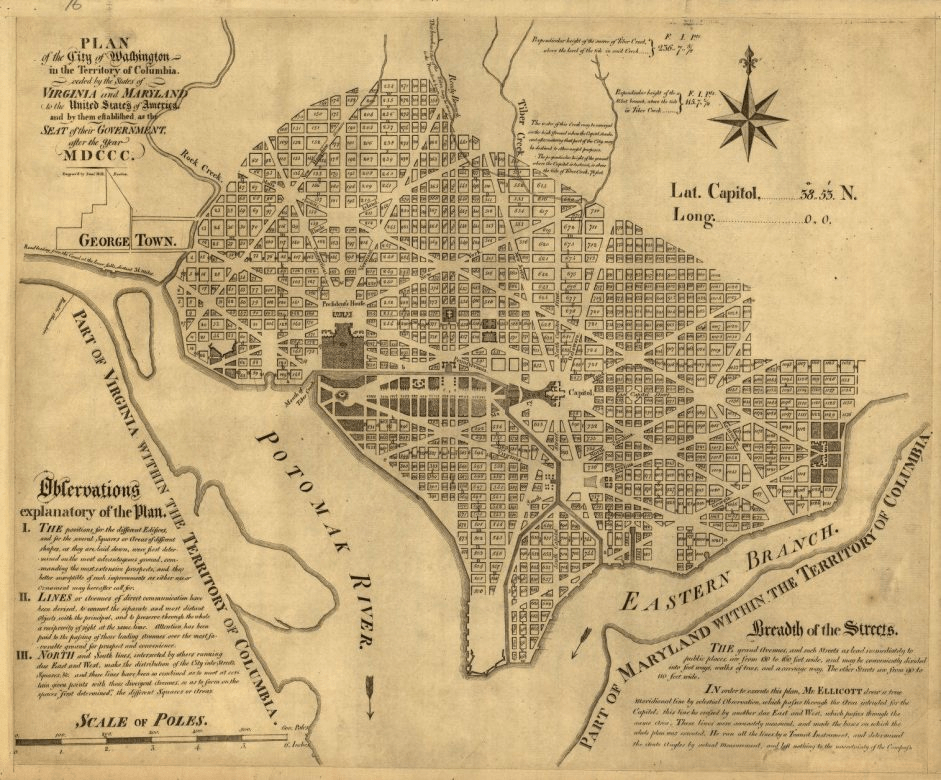
Banneker himself was born free in what is now Ellicott City, Maryland, and was encouraged in his studies of astronomy and mathematics by the Ellicotts, a Quaker family who owned a mill and much of the land in the area. Predicting a solar eclipse and constructing a functioning clock that struck on the hour were among his early achievements. His prowess caught the eye of Jefferson after Major Andrew Ellicott chose Banneker to assist him in surveying the original boundaries of what would become the District of Columbia. Banneker also compiled several ephemerides (a type of astronomical chart) and almanacs.

On August 19, 1791, the accomplished American mathematician and astronomer Benjamin Banneker pens a letter to then-Secretary of State Thomas Jefferson. Jefferson corresponds prolifically with luminaries from around the world, but Banneker is unique among them: the son of a free Black American woman and a formerly enslaved African man from Guinea, Banneker criticizes Jefferson’s hypocritical stance on slavery in respectful but unambiguous terms, using Jefferson’s own words to make his case for the abolition of slavery.

Banneker himself was born free in what is now Ellicott City, Maryland, and was encouraged in his studies of astronomy and mathematics by the Ellicotts, a Quaker family who owned a mill and much of the land in the area. Predicting a solar eclipse and constructing a functioning clock that struck on the hour were among his early achievements. His prowess caught the eye of Jefferson after Major Andrew Ellicott chose Banneker to assist him in surveying the original boundaries of what would become the District of Columbia. Banneker also compiled several ephemerides (a type of astronomical chart) and almanacs.

For the complete article: history.com

READ MORE: Why Thomas Jefferson’s Anti-Slavery Passage Was Removed from the Declaration of Independence

Citation Information

Article Title

Benjamin Banneker writes to Thomas Jefferson, urging justice for African Americans

AuthorHistory.com Editors

Website Name

HISTORY

URL

https://www.history.com/this-day-in-history/benjamin-banneker-writes-letter-to-thomas-jefferson-slavery

Access Date

August 19, 2022

Publisher

A&E Television Networks

Last Updated

August 17, 2022

Original Published Date

July 20, 2021

On this day


WethePeople

1953   CIA-assisted coup overthrows government of Iran

The Iranian military, with the support and financial assistance of the United States government, overthrows the government of Premier Mohammed Mosaddeq and reinstates the Shah of Iran. Iran remained a solid Cold War ally of the United States until a revolution ended the Shah’s rule in 1979. Mosaddeq came to…

politics,pollution,petitions,pop culture & purses