Fredensborg was a frigate built in Copenhagen in 1752 or even 1753. She was called Cron Prindz Christian following prince who was to be king Christian VII associated with Denmark and Norway, in addition to was fitted out as being a slave ship. After a unsuccessful stint in this triangular trade, her in business area was limited for the Caribbean, where she sailed as a broker until 1756. The dispatch was then purchased by simply another Danish company and renamed Fredensborg after one of the Danish-Norwegian trading stations on the African Gold Coast. On 1 12 , 1768 Fredensborg sank in a very storm off Tromoy throughout Arendal, Norway.
The destroy was discovered by divers in September 1974. One was Leif Svalesen who later has worked to be able to document the ship.
Written By: The Editors of Encyclopaedia Britannica
See Article History
Antarctic Treaty, (Dec. 1, 1959), an agreement signed by 12 nations, in which the Antarctic continent was made a demilitarized zone to be preserved for scientific research. The treaty resulted from a conference in Washington, D.C., attended by representatives of Argentina, Australia, Belgium, Britain, Chile, France, Japan, New Zealand, Norway, South Africa, the United States, and the Soviet Union. Later other nations acceded to the treaty.
The treaty did not deny or support national claims to territorial sovereignty in Antarctica, but it did forbid all contracting parties from establishing military bases, carrying on military maneuvers, testing any weapons (including nuclear weapons), or disposing of radioactive wastes in the area. The treaty encouraged the freedom of scientific investigation and the exchange of scientific information and personnel in Antarctica. The treaty bound its members indefinitely, with a review of its provisions possible after 30 years. A protocol to the 1959 treaty was signed in 1991. The agreement banned mineral and oil exploration for 50 years and included regulations for the protection of the Antarctic environment.
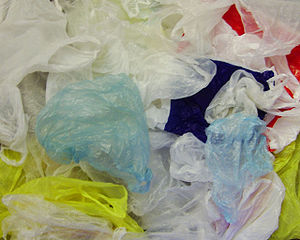
I heard that Alameda County, California, voted to implement its “ban” on single-use bags, not regulate them, sometime around January 2013. It just so happens that at or around the same time, things were being finalized in different parts of our beautiful state of Washington. It has been a long struggle for Washington State to move towards an ordinance that would “ban” bags at retail outlets due to big MONEY in the plastics industry.
However, in late December, word was that the City Council’s Zero Waste Initiative to “ban” plastic bags in a limited and graduated way was realized after four years. In 2008, the Council tried to ban Styrofoam, and though they tried to regulate plastic bags, they got serious pushback from the industry, which spent about $1.4 million, collected signatures with rumors of leaving out some info, and then had the ordinance repealed. It was nice to read about Council Bill 117345, a bill to protect the Puget Sound, our marine life, Wildlife, and our Environment in general. About twelve states and up to twenty nations joined in this effort. The Seattle City Council voted 9-0 to implement the ban on plastic carry-out bags.
Finally, after years of pulling out my recycled bags for the checker to shove my groceries into, Washington State is joining the global movement to protect marine wildlife; the ordinance will take effect on July 1, 2012. It may be a cliché, but this ordinance is a change we can all believe in. I have to say, at first, in my experiences with retail folks, they all seemed a little annoyed at having to fight with the reusable bags. The word from most Checkers back in the day was that plastic is just easier. Yes, the first reusable bags were too small, the dye ran, the material was unforgiving, but as folks found better ways to make them, the cost came down, and more people bought them, including me.
Now, the bags not only cost a little bit more, but they are also bigger, more stylish, last forever are definitely more flexible, and a highly recommended investment. The move to switch from plastic to” bring your own bag” will be difficult for some at first. Studies are showing that birds, sea turtles, and other wildlife eat the bags, and obviously, some are made with toxic chemicals. The time for a behavior change is now. We all know change is tough, but here we are in the 21st Century, and that floating garbage patch /circle discovered in the 50′s is only getting bigger. There will always be pushback from the plastics industry, their supporters, as well as environmental activists, who all feel the government does not go far enough, and they may be right, but we have to start somewhere.
It baffles me how complicated people have made the effort to clean up our environment; we all know the need to reduce TRASH as a whole starts at home, although Seattle is the 15th largest metropolitan area in the nation, only 13% of plastic bags used are recycled.
We owe it to our next generation…
Grocery stores, as well as food service outlets, owe it to consumers and the environment.
It’s 2025, and plastic is everywhere! We all see our family members still have them, we see folks walking out of grocery stores with double-bagged plastic holding their groceries … sigh! There are the tiny, medium ones that are cute, but these gigantic ones with brand names and amazing graphics are made out of something different. Anyway, it’s like we’ve gone back to square one with no progress in sight and even less in the news about the current impact on Marine and Wildlife… which, ok includes those boats trying to watch, and or sneak up on our marine life, only some are leaking fuel, making so much noise, others know they are dumping fuel and don’t get me started on some of the customers dumping trash! The trash people leave at local and National Parks is offensive … last, if each state only knew and put more importance on keeping the environment clean, it would change how people live… the significant change should also allow for higher wages … our environment sets the tone for illnesses
** Food To Live, of Brooklyn, NY, is recalling its packaged Organic Moringa Leaf Powder (dried Moringa oleifera) and its Organic Supergreens Powder Mix distributed under the Food To Live brand that are in the following sizes:
ORGANIC SUPERGREENS POWDER MIX in 8 ounce, 1 pound, 1.5 pound, 3 pound, 6 pound, and 12 pound bags.
ORGANIC MORINGA LEAF POWDER, in 8 ounce, 1 pound, 2 pound, 4 pound, 8 pound, 16 pound, and 44 pound bags. “Organic Moringa Leaf Powder” and “Organic Supergreens Powder Mix” are packaged in plastic stand-up pouches of various sizes (ranging from 8 ounces to 44 pounds). Only packages with lot codes starting with “SO-69006” and ending with “SO-72558” (printed directly onto the back of the bag) are affected. No other Food To Live products and lots are involved in this recall. Consumers with questions can call Food To Live at (718) 717-1029 during business hours (8:00 AM EST to 5:00 PM EST, Monday through Friday, or email recall@foodtolive.com for assistance. Media inquiries or requests for more information should be directed to the contact person listed above.
** Face Rock Creamery LLC of Bandon, OR is voluntarily recalling 16/6oz. units of Vampire Slayer Garlic Cheddar with a use-by date of 11/04/26 The affected Vampire Slayer Cheddar Block with a use-by date of 11/04/26 was sold exclusively at Face RockFlagship store located at 680 2nd St. SE, Bandon, Oregon.Approximately 16 units were sold between November 10th at 3:30pm PT and November 13th, 2025 at 3:30pm PT.
If you purchased the 6oz. Vampire Slayer Garlic Cheddar, UPC 8 512222 00547 8, during the specified dates above, please either destroy the product or return it to our retail location for a full refund. Customers with questions about this recall should call 541-347-3223 between 9am-4pm PT, Monday-Friday, or send email to info@facerockcreamery.com
** The recalled Organic Moringa Leaf Powder was sold nationwide through the company’s website, africaimports.com. The affected product is packaged in 1-kilogram boxes labeled “Organic Moringa Leaf Powder.” Photos of the affected product are attached to this notice to assist customers in identifying the product. All Organic Moringa Leaf Powder purchased after 06/05/2025 is included in this recall. For additional information, please contact Wayne Kiltz, President of Africa Imports, at 201-457-1995 x236 or africa@africaimports.com.
** Moonlight Companies is voluntarily recalling California-grown conventional yellow and white peaches because they have the potential to be contaminated with Listeria monocytogenes, an organism that can cause serious and sometimes fatal infections in young children, frail or elderly people, and others with weakened immune systems. This recall is being conducted because Listeria monocytogenes was identified in the packing facility environment. The recalled peaches were sold at retail stores nationwide between September 16, 2025 and October 29, 2025. The peaches were either sold as individual pieces of fruit bearing PLU stickers or as multi-packs. This recall does not include packages or PLU stickers with the words “Washington” and/or “Organic.” Consumers with questions can contact 855-215-5017, Monday – Friday from 8 am – 5 pm Eastern Time.
** Vanguard Enterprises, LLC. DBA Bedrock MFG of Boise, Idaho is recalling Monarch Premium Kratom brand Bali Gold, Red Bali, Green Maeng Da, and White Elephant powder because product has the potential to be contaminated with Salmonella, an organism which can cause serious and sometimes fatal infections in young children, frail or elderly people, and others with weakened immune systems. Consumers who have the affected Monarch Premium Kratom powder at home are urged not to consume products and contact support@bedrockmfg.co for a full refund.
Consumers with questions may contact the company at 888-347-5088, Monday-Friday, 8am-4pm GMT.
Monarch Premium Kratom – Product Lot Summary
Product Name
UPC Code
Lot Code
Monarch Premium Kratom, Bali Gold, 4oz powder (112g)
851006008428
020123PA3F-T
Monarch Premium Kratom, Bali Gold, 8oz powder (224g)
706970483712
020123PA3F-T
Monarch Premium Kratom, Green Maeng Da, 4oz powder (112g)
851006008466
020123PA3F-G
Monarch Premium Kratom, Green Maeng Da, 0.5oz powder (14g)
851006008770
020123PA3F-G
Monarch Premium Kratom, Green Maeng Da, 2oz powder (56g)
851006008459
020123PA3F-G
Monarch Premium Kratom, Red Bali, 4oz powder (112g)
851006008442
020123PA3F-R
Monarch Premium Kratom, Red Bali, 8oz powder (224g)
706970483859
020123PA3F-R
Monarch Premium Kratom, Red Bali, 2oz powder (56g)
851006008435
020123PA3F-R
Monarch Premium Kratom, White Elephant, 4oz powder (112g)
851006008480
020123PA3F-W
Monarch Premium Kratom, White Elephant, 0.5oz powder (14g)
851006008756
020123PA3F-W
Monarch Premium Kratom, White Elephant, 8oz powder (224g)
During a White House ceremony attended by James S. Brady, President Bill Clintonsigns the Brady handgun-control bill into law. The law requires a prospective handgun buyer to wait five business days while the authorities check on his or her background, during which time the sale is approved or prohibited based on an established set of criteria.
In 1981, James Brady, who served as press secretary for President Ronald Reagan, was shot in the head by John Hinckley, Jr., during an attempt on President Reagan’s life outside a hotel in Washington, D.C. Reagan himself was shot in his left lung but recovered and returned to the White House within two weeks. Brady, the most seriously injured in the attack, was momentarily pronounced dead at the hospital but survived and began an impressive recovery from his debilitating brain injury.
During the 1980s, Brady became a leading proponent of gun-control legislation and in 1987 succeeded in getting a bill introduced into Congress.
The Brady Bill, as it became known, was opposed by many congressmen, who, in reference to the Second Amendment to the U.S. Constitution, questioned the constitutionality of regulating the ownership of arms.
In 1993, with the support of President Bill Clinton, an advocate of gun control, the Brady Bill became law.

.jpg/600px-Fredensborg_(1753_ship).jpg)



 March 2012,


You must be logged in to post a comment.