 0476 – Romulus Augustulus, the last emperor of the western Roman Empire, was deposed when Odoacer proclaimed himself King of Italy.
1609 – English navigator Henry Hudson began exploring the island of Manhattan.
1781 – Los Angeles, CA, was founded by Spanish settlers. The original name was “El Pueblo de Nuestra Senora La Reina de Los Angeles de Porciuncula,” which translates as “The Town of the Queen of Angels.”
1825 – New York Governor Clinton ceremoniously emptied a barrel of Lake Erie water in the Atlantic Ocean to consummate the “Marriage of the Waters” of the Great Lakes and the Atlantic.
1833 – Barney Flaherty answered an ad in “The New York Sun” and became the first newsboy/paperboy at the age of 10.
1882 – Thomas Edison’s Pearl Street electric power station began operations in New York City. It was the first display of a practical electrical lighting system.
1885 – The Exchange Buffet opened in New York City. It was the first self-service cafeteria in the U.S.
1886 – Geronimo, and the Apache Indians he led, surrendered in Skeleton Canyon in Arizona to Gen. Nelson Miles.
1888 – George Eastman registered the name “Kodak” and patented his roll-film camera. The camera took 100 exposures per roll.
1894 – A strike in New York City by 12,000 tailors took place to protest sweatshops.
1899 – An 8.3 earthquake hit Yakutat Bar, AK.
1917 – The American expeditionary force in France suffered its first fatalities in World War I.
1921 – The first police broadcast was made by radio station WIL in St. Louis, MO.
1923 – The first American dirigible, the “Shenandoah,” began its maiden voyage in Lakehurst, NJ.
1944 – During World War II, British troops entered the city of Antwerp, Belgium.
1949 – The longest pro tennis match in history was played when Pancho Gonzales and Ted Schroeder played 67 games in five sets.
1951 – The first live, coast-to-coast TV broadcast took place in the U.S. The event took place in San Francisco, CA, from the Japanese Peace Treaty Conference. It was seen all the way to New York City, NY.
1953 – The New York Yankees became the first baseball team to win five consecutive American League championships.
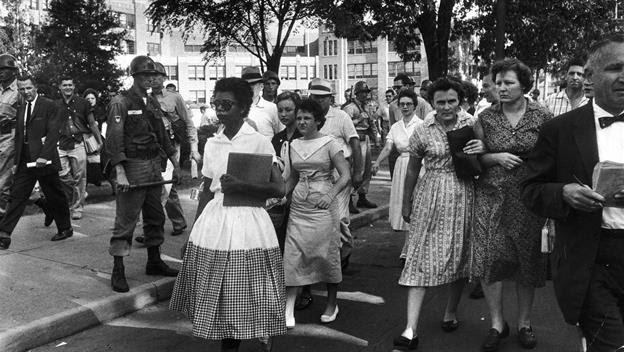
1957 – The Arkansas National Guard was ordered by Governor Orval Faubus to keep nine black students from going into Little Rock’s Central High School.
1957 – The Ford Motor Company began selling the Edsel. The car was so unpopular that it was taken off the market only two years.
1967 – “Gilligan’s Island” aired for the last time on CBS-TV. It ran for 98 shows.
1967 – Michigan Gov. George Romney said during a TV interview that he had undergone “brainwashing” by U.S. officials while visiting Vietnam in 1965.
1971 – “The Lawrence Welk Show” was seen for the last time on ABC-TV.
1972 – Swimmer Mark Spitz captured his seventh Olympic gold medal in the 400-meter medley relay event at Munich, Germany. Spitz was the first Olympian to win seven gold medals.
1981 – The Soviet Union began war games with about 100,000 troops on the Polish border.
1983 – U.S. officials announced that there had been an American plane, used for reconnaissance, in the vicinity of the Korean Air Lines flight that was shot down.
1986 – South African security forces halted a mass funeral for the victims of the riot in Soweto.
1989 – A reconnaissance satellite was released by the Air Force’s Titan Three rocket. The Titan Three set over 200 satellites into space between 1964 and 1989.
1993 – Pope John Paul II started his first visit to the former Soviet Union.
1993 – Jim Abbott (New York Yankees) pitched a no-hitter. Abbott had been born without a right hand.
1995 – The Fourth World Conference on Women was opened in Beijing. There were over 4,750 delegates from 181 countries in attendance.
1998 – In Mexico, bankers stopped approving personal loans and mortgages.
1998 – The International Monetary Fund approved a $257 million loan for the Ukraine.
1998 – Google was incorporated as a privately held company.
1999 – The United Nations announced that the residents of East Timor had overwhelmingly voted for independence from Indonesia in a referendum held on August 30. In Dili, pro-Indonesian militias attacked independence supporters, burned buildings, blew up bridges and destroyed telecommunication facilities.
2002 – The Oakland Athletics won their AL-record 20th straight game. The A’s gave up an 11-run lead during the game and then won the game on a Scott Hatteberg home run in the bottom of the ninth inning.
2003 – Keegan Reilly, 22, became the first parapalegic climber to reach the peak of Japan’s Mount Fuji.






 Richard Wright 9/4/1908 – 11/28/1960


You must be logged in to post a comment.