July 28, 1868: Following its ratification by the necessary three-quarters of U.S. states, the 14th Amendment, granting citizenship to all persons born or naturalized in the United States—including formerly enslaved people—is officially adopted into the U.S. Constitution. Secretary of State William Seward issues a proclamation certifying the amendment.
Two years after the Civil War, the Reconstruction Acts of 1867 divided the South into five military districts, where new state governments, based on universal manhood suffrage, were to be established. Thus began the period known as Radical Reconstruction, which saw the 14th Amendment, which had been passed by Congress in 1866, ratified in July 1868. The amendment resolved pre-Civil War questions of African American citizenship by stating that “all persons born or naturalized in the United States…are citizens of the United States and of the state in which they reside.” The amendment then reaffirmed the privileges and rights of all citizens, and granted all these citizens the “equal protection of the laws.”
Two men at a Washington state park stumble on a skull, part of a skeleton later found to be over 9,000 years old—one of the oldest in N. America. “Kennewick Man” is reburied 21 years later, in Native American rites.
Kennewick Man is the name generally given to the skeletal remains of a prehistoric Paleoamerican man found on a bank of the Columbia River in Kennewick, Washington, United States, on July 28, 1996.
It is one of the most complete ancient skeletons ever found.
On July 28, 1968, several hundred Native Americans in Minneapolis, Minnesota attend a meeting, organized by community activists George Mitchell, Dennis Banks and Clyde Bellecourt, to discuss issues facing their local Indigenous community. This event marks the start of the American Indian Movement, or AIM, a primary proponent of the Red Power movement. Inspired by the gains of the Black civil rights movement, AIM sought to address the extreme suffering of Indigenous people and create a path for self-determination and empowerment.
Several major protest actions put AIM and its causes in the national spotlight. In 1969, AIM participated in a 19-month occupation of Alcatraz Island to reclaim the federal land for Indigenous people. In November 1972, it organized the “Trail of Broken Treaties,” a cross-country caravan to Washington to meet with lawmakers and demand that the government fulfill all its treaty commitments. The action culminated in an occupation of the Bureau of Indian Affairs offices that catapulted AIM to national attention. And in 1973, an occupation at Wounded Knee, South Dakota, to protest government corruption resulted in a 71-day standoff and ultimately, a deadly battle with law enforcement. Such activities not only put AIM in the national spotlight, but also squarely in the sights of the FBI and the CIA, which were working covertly to discredit and disrupt domestic political organizations.
Following its ratification by the necessary three-quarters of U.S. states, the 14th Amendment, guaranteeing to African Americans citizenship and all its privileges, is officially adopted into the U.S. Constitution.Two years after the Civil War, the Reconstruction Acts of 1867 divided the South into five military districts, where new state governments, based on universal manhood suffrage, were to be established.Thus, began the period known as Radical Reconstruction, which saw the 14th Amendment, which had been passed by Congress in 1866, ratified in July 1868. The amendment resolved pre-Civil War questions of African American citizenship by stating that “all persons born or naturalized in the United States…are citizens of the United States and of the state in which they reside.”The amendment then reaffirmed the privileges and rights of all citizens, and granted all these citizens the “equal protection of the laws.” In the decades after its adoption, the equal protection clause was cited by a number of African American activists who argued that racial segregation denied them the equal protection of law.However, in 1896, the U.S. Supreme Court ruled in Plessy v. Ferguson that states could constitutionally provide segregated facilities for African Americans, so long as they were equal to those afforded white persons. The Plessy v. Ferguson decision, which announced federal toleration of the so-called “separate but equal” doctrine, was eventually used to justify segregating all public facilities, including railroad cars, restaurants, hospitals, and schools.However, “colored” facilities were never equal to their white counterparts, and African Americans suffered through decades of debilitating discrimination in the South and elsewhere.In 1954, Plessy v. Ferguson was finally struck down by the Supreme Court in its ruling in Brown v. Board of Education of Topeka.history.com

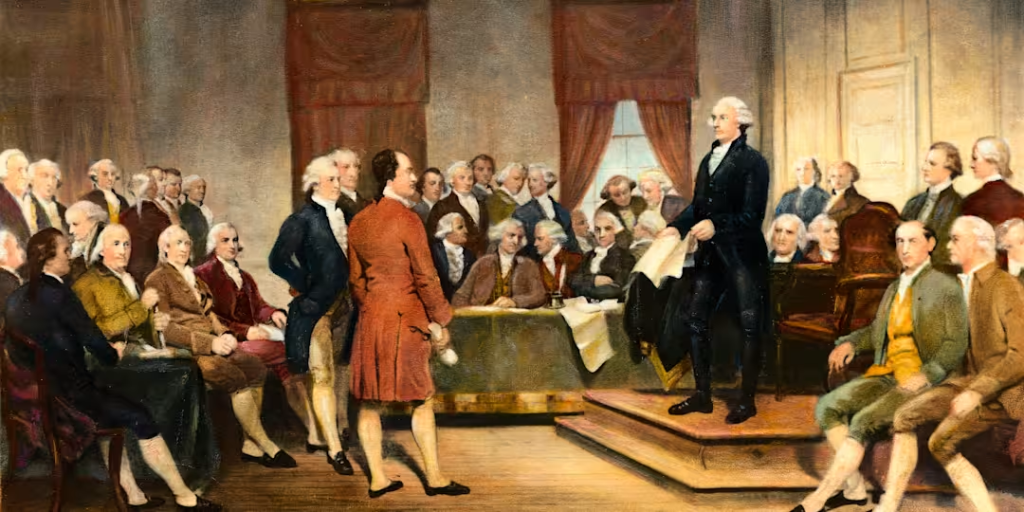






 Following its ratification by the necessary three-quarters of U.S. states, the 14th Amendment, guaranteeing to African Americans citizenship and all its privileges, is officially adopted into the U.S. Constitution.
 Be a Seed for Change
You must be logged in to post a comment.