

Women’s history Month –
 just a few listed below …
1992 – Carol Moseley-Braun became the first African-American woman U.S. senator.
1992- Dr Mae Carol Jemison First African American Woman in Space
Maya Angelou ...known for her enormous output of poetry, essays, autobiography and theater, she captured the essence of what it meant to be a woman, an African American, and a sensitive and forward-thinking citizen of this nation and the world.
Mary Jackson retired from the NASA Langley Research Center in 1985 as an Aeronautical Engineer after 34 years. NASA pioneer
Janet Emerson Bashen is the first African-American woman to receive a patent for developing LinkLine software, an equal opportunity program which tracks EEO investigations from the beginning to the end stages.
Dorothy Vaughan, head of the NACA’s segregated West Area Computing Unit, Vaughan was both a respected mathematician and NASA’s first African-American manager. NASA pioneer
Elizabeth Peratrovich was a civil rights leader ahead of her time. Her activism led to passage of the Alaska Territory’s first anti-discrimination act (1945).
Katherine Johnson, said her greatest contribution to space exploration was the calculations that helped synch Project Apollo’s Lunar Lander with the moon-orbiting Command and Service Module. She also worked on the Space Shuttle and the Earth Resources Satellite, and authored or coauthored 26 research reports
Elizabeth Peratrovich An Alaska Native of the Tlingit nation grew up in a small Alaska village and was orphaned at a young age. She and her husband Roy, also of the Tlingit nation, had three children and moved to Juneau seeking more opportunities.
2017 Aramis Ayala:The 1st Black Woman state Attorney said no to death penalty
1925 Nellie Tayloe Ross of Wyoming is sworn in as the first woman governor in the United States.
MAMÁ TINGÓ Florinda Soriano Munoz, known as Mamá Tingó, was born on November 8, 1921, in the Dominican Republic. A peasant farmer, or campesino, she fought for the land rights of fellow campesinos as a member of the Federation of Christian Agrarian Leagues, a group of over 350 who stood for the right to their lands for decades after unjust redistribution. Though elderly and illiterate, she was an effective and passionate leader.
Shonda Rhimes TV writer and producer and her many complex Black women heroines
Pat Maginnis was the first abortion activist in U.S. history. From distributing leaflets on a street corner to an illegal underground railroad of abortion services, she is an unsung hero in the fight for reproductive justice.
Pauli Murray was a civil rights and women’s rights activist decades ahead of her time. Facing lifelong discrimination based on her race and sex, she persisted and became an accomplished attorney, author, activist, academic, and spiritual leader.
LILI’UOKALANI The first and last queen of Hawai’i, Lili’uokalani was born Lydia Lili’uloloku Walania Wewehi Kamaka’eha on September 2, 1838. When King Kamehameha V died in 1874, Lydia’s brother was selected to rule. Three years later she was named heir to the throne. Her name changed from Lydia to Lili’uokalani to represent her royal lineage. Her brother ruled until his death in 1891, when she took his place.
Dr. Olivia Hooker, 1st Black Woman in U.S. Coast Guard
1925 Nellie Tayloe Ross of Wyoming is sworn in as the first woman governor in the United States.
Margaret Dunkle played a key role in implementing Title IX, the law that transformed education for women and girls, from athletic fields to graduate schools. Her groundbreaking 1974 report documenting discrimination against female athletes became the blueprint for the Title IX regulations on athletics.
| 1942 | Julia Flikke of the Nurse Corps becomes the first woman colonel in the U.S. Army. |
| 1918 | Women are scheduled to march in the St. Patrick’s Day Parade in New York due to a shortage of men. |
Saru Jayaraman Attorney responded to the 9/11 tragedy by organizing displaced World Trade Center workers and co-founding ROC United. A national labor leader and researcher, she helps restaurant workers mobilize with employers and consumers for better wages and working conditions through policy change, workplace justice campaigns, cooperatively-owned restaurants, and more.
Share this:

Karen Davis… 20yr sentence for a nonviolent crime, serves 17yrs before clemency is implemented
Women’s History Month
Congratulations to Karen Davis who is NOW FREE thanks to the First Step Act.
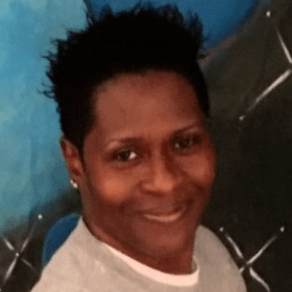
DOB: 5/12/71
Age: 48
Race: Black
Marital Status: Married.
Children : Seven children, Timothy Benford, Nathan Benford, Willie Davis, Jr., Isadore Davis, Deonte Davis, Jazmine Davis, Brandon Davis.
Raised: Tennessee
Tried: Tennessee
I was exposed to the drug dealing business in my early teen years by my uncle, and then in my early twenties, drawn in further by my husband. I would sometimes transport drugs to complete their deals, but I was not an enthusiastic participant in this way of life. By the time I was 25 years old my husband was sent to prison for 3 years and left me at home with 5 boys to support. I started back dealing along with other family members, but I never acted as an introduction for anyone and I did not make the kind of sales or money that I was indicted for. My uncle was the first who eventually implicated me by calling at home multiple times telling me to take a plea and asking me to admit to things I knew were lies. I was not informed enough to know to take a plea and then it was withdrawn and I went to a speedy trial. I was portrayed as the leader, which is very far from being accurate. I received enhancements because of my priors and I was not granted a downward departure because I would not admit to lies that my uncle and cousin stated. Today, those who were the organizers and big dealers are out free while I am still incarcerated and paying my penalty.
Karen believes she deserves clemency because:

I acknowledge the mistakes I made, I have worked hard to change my way of thinking and acting and I need to return home for the sake of my 7 children. I have learned some valuable lessons while I have been in prison and I want to share my experiences and knowledge with others to help them avoid making the same mistakes I made. I have grown and evolved into a much more humble and diversified person with a passion to go out into society to make a difference in this world especially for those who may feel lost and wander this earth “not all who wander are always lost”. I have a fire that burns inside me to rebuild my life with the sincerest intentions to be the best I can be for my family, friends and those who may need someone who has a caring heart.
Future Plans: My future life plans are to obtain a job in a technology call center environment. I worked and learned quite a bit while working in the UNICOR call center for 8 years. I was an operator for several years and then worked my way up to a clerk position. I would also like to continue with my education using government grants that may be available. I would like to be located in the Atlanta area and I want to be part of the EPIC family and assist with the work of CAN-DO to help others who are still incarcerated. I trust that God will reveal to me His Will for my life and use me in ways that He sees fit.
Charge(s): Conspiracy to Distribute and Possess with Intent to Distribute 50 grams or more of cocaine. 21 USC 843: Use of a Telephone to Facilitate Commission of a Conspiracy to distribute Cocaine and Marijuana.
Health Status: High blood pressure
Sentence: 20 years
Date Sentence Started: 7/22/2003
Years served: 17 years
Release Date: 10/22/2020. (NOW FREE)
Will Live: Atlanta, GA
Charge(s): Conspiracy to Distribute and Possess with Intent to Distribute 50 grams or more of cocaine. 21 USC 843: Use of a Telephone to Facilitate Commission of a Conspiracy to distribute Cocaine and Marijuana.
Priors: Possession of marijuana, simple assault, selling or delivering cocaine.
Prison Conduct: Clear record.
Supporters: CAN-DO Foundation, The LOHM, FEDFAM4LIFE, my family, my church community, many friends.
Address:
FCI PEKIN, SATELLITE CAMP
P.O. BOX 5000
PEKIN, IL 61555
Prison Accomplishments: Karen mentors new women who enter the prison, participated in the Cancer Walk, and organizes sports events. She consistently receives “outstanding work evaluation” at UNICOR.
Courses Completed: Completed the 40 hour drug program, Reach 1-Teach 1, AIDS awareness, Wellness, psychology, business education, budgeting and money management courses.
Source: candoclemency.com
Share this:

on this day 3/16 1964 – U.S. President Lyndon B. Johnson submitted a $1 billion war on Poverty program to Congress.
 1190 – The Crusaders began the massacre of Jews in York, England.
1521 – Portuguese navigator Ferdinand Magellan reached the Philippines. He was killed the next month by natives.
1527 – The Emperor Babur defeated the Rajputs at the Battle of Kanvaha in India.
1621 – Samoset walked into the settlement of Plymouth Colony, later Plymouth, MA. Samoset was a native from the Monhegan tribe in Maine who spoke English.
1802 – The U.S. Congress established the West Point Military Academy in New York.
1836 – The Republic of Texas approved a constitution.
1850 – The novel “The Scarlet Letter,” by Nathaniel Hawthorne, was published for the first time.
1871 – The State of Delaware enacted the first fertilizer law.
1882 – The U.S. Senate approved a treaty allowing the United States to join the Red Cross.
1883 – Susan Hayhurst graduated from the Philadelphia College of Pharmacy. She was the first woman pharmacy graduate.
1907 – The world’s largest cruiser, the British Invincible was completed at Glasgow.
1908 – China released the Japanese steamship Tatsu Maru.
1909 – Cuba suffered its first revolt only six weeks after the inauguration of Gomez.
1913 – The 15,000-ton battleship Pennsylvania was launched at Newport News, VA.
1915 – The Federal Trade Commission began operation.
1917 – Russian Czar Nicholas II abdicated his throne.
1918 – Tallulah Bankhead made her New York acting debut with a role in “The Squab Farm.”
1926 – Physicist Robert H. Goddard launched the first liquid-fuel rocket.
1928 – The U.S. planned to send 1,000 more Marines to Nicaragua.
1935 – Adolf Hitler ordered a German rearmament and violated the Versailles Treaty.
1939 – Germany occupied the rest of Czechoslovakia.
1945 – Iwo Jima was declared secure by the Allies. However, small pockets of Japanese resistance still existed.
1946 – Algerian nationalist leader Ferhat Abbas was freed after spending a year in jail.
1946 – India called British Premier Attlee’s independence off contradictory and a propaganda move.
1947 – Martial law was withdrawn in Tel Aviv.
1950 – Congress voted to remove federal taxes on oleomargarine.
1964 – Paul Hornung and Alex Karras were reinstated to the NFL after an 11-month suspension for betting on football games.
1964 – U.S. President Lyndon B. Johnson submitted a $1 billion war on poverty program to Congress.
1968 – U.S. troops in Vietnam destroyed a village consisting mostly of women and children. The event is known as the My-Lai massacre.
1978 – Italian politician Aldo Moro was kidnapped by left-wing urban guerrillas. Moro was later murdered by the group.
1982 – Russia announced they would halt their deployment of new nuclear missiles in Western Europe.
1984 – Mozambique and South Africa signed a pact banning the support for one another’s internal enemies.
1984 – William Buckley, the CIA station chief in Beirut, was kidnapped by gunmen. He died while in captivity.
1985 – “A Chorus Line” played its 4,000 performance.
1985 – Terry Anderson, an Associated Press newsman, was taken hostage in Beirut. He was released in December 4, 1991.
1987 – “Bostonia” magazine printed an English translation of Albert Einstein’s last high school report card.
1988 – Indictments were issued for Lt. Colonel Oliver North, Vice Admiral John Poindexter of the National Security Council, and two others for their involvement in the Iran-Contra affair.
1988 – Mickey Thompson and his wife Trudy were shot to death in their driveway. Thompson, known as the “Speed King,” set nearly 500 auto speed endurance records including being the first person to travel more than 400 mph on land.
1989 – In the U.S.S.R., the Central Committee approved Gorbachev’s agrarian reform plan.
1989 – The Soviet Communist Party’s Central Committee approved large-scale agricultural reforms and elected the party’s 100 members to the Congress of People’s Deputies.
1993 – In France, ostrich meat was officially declared fit for human consumption.
1994 – Tonya Harding pled guilty in Portland, OR, to conspiracy to hinder prosecution for covering up the attack on her skating rival Nancy Kerrigan. She was fined $100,000. She was also banned from amateur figure skating.
1994 – Russia agreed to phase out production of weapons-grade plutonium.
1995 – NASA astronaut Norman Thagard became the first American to visit the Russian space station Mir.
1998 – Rwanda began mass trials for 1994 genocide with 125,000 suspects for 500,000 murders.
1999 – The 20 members of the European Union’s European Commission announced their resignations amid allegations of corruption and financial mismanagement.
Share this:

Wisconsin…

For Black folks, collective bargaining means equality in the workplace.
Now, this basic right is under attack in Wisconsin — and across the country.
Support the workers who are fighting back.
There was once a time in this country when Black folks would work 12-hour days for less money than their White co-workers who worked only eight. The key to leveling the playing field for Black workers was collective bargaining — and now Republicans around the country are attacking this basic right.
The right of workers to negotiate as a group for better wages, benefits and working conditions has been important for everyone, but it’s been especially meaningful for Black Americans. Before we could collectively bargain, we had little control over our working conditions and no protection from racial discrimination in the workplace.
That’s why it’s critical that we stand with the workers in Wisconsin, Ohio, New Jersey, and everywhere else collective bargaining is coming under attack. Please join us in sending a message of support to all those fighting this battle on the front lines. It takes only a moment:
http://act.colorofchange.org/go/778?akid=1932.1174326.mkhRBj&t=3
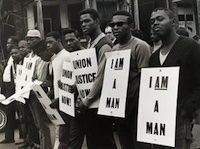
In Memphis in 1968, Black sanitation workers worked in dangerous, inhumane conditions under abusive White supervisors for little pay. After two workers were crushed to death by a malfunctioning city garbage truck, the city’s Black sanitation workers sought to unionize. They demanded better wages, safer working conditions, and the right to collectively bargain for these things. They took to the streets of Memphis bearing signs that read, “I am a man.” During the strike, police attacked and jailed Black workers for peaceful protest. Months later, Dr. Martin Luther King, Jr., who said that “all labor has dignity,” joined these workers on the front lines. He was assassinated while leading the effort to win collective bargaining rights for these workers.1
Collective bargaining has helped Black workers vulnerable to workplace discrimination win needed on-the-job protections. “Black workers have an interest in unions as all workers do, because they give them power in the labor market to improve working conditions, and allow them due process and fairness on the job,” says labor scholar Stephen Pitts. “Any sort of institution that allows due process procedures and reduces arbitrary behavior in decision making is positive for black folks.”2
More than just protection from discrimination, collective bargaining has won Black workers fairness in pay and advancement, access to health insurance and retirement savings, and basic worker safety protections.3 This is especially true for Black public-sector workers. Twenty-five percent of all Black college graduates work in the public sector, and government work is second only to health and education services in concentration of Black workers.4 As scholar Michael Honey points out, “The one toe-hold many black and minority workers (and especially women among them) still have in the economy is in unionized public employment.5
Now, Republicans in state legislatures around the country are attacking public employees’ collective bargaining rights. The battle began in Wisconsin, when Republican Governor Scott Walker offered a bill that would strip public employees of their collective bargaining rights. In response, thousands of regular people filled the state capitol in protest — with many camping out there for days or even weeks. To stop the bill and force Republicans to negotiate, 14 Democratic state senators left Wisconsin, (preventing Republicans from voting on the bill). Despite the overwhelming public opposition to the bill, Republicans were eventually able to pass the law using procedural tricks late last week.6 But the protesters in Wisconsin drew the world’s attention to this fight, and exposed the attack on collective bargaining rights as hugely unpopular and politically motivated. And right now they’re working to hold Republicans accountable in powerful ways.
Wisconsin is one of many states where collective bargaining is under attack. Republicans in Ohio just passed a law similar to Wisconsin’s, and states from Indiana to New jersey are prepared to follow suit.
Republicans say that their effort to roll back collective bargaining rights is necessary to curb spending in times of economic hardship, but that just doesn’t square with the facts. In no state are public employees’ salaries or pension benefits a major cause of their current financial problems.7 The Republican efforts are part of a strategy to attack public employees’ unions, which overwhelmingly give money to Democratic interests. Without the strength of the unions, many expect that President Obama and other Democrats will have a tougher time raising funds for the 2012 election.8
DePaul University law professor Terry Smith says that, “Dismantling bargaining rights will disproportionately affect African Americans.”9 This right has played a vitally important role in Black Americans’ move into the middle class. For Republicans, the economic well-being of Black folks (and all workers) is only collateral damage in a political battle. It’s shameful.
That’s why it’s important that we stand with the brave workers around the country fighting to preserve the right to collectively bargain in their states. They’re on the front lines, and your message of support will help them keep going even as circumstances get tougher. Please join us in telling these workers that you stand with them, and then ask your friends and family to do the same.
http://act.colorofchange.org/sign/workers
Thanks and Peace,
— James, Gabriel, William, Dani, Matt, Natasha and the rest of the ColorOfChange.org team
March 15th, 2011
Help support our work. ColorOfChange.org is powered by YOU — your energy and dollars. We take no money from lobbyists or large corporations that don’t share our values, and our tiny staff ensures your contributions go a long way. You can contribute here:
http://act.colorofchange.org/go/205?akid=1932.1174326.mkhRBj&t=6
References:
1. “How Unions Helped Bring Economic Justice to Black Workers,” AlterNet, 2-25-2011
http://act.colorofchange.org/go/785?akid=1932.1174326.mkhRBj&t=8
2. See Reference 1
3. “Gutting Unions Hurts the Black Middle Class,” The Root, 3-11-2011
http://act.colorofchange.org/go/779?akid=1932.1174326.mkhRBj&t=10
4. “Black Workers Central to National Union Battle,” ColorLines, 3-1-2011
http://act.colorofchange.org/go/780?akid=1932.1174326.mkhRBj&t=12
5. “It’s 1968 All Over Again and King’s Fight for Unions Is Still Essential,”
http://act.colorofchange.org/go/781?akid=1932.1174326.mkhRBj&t=14
6. “Wisconsin Union Law to Take Effect on March 26,” Wall Street Journal, 3-14-2011
http://act.colorofchange.org/go/782?akid=1932.1174326.mkhRBj&t=16
7.“Unions aren’t to blame for Wisconsin’s budget,” The Washington Post, 2-18-2011
http://act.colorofchange.org/go/783?akid=1932.1174326.mkhRBj&t=18
8. “WI Senate GOP Leader Admits On-Air That His Goal Is To Defund Labor Unions, Hurt Obama’s Reelection Chances,” Think Progress, 3-9-2011
http://act.colorofchange.org/go/784?akid=1932.1174326.mkhRBj&t=20
9. See Reference 3


You must be logged in to post a comment.