Black Wall Street NEIGHBOURHOOD, TULSA, OKLAHOMA ~ Black History


Black Wall Street, former byname of the Greenwood neighbourhood in TulsaOklahoma, where in the early 20th century African Americans had created a self-sufficient prosperous business district. The term Black Wall Street was used until the Tulsa race riot of 1921. The name has also been applied more generally to districts of African American high economic activity.

Historically, African Americans worked mainly as servants in Tulsa, where they developed their own insular society with its own economy. Black businesses clustered on the strip of land that would become Greenwood in 1905, when African Americans acquired the land. Businesses included a grocery store and a barbershop. Doctors and real estate agents opened their own businesses. The neighbourhood also had its own newspaper and schools.

Black Wall Street was thriving at the time of the Tulsa race riot of 1921. The riot, however, took a heavy financial toll on African Americans. Many homes and businesses were destroyed. Moreover, following the riot, residents of Greenwood met resistance to rebuild. Nonetheless, African American professionals and entrepreneurs slowly began to rebuild. Lawyers offered legal assistance to African Americans jailed in the riots and helped them sue the city for compensation. A massive reconstruction of the district was completed in 1922, only one year after the riot and without the help of the greater Tulsa community. Eighty businesses were opened by the end of 1922.

The community thrived throughout the first half of the century, even during the Great Depression. In addition to the usual businesses, the area formerly known as Black Wall Street contained a business college and the reopened offices of the African American newspaper. Many middle- and upper-class African Americans lived there. In addition, it provided the backbone for greater civic and political participation by Tulsa’s African American residents.

Get exclusive access to content from our 1768 First Edition with your subscription

By the end of the 1950s, however, more than half of the businesses had closed. Desegregation allowed the entry of businesses owned by whites, while increasing numbers of African Americans in the community invested in entities outside Greenwood.

By 1961, 90 percent of African American income in Tulsa was spent outside of the Greenwood district.

This article was most recently revised and updated by André Munro, Assistant Editor.

LEARN MORE in these related Britannica articles:

  • Tulsa
    Tulsa
    Tulsa, city, Osage and Tulsa counties, seat (1907) of Tulsa county, northeastern Oklahoma, U.S., situated on the Arkansas River. It originated in 1836 as a settlement of Creek Indians who named it for their former town in Alabama. White settlement began after the arrival in 1882 of the St. Louis-San…
  • Tulsa race riot of 1921
    Tulsa race riot of 1921, race riot that began on May 31, 1921, in Tulsa, Oklahoma, and was one of the most severe incidents of racial violence in U.S. history. Lasting for two days, the riot left somewhere between 30 and 300 people…

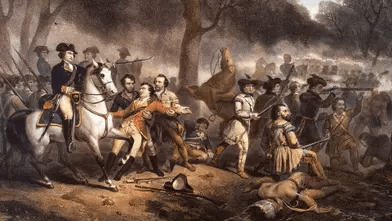
1754 – First Blood on the French and Indian War


In the first engagement of the French and Indian War, a Virginia militia under 22-year-old Lieutenant Colonel George Washington defeats a French reconnaissance party in southwestern Pennsylvania. In a surprise attack, the Virginians killed 10 French soldiers from Fort Duquesne, including the French commander, Coulon de Jumonville, and took 21 prisoners. Only one of Washington’s men was killed.

The French and Indian War was the last and most important of a series of colonial conflicts between the British and the American colonists on one side, and the French and their broad network of Native American allies on the other. Fighting began in the spring of 1754, but Britain and France did not officially declare war against each other until May 1756 and the outbreak of the Seven Years War in Europe.

In November 1752, at the age of 20, George Washington was appointed adjutant in the Virginia colonial militia, which involved the inspection, mustering, and regulation of various militia companies. In November 1753, he first gained public notice when he volunteered to carry a message from Virginia Governor Robert Dinwiddie to the French moving into the Ohio Valley, warning them to leave the territory, which was claimed by the British crown. Washington succeeded in the perilous wilderness journey and brought back an alarming message:

The French intended to stay.

Source: history.com

Amnesty International, a human rights organization, was founded ~5/28/1961


Amnesty International is a global movement of more than 7 million people who take injustice personally. We are campaigning for a world where human rights are enjoyed by all.

We are funded by members and people like you. We are independent of any political ideology, economic interest or religion. No government is beyond scrutiny. No situation is beyond hope.

Few would have predicted when we started that torturers would become international outlaws. That most countries would abolish the death penalty. And seemingly untouchable dictators would be made to answer for their crimes.

WHAT DOES AMNESTY DO?

We investigate and expose the facts, whenever and wherever abuses happen.

We lobby governments, and other powerful groups such as companies. Making sure they keep their promises and respect international law.

By telling the powerful stories of the people we work with, we mobilize millions of supporters around the world to campaign for change and to stand in defence of activists on the frontline.

We support people to claim their rights through education and training.

Watch our videos below

FORTRESS EUROPE A TURNING POINT FOR CHINA? A LETTER FOR ALES AFRICA NOT 4 SALE ACTION FOR TEORORA FAIR PLAY QATAR

Where it all began

In 1961, British lawyer Peter Benenson was outraged when two Portuguese students were jailed just for raising a toast to freedom. He wrote an article in The Observer newspaper and launched a campaign that provoked an incredible response. Reprinted in newspapers across the world, his call to action sparked the idea that people everywhere can unite in solidarity for justice and freedom.

This inspiring moment didn’t just give birth to an extraordinary movement, it was the start of extraordinary social change.

“Only when the last prisoner of conscience has been freed, when the last torture chamber has been closed, when the United Nations Universal Declaration of Human Rights is a reality for the world’s people, will our work be done.”

Peter Benenson, Amnesty International founder
© Amnesty International Togo

Amnesty evolves

Over the years, human rights have moved from the fringes to centre stage in world affairs.

Amnesty has grown from seeking the release of political prisoners to upholding the whole spectrum of human rights. Our work protects and empowers people – from abolishing the death penalty to protecting sexual and reproductive rights, and from combatting discrimination to defending refugees and migrants’ rights. We speak out for anyone and everyone whose freedom and dignity are under threat.


politics,pollution,petitions,pop culture & purses