
|
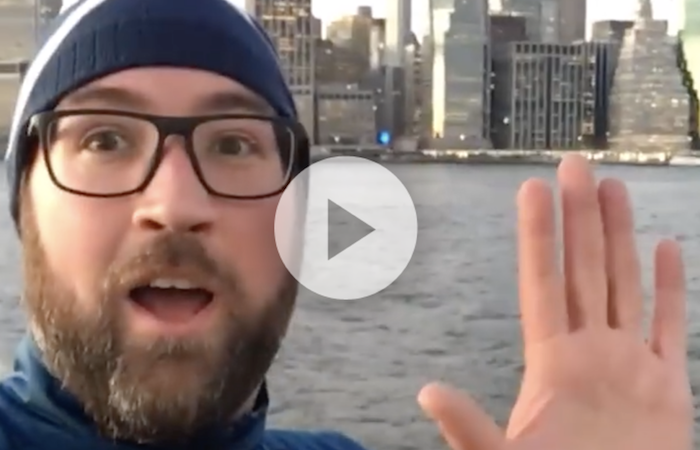
Dear Avaazers, This video recorded by Avaaz team members is going viral! It’s a shot of hope and love for 2018 — will you help share it and spread the joy across the world? Watch and share it now:
We’ve stopped the rise of the far-right in several countries, frustrated Trumpism in almost every major accomplishment it sought, opened our hearts to refugees, won major battles to protect our planet, and defeated toxic foes from Monsanto to Rupert Murdoch. The best part is the WAY we’re winning. Not through fear, anger and manipulation, but through love, hope and smarts. We are being the change we wish to see, and building the world we dream of, each step of the way. And we’re doing it, TOGETHER. So bring it on, 2018!!! With gratitude for all you lovely people who made all this happen, and hope for the year to come, Ricken, Emma, Fatima, Alice, Nana, Spyro, Nataliya, Danny and the whole Avaaz team. P.S. If you’re feeling hopeless right now — yes, the threats are real, but if we give up hope where does that leave us? Our grandparents faced far worse with far less — we can’t throw our hands up now. Lots of love to you! And let’s all beware the media we’re reading this year — the far-right and the Russian government have an OBJECTIVE of making engaged citizens like us cynical by spinning stories and lies (especially on Facebook) that destroy hope and trust in democracy, institutions, media and each other. Here’s evidence for that (Guardian). Let’s fight smart for everything we love in 2018!!! |

Michael Phelan, Social Security Works
Republicans in Congress aren’t wasting any time. They are launching an immediate attack on Social Security―attempting to dismantle the program. In the new federal budget―being voted on this month―Senate Republicans are proposing a $492 million cut to the Social Security Administration (SSA). This is on top of the billions Republicans have already underfunded the SSA this decade. With their ongoing assault on SSA’s funding, Republicans are making it increasingly difficult for the American people to access the benefits that we’ve earned with every paycheck. We must stop this backdoor attack on Social Security! Years of cuts to SSA’s funding have resulted in direct cuts to service, including:
The additional half billion dollar cut proposed by Republicans would force huge additional service cuts―a step towards the GOP’s ultimate goal of dismantling Social Security. Social Security Works is launching a campaign to fight these devastating cuts that will hurt the American people and undermine confidence in the program. And we need your help! Time and again, we have beaten back attempts by Wall Street and Republicans in Congress to cut Social Security. And this backdoor attempt to weaken the system is arguably the most dangerous. By reducing services, Republicans are threatening the future of the entire program. Together, we’re protecting the most successful social insurance program in U.S. history and telling Washington politicians where the American people stand: Expand, don’t cut, Social Security! Thank you, Michael Phelan |
||||
|
|
||||
|



Share this:

Medicare & Medicaid Services – History of & Centers for MMS
 Medicare & Medicaid
On July 30, 1965, President Lyndon B. Johnson signed into law the bill that led to the Medicare and Medicaid. The original Medicare program included Part A (Hospital Insurance) and Part B (Medical Insurance). Today these 2 parts are called “Original Medicare.” Over the years, Congress has made changes to Medicare:
- More people have become eligible.
For example, in 1972, Medicare was expanded to cover the disabled, people with end-stage renal disease (ESRD) requiring dialysis or kidney transplant, and people 65 or older that select Medicare coverage.
- More benefits, like prescription drug coverage, have been offered.
At first, Medicaid gave medical insurance to people getting cash assistance. Today, a much larger group is covered:
- Low-income families
- Pregnant women
- People of all ages with disabilities
- People who need long-term care
States can tailor their Medicaid programs to best serve the people in their state, so there’s a wide variation in the services offered.
Medicare Part D Prescription Drug benefit
The Medicare Prescription Drug Improvement and Modernization Act of 2003 (MMA) made the biggest changes to the Medicare in the program in 38 years. Under the MMA, private health plans approved by Medicare became known as Medicare Advantage Plans. These plans are sometimes called “Part C” or “MA Plans.”
The MMA also expanded Medicare to include an optional prescription drug benefit, “Part D,” which went into effect in 2006.
Children’s Health Insurance Program
The Children’s Health Insurance Program (CHIP) was created in 1997 to give health insurance and preventive care to nearly 11 million, or 1 in 7, uninsured American children. Many of these children came from uninsured working families that earned too much to be eligible for Medicaid. All 50 states, the District of Columbia, and the territories have CHIP plans.
Affordable Care Act
The 2010 Affordable Care Act (ACA) brought the Health Insurance Marketplace, a single place where consumers can apply for and enroll in private health insurance plans. It also made new ways for us to design and test how to pay for and deliver health care. Medicare and Medicaid have also been better coordinated to make sure people who have Medicare and Medicaid can get quality services.
50th Anniversary – Medicare & Medicaid Event: 50 Years, Millions Of Healthier Lives
This event commemorates the 50th Anniversary of the Medicare and Medicaid programs and includes a panel of experts discussing how Medicare and Medicaid have changed society and the ways in which we can work together to strengthen and improve health care for future generations. Learn more about the 50th Anniversary of Medicare and Medicaid.
Check out these special 50th Anniversary videos:
- 50th Anniversary – Medicare & Medicaid Event: 50 Years, Millions Of Healthier Lives
- 50th Anniversary – Medicare & Medicaid Event
- The Spirit of CMS
related …
- Medicare & Medicaid Milestones, 1937-2015 [PDF, 470KB]
- Administrator Tenure Dates & Biographies, 1965 — 2015 [PDF, 870KB]
- CMS History Project Presidents’ Speeches Table of Contents [PDF, 1MB]
- Oral History Biographies and Interviews [ZIP, 5MB]
- President Bush Signs Medicare Legislation [PDF, 1MB]
- President Milestones [PDF, 1MB]
- Why is CMS in Baltimore? [PDF, 1MB]
- 35th Anniversary Speeches [PDF, 1MB]
- 40th Anniversary Photos and Transcript [ZIP, 85KB]
- CMS History Quiz [PDF, 106KB]
posted 1/31/2017
Share this:

2018 ~ Your Driver’s License May Not Fly ~ 2018
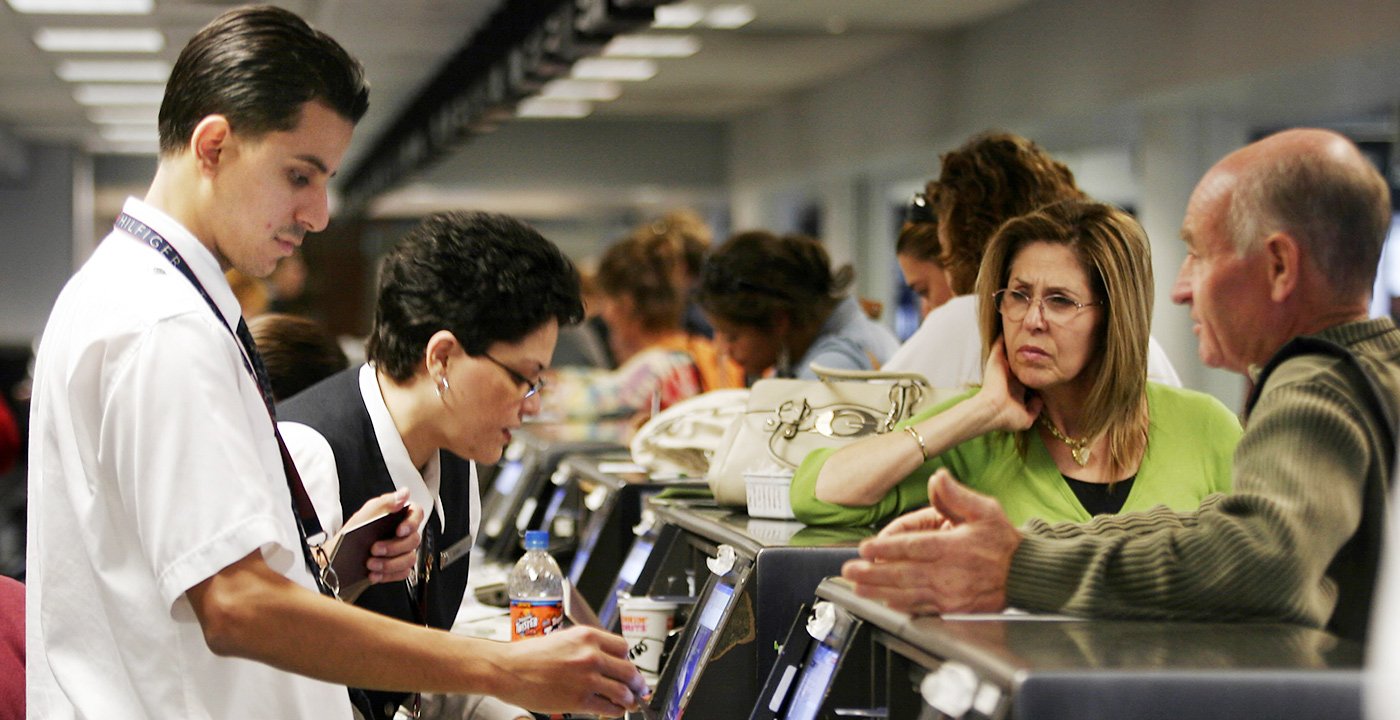
Starting next year, 2018 -TSA may not accept some state driver’s licenses that don’t meet acceptable security standards.
by | AARP | October 11, 2017
CHRISTIAN SCIENCE MONITOR/GETTY IMAGES
En español | If you’re planning to fly after Jan. 22, you may not be able to use your driver’s license as a form of identification to get through security. That’s thanks to the REAL ID Act of 2005, which everyone in the travel industry is hoping you — and the other 719 million passengers who fly domestically every year — have heard about.
The law, a counterterrorism measure that followed 9/11, calls for states to issue driver’s licenses with more security features — such as scannable bar codes and digital photos. They will be required for people to board any commercial flight and enter federal facilities and military bases.
Passports or other approved forms of federal identification — such as a border-crossing card, U.S. military ID or Global Entry card — can be used as an alternative. You will need this alternative ID if you live in one of 24 states that have yet to add the security measures to the driver’s licenses they issue. And you may need to get a new, updated license if you live in one of the states that already offers them.
Enforcement begins on Jan. 22. You can check your state’s status on the Department of Homeland Security website’s interactive map. Some states have been granted extensions to make their licenses compliant.
“It’s very complicated,” admits Katy Lloyd, spokesperson for the Virginia Department of Motor Vehicles. Virginia has just been granted a REAL ID extension until Oct. 10, 2018, when the state plans to have compliant licenses ready. Until then, residents can get through security using the driver’s licenses they already have.
Delays are caused at least in part by the controversy over the legislation. Its opponents include some legislators who have called it an “unfunded mandate” that is too expensive to implement. The American Civil Liberties Union considers the REAL ID Act a serious threat to Americans’ civil rights that will “lead to a slippery slope of surveillance and monitoring of citizens.” In 2012 the ACLU declared “REAL ID is dead,” as states including Maine, Hawaii and Utah had passed laws prohibiting their participation in the REAL ID Act.
Many states have repealed or are repealing those laws. While they are working on new compliant driver’s licenses, they also plan to offer unenhanced licenses as an option to residents.
The bottom line: You don’t want to find yourself barred from flying because you didn’t realize your old-school license is no longer an acceptable form of identification. If your state doesn’t have the new IDs, there is still time to get a passport or apply for another ID, says Tom Spagnola, senior vice president of supplier relations at the online travel agency CheapOair.
Spagnola says airlines, not to mention airport security agents, don’t want to face a slew of angry and confused travelers when enforcement begins. Many in the travel industry are working overtime to inform the public, so he’s hopeful the message will get through: “We still have three more months to work on passenger awareness.”
resource: AARP
You May Also Like
Share this:

10 Things Every Washington Employer Needs to Know About the New Paid Sick Leave Law
 The Washington State Department of Labor and Industries has now published final regulations implementing Initiative 1433 — the new statewide paid sick leave law passed by the voters in November 2016. These regulations have been much-anticipated by Washington employers, and they provide new details about how employers will be expected to comply with the statewide paid sick leave law that goes into effect on Jan. 1, 2018.
Lane Powell’s Employment Team has read the final regulations and compiled this handy list of the top 10 takeaways from the paid sick leave regulations:
1. Which employees are covered? Every non-exempt employee who works in the state of Washington is entitled to accrue paid sick leave starting on January 1, 2018. Non-exempt seasonal, temporary, on-call and part-time employees are all covered. Many employers’ current paid sick leave and/or PTO policies do not extend to these employee classifications and will need to be updated before the New Year.
2. Does that mean that exempt employees are not covered by Washington State’s paid sick leave law? Yes. Exempt employees are not covered by the state law. But exempt employees are covered by other local ordinances, including Seattle’s Paid Sick and Safe Time Ordinance, so be careful. An employer may be more generous than legally required, and provide paid sick leave to exempt employees, even if not legally required to do so. Extending paid sick leave benefits to exempt employees may also make sense from a practical standpoint.
3. How much paid sick leave do employees get? Covered non-exempt employees must accrue paid sick leave at the rate of one hour of paid sick leave for every 40 hours worked.
4. May employers place caps on the amount of paid sick leave employees can accrue or use? No caps on accrual or use are permitted. Employees must be allowed to accrue paid sick leave on all hours worked for the entire year.
5. May employers pay premium pay in lieu of providing leave? No. Although some local ordinances allow premium pay in lieu of leave, this is not permitted under the Washington paid sick leave law.
6. May employers offer employees the option to cash out their accrued, unused leave balances at year-end? Yes. Although employees must be allowed to carry-over up to 40 hours of unused paid sick leave to the next year, an employer may elect to cash out an employee’s accrued, unused paid sick leave balance which exceeds 40 hours.
7. May employers frontload paid sick leave? Yes, but the amount of paid sick leave that the employer frontloads must equal or exceed the amount the employee would receive if he or she accrued leave at the rate of one hour of leave for every 40 hours worked. Unless the employer knows with certainty the number of hours the employee will work during the year, calculating the amount of leave to frontload may be difficult. Additionally, unlike many local ordinances, frontloading leave does not exempt employers from the requirement to allow carry-over of up to 40 hours of leave to the next year.
8. What is the rate of pay for paid sick leave? For each hour of paid sick leave used, an employee must be paid the greater of: (a) minimum wage, or (b) the employee’s “normal hourly compensation,” which means the rate of pay the employee would have earned for the hours had the employee come to work. However, the “normal hourly compensation” does not include overtime, tips, gratuities, service charges, holiday pay or other premium rates, unless the employer or a collective bargaining agreement allows for such considerations. On the other hand, where an employee’s normal hourly compensation is a shift-differential, the differential rate is the “normal hourly compensation” and must be paid for paid sick leave.
9. May employers request verification for use of paid sick leave for absences less than three days? No. Verification may be requested for absences exceeding three days. For shorter absences, verification is not permitted, even in instances of perceived patterns of abuse. Washington’s paid sick leave law does, however, allow employers to request medical verification if permitted or required to do so under other federal, state or local laws or ordinances.
10. May employers withhold payment of paid sick leave if the leave was not for an authorized purpose? Yes. If an employer can demonstrate that an employee’s use of paid sick leave was for a purpose not authorized by the law, the employer may withhold payment for the use of paid sick leave. However, the employer may not subsequently deduct those hours from an employee’s accrued, unused paid sick leave bank.
Krista N. Hardwick is an attorney at Lane Powell. The firm is hosing a Paid Sick Leave webinar on Nov. 15. Contact Geneva Granatstein for more information on the webinar.


You must be logged in to post a comment.