Tag Archives: Arts

Slavery, Hollywood, and Public Discourse – Black History


NMAAHC -- National Museum of African American History and Culture

Lonnie Bunch, museum director, historian, lecturer, and author, is proud to present A Page from Our American Story, a regular on-line series for Museum supporters. It will showcase individuals and events in the African American experience, placing these stories in the context of a larger story — our American story.

A Page From Our American Story

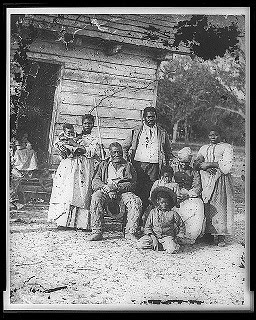
Civil War era Photo of slaves on plantation Family on Smith’s Plantation, Beaufort, South Carolina, circa 1862. Image courtesy of the Library of Congress.
Slavery: perhaps the last, great unmentionable in public discourse. It is certainly a topic that even today makes people very uncomfortable, regardless of their race.

American society has often expressed its internal problems through its art. Perhaps the most powerful medium for important discussions since the turn of the last century has been the motion picture.

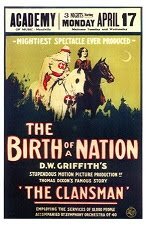
For decades Hollywood has attempted to address the issue of slavery. For the most part, films have represented the period of enslavement in a manner that reflected society’s comfort level with the issue at the time. Director D. W. Griffith’s 1915 silent drama, Birth of a Nation, for instance, depicted African Americans (white actors in black face) better off as slaves. Griffith’s movie showed the institution of slavery “civilizing” blacks. Birth even made it seem like slaves enjoyed their lives and were happy in servitude.

That wasn’t the case, of course, but it was what white society wanted to believe at the time.

Birth of a Nation movie poster

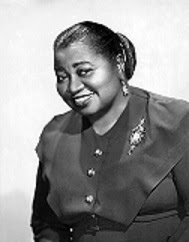
More than two decades after Birth of a Nation, the portrayal of African Americans in films had changed only a little. 1939 saw the release of one of Hollywood’s most acclaimed movies, Gone with the Wind. Producer David O. Selznick believed he was serving the black community with respect — he made sure the novel’s positive portrayal of the Ku Klux Klan was eliminated from the film, for example. But Gone with the Wind nevertheless treated the enslaved as relatively happy, loyal servants, a depiction that continued to reflect America’s segregated society. History was made, however, when Hattie McDaniel became the first African American to win an Academy Award for her role as “Mammy.” Still, her part, and the parts of the other black actors drew harsh criticism from major African American newspapers and civil rights groups.

Nearly forty years later, one of Hollywood’s most meaningful attempts to portray the period of enslavement came in 1977 with the television blockbuster mini-series, Roots. Based on Alex Haley’s 1976 best-selling book, Roots: The Saga of an American Family, the mini-series was groundbreaking on many levels. It was a dramatic series with a predominantly African American ensemble that captured a record 37 Emmy nominations — television’s highest artistic award.

Hattie McDaniel publicity photo Promotional photograph of actor Hattie McDaniel (1939).
And Roots marked the first time America witnessed slavery portrayed in detail. Along with the scenes of transporting, selling, and trading men and women, were scenes showing the brutality African Americans often suffered at the hands of slave owners. The depictions of abuse and cruelty were limited, of course, by the medium and by what American society would accept at the time. In keeping with the series’ marketing campaign, the show focused heavily on the family’s ultimate triumphs. For all of Roots’ firsts, and there were many, it was ultimately a story of resiliency.

Fast forward three-plus decades — American society is undeniably changed. African Americans are regularly featured in movies and television shows. The nation elected, then re-elected, an African American president, Barack Obama.

Drawing critical acclaim today is the movie 12 Years a Slave. 12 Years is a watershed moment in filmmaking. Not only does it feature remarkable performances, excellent cinematography, and powerful direction; it also offers the first realistic depiction of enslavement.

Unlike prior motion pictures and television shows, 12 Years does not retreat from the brutality many blacks endured. The movie is not for the faint hearted, as the violence and cruelty it portrays is not the highly stylized violence found in films like Django Unchained.  12 Years is true to the reality that for years many Americans treated fellow human beings with ruthless brutality — and that reality is harder to face.

12 Years a Slave movie poster

The film, however, is not only drawing praise from critics — it recently received nine Oscar nominations, including Best Picture — but enjoying audience appreciation, as well. With that appreciation comes an opportunity to bring the discussion of slavery to the mainstream.

This, then, is an exciting time for the Smithsonian’s National Museum of African American History and Culture. Among its many virtues, the Smithsonian is a great legitimizer with a long tradition of providing venues for Americans to examine their shared history. One of the over-arching goals of the National Museum of African American History and Culture is to create a place where issues like enslavement can be viewed through an unvarnished lens.

America today needs this discussion and I believe it is ready for it, a sentiment undergirded by a belief in the public’s ability to deal with and care about the issue. The great strength of history, and African American history, is its ability to draw inspiration from even the worst of times. No doubt people throughout the nation and around the world will find that inspiration when they visit the Museum and view our major exhibition on “Slavery and Freedom” when our doors open in late 2015.

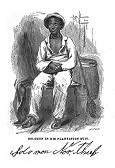
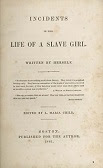
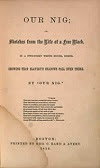
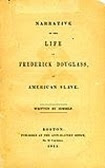
Before I close, I want to recommend four insightful narratives written by African Americans during this period of American history. The first is Solomon Northup’s book, 12 Years a Slave. Next is Incidents in the Life of a Slave Girl, by Harriet Jacobs. One of the first books to describe the sexual abuse and torment that female slaves endured, Incidents became one of the most influential works of its time. Our Nig: Sketches from the Life of a Free Black, by Harriet Wilson, is believed to be the first novel published by an African American in North America. Though fictionalized, Wilson’s book is based on her life growing up in indentured servitude in New Hampshire. Finally, Narrative of the Life of Frederick Douglass, An American Slave, remains today one of the most important autobiographical works ever written by an American.

12 Years a Slave book cover 12 Years a Slave by Solomon Northrup. 1853. Incidents book cover Incidents in the Life of a Slave Girl by Harriet Jacobs. 1861. Our Nig book cover Our Nig: Sketches from the Life of a Free Black by Harriet Wilson. 1859. Narrative of the Life of Frederick Douglass book cover Narrative of the Life of Frederick Douglas, An American Slave by Frederick Douglass. 1845.
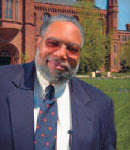
 

 dd-enews-temp-lonnie-bunch-2.jpg All the best, Lonnie Bunch Director

P.S. We can only reach our $250 million goal with your help. I hope you will consider making a donation or becoming a Charter Member today.

Henrietta Lacks … a story kept quiet until Rebecca Skloot


The Immortal Life of Henrietta Lacks by, Rebecca Skloot

In April 2011, I watched a C-SPAN show interviewing the author of a book about Henrietta Lacks, her name: Rebecca Skloot.

Henrietta’s story starts August 1, 1920, and her birth and life ended sometime in the early fifties, 1951. This story has just come into the light of day and while I cried again because it’s sad, and unacceptable by some, it reminds us of how life is treated when you have no or less power than the “average Joe” which is code for being white.

After having several children and years and years of reports by “the Media”, publicity, and whatnot, Henrietta’s family seems to be the only ones who didn’t benefit from the story of this woman whose cells were used to create a cell line for medical research but got nothing in return. I don’t know when everyone else heard of this story, but Oprah and some associates decided to make a movie…hopefully, some or ALL of the revenue will be given to the family. It is a story that makes you gasp, gets you upset, or mad, it will make you cry and wonder how the science community got away with not paying Henrietta Lacks and or her family for her contribution. If I understood the interviewer, Henrietta’s family has recently gotten more PR about their Mother’s story, but it’s unclear if anyone paid money for all the stories, books, and or TV programs about her. It is a story that appears to be on the surface, one of unintentional theft, that became just that, and if you are willing to dig deeper you realize it is theft and a secret kept quiet for years.

It becomes apparent her cells are used by an immoral scientist who did not tell her or her family even after it was evident that the cells were rare, viable, unusual, and priceless…worth an astronomical amount in my opinion.  The fact that they were used and what effects they all would eventually have on science today, in 2011, was not evident then, but those scientists probably had some idea. I understand that back then technology may not have been as advanced, but it did advance and still is and if the reports are correct, the science community gave Henrietta nothing to her or her family for the wonderful things those rare cells she had that changed the lives of so many. It happened in a time when minorities were treated very poorly and again, even if the reports state that standard procedure was this that, and or the other, the ’70s gave way to new ways to handle science technologies; it’s time to pay Henrietta Lacks and her family back.

First posted 4/13/11

in the Library … Elijah Rising – by Lyn LeJune


Have you gotten your copy?


About the Author

Lyn LeJeune is the author of several novels. Her stories have been published in literary journals such as Big Muddy: A Journal of The Mississippi River Valley (East Missouri University), The Bishop s House Review (Duke), The Dead Mule School of Southern Literature, Nantahala, Milestone, Identity Theory, Our Stories, Demolition Magazine and Stone Table Review, and The Best of Our Stories. She was recipient of the Paris Writers Institute Scholarship for study in Paris, France. Lyn studied writing at Skidmore, where she worked with Marilynne Robinson and Mary Gordon, Duke, and the Breadloaf Writers Conference. Lyn routinely holds seminars on writing and development of oral history projects and has a gift for one-on-one conversation, communicating with large audiences, and working with smaller audiences in venues such as book clubs and seminars.
 
 One of Lyn s first readers for Elijah Rising was Howard Zinn, who commented: I read it in two sittings, became involved in the story. You write very well! Best wishes, Howard ZinnLyn is 100% Cajun and makes the best gumbo in South Louisiana.
                

I told a lie that put my dad in prison


When I was eight years old, my mom scared me into telling a lie that would change the course of our family’s life.

One day when I was at home watching my dad work, I came out of the bathroom and my mom asked me if my dad had ever touched me. Confused, I said no. But then she asked me again. And I said no. She kept asking, and I kept saying no, until she became angry and threatened to beat me with a belt until I said yes. I was too young to know that my mom was using drugs at the time, and I was scared. So I said yes.

My dad was convicted of sexually assaulting me and has been in prison for over 15 years for a crime he didn’t commit. Now that I’m an adult and a mom, I’m working hard to right this wrong that should have never happened. I started a petition on Change.org asking for the Governor of New York to pardon my innocent father. Click here to sign my petition.

My dad has been in prison for decades for a crime he didn’t commit, all because I was forced into telling a lie about him when I was eight years old. Help my dad get pardoned by signing my petition.

I remember sometimes during dinner my mom would make excuses to leave so she could find drugs. When my dad would try to stop her, they would fight, and I would cry. Now I know it’s because he wanted her to stay home with the family that he was working so hard to keep together.

After my dad was sent to prison, my siblings and I went to live with my grandmother. I told her the whole truth: that my dad had never touched me, and that my mom taught me all the words to say that would get him in trouble. My mom even admits now that this happened during one of her drug binges, and she doesn’t know why she did it.

I’ve been fighting to set my dad free with this evidence since I was 15 years old — but all of my appeals have been denied. I was recently interviewed about my story by national news, and I believe that this wave of public support can help my case. That’s why I started this petition to pressure Governor Cuomo into pardoning him. Will you help me by signing?

Ask Governor Cuomo of New York to pardon my dad Daryl Kelly, an innocent man, by signing my petition on Change.org.

Thank you so much for your support.

Chaneya Kelly

Great Stat (This is AWESOME)