

Tag Archives: Atlantic Ocean

On This Day

Print Cite This
Synopsis
Aviator Amelia Earhart was born on July 24, 1897 in Atchison, Kansas. In 1923, Earhart, fondly known as “Lady Lindy,” became the 16th woman to be issued a pilot’s license. She had several notable flights, becoming the first woman to fly across the Atlantic Ocean in 1928, as well as the first person to fly over both the Atlantic and Pacific. In 1937, she mysteriously disappeared while trying to circumnavigate the globe from the equator. Since then,
Contents
Quotes
“The woman who can create her own job is the woman who will win fame and fortune.”
– Amelia Earhart
“Adventure is worthwhile in itself.”
– Amelia Earhart
« prev1 / 2next »
several theories have formed regarding Earhart’s last days, many of which have been connected to various artifacts that have been found on Pacific islands—including clothing, tools and, more recently, freckle cream. Earhart was legally declared dead in 1939.
Early Life
Amelia Earhart was born on July 24, 1897 in Atchison, Kansas, in America’s heartland. She spent much of her early childhood in the upper-middle class household of her maternal grandparents. Amelia’s mother, Amelia “Amy” Otis, married a man who showed much promise, but had never been able to break the bonds of alcohol. Edwin Earhart was on a constant search to establish his career and put the family on a firm financial foundation. When the situation got bad, Amy would shuttle Amelia and her sister Muriel to their grandparents’ home. There they sought out adventures, exploring the neighborhood, climbing trees, hunting for rats, and taking breathtaking rides on Amelia’s sled.
Even after the family was reunited when Amelia was 10, Edwin constantly struggled to find and maintain gainful employment. This caused the family to move around, and Amelia attended several different schools. She showed early aptitude in school for science and sports, though it was difficult to do well academically and make friends. In 1915, Amy separated once again from her husband, and moved Amelia and her sister to Chicago to live with friends. While there, Amelia attended Hyde Park High School, where she excelled in chemistry. Her father’s inability to be the provider for the family led Amelia to become independent and not rely on someone else to “take care” of her.
After graduation, Amelia Earhart spent a Christmas vacation visiting her sister in Toronto, Canada. After seeing wounded soldiers returning from World War I, she volunteered as a nurse’s aide for the Red Cross. Earhart came to know many of the wounded who were pilots. She developed a strong admiration for aviators, spending much of her free time watching the Royal Flying Corps practicing at the airfield nearby. In 1919, Earhart enrolled in medical studies at Columbia University. She quit a year later to be with her parents, who had reunited in California.
Early Career
At a Long Beach air show in 1920, Amelia Earhart took a plane ride that transformed her life. It was only 10 minutes, but when she landed she knew she had to learn to fly. Working at a variety of jobs, from photographer to truck driver, she earned enough money to take flying lessons from pioneer female aviator Anita “Neta” Snook.
Share this:

Urgent message whales & dolphins … Lyndia Storey
Navy to deafen 15,900 whales and dolphins and kill 1,800 more
By Lyndia Storey (Contact)
To be delivered to: U.S. Navy EIS Comments
The Goal is … 500,000 Signatures before July 10
Navy to deafen 15,900 whales and dolphins and kill 1,800 more -> http://signon.org/s/wJGZDW #signon
Stop the killing of 1,800 whales and dolphins and the deafening of 15,900 more by ceasing the operation of the Navy’s underwater sound system in the Hawaiian Islands, the California and Atlantic Coasts, and the Gulf of Mexico.
The Navy is required to include comments on their Environmental Impact Statement (EIS) re: the use of high frequency underwater sound for testing in Hawaii, the California and Atlantic Coasts, and the Gulf of Mexico. According to their estimates it will deafen more than 15,900 whales and dolphins and kill 1,800 more over the next 5 years. Whales and dolphins depend on sound to navigate and live. Your signature and comment will have to be included in the EIS and could stop this Naval program, potentially saving the lives of these ocean creatures. The comments must be in by July 10, 2012.
NEW goal – We need 250,000 signatures
There are currently 244,386 signatures
There are currently 244,386 signatures
Share this:

A picture could save a thousand whales …Phil Kline, Greenpeace
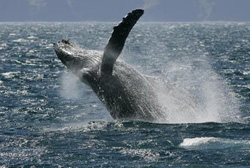 WWW.Greenpeaceusa.org WWW.Greenpeaceusa.org |
The very first agenda item at this year’s International Whaling Commission (IWC) meetings in Panama is a proposal that would create a permanent whale sanctuary in the South Atlantic.
This proposal represents one of the best opportunities we’ve ever had to protect whale populations in the South Atlantic…but there’s a problem.
The Japanese government is bribing small countries like the Solomon Islands and Antigua and Barbuda to vote against the proposal to avoid setting an example for whale protection. That’s why me and my team are preparing to head down to Panama to send a message to these delegates ourselves in a unique and creative way
But we can’t make it happen without your support.
Please make your most generous gift today and help us raise $40,000 by June 19th to support our work in Panama and to protect our oceans and planet.
Here’s the plan: Greenpeace has teamed up with other Latin American conservation organizations and the Panamanian government to place photo exhibitions highlighting the substantial economic benefits of protecting these creatures in front of the delegations voting with Japan. We’ve secured the best locations for these exhibitions and know the delegates will have to see them.
It’s really an amazing opportunity to directly communicate with these countries and show them that letting Japan buy their votes on something this important simply isn’t worth it. And you can bet this will make the news back home in these countries as well. Every delegate we get to think twice about voting with Japan brings us one step closer to the reality of a whale sanctuary in the South Atlantic.
Help make this a reality by making a contribution today.
Panama was the first Latin IWC country to stop allowing Japan to buy their votes and start supporting whale conservation efforts. With the IWC meeting in Panama this year, we have an amazing opportunity to convince other Latin and Caribbean countries to follow their lead.
Every bit of support we are able to take away from the Japanese government’s position is a victory for whales. This is our chance to directly communicate with the people who will decide the fate of the world’s whales.
I’ve been going to these things for years and usually the delegates are completely removed from the public and public opinion. That’s not going to be the case in Panama. Let’s not miss this opportunity. .
Make your donation today and help us raise $40,000 by June 19th to save the whales and protect the planet.
For the whales,
Phil Kline
Greenpeace Oceans Campaigner
Share this:


Somewhere in the North Pacific a Japanese whaling vessel is hunting a sperm whale mother and her calf.
We can’t let Japan block the creation of a whale sanctuary in the South Atlantic.
Tell President Obama’s IWC delegation to take the lead on the South Atlantic Whale Sanctuary proposal.
|

Somewhere in the North Pacific a Japanese whaling vessel is hunting a sperm whale mother and her calf.
It’s just one of the 120 minkes, 50 Brydes, 100 sei and 10 sperm whales they plan to kill during this year’s hunt. But the hunt is not what the Japanese whaling program is concerned about at the moment.
Instead, they’re busy buying votes from small countries like the Solomon Islands and Antigua and Barbuda to kill a proposal at the upcoming International Whaling Commission (IWC) meetings that would create a permanent whale sanctuary in the South Atlantic.
This proposal represents one of the best opportunities we’ve ever had to protect whale populations in the South Atlantic. We can’t let Japan kill it. And that means we need strong leadership from President Obama’s delegation to the IWC.
The proposed South Atlantic Whale Sanctuary stretches from the freezing waters of Antarctica to the warm waters of the equator. Most of the great whales are highly migratory, feeding in the nutrient rich waters of the Antarctic before traveling to tropical waters to give birth and suckle their young.
The establishment of the South Atlantic Whale Sanctuary would mean that the whales of the Southern Hemisphere could live their entire lives in an area free from the threat of commercial whaling.
I’ll be traveling to Panama for the IWC meetings this year as an official observer and will personally deliver your message to the US delegation. It’s critical that the US team knows there is widespread public support back home for this proposal. That’s why your message is so important.
Carmen, these whales have a right to live their lives without out the fear of being hunted. Take action now and tell the US delegation to the IWC to do everything in their power to make sure the South Atlantic Whale Sanctuary proposal passes.
I’ve been attending the International Whaling Commission (IWC) meetings as an observer for years now. And usually every year feels the same. This year is different. This year we have a real chance to take a giant step forward in terms of whale conservation in the South Atlantic.
I’ll be there. I hope you’ll join me by taking action.
Save the whales,
Phil Kline
Greenpeace Oceans Campaigner

 Be a Seed for Change
You must be logged in to post a comment.