Tag Archives: Black History Month

a sport not many focus on … Golf & Women of Colour – reminder – Black History


Wethepeople

So, I’m flipping through my newest 2015 Essence from back to front because of the horoscope section and as I’m looking I see a section called “trending topics” reporting that the USTA just appointed former tennis player Katrina Adams, President, CEO and chairman of the board and the first African American to fill the role. So, more things have changed in the World of Sports in which women of colour historically have not dominated.  While flipping through my 2014 issue of Essence with various fashions it was became obvious that this is not just about fashion, though the title gave me that impression and had to share given the history. In fact, it is about a Woman named Renee Powell and some young Women who were introduced to her and who have chosen her as their mentor. Now, the surprise to most would be that these brightly fashionable women are people of colour and that the article is about golf or as they say, “One of America’s favourite pastimes.”  In fact my family lived just a few blocks away from a golf course and while golf wasn’t my choice the history of golf was well known in our house, including a couple of good along with the bad and the really ugly stories of racism. It is a sad day to know that the practice is still alive and well, though tiger woods did shatter the glass ceiling some. The art of discrimination is subtle these days, while the stories of’ the good ‘olé boys club were worse, golf is a work in progress. The article tells us about the ups and downs of Powell’s life and daily experiences as a young girl to becoming one of four African-American women qualifying for golf’s top pro-circuit … The LPGA Tour that included Althea Gibson, LaRee Pearl Sugg, Shasta Avery Hardt and Renee Powell. Their legacy on the links is gone into in depth. They list the youngest pro at 17, four others including the niece of tiger woods who also has a great story, but what is even more exciting is that after Powell retired she now owns her own golf club, is the golf pro. She also teaches and mentors a new generation of girls/women of colour who love the game and are willing to take it as far as they can. Golfing is not cheap, so, if you have an opportunity to donate to your area’s youth sports club or make time to teach train and expose kids of colour to golf … do it!

Oh and the article on Golf is in Essence and was written by Connie Aitcheson

and … it’s in  “Trending Topics”  the February issue of Essence

Carter Woodson ~ American historian


Carter G. Woodson

To commemorate and celebrate the contributions to our nation made by people of African descent, American historian Carter G. Woodson established Black History Week. The first celebration occurred on Feb. 12, 1926. For many years, the second week of February was set aside for this celebration to coincide with the birthdays of abolitionist/editor Frederick Douglass and Abraham Lincoln. In 1976, as part of the nation’s bicentennial, the week was expanded to a month. Since then, U.S. presidents have proclaimed February as National African-American History Month.


In the fall of 1870, a handful of students made their way through the northwest quadrant of the nation’s capital, and through the doors of D.C.’s “Preparatory High School for Colored Youth,” the country’s first public high school for African American children. The students and teachers who graced its hallways would be heard through the years in the halls of Congress, in the highest ranks of the United States military, at the heart of our civil rights movement, and in the upper echelons of medical and scientific study.

One such voice was that of Carter G. Woodson; a journalist, author, historian, and co-founder of the Association for the Study of Negro Life and History (ASNLH). It was through his work with the ASNLH that Woodson spearheaded the celebration of “Negro History Week” in America, which served as the precursor to Black History Month, which was officially recognized by President Gerald Ford in 1976. Woodson taught us that, “those who have no record of what their forebears have accomplished lose the inspiration which comes from the teaching of biography and history.”

Find out more about Carter G. Woodson.


Jim crow… did you know?


Jim Crow Era

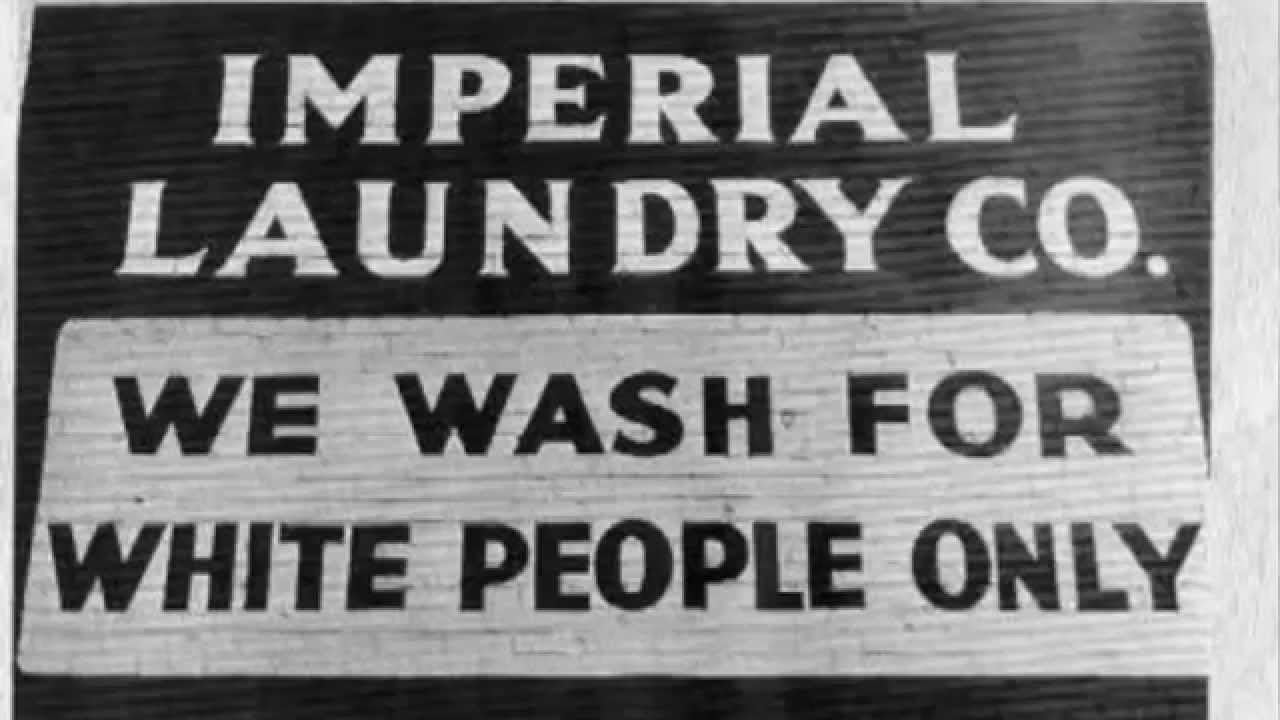
After the Civil War, there was a period from about 1865 to 1877 where federal laws offered observable protection of civil rights for former slaves and free blacks; it wasn’t entirely awful to be an African American, even in the South. However, starting in the 1870s, as the Southern economy continued its decline, Democrats took over power in Southern legislatures and used intimidation tactics to suppress black voters. Tactics included violence against blacks and those tactics continued well into the 1900s. Lynchings were a common form of terrorism practiced against blacks to intimidate them. It is important to remember that the Democrats and Republicans of the late 1800s were very different parties from their current iterations. Republicans in the time of the Civil War and directly after were literally the party of Lincoln and anathema to the South. As white, Southern Democrats took over legislatures in the former Confederate states, they began passing more restrictive voter registration and electoral laws, as well as passing legislation to segregate blacks and whites.

It wasn’t enough just to separate out blacks – segregation was never about “separate but equal.” While the Supreme Court naively speculated in Plessy v. Ferguson that somehow mankind wouldn’t show its worst nature and that segregation could occur without one side being significantly disadvantaged despite all evidence to the contrary, we can look back in hindsight and see that the Court was either foolishly optimistic or suffering from the same racism that gripped the other arms of the government at the time. In practice, the services and facilities for blacks were consistently inferior, underfunded, and more inconvenient as compared to those offered to whites – or the services and facilities did not exist at all for blacks. While segregation was literal law in the South, it was also practiced in the northern United States via housing patterns enforced by private covenants, bank lending practices, and job discrimination, including discriminatory labor union practices.

This kind of de facto segregation has lasted well into our own time.

The era of Jim Crow laws saw a dramatic reduction in the number of blacks registered to vote within the South. This time period brought about the Great Migration of blacks to northern and western cities like New York City, Chicago, and Los Angeles. In the 1920s, the Ku Klux Klan experienced a resurgence and spread all over the country, finding a significant popularity that has lingered to this day in the Midwest. It was claimed at the height of the second incarnation of the KKK that its membership exceeded 4 million people nationwide. The Klan didn’t shy away from using burning crosses and other intimidation tools to strike fear into their opponents, who included not just blacks, but also Catholics, Jews, and anyone who wasn’t a white Protestant.

This time period was not without its triumphs for blacks, even if they came at a cost or if they were smaller than one would have preferred. The NAACP was founded in 1909, in response to the continued practice of lynching and race riots in Springfield, Ill. From the 1920s through the 1930s in Harlem, New York, a cultural, social, and artistic movement took place that was later coined the Harlem Renaissance. Musicians like Duke Ellington and Jelly Roll Morton, writers such as Zora Neale Hurston and Langston Hughes, it-girls like Josephine Baker, and philosophers like W.E.B. Du Bois all had a hand in the Harlem Renaissance and American culture as a whole is richer and better for it. 

Notable Supreme Court Cases:

  • The Slaughter-House Cases, 83 U.S. 36 (1873) – this series of three cases, which were consolidated into one issue, offered the first opinion from the Supreme Court on the 14th Amendment. The court chose to interpret the rights protected by the 14th Amendment as very narrow and this precedent would be followed for many years to come.
  • Civil Rights Cases, 109 U.S. 3 (1883) – in this set of five cases that were consolidated into one issue, a majority of the court held the Civil Rights Act of 1875 unconstitutional against the lone famous dissent of Justice Harlan. The majority argued that Congress lacked authority to regulate private affairs under the 14th Amendment and that the 13th Amendment “merely abolishe[d] slavery”. Segregation in public accommodations would not be declared illegal after these cases until the Civil Rights Act of 1964.
  • Plessy v. Ferguson, 163 U.S. 537 (1896) – this is the case which gave us the phrase “separate but equal” and upheld state racial segregation laws for public facilities. Justice Harlan again offered a lone dissent. These laws would remain in play until 1954.

Selected Library Resources:

Additional Resources:

library.law.howard.edu

Be inspired by activist and suffragette Mary Church Terrell


Career image

The National Museum of African American History and Culture (NMAAHC) is proud to present the next page from Our American Story, an online series for Museum supporters. Despite the variety of uncertain news in the world today, one story continues to speak of powerful strength and uplift: the story of the African American experience. This legacy speaks of everyday heroism, profound resiliency, and the binding power of the community. We offer these stories to honor and celebrate an immensely rich history and culture—and to inspire and sustain our community as we move toward the future, together.
Mary Eliza Church Terrell was a renowned educator and speaker who campaigned fearlessly for women’s suffrage and the social equality of African Americans.

Circular desk calendar owned by Mary Church Terrell

Born in Memphis, Tennessee, in 1863, the year of the Emancipation Proclamation, Mary Eliza Church was part of a changing America. She was the daughter of affluent African American parents, both of whom were previously enslaved. Her mother, Louisa Ayers Church, owned a hair salon. Her father, Robert Reed Church, was a successful businessman who would later become one of the South’s first African American millionaires.
Terrell’s parents sent her to Ohio to attend preparatory school at Antioch and later Oberlin College. There she earned her bachelor’s and master’s degrees. At a time when women were not expected to achieve academically, Terrell excelled—and committed herself to pass on what she learned. After teaching for two years at Wilberforce College, she moved to Washington, D.C. to teach high school, where she met lawyer and future judge Robert Terrell. They married in 1891.

“Most girls run away from home to marry; I ran away to teach.”

— Mary Church Terrell 

Although Mary Church Terrell’s life focused on education and progress, tragedy would spur her into activism.
In 1892, her childhood friend Thomas Moss was lynched in Memphis. Moss was the owner of People’s Grocery, a successful wholesale grocery outside the city. He, like Terrell, represented progress, which many whites at the time felt was a direct threat to their own commerce and livelihood. The gunshot-riddled bodies of Moss and two of his employees were left on a railroad track just north of Memphis.

Terrell, along with journalist Ida B. Wells, organized anti-lynching campaigns to mobilize advocates and generate awareness. Later she would protest President Theodore Roosevelt’s 1906 discharge of 167 African American soldiers for unfounded conspiracy claims in Brownsville, Texas. She wrote columns and essays espousing the importance of dignity and respect for the soldiers and demanded a fair trial. Her efforts were to no avail at the time, although an Army investigation in 1972 led to the honorable discharges of all the soldiers, only two of whom were still alive.

NACWC EMBLEM LOGO SEAL

Pin for the National Association of Colored Women’s Clubs
Terrell held firm to the idea of racial uplift—the belief that blacks would help end racial discrimination by advancing themselves through education, work, and activism. Her words “lifting as we climb” became the motto of the National Association of Colored Women (NACW), the group she co-founded in 1896.
She also would go on to serve as one of the charter members of the NAACP, founded in 1909.

Understanding the intersectionality of race and gender discrimination, she lectured, penned essays, and spoke out on behalf of the women’s suffrage movement—even picketing the Woodrow Wilson White House with members of Howard University’s Delta Sigma Theta sorority.

Terrell was an active member of the National Association of Women’s Suffrage Act (NAWSA), where she worked alongside the organization’s founder, Susan B. Anthony. Terrell was invited to deliver two speeches on the challenges faced by women, and particularly women of color in America, at the International Congress of Women in Berlin in 1904. She was the only woman of African descent invited to speak at the conference. She delivered her speeches in German, French, and English, receiving a standing ovation from the audience.

Terrell’s belief that education and activism would provide a path to equality was demonstrated by her devotion to both pursuits. A self-described “dignified agitator,” Terrell would fight, protest, and work on behalf of social progress for women of color for more than half a century.

While in her 80s, Mary Church Terrell joined efforts to end segregation in restaurants in Washington, D.C., which laid the groundwork for the 1953 court ruling that segregation in D.C. restaurants was unconstitutional. In 1954, two months after the landmark Brown v. Board of Education ruling, she passed away at her home in Highland Beach, Maryland, a Chesapeake Bay resort community for affluent African Americans founded by one of Frederick Douglass’s sons.

From her tireless efforts to pass the Nineteenth amendment 100 years ago to serving as the first black woman on the Washington, D.C. Board of Education, Terrell’s work continues to echo throughout the world today. Her commitment to change opened countless doors of opportunity for those who came after her.
Her legacy endures in the hearts and minds of those continuing the fight for a world with more educated and empowered black women. From Civil Rights leaders and feminists of the 1960s to contemporary activists and trailblazers, many have and will continue to invoke Terrell’s fighting—and dignified—spirit.
The Museum helps connect individuals with a deeper understanding of the African American story by sharing the lives of inspiring pioneers like Mary Church Terrell, who demonstrate the impact one person can make on the world. Please help the Museum continue this important work and consider joining the Museum or making a donation today.

Share this American Story

1400 Constitution Ave NW, Washington, DC 20560
(844) 750-3012 | NMAAHC.si.edu
© 2020 Smithsonian Institution
Opera glasses and case owned by Mary Church Terrell. Collection of the Smithsonian National Museum of African American History and Culture, Gift of Ray and Jean Langston in memory of Mary Church and Robert Terrell.
Gelatin silver print of Mary Church Terrell by Addison Scurlock, ca. 1910. Collection of the Smithsonian National Museum of African American History and Culture, Gift of Ray and Jean Langston in memory of Mary Church and Robert Terrell.
Service award pin for Mary Church Terrell from the National Association of Colored Women, 1900. Collection of the Smithsonian National Museum of African American History and Culture, Gift of Ray and Jean Langston in memory of Mary Church and Robert Terrell.
Circular desk calendar owned by Mary Church Terrell. Collection of the Smithsonian National Museum of African American History and Culture, Gift of Ray and Jean Langston in memory of Mary Church and Robert Terrell.
Pin for the National Association of Colored Women’s Clubs. Collection of the Smithsonian National Museum of African American History and Culture, Gift of Ray and Jean Langston in memory of Mary Church and Robert Terrell.
Unsubscribe | View in Browser

Slavery, Hollywood, and Public Discourse – Black History


NMAAHC -- National Museum of African American History and Culture

Lonnie Bunch, museum director, historian, lecturer, and author, is proud to present A Page from Our American Story, a regular on-line series for Museum supporters. It will showcase individuals and events in the African American experience, placing these stories in the context of a larger story — our American story.

A Page From Our American Story

Civil War era Photo of slaves on plantation Family on Smith’s Plantation, Beaufort, South Carolina, circa 1862. Image courtesy of the Library of Congress.

Slavery: perhaps the last, great unmentionable in public discourse. It is certainly a topic that even today makes people very uncomfortable, regardless of their race.

American society has often expressed its internal problems through its art. Perhaps the most powerful medium for important discussions since the turn of the last century has been the motion picture.

For decades Hollywood has attempted to address the issue of slavery. For the most part, films have represented the period of enslavement in a manner that reflected society’s comfort level with the issue at the time. Director D. W. Griffith’s 1915 silent drama, Birth of a Nation, for instance, depicted African Americans (white actors in black face) better off as slaves. Griffith’s movie showed the institution of slavery “civilizing” blacks. Birth even made it seem like slaves enjoyed their lives and were happy in servitude.

That wasn’t the case, of course, but it was what white society wanted to believe at the time.

Birth of a Nation movie poster

More than two decades after Birth of a Nation, the portrayal of African Americans in films had changed only a little. 1939 saw the release of one of Hollywood’s most acclaimed movies, Gone with the Wind. Producer David O. Selznick believed he was serving the black community with respect — he made sure the novel’s positive portrayal of the Ku Klux Klan was eliminated from the film, for example. But Gone with the Wind nevertheless treated the enslaved as relatively happy, loyal servants, a depiction that continued to reflect America’s segregated society. History was made, however, when Hattie McDaniel became the first African American to win an Academy Award for her role as “Mammy.” Still, her part, and the parts of the other black actors drew harsh criticism from major African American newspapers and civil rights groups.

Nearly forty years later, one of Hollywood’s most meaningful attempts to portray the period of enslavement came in 1977 with the television blockbuster mini-series, Roots. Based on Alex Haley’s 1976 best-selling book, Roots: The Saga of an American Family, the mini-series was groundbreaking on many levels. It was a dramatic series with a predominantly African American ensemble that captured a record 37 Emmy nominations — television’s highest artistic award.

Hattie McDaniel publicity photo Promotional photograph of actor Hattie McDaniel (1939).

And Roots marked the first time America witnessed slavery portrayed in detail. Along with the scenes of transporting, selling, and trading men and women, were scenes showing the brutality African Americans often suffered at the hands of slave owners. The depictions of abuse and cruelty were limited, of course, by the medium and by what American society would accept at the time. In keeping with the series’ marketing campaign, the show focused heavily on the family’s ultimate triumphs. For all of Roots’ firsts, and there were many, it was ultimately a story of resiliency.

Fast forward three-plus decades — American society is undeniably changed. African Americans are regularly featured in movies and television shows. The nation elected, then re-elected, an African American president, Barack Obama.

Drawing critical acclaim today is the movie 12 Years a Slave. 12 Years is a watershed moment in filmmaking. Not only does it feature remarkable performances, excellent cinematography, and powerful direction; it also offers the first realistic depiction of enslavement.

Unlike prior motion pictures and television shows, 12 Years does not retreat from the brutality many blacks endured. The movie is not for the faint hearted, as the violence and cruelty it portrays is not the highly stylized violence found in films like Django Unchained.  12 Years is true to the reality that for years many Americans treated fellow human beings with ruthless brutality — and that reality is harder to face.

12 Years a Slave movie poster

The film, however, is not only drawing praise from critics — it recently received nine Oscar nominations, including Best Picture — but enjoying audience appreciation, as well. With that appreciation comes an opportunity to bring the discussion of slavery to the mainstream.

This, then, is an exciting time for the Smithsonian’s National Museum of African American History and Culture. Among its many virtues, the Smithsonian is a great legitimizer with a long tradition of providing venues for Americans to examine their shared history. One of the over-arching goals of the National Museum of African American History and Culture is to create a place where issues like enslavement can be viewed through an unvarnished lens.

America today needs this discussion and I believe it is ready for it, a sentiment undergirded by a belief in the public’s ability to deal with and care about the issue. The great strength of history, and African American history, is its ability to draw inspiration from even the worst of times. No doubt people throughout the nation and around the world will find that inspiration when they visit the Museum and view our major exhibition on “Slavery and Freedom” when our doors open in late 2015.

Before I close, I want to recommend four insightful narratives written by African Americans during this period of American history. The first is Solomon Northup’s book, 12 Years a Slave. Next is Incidents in the Life of a Slave Girl, by Harriet Jacobs. One of the first books to describe the sexual abuse and torment that female slaves endured, Incidents became one of the most influential works of its time. Our Nig: Sketches from the Life of a Free Black, by Harriet Wilson, is believed to be the first novel published by an African American in North America. Though fictionalized, Wilson’s book is based on her life growing up in indentured servitude in New Hampshire. Finally, Narrative of the Life of Frederick Douglass, An American Slave, remains today one of the most important autobiographical works ever written by an American.

12 Years a Slave book cover 12 Years a Slave by Solomon Northrup. 1853. Incidents book cover Incidents in the Life of a Slave Girl by Harriet Jacobs. 1861. Our Nig book cover Our Nig: Sketches from the Life of a Free Black by Harriet Wilson. 1859. Narrative of the Life of Frederick Douglass book cover Narrative of the Life of Frederick Douglas, An American Slave by Frederick Douglass. 1845.


 dd-enews-temp-lonnie-bunch-2.jpg All the best, Lonnie Bunch Director

P.S. We can only reach our $250 million goal with your help. I hope you will consider making a donation or becoming a Charter Member today.