The National Museum of African American History and Culture (NMAAHC) is proud to present the next page from Our American Story, an online series for Museum supporters. Despite the variety of uncertain news in the world today, one story continues to speak of powerful strength and uplift: the story of the African American experience. This legacy speaks of everyday heroism, profound resiliency, and the binding power of the community. We offer these stories to honor and celebrate an immensely rich history and culture—and to inspire and sustain our community as we move toward the future, together.
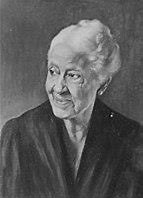
Mary Eliza Church Terrell was a renowned educator and speaker who campaigned fearlessly for women’s suffrage and the social equality of African Americans.
Circular desk calendar owned by Mary Church Terrell
Born in Memphis, Tennessee, in 1863, the year of the Emancipation Proclamation, Mary Eliza Church was part of a changing America. She was the daughter of affluent African American parents, both of whom were previously enslaved. Her mother, Louisa Ayers Church, owned a hair salon. Her father, Robert Reed Church, was a successful businessman who would later become one of the South’s first African American millionaires.
Terrell’s parents sent her to Ohio to attend preparatory school at Antioch and later Oberlin College. There she earned her bachelor’s and master’s degrees. At a time when women were not expected to achieve academically, Terrell excelled—and committed herself to pass on what she learned. After teaching for two years at Wilberforce College, she moved to Washington, D.C. to teach high school, where she met lawyer and future judge Robert Terrell. They married in 1891.
“Most girls run away from home to marry; I ran away to teach.”
— Mary Church Terrell
Although Mary Church Terrell’s life focused on education and progress, tragedy would spur her into activism.
In 1892, her childhood friend Thomas Moss was lynched in Memphis. Moss was the owner of People’s Grocery, a successful wholesale grocery outside the city. He, like Terrell, represented progress, which many whites at the time felt was a direct threat to their own commerce and livelihood. The gunshot-riddled bodies of Moss and two of his employees were left on a railroad track just north of Memphis.
Terrell, along with journalist Ida B. Wells, organized anti-lynching campaigns to mobilize advocates and generate awareness. Later she would protest President Theodore Roosevelt’s 1906 discharge of 167 African American soldiers for unfounded conspiracy claims in Brownsville, Texas. She wrote columns and essays espousing the importance of dignity and respect for the soldiers and demanded a fair trial. Her efforts were to no avail at the time, although an Army investigation in 1972 led to the honorable discharges of all the soldiers, only two of whom were still alive.

Pin for the National Association of Colored Women’s Clubs
Terrell held firm to the idea of racial uplift—the belief that blacks would help end racial discrimination by advancing themselves through education, work, and activism. Her words “lifting as we climb” became the motto of the National Association of Colored Women (NACW), the group she co-founded in 1896.
She also would go on to serve as one of the charter members of the NAACP, founded in 1909.
Understanding the intersectionality of race and gender discrimination, she lectured, penned essays, and spoke out on behalf of the women’s suffrage movement—even picketing the Woodrow Wilson White House with members of Howard University’s Delta Sigma Theta sorority.
Terrell was an active member of the National Association of Women’s Suffrage Act (NAWSA), where she worked alongside the organization’s founder, Susan B. Anthony. Terrell was invited to deliver two speeches on the challenges faced by women, and particularly women of color in America, at the International Congress of Women in Berlin in 1904. She was the only woman of African descent invited to speak at the conference. She delivered her speeches in German, French, and English, receiving a standing ovation from the audience.
Terrell’s belief that education and activism would provide a path to equality was demonstrated by her devotion to both pursuits. A self-described “dignified agitator,” Terrell would fight, protest, and work on behalf of social progress for women of color for more than half a century.
While in her 80s, Mary Church Terrell joined efforts to end segregation in restaurants in Washington, D.C., which laid the groundwork for the 1953 court ruling that segregation in D.C. restaurants was unconstitutional. In 1954, two months after the landmark Brown v. Board of Education ruling, she passed away at her home in Highland Beach, Maryland, a Chesapeake Bay resort community for affluent African Americans founded by one of Frederick Douglass’s sons.
From her tireless efforts to pass the Nineteenth amendment 100 years ago to serving as the first black woman on the Washington, D.C. Board of Education, Terrell’s work continues to echo throughout the world today. Her commitment to change opened countless doors of opportunity for those who came after her.
Her legacy endures in the hearts and minds of those continuing the fight for a world with more educated and empowered black women. From Civil Rights leaders and feminists of the 1960s to contemporary activists and trailblazers, many have and will continue to invoke Terrell’s fighting—and dignified—spirit.
The Museum helps connect individuals with a deeper understanding of the African American story by sharing the lives of inspiring pioneers like Mary Church Terrell, who demonstrate the impact one person can make on the world. Please help the Museum continue this important work and consider joining the Museum or making a donation today.
Share this American Story
1400 Constitution Ave NW, Washington, DC 20560
(844) 750-3012 | NMAAHC.si.edu
© 2020 Smithsonian Institution
Opera glasses and case owned by Mary Church Terrell. Collection of the Smithsonian National Museum of African American History and Culture, Gift of Ray and Jean Langston in memory of Mary Church and Robert Terrell.
Gelatin silver print of Mary Church Terrell by Addison Scurlock, ca. 1910. Collection of the Smithsonian National Museum of African American History and Culture, Gift of Ray and Jean Langston in memory of Mary Church and Robert Terrell.
Service award pin for Mary Church Terrell from the National Association of Colored Women, 1900. Collection of the Smithsonian National Museum of African American History and Culture, Gift of Ray and Jean Langston in memory of Mary Church and Robert Terrell.
Circular desk calendar owned by Mary Church Terrell. Collection of the Smithsonian National Museum of African American History and Culture, Gift of Ray and Jean Langston in memory of Mary Church and Robert Terrell.
Pin for the National Association of Colored Women’s Clubs. Collection of the Smithsonian National Museum of African American History and Culture, Gift of Ray and Jean Langston in memory of Mary Church and Robert Terrell.
Unsubscribe | View in Browser