Tag Archives: Black History Month

Nia Simone – In Memory


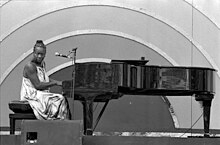
Nina Simone (born February 21, 1933, Tryon, North Carolina, U.S.—died April 21, 2003, Carry-le-Rouet, France) American singer who created urgent emotional intensity by singing songs of love, protest, and Black empowerment in a dramatic style, with a rough-edged voice.

Simone at the 1986 Playboy Jazz Festival

precocious child, Simone played piano and organ in girlhood. She became sensitive to racism when at age 12 she gave a piano recital in a library where her parents had to stand in back because they were Black. A student of classical music at the Juilliard School of Music in New York City, she began performing as a pianist. Her vocal career began in 1954 in an Atlantic CityNew Jersey, nightclub when the club owner threatened to fire her unless she sang too. Her first album featured her distinctive versions of jazz and cabaret standards, including “I Loves You, Porgy,” which became a 1959 hit.

Source: britannica.com

Feminism …


by The Thinker-Writer, January 31, 2010
 The belief that women are and should be treated as potential intellectual equals and social equals to men. These people can be male or female human beings, although the ideology is commonly (and perhaps falsely) associated mainly with women. The basic idea of Feminism revolves around the principle that just because human bodies are designed to perform certain procreative functions, biological elements need not dictate intellectual and social functions, capabilities, and rights. Feminism also, by its nature, embraces the belief that all people are entitled to freedom and liberty within reason–including equal civil rights–and that discrimination should not be made based on gender, sexual orientation, skin color, ethnicity, religion, culture, or lifestyle. Feminists–and all persons interested in civil equality and intellectuality–are dedicated to fighting the ignorance that says people are controlled by and limited to their biology.
Feminism is the belief that people are entitled to the same civil rights and liberties and can be intellectual equals regardless of gender. However, you should still hold the door for a feminist; this is known as respect or politeness and need have nothing whatever to do with gender discrimination.
By The Thinker-Writer, January 31, 2010
***********************************************************

So, why did I go to the urban dictionary for a definition of Feminism?

I saw the article above and thought, nah, that wasn’t what I was taught as a young child…

Then

beaseedforchangestickersGREENI got my Cosmo in the mail and while the fashions are fun, some gaudy, others worthy of a second look or two, but most are out of my price and age range, but when I see hair and beauty products, well now, that is a whole different response entirely. As I was thumbing through one of many magazines, which is another bad habit, an article about feminism popped up and yes folks are questioning Beyoncé among others with headlines such as, “can you be Sexy and a Feminist? ” or as Cosmo asks,

“Can you be a Sexy Feminist? It was a quick read and in all honesty, I don’t spend a lot of my time dissecting labels, but I will say that being a feminist used to be defined as a woman who didn’t appreciate men, some said, they despised them.  Honestly, there was a time when Women were advised not to question the gender roles of men & women, and when that barrier fell, women realized it was time to demand equal access to education. While so-called hardcore feminists suggested being a companion, forget about being happily married, lest we acquiesce simply because we are women. I don’t subscribe to hating on men, I like men on several levels, that includes my dad, my kid’s father, my son, a couple of teachers, and a couple of bosses who happened to be male.

As a side note on a political level, current Republican men are the bane of our (women) existence in my opinion.

  So, getting back to Feminism, when it comes to being an active participant in what seemingly is the opposite side of equality and justice for everyone.  I have to admit, I have danced to fabulous music that had one or more negatives like sexual assault, and misogynistic and chauvinistic words. It’s definitely not something I ever used to think about while dancing, and as an adult, I found it upsetting when what was being said became clear; generally, this kind of talk would get a whole different response if these words were being exchanged through a conversation at work, a bar or one on one. In this 21st Century, we hear more Women with edgy lyrics and to find out that a story or two based on reality inadvertently comes to light … so, the choice to listen and buy is up to you.

   However, it does appear that the word feminism or being a feminist in this 21st century society is ever-changing and ever-evolving to bring about a belief in equality and the rights for everyone in all its forms and genders. I see the urban dictionary as a place run not only by a younger group of folks, but who use it, research it, and discuss the “stuff” they post. I admit to not referring to the urban dictionary that much, but I found the post in the process of searching out what younger folks felt about the comments on who is or can be a feminist, it caught my eye.  As you read on, Cosmo asked stars like Lady Gaga, Lana Del Rey, and Taylor Swift just to name a few, but when Pharrell was asked he stated, “I don’t think it’s possible for me to be (a feminist). I’m a man, but I do support feminists.”

Anyway, an article worth reading in Cosmo in September 2014

~~ Nativegrl77

What do you think?

Is being a feminist gender-specific?

The answer is yes, in the 1800s, as the root of feminism they used to define women, was fem, being that of the female feminine persuasion, so Pharrell among others probably used the definitions as their guide … though in this 21st Century like and while we are coming out of the nightmare that was the era of trump … The dictionary defines a Feminist as a person who believes in Equal Rights for Women. We need more 21st Century thoughts and people action.

 

a sport not many focus on … Golf & Women of Colour – reminder – Black History


Wethepeople

So, I’m flipping through my newest 2015 Essence from back to front because of the horoscope section and as I’m looking I see a section called “trending topics” reporting that the USTA just appointed former tennis player Katrina Adams, President, CEO and chairman of the board and the first African American to fill the role. So, more things have changed in the World of Sports in which women of colour historically have not dominated.  While flipping through my 2014 issue of Essence with various fashions it was became obvious that this is not just about fashion, though the title gave me that impression and had to share given the history. In fact, it is about a Woman named Renee Powell and some young Women who were introduced to her and who have chosen her as their mentor. Now, the surprise to most would be that these brightly fashionable women are people of colour and that the article is about golf or as they say, “One of America’s favourite pastimes.”  In fact my family lived just a few blocks away from a golf course and while golf wasn’t my choice the history of golf was well known in our house, including a couple of good along with the bad and the really ugly stories of racism. It is a sad day to know that the practice is still alive and well, though tiger woods did shatter the glass ceiling some. The art of discrimination is subtle these days, while the stories of’ the good ‘olé boys club were worse, golf is a work in progress. The article tells us about the ups and downs of Powell’s life and daily experiences as a young girl to becoming one of four African-American women qualifying for golf’s top pro-circuit … The LPGA Tour that included Althea Gibson, LaRee Pearl Sugg, Shasta Avery Hardt and Renee Powell. Their legacy on the links is gone into in depth. They list the youngest pro at 17, four others including the niece of tiger woods who also has a great story, but what is even more exciting is that after Powell retired she now owns her own golf club, is the golf pro. She also teaches and mentors a new generation of girls/women of colour who love the game and are willing to take it as far as they can. Golfing is not cheap, so, if you have an opportunity to donate to your area’s youth sports club or make time to teach train and expose kids of colour to golf … do it!

Oh and the article on Golf is in Essence and was written by Connie Aitcheson

and … it’s in  “Trending Topics”  the February issue of Essence

Carter Woodson ~ American historian


Carter G. Woodson

To commemorate and celebrate the contributions to our nation made by people of African descent, American historian Carter G. Woodson established Black History Week. The first celebration occurred on Feb. 12, 1926. For many years, the second week of February was set aside for this celebration to coincide with the birthdays of abolitionist/editor Frederick Douglass and Abraham Lincoln. In 1976, as part of the nation’s bicentennial, the week was expanded to a month. Since then, U.S. presidents have proclaimed February as National African-American History Month.


In the fall of 1870, a handful of students made their way through the northwest quadrant of the nation’s capital, and through the doors of D.C.’s “Preparatory High School for Colored Youth,” the country’s first public high school for African American children. The students and teachers who graced its hallways would be heard through the years in the halls of Congress, in the highest ranks of the United States military, at the heart of our civil rights movement, and in the upper echelons of medical and scientific study.

One such voice was that of Carter G. Woodson; a journalist, author, historian, and co-founder of the Association for the Study of Negro Life and History (ASNLH). It was through his work with the ASNLH that Woodson spearheaded the celebration of “Negro History Week” in America, which served as the precursor to Black History Month, which was officially recognized by President Gerald Ford in 1976. Woodson taught us that, “those who have no record of what their forebears have accomplished lose the inspiration which comes from the teaching of biography and history.”

Find out more about Carter G. Woodson.


Jim crow… did you know?


Jim Crow Era

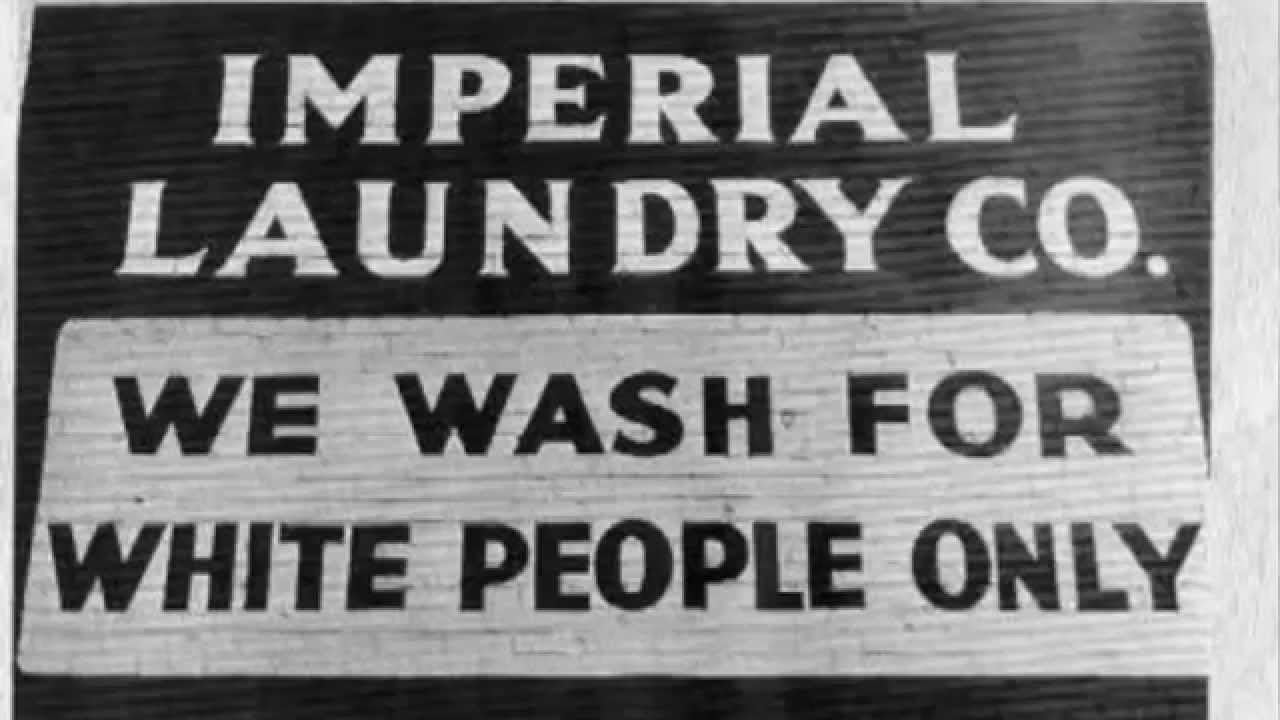
After the Civil War, there was a period from about 1865 to 1877 where federal laws offered observable protection of civil rights for former slaves and free blacks; it wasn’t entirely awful to be an African American, even in the South. However, starting in the 1870s, as the Southern economy continued its decline, Democrats took over power in Southern legislatures and used intimidation tactics to suppress black voters. Tactics included violence against blacks and those tactics continued well into the 1900s. Lynchings were a common form of terrorism practiced against blacks to intimidate them. It is important to remember that the Democrats and Republicans of the late 1800s were very different parties from their current iterations. Republicans in the time of the Civil War and directly after were literally the party of Lincoln and anathema to the South. As white, Southern Democrats took over legislatures in the former Confederate states, they began passing more restrictive voter registration and electoral laws, as well as passing legislation to segregate blacks and whites.

It wasn’t enough just to separate out blacks – segregation was never about “separate but equal.” While the Supreme Court naively speculated in Plessy v. Ferguson that somehow mankind wouldn’t show its worst nature and that segregation could occur without one side being significantly disadvantaged despite all evidence to the contrary, we can look back in hindsight and see that the Court was either foolishly optimistic or suffering from the same racism that gripped the other arms of the government at the time. In practice, the services and facilities for blacks were consistently inferior, underfunded, and more inconvenient as compared to those offered to whites – or the services and facilities did not exist at all for blacks. While segregation was literal law in the South, it was also practiced in the northern United States via housing patterns enforced by private covenants, bank lending practices, and job discrimination, including discriminatory labor union practices.

This kind of de facto segregation has lasted well into our own time.

The era of Jim Crow laws saw a dramatic reduction in the number of blacks registered to vote within the South. This time period brought about the Great Migration of blacks to northern and western cities like New York City, Chicago, and Los Angeles. In the 1920s, the Ku Klux Klan experienced a resurgence and spread all over the country, finding a significant popularity that has lingered to this day in the Midwest. It was claimed at the height of the second incarnation of the KKK that its membership exceeded 4 million people nationwide. The Klan didn’t shy away from using burning crosses and other intimidation tools to strike fear into their opponents, who included not just blacks, but also Catholics, Jews, and anyone who wasn’t a white Protestant.

This time period was not without its triumphs for blacks, even if they came at a cost or if they were smaller than one would have preferred. The NAACP was founded in 1909, in response to the continued practice of lynching and race riots in Springfield, Ill. From the 1920s through the 1930s in Harlem, New York, a cultural, social, and artistic movement took place that was later coined the Harlem Renaissance. Musicians like Duke Ellington and Jelly Roll Morton, writers such as Zora Neale Hurston and Langston Hughes, it-girls like Josephine Baker, and philosophers like W.E.B. Du Bois all had a hand in the Harlem Renaissance and American culture as a whole is richer and better for it. 

Notable Supreme Court Cases:

  • The Slaughter-House Cases, 83 U.S. 36 (1873) – this series of three cases, which were consolidated into one issue, offered the first opinion from the Supreme Court on the 14th Amendment. The court chose to interpret the rights protected by the 14th Amendment as very narrow and this precedent would be followed for many years to come.
  • Civil Rights Cases, 109 U.S. 3 (1883) – in this set of five cases that were consolidated into one issue, a majority of the court held the Civil Rights Act of 1875 unconstitutional against the lone famous dissent of Justice Harlan. The majority argued that Congress lacked authority to regulate private affairs under the 14th Amendment and that the 13th Amendment “merely abolishe[d] slavery”. Segregation in public accommodations would not be declared illegal after these cases until the Civil Rights Act of 1964.
  • Plessy v. Ferguson, 163 U.S. 537 (1896) – this is the case which gave us the phrase “separate but equal” and upheld state racial segregation laws for public facilities. Justice Harlan again offered a lone dissent. These laws would remain in play until 1954.

Selected Library Resources:

Additional Resources:

library.law.howard.edu