Tag Archives: black people

News from … April 4 2015- things to remember!


World

7 San Francisco officers suspended over racist texts Associated Press

**********

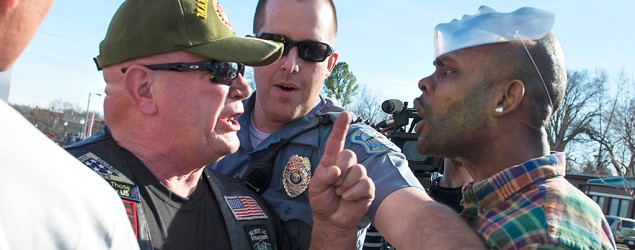
A police officer tries to separate a supporter of Michael Brown from a Ferguson police supporter. (Reuters)

Contents of racist Ferguson emails released

One of the messages compares black welfare recipients to mixed-breed dogs. 

Several references to President Obama »

**********

Here’s What Happens When Pregnant Women Lose Their Rights

Purvi Patel’s case is just the latest miscarriage of justice.

**********

Bethann Hardison on Winning Over the Battle of Versailles  Crowd

“I knew I nailed it.”

**********

A total lunar eclipse is coming Saturday morning. Don’t miss this “blood moon.”

**********

 Water, Cuts and Allocation of Pain
Critics of the historic drought restrictions announced this week by Gov. Jerry Brown want to know why he didn’t bring the hammer down on California farmers.

**********

Jefferson Thomas and the courage of Children ~ Black History


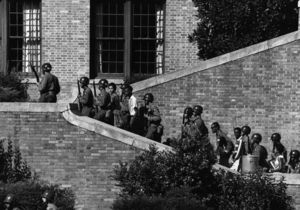
Jefferson Thomas and the Courage of Children

by Marian Wright Edelman

In 1957, Jefferson Thomas and eight fellow black students known as the Little Rock Nine stood up to institutionalized segregation in America‘s education system and helped our nation live up to the promise of Brown v. Board of Education. Thomas passed away, but Change.org Changemaker Marian Wright Edelman writes that his legacy will live on in all who fight for equality.

for the complete article … use the link below

https://www.huffingtonpost.com/marian-wright-edelman/jefferson-thomas-and-the_b_714390.html?ncid=engmodushpmg00000004 via huffingtonpost.com


A Picture Worth a Thousand More …Lonnie G. Bunch at The NMAAHC- Black History


a repost … 2011

Lonnie Bunch, museum director, historian, lecturer, and author, is proud to present A Page from Our American Story, a regular on-line series for Museum supporters. It will showcase individuals and events in the African American experience, placing these stories in the context of a larger story — our American story

Few things date history as readily as fashion. The caveat “that was the fashion of the times” can be applied to everything from bustles and corsets to micro-mini skirts and polyester pants suits — fashions at the turn of the twentieth century and styles created during the 1960s-’70s.

While designs have changed over the years, one thing remained the same: from department store catalogs to high-end fashion magazines, the models dressed in the latest fashions were white.

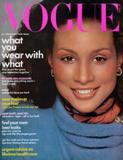
So it was a major event when Katiti Kironde appeared in the August 1968 issue of Glamour College, the first African American to appear on a American fashion magazine’s cover. Six years later, in August 1974, Beverly Johnson became the first African American woman featured on the cover of Vogue magazine — the industry’s supreme publication. It was another landmark.

Like virtually everything else on the path to equal opportunity for African Americans, progress was slow and came in steps, not leaps. So when an African American woman first appeared in one of the fashion industry’s premier magazines, it was not on a cover or with a huge, multi-page layout.

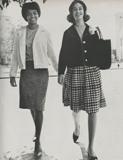
Instead, seven years before Kironde’s Glamour cover, a coed at the University of California at Los Angeles (UCLA), Willette Murphy, quietly appeared on the pages of the August 1961 issue of another hugely popular magazine, Mademoiselle.

Murphy, now Willette Klausner, was pictured wearing a simple skirt, top and jacket, and walking on the UCLA campus. Initially, she viewed the moment as “just another thing I’d done.”

Far from it: Willette Murphy’s appearance in the magazine was not merely “just another thing.” Her Mademoiselle photograph was groundbreaking. Yet, Murphy was unaware of her place in history, until a New York Times’ reporter contacted her family. “I guess my sister found out when the New York Times called my parents,” Klausner said in a published interview.

Her family was used to Willette achieving things African Americans rarely experienced at that time — she was UCLA’s first black senior class president, for example — but the call from the Times made the family realize that their daughter had made history.

For decades, in high powered fashion magazines like Vogue, Glamour and Mademoiselle, to the Sears and Roebuck and other mail order catalogs, to models walking runways in Paris and New York, the face of fashion had been white.

Images of African Americans were scarce even in popular, mainstream American magazines. Many white Americans were shocked when Dorothy Dandridge became the first African American female to appear on the cover of LIFE in November, 1954. It would be nearly four years later before another black American, boxer Sugar Ray Robinson, would find his way onto that magazine’s front page. Another African American female celebrity would not grace LIFE’s cover again until the December 8, 1967 issue which featured Pearl Bailey.

Imagine growing up black and female and seeing dress after dress, swimsuit after swimsuit, shoe after shoe — all pictured only on white women. Along with every other message sent to African Americans, this underscored the sense that African Americans were, to a great degree, nonexistent — even when it came to buying clothes.

Today fashion marketers, like marketers from every other industry, recognize that the face of America is as diverse as its people. They also recognize that African Americans’ buying power was estimated at $913 billion in 2009. A University of Georgia economics study projects that figure will rise to $1.2 trillion in 2013 — nearly 9% of the country’s estimated purchasing strength.

Today the power of the African American pocketbook is reflected on the covers of countless magazines — fashion, entertainment, and political publications which routinely feature black models, entertainers, authors, politicians and more.

Willette Murphy Klausner
Photo Courtesy of Ms. Klausner

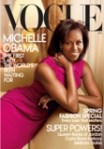
Today, it is no longer shocking to walk into a supermarket and find an African American on a magazine cover. In March 2009, First Lady Michelle Obama appeared on the cover of Vogue, only the second first lady to do so. In recent years Vogue has seen a number of black women grace its cover.

Sometimes history is made in giant leaps. More often, however, it is made in smaller, sometimes unexpected steps. Willette Murphy Klausner would become the first black merchandising executive at Bloomingdale’s, later the first female corporate vice president at MCA Universal Studios and, together with Julia Child and Robert Mondavi, the co-founder of the American Institute of Wine and Food in 1981. Today, she is a successful theater producer.

It is her photo in Mademoiselle that we celebrate today. A picture that would launch thousands more.


Lonnie Bunch, Director

All the best,
Lonnie Bunch
Director
P.S. We can only reach our $250 million goal with your help. I hope you will consider making a donation or becoming a Charter Member today.

The impact of SB1070 on people of color… by Joel Dreyfuss


In 2010, the reality of life smacked folks in the face, and people of color were targets in the state of AZ imo we are headed in that same direction, but it’s 2026 now!

The Source: The Root …This is a Re-Post
 
If you’re black and think that state’s new immigration law has nothing to do with you, think again. By: Joel Dreyfuss


A law that makes people suspects on the basis of their looks should outrage African Americans, even if they are worried about illegal immigration.

The immigration law passed in Arizona last week is the kind of reckless act that keeps us minorities paranoid in America. The new law compels local law enforcers to verify immigration status based on “reasonable suspicion”–whatever that is–and has created the potential for cops to stop brown people in the streets and demand to see their papers. Even the sheriff of Pima County, Ariz., (which borders Mexico) says the law is “stupid,” “racist,” and would force his officers to racially profile people. The scope of the law was narrowed after its passage in order to assure Hispanics, who make up 30 percent of the state’s population, that they would not be the victims of racial profiling.

But those assurances that people won’t be suspects because of the way they look have little credibility when the experience of black and brown people in America has been so contrary to those promises. Being stopped for Driving While Black (or Brown) is such a common phenomenon that comedians make jokes about it. And a city like New York, which operates a massive stop-and-frisk policy that probably violates a dozen constitutional principles, keeps trying to explain why black and brown citizens make up 80 to 90 percent of those questioned by police. The latest rationale: They fit the description of suspected perps when 98 percent of those stopped and questioned are innocent of any crime.

The reason people of color get worked up about such policies is America’s nasty habit of making everything racial in a panic. We have a long history of lynchings and runaway convictions that were triggered by fears that black people were getting out of hand in some fashion, whether it was interracial sex or talking back to massa. The roundup of Japanese Americans during World War II will forever stain this country’s history.

After 9/11, looking Arab or simply wearing a turban, whether you are Muslim or not, turned out to be a grave danger in some parts of the country and a constant annoyance in others. No Muslim American believes that the frequent “random” checks they endured at airports in the months after the tragedy were really a matter of chance. And last week, the front page of the Boston Herald illustrated a cover story about the crackdown on benefits for illegal immigrants with a photo of black, Hispanic and Asian models, their foreheads stamped with the following: “No Tuition, No Welfare, No Medicaid.” Ironically, the headline at above the newspaper’s logo announced a “workplace diversity job fair.”

Of course, the concept of white or blonde illegal aliens is apparently beyond the capacity of the people passing the laws or the editors at the Herald. But nearly 600,000 of those in the United States illegally were estimated to come from Europe or Canada in 2005; and while I knew many Irish, English and other Europeans who had overstayed their visas when I was growing up in New York, I never heard of a raid of an Irish bar, except when ATF or the FBI were trying to trap Irish Republican Army gun runners during the “troubles.”

Now Arizona, better known for resorts, retirees in golf carts, and college basketball teams whose players never graduate, is suddenly at the center of a debate that could shape U.S. politics for the next 10 years. The only surprise is that it took so long. All the great economies have been struggling with the immigration issue for years. Just last week, France was in tizzy about the burqa, the full-length outfit with only an eye-slit that conservative Muslim women wear. Nicolas Sarkozy’s government has considered banning the burqa on security grounds (you can’t identify the person), but the real reason behind this initiative, Arizona’s or any of the dozen being considered in other states or countries is fear of change.

No doubt, the Great Recession of the last three years has heightened American insecurity. Although the downturn has hit blue-collar workers the hardest, many people who thought they were solidly in the middle class have seen their savings, their safety net, even their homes evaporate in the financial collapse. The next step for many of them would be to step “down” into the blue-collar workforce. Suddenly, the Mexican, Salvadorian and African immigrants they hardly noticed during boom times are now potential competitors.

African Americans, who lost more than their fair share of blue-collar jobs in the downturn, have long been ambiguous about illegal immigration. As Cord Jefferson noted here a few months ago, a growing number of experts believe that blacks and Hispanic immigrants battle for unskilled jobs at the bottom of the labor pool. Black Americans have not turned out in large numbers at immigration rallies, despite the fact that many African-American politicians talk of the need for coalitions with Hispanics.

But a law that puts you in jeopardy for being has special resonance with black Americans. We already know the peril of living in a state where you are presumed guilty by the color of your skin. A law that makes a suspect of anyone who might look illegal should make us vigorously resist this encroachment.

Joel Dreyfuss is managing editor of The Root. Follow him on Twitter.

In memory of Claudette Colvin


Black History Unsung Heroes: Claudette Colvin

Women’s History Month

Image result for claudette colvin

Black History Unsung Heroes: Claudette Colvin

click on link above to read her amazing story

As a teenager, she made history, but it took decades for her to become recognized for her courage and achievements.

source: biography.com

first posted 2015

A full nine months before Rosa Parks‘s famous act of civil disobedience, 15-year-old Claudette Colvin is arrested on March 2, 1955 for refusing to give up her seat on a segregated Montgomery, Alabama bus. 

Colvin was traveling home from school when the bus’ driver ordered her, along with three fellow Black students, to give up their row of seats to a white passenger. Colvin’s friends obliged, but she refused to move. At school, she had recently learned about abolitionists, and later recalled that “it felt like Sojourner Truth was on one side pushing me down, and Harriet Tubman was on the other side of me pushing me down. I couldn’t get up.”

Women’s History Month!