|
|||
|



|
|||
|

The Social Security Administration has lost its mind.
They’re about to close dozens of field offices. But don’t worry, they say. Seniors will use their smartphones or laptops if they need help.
The SSA may think they’ve got a great money saving idea, but this could be disaster for seniors with vision problems or arthritis, or those who can’t afford a computer.
Social Security is a great system, but it’s often complex. While many seniors are expert computer users, others will struggle.
Our parents and grandparents deserve to have a human face to guide them. They’ve done too much for us to be abandoned now.
Please sign our petition demanding the the Senate pass S.2742, which would require any future office closures to go through a public review period to ensure that local communities can stand up for their field offices.
It’s the least we can do.

Will my Social Security benefits be taxable?
It depends on your income. The taxation of Social Security benefits is based on your “combined income,” which is your adjusted gross income (the bottom of page 1 of your Form 1040) plus tax-exempt interest and 50% of your Social Security benefits.
Your benefits are tax-free if your combined income is less than $25,000 if you are single or $32,000 if you file a joint return. Above that level, up to half of your benefits are taxable if your combined income is up to $34,000 on a single return or $44,000 on a joint return. And as much as 85% of your Social Security benefits are taxable if your combined income is more than $34,000 on a single return or $44,000 on a joint return. See Income Taxes and Your Social Security Benefits for details.
Be careful about moves you make that could boost your income and increase your Social Security taxes, such as converting a traditional IRA to a Roth after you start receiving Social Security benefits. Instead of making a big conversion in one year, you may want to spread out your conversions over several years if that helps you stay below the cutoff for paying taxes on your benefits. Also, reducing the amount of money subject to required minimum distributions after you turn 70½ can help you stay below the income cutoff for paying taxes on Social Security benefits. For example, Roths aren’t subject to RMDs, so the more money you convert from traditional IRAs to Roths through the years, the less money that will be subject to required minimum distributions.
For more information about Social Security, see Best Strategies to Boost Your Social Security Benefits.
In an announcement that hardly anyone saw coming, President Obama today declared that the United States will begin the process of normalizing relations with Cuba for the first time in half a century. Decades of isolation have not yielded any improvement in promoting democracy in Cuba, and there is no good reason to keep doing the same thing and expect a different result.
Along with this historic change in U.S. foreign policy, Cuba has returned Alan Gross to American soil. Gross was an American contractor for the United States Agency for International Development (USAID) who spent five years in Cuban jail: his crime was working to increase Internet access and connectivity in small communities on the island. “What a blessing it is to be a citizen of this country,” Gross said at a news conference this afternoon.
Cuba will also release more than 50 political prisoners and a key U.S. intelligence asset held for nearly 20 years in exchange for the United States releasing several Cuban spies.
Here are some other key details of the agreement:
1. The two counties will re-open diplomatic ties. The United States will re-establish an embassy in Havana, travel restrictions will be loosened, and the embargo on economic goods will be eased. Congressional action, however, is required to fully lift the economic embargo between the two countries.
2. Pope Francis helped to facilitate the deal.
The Pope was “directly involved in the talks “, according to Obama administration officials, appealing to both countries and hosting a key meeting at the Vatican this fall. He released a statement congratulating both parties on the agreement.
3. The American public supports this move. Polls have consistently found that a majority of Americans, Cuban Americans, and even Republicans support normalization of relations with Cuba.
4. Economic impacts for Cubans could be significant. The island nation has been isolated from much of the world for a long time. Under the new agreement, Americans will be able to send $6000 more a year to people in Cuba (Cubans, on average, earn just $17 a month). And more Americans will be about to travel to Cuba — and return with up to $400 worth of goods for personal use. That includes — you guessed it — up to $100 worth of Cuban cigars.
Not everyone is cheering the agreement. But those opposing the deal, led by Sen. Marco Rubio, are offering arguments rooted in hypocrisy. Rubio has vowed to “make every effort to block this dangerous and desperate attempt,” and states that the “new policy is based on an illusion, on a lie.” But this outcry contradicts his own faith in the power of free market economies to introduce Cubans to an American-style economy and spread freedom as Republicans usually argue it would.
BOTTOM LINE: An historic agreement between the United States and Cuba and brokered by the Pope has freed American political prisoners and will chart a new course in relations between the two countries. The era of isolation did not help spread democracy or improve human rights; a new approach that values diplomatic engagement and the empowerment of Cuban civil society is the right way to go.
|
|
|
In January 2015
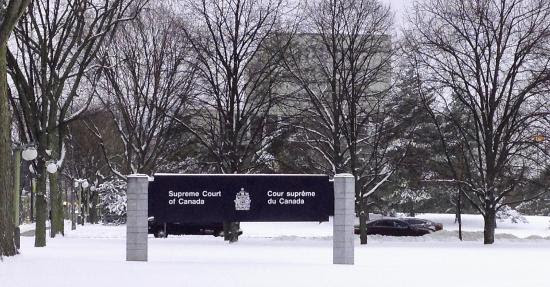
Ottawa, CA – Hockey. Maple syrup. Round bacon. Canada is known for many things. But it is also now, unexpectedly, the new battleground for one of the world’s most epic environmental litigations.
With sub-freezing temperatures and the first snow of the season on the ground, one might have thought that hell had indeed frozen over and that Chevron was finally ready to fight it out on the ice, as promised, in its effort to avoid paying a $9.5 billion judgment to Ecuadorian rainforest communities. But the hearing this month before Canada’s Supreme Court was just Chevron’s latest legal maneuver to deny justice to 30,000 Ecuadorian indigenous and farmer communities seeking clean water, healthcare, and a full remediation of the contamination the company left behind over two decades ago.
Read the rest on Eye on the Amazon »
CHEVRON DESERVES THE PUBLIC EYE LIFETIME ACHIEVEMENT AWARD FOR CORPORATE IRRESPONSIBILITY. HAVE YOU VOTED YET?


 Be a Seed for Change
You must be logged in to post a comment.