Tag Archives: card check

Massai seek return of the ancestral lands they lost at gunpoint


in Laikipia district, Kenya

a repost

Using a long stick with a hooked tip, Mary Kinyanga tugs a branch of the thorny savannah tree and brings juicy green seed pods cascading down for her goats.

As her flock munches audibly, she casts an envious glance at the neighbouring white-owned ranch, where guests are arriving by light aeroplane for a wedding party.

“They are giving us big problems,” Ms Kinyanga says of her neighbours. “They have grass. We need the land. It belongs to us, but if somebody goes grazing there, they get put in jail.”

Driven from their land at gunpoint in 1911, Masai tribes in Kenya’s Laikipia district are demanding the return of their ancestral territory. Their campaign pits them against a handful of white farmers whose families created vast ranches on the land after the expulsion of the tribes.

But the farmers accuse the Masai of destructive overgrazing of the land, and fear that attempts to reclaim the territory will spell doom for its wildlife and ruin a lucrative tourist trade.

The Masai campaign is based on a belief that a treaty signed with the British colonial government in 1904 gave the colonial power a 100-year lease on their ancestral lands, which will expire next month.

“Everyone is aware of the impending land issue,” says Michael Dyer, whose family owns the 13,000-hectare (32,000-acre) Borana ranch. “We had nothing to do with the ancestral land being taken away. We do recognise there is an issue [but] we are concerned about the ecological preservation of a very valuable resource.”

The vast Laikipia plateau stretches across 2m acres of mountain, savannah and forest from Mount Kenya in the east to the Rift valley in the west. Local wildlife experts say it is home to more endangered wildlife than anywhere else in Kenya, including more than half the country’s rhino population and 80% of the world’s population of Grevy’s zebra.

In recent years, prompted by falling beef prices, the white ranchers have shifted from farming to ecotourism for the ultra-rich: prices at some lodges top $500 (£270) a night.

“It does not matter to me who owns the land,” Mr Dyer says of the Masai claim. “It is more important what happens to it. Sections of the land are vastly overgrazed.”

There is a stark and visible contrast between the regions of Laikipia where the Masai are free to wander and the commercial ranches. The hills where Mary Kinyanga’s goats graze are bare and brown; the grass is baked a bright yellow in the dry season, and there is little sign of wildlife.

The white ranches are lusher and vast herds of elephants, giraffe and antelope roam behind electric fences.

But an expert on the resettlements argues that the Masai were forced into overgrazing by British colonial policies which took their best land and confined them to reserves.

“Of course they overgrazed,” says Lotte Hughes, an east African historian at St Antony’s College, Oxford. “They were confined to reserves, banned from leaving them, and banned from selling their surplus cattle because the British were obsessed by the idea of ‘disease-infested’ native cattle alongside exotic, imported stock.”

Dr Hughes criticises the wildlife preservation argument as the “Fortress Conservation model”.

“People don’t seem to realise that the landscape is shaped by people and their domestic herds,” she says. “For centuries there was no problem.”

The campaign to win the return of Laikipia was launched at the weekend by Osiligi, the community group which was instrumental in the Masai’s successful campaign for compensation from the Ministry of Defence for alleged injuries from British army ordnance.

In September 2002 a group of Massai and Samburu tribesmen received a £4.5m settlement for injuries and deaths blamed on munitions left over from British soldiers’ training exercises. That payment, and a further £500,000 settlement in February this year, has encouraged the belief that the Masai can win further compensation.

At a press conference staged with theatrical flair, the community group gathered 18 Masai elders, who dressed in their traditional scarlet robes and chanted a battle song adapted to their new theme.

“God, give us back our land,” a wizened Masai chief crooned, while the men who sat around him in a semi-circle cried their assent with a deep-throated “heh”. “May the world listen to us,” the chief chanted.

James Legei, manager of Osiligi, says: “The movement of the Masai from Laikipia marked the end of us conducting our [religious] ceremonies, because there are sacred sites that are now within electric fences.

“We hope that by August 15 our land will get back to us, and we can go to visit the graves of our great fathers.”

The belief that there is a 100-year lease expiring in August 2004 is the Masai equivalent of an urban myth, however. The 1904 agreement cleared the tribe from prime land to make way for white settlers. Their territory was reduced by two-thirds, but they were permitted to stay in Laikipia. But rather than a lease, the treaty promised the Laikipia plateau to the Masai in perpetuity.

That promise was broken between 1911 and 1913 when the Masai were forced to move from Laikipia to distant reserves.

Dr Hughes says: “I have every sympathy with the Masai. Their sense of betrayal at the hands of the colonial British government is justified and rooted in strong historical evidence that I have spent several years researching.

“But I must point out – with the greatest respect to my Masai friends – that some of the claims [they are making] are factually incorrect. [The 1904 agreement] was not a lease.”

The descendants of the white settlers are conscious of the need to contribute to the wellbeing of the people the British dispossessed. Even in the colonial era, some Masai returned to work for the British and built close ties with white landowners.

Some ranches in the district are now “community-owned” – run by Masai as farms and tourist lodges with the aid of their white neighbours.

Profits from the big ranches have been spent on mobile clinics and schools for the Masai, and the white farmers employ many Masai as park rangers, drivers and domestic staff.

Both the white residents and some Masai fear that the land claims will lead to violence, which will scare away the tourists and ruin livelihoods. David Masere, community liaison officer for the Laikipia Wildlife Forum, says: “It is a fact that this land was taken from the Masai. But if force is used, then we are going to have conflict and we are going to lose a lot.”

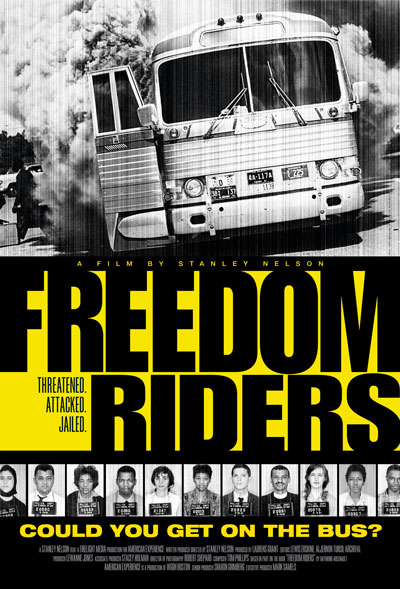
FREEDOM RIDERS : A Stanley Nelson Film : American Experience – In memory


  Get Inspired

 The World Premiere: In 2010 at Sundance Film Festival, US

 A Documentary Competition

Award-winning filmmaker Stanley Nelson (Wounded Knee, Jonestown: The Life and Death of Peoples Temple, The Murder of Emmett Till) returns to the Sundance Film Festival with his latest documentary FREEDOM RIDERS, the powerful, harrowing and ultimately inspirational story of six months in 1961 that changed America forever. From May until November 1961, more than 400 black and white Americans risked their lives—and many endured savage beatings and imprisonment—for simply traveling together on buses and trains as they journeyed through the Deep South. Deliberately violating Jim Crow laws, the Freedom Riders’ belief in non-violent activism was sorely tested as mob violence and bitter racism greeted them along the way.

FREEDOM RIDERS features testimony from a fascinating cast of central characters: the Riders themselves, state and federal government officials, and journalists who witnessed the rides firsthand.

“I got up one morning in May and I said to my folks at home, I won’t be back today because I’m a Freedom Rider. It was like a wave or a wind that you didn’t know where it was coming from or where it was going, but you knew you were supposed to be there.” — Pauline Knight-Ofuso, Freedom Rider

Despite two earlier Supreme Court decisions that mandated the desegregation of interstate travel facilities, black Americans in 1961 continued to endure hostility and racism while traveling through the South. The newly inaugurated Kennedy administration, embroiled in the Cold War and worried about the nuclear threat, did little to address domestic Civil Rights.See the source image

“It became clear that the Civil Rights leaders had to do something desperate, something dramatic to get Kennedy’s attention. That was the idea behind the Freedom Rides—to dare the federal government to do what it was supposed to do, and see if their constitutional rights would be protected by the Kennedy administration,” explains Raymond Arsenault, author of Freedom Riders: 1961 and the Struggle for Racial Justice, on which the film is partially based.

Organized by the Congress of Racial Equality (CORE), the self-proclaimed “Freedom Riders” came from all strata of American society—black and white, young and old, male and female, Northern and Southern. They embarked on the Rides knowing the danger but firmly committed to the ideals of non-violent protest, aware that their actions could provoke a savage response but willing to put their lives on the line for the cause of justice.

Each time the Freedom Rides met violence and the campaign seemed doomed, new ways were found to sustain and even expand the movement. After Klansmen in Alabama set fire to the original Freedom Ride bus, student activists from Nashville organized a ride of their own. “We were past fear. If we were going to die, we were gonna die, but we can’t stop,” recalls Rider Joan Trumpauer-Mulholland. “If one person falls, others take their place.”

Later, Mississippi officials locked up more than 300 Riders in the notorious Parchman State Penitentiary. Rather than weaken the Riders’ resolve, the move only strengthened their determination. None of the obstacles placed in their path would weaken their commitment.

The Riders’ journey was front-page news and the world was watching. After nearly five months of fighting, the federal government capitulated. On September 22, the Interstate Commerce Commission issued its order to end the segregation in bus and rail stations that had been in place for generations. “This was the first unambiguous victory in the long history of the Civil Rights Movement. It finally said, ‘We can do this.’ And it raised expectations across the board for greater victories in the future,” says Arsenault.

“The people that took a seat on these buses, that went to jail in Jackson, that went to Parchman, they were never the same. We had moments there to learn, to teach each other the way of nonviolence, the way of love, the way of peace. The Freedom Ride created an unbelievable sense: Yes, we will make it. Yes, we will survive. And that nothing, but nothing, was going to stop this movement,” recalls Congressman John Lewis, one of the original Riders.

Says Stanley Nelson, “The lesson of the Freedom Rides is that great change can come from a few small steps taken by courageous people. And that sometimes to do any great thing, it’s important that we step out alone.”

CREDITS
A Stanley Nelson Film
A Firelight Media Production for AMERICAN EXPERIENCE

Produced, Written and Directed by
Stanley Nelson

Produced by
Laurens Grant

Edited by
Lewis Erskine, Aljernon Tunsil

Archival Producer
Lewanne Jones

Associate Producer
Stacey HolmanDirector of Photography
Robert Shepard

Composer
Tom Phillips

Music Supervisor
Rena Kosersky

Based in part on the book Freedom Riders by
Raymond Arsenault

AMERICAN EXPERIENCE is a production of WGBH Boston.
Senior producer
Sharon Grimberg

Executive producer
Mark Samels

I have been to the Mountaintop: April 3 ~ 4,1968


April 4, 1968, The civil rights leader was in Memphis to support a sanitation workers’ strike and was on his way to dinner when a bullet struck him in the jaw and severed his spinal cord. King, pronounced dead after his arrival at a Memphis hospital. He was 39 years old.

In the months before his assassination, Martin Luther King became increasingly concerned with the problem of economic inequality in America. He organized a Poor People’s Campaign to focus on the issue, including an interracial poor people’s marchon Washington, and in March 1968 traveled to Memphis in support of poorly treated African-American sanitation workers. On March 28, a workers’ protest march led by King ended in violence and the death of an African-American teenager. King left the city but vowed to return in early April to lead another demonstration.

On April 3, back in Memphis, King gave his last sermon, saying, “We’ve got some difficult days ahead. But it really doesn’t matter with me now, because I’ve been to the mountaintop…And He’s allowed me to go up to the mountain. And I’ve looked over, and I’ve seen the Promised Land. I may not get there with you. But I want you to know tonight that we, as a people, will get to the promised land.”

One day after speaking those words, Dr. King was shot and killed by a sniper. As word of the assassination spread, riots broke out in cities all across the United States and National Guard troops were deployed in Memphis and Washington, D.C. On April 9, King was laid to rest in his hometown of Atlanta, Georgia. Tens of thousands of people lined the streets to pay tribute to King’s casket as it passed by in a wooden farm cart drawn by two mules.

The evening of King’s murder, a Remington .30-06 hunting rifle was found on the sidewalk beside a rooming house one block from the Lorraine Motel. During the next several weeks, the rifle, eyewitness reports, and fingerprints on the weapon all implicated a single suspect: escaped convict James Earl Ray. A two-bit criminal, Ray escaped a Missouri prison in April 1967 while serving a sentence for a holdup. In May 1968, a massive manhunt for Ray began. The FBI eventually determined that he had obtained a Canadian passport under a false identity, which at the time was relatively easy.

On June 8, Scotland Yard investigators arrested Ray at a London airport. He was trying to fly to Belgium, with the eventual goal, he later admitted, of reaching Rhodesia. Rhodesia, now called Zimbabwe, was at the time ruled by an oppressive and internationally condemned white minority government. Extradited to the United States, Ray stood before a Memphis judge in March 1969 and pleaded guilty to King’s murder in order to avoid the electric chair. He was sentenced to 99 years in prison.

Three days later, he attempted to withdraw his guilty plea, claiming he was innocent of King’s assassination and had been set up as a patsy in a larger conspiracy. He claimed that in 1967, a mysterious man named “Raoul” had approached him and recruited him into a gun running enterprise. On April 4, 1968, he said, he realized that he was to be the fall guy for the King assassination and fled to Canada. Ray’s motion was denied, as were his dozens of other requests for a trial during the next 29 years.

During the 1990s, the widow and children of Martin Luther King Jr. spoke publicly in support of Ray and his claims, calling him innocent and speculating about an assassination conspiracy involving the U.S. government and military. U.S. authorities were, in conspiracists’ minds, implicated circumstantially. FBI Director J. Edgar Hoover obsessed over King, who he thought was under communist influence. For the last six years of his life, King underwent constant wiretapping and harassment by the FBI. Before his death, Dr. King was also monitored by U.S. military intelligence, which may have been asked to watch King after he publicly denounced the Vietnam War in 1967. Furthermore, by calling for radical economic reforms in 1968, including guaranteed annual incomes for all, King was making few new friends in the Cold War-era U.S. government.

Over the years, the assassination has been reexamined by the House Select Committee on Assassinations, the Shelby County, Tennessee, district attorney’s office, and three times by the U.S. Justice Department. The investigations all ended with the same conclusion: James Earl Ray killed Martin Luther King. The House committee acknowledged that a low-level conspiracy might have existed, involving one or more accomplices to Ray, but uncovered no evidence to definitively prove this theory. In addition to the mountain of evidence against him–such as his fingerprints on the murder weapon and his admitted presence at the rooming house on April 4–Ray had a definite motive in assassinating King: hatred. According to his family and friends, he was an outspoken racist who informed them of his intent to kill Dr. Martin Luther King, Jr. He died in 1998.

Maya Angelou … Shine On


Maya Angelou

Maya Angelou

Author, Poet, Mom, Singer, Dancer, Actor,  Activist

Maya Angelou is an American author and poet. She has published seven autobiographies, three books of essays, and several books of poetry, and is credited with a list of plays, movies, and television shows spanning… wikipedia.org

In the Library … “Injustices” by Ian Millhiser


ThinkProgress

Injustices: The Supreme Court’s History of Comforting The Comfortable And Afflicting The Afflicted

InjusticesThey won’t be selling Injustices at the Supreme Court gift shop. Ian Millhiser’s scathing, exuberant indictment of the many misdeeds of the nation’s highest court is a necessary, and highly entertaining, corrective to the mythology that has always surrounded the work of the Justices.”

~Jeffrey Toobin,
Author of The Oath and The Nine

by: ThinkProgress Justice Editor, Ian MillhiserOrder now: Amazon, Barnes and Noble, Indie Bound

Dear ThinkProgress Reader:

For the last five years, I’ve covered the Supreme Court for ThinkProgress. I’ve chronicled the justices’ decision to open the floodgates to corporate election spending, and I’ve reported on the rash of voter suppression laws that followed after the Court gutted the Voting Rights Act. I’ve shared your bewilderment when the Court held that a woman’s choice whether to use birth control could be given to her boss, and I’ve shared your terror at the prospect that the justices could rip health care away from millions of Americans.

Yet, as I explain in Injustices: The Supreme Court’s History of Comforting the Comfortable and Afflicting the Afflicted, these cases are hardly anomalies in the Supreme Court’s history. To the contrary, the justices of the Supreme Court shaped a nation where children toiled in coal mines, where Americans could be forced into camps because of their race, and where a woman could be sterilized against her will by state officials. The Court was the midwife of Jim Crow, the right hand of union busters, and the dead hand of the Confederacy.

Injustices tells the history of the Supreme Court through the eyes of the people that it has hurt the most — the young people stripped of their childhoods, the freedmen forced into peonage, the men and women who will die needlessly if the Supreme Court guts Obamacare. In my coverage of the Court over at ThinkProgress, I’ve strived to provide clarity on what the law provides and how the justices should decide their cases in accordance with that law, but I’ve also strived to reach beyond arcane legal arguments to show how the Court’s decisions shape the lives of millions of Americans. I bring that same ethic to over 150 years of Supreme Court history in Injustices. I urge you to check it out.

Sincerely,
Ian Millhiser

Get It Here:
Amazon BarnesNoble IndieBound

* * *

“More than just an indictment of the Supreme Court, Injustices offers a stirring defense of the role government plays in bettering people’s lives-and a heartbreaking window into the lives that are ruined when the justices place their own agenda above the law.”

~Ted Strickland,
Former Ohio Governor and US Representative
Former President, Center for American Progress Action Fund

“A powerful critique of the Supreme Court, which shows that it has largely failed through American history to enforce the Constitution and to protect our rights. With great clarity and poignant human stories throughout, Ian Millhiser has written a book that all who are interested in American government and our legal system – which should be all of us – must read.”

~Erwin Chemerinsky,
Founding Dean & Distinguished Professor, UC Irving Law School

“Ian Millhiser’s Injustices is a powerful reminder that for most of its history, the Supreme Court has erred on the side of protecting the privilege and powers of America’s elites-and that it has so often done so by reading the Constitution upside-down. Millhiser has crafted an indictment of the Court’s treatment of workers, minorities, women, voters, and powerless groups, with a deeply researched grounding in history and the law. His dispiriting conclusion is a powerful reminder of how much the Court matters, and how much more it could be.”

~Dahlia Lithwick,
Senior Editor, Slate