Tag Archives: Caribbean

Erich Von Daniken: Asks young researchers to continue his legacy


Erich Von Daniken tells other researchers that we need professors to learn the old languages …learn Sumerian Egyptian language use your new knowledge and apply it to the old text to get better translations … use your eyes in archaeology ~ seek new information from tribes, paintings, stone … compare it, use new eyes and get a new prospective

Save the Brazilian Amazon’s last tributary from destruction


Photo credit: Aaron Vincent Elkaim

Believe it or not there is only one major tributary in the Brazilian Amazon that still runs free – the pristine Tapajós River. Today, the Tapajós and its vast forests are at risk of imminent destruction from the Brazilian government’s plans to build 29 large dams and approximately 80 smaller dams across its tributaries. Local communities such as the Mundurukú people, whose ancestral lands would be flooded, are fiercely resisting this devastation. Please donate today and support our work to keep the Tapajós running free.

“The fact is that there is only one earth and that nature provides everything. This is the indigenous reality and that is why our peoples are uniting in order to put an end to the damage caused by the Federal Government.”
– Mundurukú Chief Saw

Working with the Mundurukú, we have already made a difference: last year, our collective efforts forced Brazil’s Ministry of Mines and Energy to postpone the dam’s license. Yet, we‘re aware that this victory, while important, is temporary.

Only the Mundurukú’s resolve and support from people around the world will defend the Tapajós basin, helping to preserve rivers, rainforests, and our climate. That’s why Amazon Watch stands with the Mundurukú while advocating for clean energy alternatives. We are advancing solutions that respect the rights of indigenous cultures, promote truly renewable energy sources, and allow the Amazon to thrive as it works to regulate our global climate.

The Mundurukú are our frontline allies in the struggle to save our planet from the devastation of climate change. How the world responds to their call reflects the choices we make about our own future. Today we invite you to make a choice in favor of people and planet.

For the Amazon,

Smells Like Death and Bad Decisions …repost


RioCoverby
Bring up Rio de Janeiro and you’ll conjure delectable images in my mind. Images like … Beaches. Mouthfuls of picanha bursting with juicy flavor. Grown and sexy natives are pressing their bodies against each other to samba music in dusky bars. Brazilian women flaunting their beautiful Brazilian bundas in skin-baring bikinis as they walk along the beach, hips swaying in the sunlight – not to mention their bronze skin and sun-kissed waist-length tresses. (Excuse me while I whip out my credit card to order 22 inches of Brazilian Remy hair. Now I want to look Brazilian for a few weeks.)


These appetizing images aren’t all that come to mind. I haven’t forgotten about soccer. Brazil and soccer are synonymous with one another and Brazil is hosting its first World Cup in 64 years.

Rio is also home to the 2016 Olympic Games – the first country in South America to claim the privilege. But these facts are troubling, particularly because despite these honors, Rio is socially, environmentally and financially stewing in a sewage and pollution crisis that’s as disgusting as it is disturbing. This is affecting peoples’ lives and threatening the country’s tourism industry. If these issues aren’t checked by August 5, 2016, then the 2016 Olympics are in jeopardy.

Rio’s Crappy Situation

“When Brazil was selected as the host of the World Cup five years ago, we celebrated. We celebrated because we didn’t know that it was going to cost so much,” said Mateos da Costa, a 53-year-old taxi driver told CNN. “Our leaders should have known that Brazil was not in a condition to organize the event.”

To say Brazil was not in a condition is an understatement. Brazil’s competence for hosting global events has been under scrutiny several times, but after beating out Tokyo, Madrid and Chicago to host the games, the country promised to get their act together and clean up their public sewage issues in time for the games. Now, these same unsavory sewage conditions are the reason Brazil will not make good on its commitment to clean up in time for neither the World Cup nor the 2016 Olympic Games.

UNFULFILLED PROMISES


Rio residents, or Cariocas, are frustrated with Rio’s behavior. Initially, the World Cup and the Olympics came attached to promises of economic prosperity for not only the government but also the people. Taxpayers have paid over $3.6 billion to develop stadiums across Brazil – and that amount is just a portion of the World Cup’s $11.5 billion price tag.

Despite all the money poured into these sports initiatives, Brazil’s has a laundry list of mostly built stadiums that aren’t ready for World Cup use. And according to discussions, there are so many factors to blame, including corruption, shortsighted planning and “overwhelming bureaucracy,” says to Wall Street Journal writers John Lyons and Loretta Chao. They insist there’s widespread belief prioritization of tourism and entertainment over education and health care keep the country poor.

“It’s an affront, in a country with so many deficiencies in basic needs, to organize a Cup in this way,” Alcyr Leme told the Wall Street Journal. Although Leme has “fond memories of going to see Brazilian legend Pelé play in the 1960s,” he plans to watch this Cup from home. “Buying game tickets would only condone the waste,” he said.

Continued…

New NMAAHC Exhibition ~~~ Permanent Collection


NMAAHC -- National Museum of African American History and Culture

“Through the African American Lens: Selections from the Permanent Collection” Opens May 8th
 
 
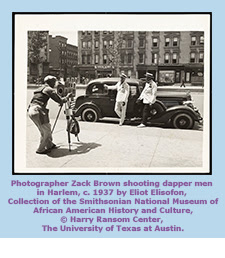
Photograph by Eliot Elisofon

Where: National Museum of American History, Level 2
14th and Constitition Ave. NW
Washington, DC 20001

When: Exhibition opens Friday, May 8th 2015

Hours: 10:00 AM to 5:30 PM

Metro: Take Orange, Blue, or Silver line and exit at Smithsonian Station or Federal Triangle Station

Admission is free!

African Americans have survived slavery, fought for their freedom in the Civil War, for the freedom of others in subsequent wars and created lives of meaning for themselves, their families and their country. Since its creation in 2003, the Smithsonian’s National Museum of African American History and Culture (NMAAHC) has been collecting items—large and small—to tell the story of expanding America’s freedom from the African American perspective. The museum’s eighth exhibition, “Through the African American Lens: Selections from the Permanent Collection,” will showcase stories of trailblazers, innovators, visionaries and history makers who helped to shape this great nation. The exhibition will open May 8 in the NMAAHC Gallery at the Smithsonian’s National Museum of American History.

“Through the African American Lens” will use the museum’s collection to show how the African American story is quintessentially an American one. This exhibition was made possible in large part by more than two dozen families of well-known and lesser-known history makers who graciously donated their family treasures, establishing the building blocks of the museum’s collection.

Visitors will see approximately 140 collection items belonging to freedom fighters, unsung activists and servicemen, sports and entertainment legends and prominent artists and designers.

James Brown Suit

Among the artifacts on display will be the following:

  • Personal items belonging to Harriet Tubman
  • Prints from “The Life of Toussaint L’Ouverture” by Jacob Lawrence (1986)
  • Uniform of a Pullman Porter worn by a member of the Brotherhood of Sleeping Car Porters, the first African American labor union established in 1925
  • School desks from the Hope School, a Rosenwald school in South Carolina
  • Dining room table owned by Lucinda Todd that was used by Brown family and NAACP Legal Defense Fund during preparation for the Supreme Court Case, Brown v. the Board of Education of Topeka
  • Dresses designed by renowned fashion designer, Ann Lowe
  • James Brown’s electric organ and red jumpsuit
  • Dresses worn by R&B musical group, En Vogue
  • Carl Lewis’ 1989 Santa Monica Track Club speed suit
  • Althea Gibson’s tennis racket

For more information, please read the press release.