Tag Archives: Civil War

“Woven Into The Fabric Of America”


By

“Woven Into The Fabric Of America”

by CAP Action War Room Posted on June 9, 2015 at 6:10 pm

Five Years Later, The Affordable Care Act Has Transformed Our Health Care System

Five years ago, the idea that healthcare reform would give millions of uninsured Americans health coverage, guarantee access to insurance to people with pre-existing conditions, eliminate lifetime limits on Americans’ health coverage, and help slow the growth of healthcare costs sounded ambitious to put it gently. But five years after the passage of the Affordable Care Act, all of that has become a reality.

In a speech this morning, President Obama spoke about how health care reform has now been woven into the fabric of America. “So five years in, what we are talking about it is no longer just a law. It’s no longer just a theory. This isn’t even just about the Affordable Care Act or Obamacare. This isn’t about myths or rumors that folks try to sustain. There is a reality that people on the ground day to day are experiencing. Their lives are better,” he said. The reality is that the ACA has succeeded at delivering quality, affordable health care to millions of Americans. Here is some proof:

Despite all the evidence that the law is working, opponents of the ACA continue to work to undo all its success. The president put it best this morning when he said, “It seems so cynical… to punish millions with higher costs of care and unravel what’s now been woven into the fabric of America.” With King v. Burwell the Supreme Court has the potential to reverse much of the progress health care law has made and take away the peace of mind that millions of Americans have gained thanks to the law’s success.

For more about the impacts of King v. Burwell, check out this new video from the Center for American Progress and visit HearTheNine.org to read stories from Americans whose health coverage is on the line.

BOTTOM LINE: Since the Affordable Care Act went into effect, millions of previously uninsured Americans have gained health coverage. American families have been saved from financial catastrophe and lives have been saved. But still, despite the fact that none of the doom-and-gloom predictions came to pass, ideologically-charged politicians continue to try to undo all the progress that has been made.

10 Reasons Dish Soap May Be the Only Product You Need?


===================================================================================

If you think dish soap is just a boring kitchen essential, well, we hate to burst your bubble.

That little inexpensive plastic bottle of Joy or Palmolive (or store brand, if you’re thrifty) is actually far more useful than we give it credit for! Not only can you clean a sink-full of dirty dishes with it, you can do everything from lightening your hair color to ridding your pets of fleas!

Instead of heading to the supermarket and spending a small fortune on products that fix squeaky hinges, kill the weeds in your lawn and clean your air conditioning units, use that inexpensive bottle of dish soap you already have to handle all of that.

1)

Remove Carpet Stains

 Mix dish soap with warm water (approximately 1 tablespoon to 2 cups) and blot the stain with the solution. Continue to do so until the stain has lifted. To remove residual soap, simply sponge the area with a damp sponge or cloth.

2)

Get Your Hair Squeaky Clean

If your shampoo is not cutting it and the natural build-up of oil is causing your hair to look a little lackluster, wash it with dish soap. This grease fighter will eliminate what your shampoo has left behind. Lather, rinse and follow up with shampoo.

3)

Fight Grease Stains on Shirts

You don’t have to invest in stain fighters – just use dish soap. Simply squirt a drop or two on the grease stain and let it work its magic overnight. Once it’s had time to work the stain, wash your shirt as usual.

Photo: Fuse, Thinkstock

4)

A Longer Lasting Manicure

Did you know the natural oils around your nails can shorten the life of your manicure, if you don’t eliminate them pre-polish? Soak your fingers in a bowl of warm water and a few drops of dish soap before you add your polish. Just make sure you dry your hands thoroughly before you paint them.

Photo: Gubcio, Thinkstock

5)

Fix Hair Color Overload

If you’ve colored your hair at home and took it a few shades to dark, dish soap can save a bad situation. Wash your hair with this miracle product to lighten color.

Photo: Ra3nr, Thinkstock

6)

Lubricate Those Squeaky Hinges

Add a drop or two of dish soap to any hinge that’s making a sound when it shouldn’t. No need to rinse it off – just let it work its magic.

Photo: Luknaja

7)

Clean Your Air Con Unit to Stay Cool

The filters on your air conditioning unit attract dust and all manner of dirt and if you don’t keep them clean, you’re breathing all that in. Remove the filters from your unit, soak them in warm water and dish soap and give them a gentle scrub. Once they’re clean, dry them completely and return them to the unit. You’ll be nice and cool and breathing clean air at the same time.

Photo: Adrian825, Thinkstock

Read More
8)

 If your furry friend is suffering a flea infestation, bathe him using a healthy amount of dish soap, which will dry out and kill the fleas.

Photo: Laures, Thinkstock


 9)

Kill Weeds Without Harsh Chemicals

The last thing you want is to douse your lawn and plants in heavy duty chemicals. Mix a little bit of dish soap with ¼ – ½ cup of coarse salt in a spray bottle and fill to the top with distilled white vinegar. Spray the troublesome areas and watch weeds wither away.

Photo: Wylius, Thinkstock

10)

Create an Ice Pack

Fill a freezer sandwich bag with dish soap and freeze it completely. It’s ideal for bumps and bruises as well as keeping a lunchbox chilled. Dish soap takes longer to melt than water.

Photo:  Stockbyte, Thinkstock

Dolphins drowning in oil


The California coast is drenched in oil from a shoddy pipeline rupture, while Plains All American CEO Greg Armstrong raked in over $5 million in compensation last year, and is guaranteed $29 – $87 million in golden parachute cash! Enough is enough, dolphins are dying. Sign now calling on California’s Attorney General to file charges:

SIGN THE PETITION

Monsanto


Recently introduced legislation (H.R.1599) would prohibit any state efforts to require labeling of genetically engineered foods (GMOs), overruling legislation already passed in Maine, Vermont and Connecticut as well as bills moving in many other states.1

That’s why I started a petition to the U.S. House of Representatives, which says:I urge you to reject Representative Mike Pompeo’s “Safe and Accurate Food Labeling Act” (H.R.1599), which would prohibit states from requiring the labeling of genetically engineered foods, or GMOs.

This bill, which is being promoted by the Grocery Manufacturers Association, would prevent states from requiring GMO labels at any time. In fact, this bill is so anti-consumer it is commonly referred to as the “Deny Americans the Right to Know (or DARK) Act.”

I urge you to reject this industry bill. We have a right to know what is in our food so that we can make informed choices about the food we eat.

Sign Sarah’s petition

The Grocery Manufacturers Association, an industry group that represents Monsanto, Nestle, Dow, and Pepsi, is pushing this bill because it would let its members continue to keep quiet about their production and use of GMOs. 2

We need to make sure our members of Congress hear from their actual constituents, since they’re already hearing from the industry lobbyists. Over 90% of voters support required labels for GMOs.3 Industry should not use Congress to undermine the public’s right to know or the decisions of state legislatures that are responding to what their citizens want.

It’s our right to know what’s in our food, and corporations should not be allowed to keep us in the dark.

Click here to add your name to this petition, and then pass it along to your friends.

Thanks!

–Sarah

Sources:

1. “State Labeling Legislation Map,” Center for Food Safety, Accessed May 18, 2015
http://www.moveon.org/r/?r=304462&id=116471-17809870-TLrFsHx&t=1

2. “Monsanto Wants to Keep You in The DARK,” Food & Water Watch, March 25, 2015
http://www.moveon.org/r/?r=304463&id=116471-17809870-TLrFsHx&t=2

3. Ibid.

This petition was created on MoveOn’s online petition site, where anyone can start their own online petitions. Food and Water Watch didn’t pay us to send this email—we never rent or sell the MoveOn.org list.


Lonnie G. Bunch at The NMAAHC


NMAAHC -- National Museum of African American History and CultureEducation Steeped in African American Culture: Historically Black Colleges and Universities

Lonnie Bunch, museum director, historian, lecturer, and author, is proud to present A Page from Our American Story, a regular on-line series for Museum supporters. It will showcase individuals and events in the African American experience, placing these stories in the context of a larger story — our American story.A Page From Our American Story

Howard University, Washington, DC

Before the Civil War, when the majority of African Americans in the United States were enslaved, educational opportunities for African Americans in the South were virtually non-existent, particularly for higher education. Those like Frederick Douglass who did pursue an education –in spite of it being illegal for him to do so –were forced to study informally and often on their own. In 1837, a group of Philadelphia Quakers concerned that African Americans in the North were having a difficult time competing for jobs against the influx of immigrants, created the Institute for Colored Youth. It was the first institution of higher learning for African Americans. We know it today as Cheyney University of Pennsylvania.

The next crucial moment for African American higher education came in the years between the Civil War and World War I when the nation made a commitment to university studies across the country, predominately due to the government’s “land-grants” to help states form colleges and universities. Unprecedented funds poured into the creation of public colleges and universities, but few of these emerging institutions were open or inviting to African American students.

This left the African American community to spearhead their own movement toward higher education. With the support of the American Missionary Association and the Freedmen’s Bureau, seven black colleges had been founded by 1870. Many of these, including Fisk University (1866), Howard University (1867), Claflin University (1869), and Dillard University (1869) are still graduating students today.

Over the past 150 years, there have been many notable moments in the evolution of Historically Black Colleges and Universities (HBCUs). Among the most striking occurred in the early part of the twentieth century, when two graduates from these fledgling institutions began a debate about the direction African American higher learning should take.

On one side was Booker T. Washington, a freed slave from Virginia who had taken the helm of the Tuskegee Institute in Alabama, now Tuskegee University. Washington believed that the best way for freed slaves and other African Americans to attain equality in the United States was to focus on preparing themselves for the jobs that were available, mainly agricultural and mechanical trades.

Booker T. Wahington WEB DuBois.jpg

Farther north, W.E.B. DuBois had a very different view. DuBois was raised in Massachusetts and wasn’t exposed to segregation until he was an undergraduate at Fisk University in Nashville. He believed African Americans needed to look beyond vocational training. Equality would only come if African Americans studied the arts and sciences and became thought leaders for the next generation.

Black colleges and universities responded by trying to create programs that reflected both the practical necessities that Washington espoused as well as DuBois’ broader intellectual vision. By 1943 the struggle for funding led Dr. Fredrick D. Patterson, president of the Tuskegee Institute, to publish an open letter to the presidents of other black colleges and universities. He urged them to pool their resources and fundraising abilities and work together to help all black colleges and universities prosper. Just one year later, the United Negro College Fund (UNCF) was created to solicit donations for black colleges nationwide. The UNCF still exists today and has provided $3.6 billion in support to HBCUs and higher education for African Americans in the United States.

Throughout the ups and downs of HBCUs, the students who have attended these institutions have thrived and gone on to influence many important fields. Thurgood Marshall, Rev. Martin Luther King, Jr., Alice Walker and Charles Drew, the physician who organized the first large-scale blood bank in the United States, to name just a few, were all alumni of HBCUs.

Still today, HBCUs are standouts for student achievement. While representing just three percent of the nation’s institutions of higher learning, they graduate nearly 20 percent of African Americans. In addition, the institutions graduate more than 50 percent of African American professionals and public school teachers, as well as the majority of the African American doctoral degree recipients.

HBCUs no longer exclusively serve African Americans. Today’s institutions have a significant percentage of non-African American students, including Asian, Latino, white American and students from many foreign countries. All of these students benefit from the unique education steeped in African American history and culture that HBCUs provide.

Students attending HBCUs are immersed in a nurturing and intellectually stimulating environment that connects them with African-American history and inspires them to carry the indefatigable African American spirit forward. Through rigorous academics and enriching extra-curricular options on campus including an energetic network of fraternities and sororities, students acquire a deep appreciation for excellence, a passion for community service, and a commitment to become leaders and mentors for the next generation.

When African American students have many options for higher learning, HBCUs are still in high demand because of their unique educational environment and their proven record of helping African Americans achieve success. After nearly more than 150 years, HBCUs continue to keep their eyes on the horizon and will surely be reflecting and shaping the African American experience for many generations to come.
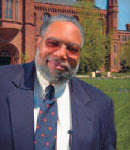
 dd-enews-temp-lonnie-bunch-2.jpg All the best,

Lonnie Bunch
Director

P.S. We can only reach our $250 million goal with your help. I hope you will consider making a donation or becoming a Charter Member today.

To read past Our American Stories, visit our archives.