
Investing in a clean energy future
At Google, a clean energy future means investing in innovative, large-scale clean energy projects we believe can become major power sources for the future. To speed up innovation and development, we put significant funding and resources behind new technologies. To date, we’ve invested more than $915 million in the renewable energy sector, including investments in projects capable of generating 1.8 GW of power. That’s enough to power 350,000 homes. Our investments are listed below.

Recurrent Energy: Large-scale solar PV projects in California
We’ve invested $94 million in a portfolio of four solar photovoltaic (PV) projects being built by Recurrent Energy near Sacramento, California. These projects have a total capacity of 88 MW—that’s equivalent to the electricity consumed by more than 13,000 homes. We’re excited to be joining global investment firm KKR on their first renewable energy investment in the US. We hope clean energy projects continue to attract new sources of capital to help the world move towards a more sustainable energy future. The energy produced by these projects is already contracted for 20 years with the Sacramento Municipal Utility District (SMUD), the first projects to be built under their feed-in tariff program (FIT) to help green the grid for Sacramento-area residents.

Clean Power Finance: Financing for rooftop solar
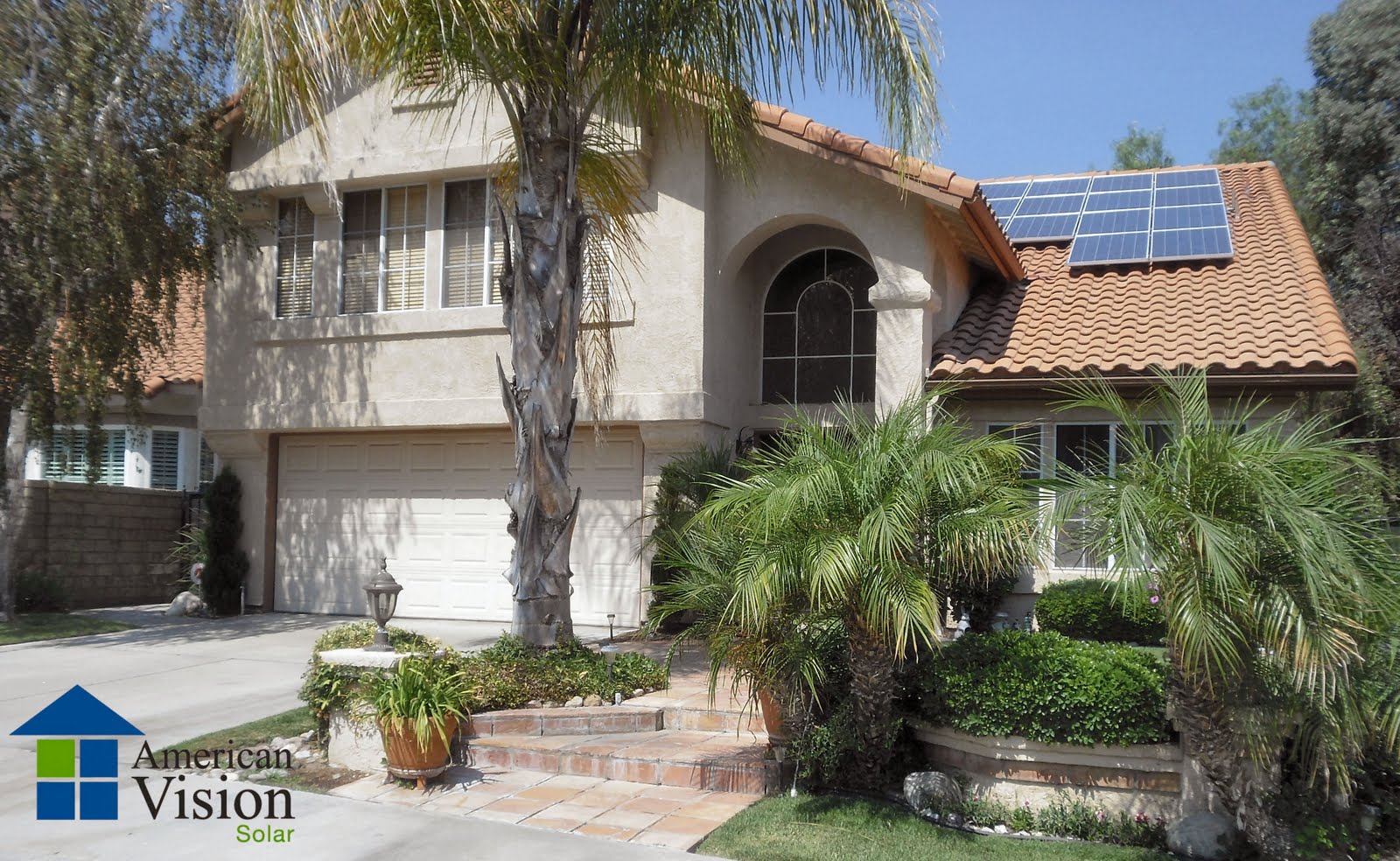
We invested $75 million to create a fund with Clean Power Finance (CPF) that will help up to 3,000 homeowners go solar. Purchasing a solar system is a major home improvement, but the upfront cost has historically been one of the biggest barriers for homeowners. Solar installers across the country don’t always have the resources to find financing for customers, or provide it themselves. And investors like Google, banks, and others, can find it difficult to enter a fragmented solar market and get connected to individual homeowners. Clean Power Finance’s open platform connects installers with investors to provide financing to homeowners. It’s an innovative and scalable model that makes business sense, and has the potential to lower costs and accelerate adoption of solar energy.

SolarCity: Solar for thousands of residential rooftops
In the largest deal of its kind to date, we invested $280 million in a SolarCity fund to help provide innovative financing for residential solar projects to make clean energy more widely accessible. With Google’s backing, SolarCity, a full service solar systems provider, can offer up to 8,000 additional customers the option to go solar through a solar lease or power purchase agreements. Here’s how it works: SolarCity works with a customer to design a solar system for their home. Investors like Google purchase the system up front and, in return, receive a portion of lease payments from the homeowner along with Solar City. This kind of innovative financing removes a major adoption barrier for homeowners—the upfront cash required for systems—and makes solar power accessible to homeowners who would otherwise not consider it. SolarCity has completed or is currently building out more than 15,000 residential solar systems, the most of any company in the US.

Brightsource: Concentrated solar power at scale
In 2008, we invested $10 million in startup company Brightsource via Google.org. We subsequently invested another $168 million into their first utility-scale solar project called Ivanpah in California’s Mojave Desert. Brightsource specializes in “power towers”—an advanced solar thermal technology that uses heliostats, or sun-tracking mirrors, to focus a tremendous amount of solar energy onto a tower-mounted receiver. The receiver produces high pressure steam which, in turn, spins a traditional turbine generator to make electricity. Ivanpah will produce 392 MW of solar power once it is up and running in 2013, and is expected to supply both Pacific Gas and Electric and Southern California Edison with energy equivalent to that used in 140,000 homes in Central and Southern California. This will be the first large scale power tower project operating efficiently at high temperatures and pressures, demonstrating a critical step for the technology on a path to reliable, low cost, clean power.

Atlantic Wind Connection: A superhighway for clean energy transmission
We invested a 37.5 percent equity stake in the critical early-stage development of the Atlantic Wind Connection (AWC) backbone, a project to build a superhighway transmission infrastructure for clean, reliable energy off the Mid-Atlantic coast. Once completed, the AWC backbone will stretch 250 miles along the coast from New Jersey to Virginia, enabling the connection of up to 7,000 MW of offshore wind power, which could provide the energy equivalent of that used in 1.9 million households. The project helps states meet their renewable energy goals and standards using the most abundant local resource. The Mid-Atlantic region has a vast offshore wind resource capable of powering more than 60,000 MW of wind turbines in shallow waters that allow wind turbines to be installed 10-15 miles offshore. This enables them to capture stronger, steadier winds while being virtually out of sight from land. In addition to providing abundant clean energy to the region, the project can help create thousands of jobs and increase the reliability of one of the most heavily congested grids in the country.

Alta Wind Energy Center: Harnessing the winds of the Mojave
The wind blows hard where the Mojave sands meet the Tehachapi Mountains in Southern California, making it a great spot for wind turbines. We’ve invested a total of $157 million in two projects totaling 270 MW at the Alta Wind Energy Center (AWEC). This investment used a leveraged lease—a financial structure new to wind but one which provides advantages to both developers and investors. The project will also use some of the first transmission lines being developed specifically to transport renewable energy from remote, resource-rich areas to major population centers. The power will be delivered to Southern California Edison under long-term agreements with the first five Alta projects, totaling 720 MW, already operational. AWEC alone will boost California’s wind energy production by 30% and help the state meet its ambitious renewable energy mandate of 33% clean power generation by 2020.

Shepherd’s Flat: One of the world’s largest wind farms
Located in Arlington, Oregon, Shepherd’s Flat is anticipated to be the world’s largest wind farm at 845 MW, and when completed in 2012 is expected to generate as much energy as that used in 235,000 homes. We’ve invested $100 million into the farm, which will also be the largest to deploy, at scale, permanent magnet generators, a state-of-the-art turbine technology used to increase efficiency and reliability and ultimately lower the cost of wind energy. The project will also benefit the region by helping California meet its aggressive renewable energy goals with a cost-effective and clean wind resource. The electricity produced at Shepherds Flat will be sold under long-term agreements to Southern California Edison.

Peace Garden wind farms: More financing for wind
Our first investment in a utility-scale renewable energy project was $38.8 million in two wind farms in North Dakota that generate 169.5 MW of power. The projects were built by NextEra Energy Resources, which uses advanced wind turbine technology and monitoring and control systems to provide one of the lowest-cost sources of renewable energy in existence today. We were excited to make this investment because it marked both the first production tax credit (PTC) deal done since the financial crisis of 2008 and also the first entry of a non-energy corporate investor into tax equity financing—a form of financing that was tightly constrained since 2008 and was thereby preventing good projects from getting built.

Photovoltaics in Germany: Clean energy overseas
In 2011, we made our first international investment of €3.5 million (approximately $5 million for a 49 percent equity stake in the project) in a recently completed solar facility in Brandenburg, Germany. The plant, one of the largest in Germany, has peak capacity of 18.65 MW and will generate as much energy as that used in more than 5,000 homes. Germany has a strong framework for renewable energy and is home to many leading-edge technology companies in the sector. More than 70 percent of the solar modules used in the project were produced by German manufacturers.






 Be a Seed for Change
You must be logged in to post a comment.