Tag Archives: Climate Change

Tell Congress that sustainabl​e agricultur​e is the right investment – repost


Today the Backyard, Tomorrow the Farm!

 Most gardeners will be planting bulbs for next spring and taking steps to protect perennials from harsh winter weather over the next few weeks. But did you know that actions you take now can also help in the fight against global warming?

The following advice from a gardening expert offers a simple step you can take this fall to be a climate-friendly gardener by increasing your soil’s ability to store carbon—a key component in the leading cause of global warming. After you read the tip, take action to call for the same kind of actions on our nation’s farms.

www.ucsusa.org

In Your Garden

Tracey Payton, a horticulture educator from Norman, Oklahoma, offers this tip on how to be a climate-friendly gardener.

“Mulch is a great way to protect bare soil, and most importantly for the climate-friendly gardener, it can help prevent carbon loss. Uncovered soil is vulnerable to releasing more carbon than it stores. Mulch also has other benefits, such as protecting against temperature fluctuations that can damage plants, suppressing weeds, and reducing moisture loss and soil erosion. Using mulch can be as easy as an additional 2-3 inch layer of compost or straw in the garden; in the flower bed, cotton seed hulls, bark mulch, or wood mulch can be used. Do only keep mulch about 2-3″ deep and away from perennial plant stems to prevent rot and other moisture problems.”

More information about how healthy soil can lock up carbon may be found in The Climate-Friendly Gardener. This guide also contains more valuable tips and information on how to fight global warming in your own backyard.  http://action.ucsusa.org/site/R?i=CbQwBKQYI1GwQMSDdIzNGA

On the Farm…

If gardeners can adopt practices to combat global warming on a small scale, think what could be accomplished if similar steps were taken on the millions of acres of farmland across the country!

Similar to mulching, one of the most effective farm practices to store carbon in the soil on a large scale—while building soil health and preventing erosion—is widespread planting of “cover crops” in the winter. A sort of living mulch, cover crops protect farm fields when other crops aren’t growing. They also have the benefit of releasing nitrogen—one of the main ingredients in fertilizers into the soil just in time for spring-planted crops, which can reduce the need for added fertilizer (another source of  global warming emissions).

We can help expand the adoption of this practice by making sure that the next Farm Bill rewards farmers who plant cover crops. Voted on every five years, the Farm Bill helps determines what food farmers will grow and what practices they will employ. This bill includes programs to help farmers successfully adopt a wide array of sustainable agriculture practices, including the planting of cover crops.

Write to your members of Congress and demand farm policies that help farmers protect our water, air, and land while producing the food we need!

Take Action Today!   www.ucsusa.org

Sincerely,

Jenn Yates
National Field Organizer
UCS Food & Environment Program

Flood Congress with Support for Climate Action … Union of Concerned Scientists


Union of Concerned Scientists

Flood Congress with Support for Climate Action

 http://action.ucsusa.org   << Take Action

Global warming emissions present a danger to public health—from worsening ozone pollution to hotter, longer heat waves and other types of extreme weather. For instance, heavy rain and floods are likely to get worse in a warming world, leaving us more and more vulnerable to health risks such as drowning and exposure to contaminated water.

Floods are one of deadliest and most expensive natural disasters in the United States. The average annual U.S. flood losses in the past 10 years were more than $10.2 billion. More than half of all waterborne disease outbreaks in the United States occur in the aftermath of heavy rain, and floodwaters may contain more than 100 types of disease causing bacteria, viruses, and parasites.

In order to protect our health from these effects of climate change, we must reduce global warming emissions now.

The Environmental Protection Agency (EPA) is on the verge of releasing draft standards that will limit global warming emissions from power plants under the Clean Air Act. Unfortunately, dirty energy companies and their allies in Congress are trying to block the EPA from moving forward with these historic standards.

Tell your members of Congress to protect our health from the effects of climate change and oppose any legislation that would block or delay the EPA’s ability to reduce global warming emissions under the Clean Air Act.

Take Action Today!

Sincerely,
Chrissy Elles
Chrissy Elles
Outreach Associate
UCS Climate & Energy Program

UCS Tell President Obama: Wake Up and Smell the Coffee


Union of Concerned Scientists

Protect Coffee from Climate Change
Post this video on the White House Facebook page today with a message about why YOU want climate actionnow.Save Our Coffee

Tell President Obama: Wake Up and Smell the Coffee!

I’ve got some bad news and good news.

The bad news: Global warming is threatening premium coffee crops in places like Ethiopia, India, and Costa Rica. Higher temperatures, drought and intense rainfall, and more resilient pests and plant diseases—all associated with global warming—have contributed to dramatically reduced coffee supplies and played a role in increasing coffee prices.

The good news? The Obama administration has the opportunity to protect our coffee from the effects of climate change! The Environmental Protection Agency (EPA) is on the verge of releasing draft standards that will limit global warming emissions from new power plants. These historic new standards will not only help save your cup of coffee, they will help us avoid the most dangerous consequences of climate change and move us toward a cleaner, more modern electricity system.

But the Obama administration is under enormous pressure from dirty energy companies to release weak standards that will do little to nothing to protect our health and environment. Fortunately, people are standing up to these tactics and calling for climate action. Activists like you sent us their “mug shots,” and we’ve compiled a video demonstrating that global warming is already affecting our everyday lives and people are demanding climate action.

Tell President Obama to protect coffee from the effects of climate change by posting this video on the White House Facebook page today, with a message about why YOU want climate action now.

The Obama administration needs to hear that dirty energy companies don’t represent your interests. By posting this video on the White House Facebook page, you’ll make a public statement to the White House and your friends and family that the president should ensure that the EPA finalizes strong global warming standards this year.

Take Action Now!

Sincerely,
Chrissy Elles
Chrissy Elles
Outreach Associate
UCS Climate & Energy Program

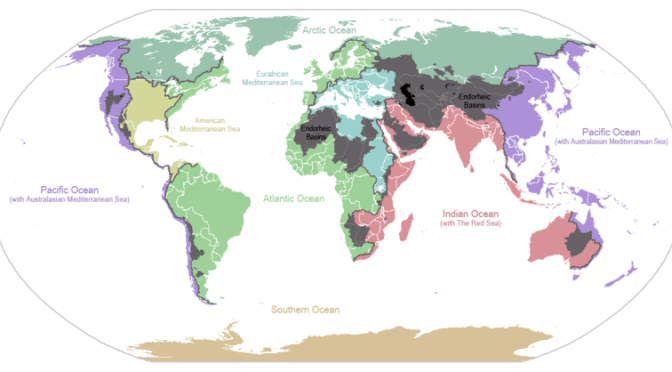
The River Basin and climate change


The Climate Reality Project

Seeing is believing. And shared experiences help build community.

That’s what’s happening around the globe as concerned people like you lead and join local expeditions to see firsthand the impacts of climate change near their homes. Thanks to the curiosity and passion of engaged people around the world, friends and neighbors are coming together to witness our shared climate reality.

Last month, near Kathmandu, Nepal, the International Centre for Integrated Mountain Development took a group to visit a river basin. The basin is shared by India, Nepal and Tibet and here, people live under the shadow of shrinking glaciers that signal existing and future water supply loss for millions of people downstream. This was one of many local expeditions taking place in partnership with The Climate Reality Project.

You can help too — and you don’t have to go to Nepal to do it. Today, I invite you to host an expedition near you.

Host an expedition

Not sure where to start? Try contacting your local, state or even federal agency — like the Forest Service, a national park, a university’s environmental science department or a local community group. They may have creative suggestions or even a free guide for your group. We’ve created a toolkit with more tips on how to get started.

I spent years taking part in outdoor expeditions myself — and I can tell you from my own experience that expeditions take you to places and connect you to people you will never forget. I encourage you to get out there. Lead and join expeditions to see and to share the reality of climate change happening near you.

http://climaterealityproject.org/host/

Thanks for all you do,

Maggie L. Fox
President and CEO
The Climate Reality Project

PS. We went to Bangladesh to find out how climate change was impacting communities. Watch the video: http://vimeo.com/37750260

The Climate Reality Project


The Climate Reality Project

Do you think schools should teach our children that climate change isn’t real?
Of course not. But the Heartland Institute, an organization known for giving a microphone to climate science deniers, now wants to bring this false message into America‘s classrooms.
As its President and CEO just admitted, Heartland is writing a “global warming curriculum” that would say climate science isn’t settled. Heartland would like to create the appearance of a scientific debate where there is none by having our teachers claim we just don’t know if humans are changing our climate.
Fortunately, one brave high school student is asking the Heartland Institute to stop. And I hope you will too.
Tell the Heartland Institute to cease and desist its plan to bring fake science into our schools. And watch our eye-opening video to learn more.

Tell the Heartland Institute to cease and desist

As you know, the science behind climate change is not controversial — it is reality. It is the height of irresponsibility to urge our schools to teach something known to be untrue — just as it is wrong to teach our children that gravity is not real or nicotine is not addictive.
As its own budget documents reveal, the Heartland Institute is funded by oil and coal companies with a financial interest in denying climate science. But I think you’ll agree this industry-funded propaganda has no place in our schools.
Corey Husic is a high school student who knows there is no place for a climate denial curriculum in school. He and many others are asking that Heartland immediately “cease and desist” its plan to bring climate denial into our schools. And today, I invite you to sign this petition as well.
Scientists know that climate change is happening, and we are beginning to see the impacts with our own eyes. This debate is a distraction. Deniers are trying to prevent us from engaging in a much more fruitful discussion over what we can do to solve the climate crisis.
We’ve created a short video to help you learn more about this urgent issue. I encourage you to watch this video now, and sign the petition to keep climate reality in America’s science classrooms.
Tell the Heartland Institute to end its plans for a climate denial curriculum. And watch our video to learn more.
http://forms.climaterealityproject.org/heartlandinstitute

Thanks for all you do,
Maggie L. Fox President and CEO The Climate Reality Project

Donate