“You just slammed my head to the ground. Do you not even care about that?”
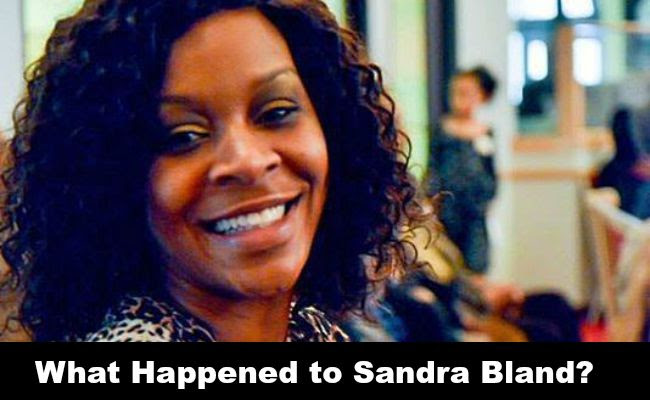
These were some of the last words of 28-year-old Sandra Bland.On Friday, Texas State troopers pulled Sandra over as she was driving to her new job for allegedly not using the turn signals during a lane change.1 What happened next was all too familiar and terrifying.
An eye-witness says police ripped Sandra out of the car, violently slammed her on the ground, and arrested her as she screamed for help. Just 72 two hours later, she was dead.2 Police are claiming Sandra took her own life, but her family and friends don’t believe it. Local District Attorney Elton Mathis has already said he has no reason to expect foul play and handed over the investigation to the same police agency that arrested Sandra.
DA Mathis said there was no reason for concern, despite the fact that an allegedly routine traffic stopped turned into a violent arrest is itself a cause for concern.3Sandra’s family says that Sandra would never kill herself and that police seem to be covering up her death.4We must demand that local officials release all video, information and photographs relating to Sandra’s unjust arrest, imprisonment and death.
The local police department and prosecutor’s office have a long history of racism and corruption. Last year, DA Mathis threatened a local Reverend who spoke out about racist prosecutions, saying he would release his “hounds” on the Reverend.5 Waller County Sheriff Glenn Smith was fired from the police department in Hempstead, Texas for documented cases of racism.5
According to her loved ones, Sandra Bland was a loving, compassionate woman, with a bright future ahead.6 Today would have been the first day at her new job working student outreach at her alma mater, Prairie View A&M University. Loved ones described her as bright, spirited, and having a thirst for life. She was also a vocal advocate against police brutality and often spoke about ending racism and police violence. Our hearts and minds are with her friends and family as they move through this unimaginably hard time.
But in a world where Black people are stereotyped as “violent” and police exist to enforce the boundaries of a deeply divided and racist society, who Sandy was or the life she was creating, did not matter. What mattered was that she was Black, and therefore, in the eyes of the law, didn’t deserve respect, didn’t deserve her civil rights, her freedom or her life. To be Black in America, is to be safe nowhere. Black women are 3 to 4 times more likely to be targeted by police and incarcerated than white women.7
The Department of Justice and Attorney General Lynch have the power and responsibility to address the systemic police violence targeting Black communities. The reality is, racism, corruption and a deep-seated culture of secrecy prevents local and state police from holding themselves accountable. Without independent oversight, police will continue to kill and prosecutors will continue to do nothing. We should not have to demand justice, every time a Black person is murdered, but we will continue to do so until the justice system respects Black lives.
1. The Declaration of Independence wasn’t signed on July 4, 1776.
On July 1, 1776, the Second Continental Congress met in Philadelphia, and on the following day 12 of the 13 colonies voted in favor of Richard Henry Lee’s motion for independence. The delegates then spent the next two days debating and revising the language of a statement drafted by Thomas Jefferson.
On July 4, Congress officially adopted the Declaration of Independence, and as a result the date is celebrated as Independence Day. Nearly a month would go by, however, before the actual signing of the document took place.
First, New York’s delegates didn’t officially give their support until July 9 because their home assembly hadn’t yet authorized them to vote in favor of independence. Next, it took two weeks for the Declaration to be “engrossed”—written on parchment in a clear hand.
Most of the delegates signed on August 2, but several—Elbridge Gerry, Oliver Wolcott, Lewis Morris, Thomas McKean and Matthew Thornton—signed on a later date. (Two others, John Dickinson and Robert R. Livingston, never signed at all.) The signed parchment copy now resides at the National Archives in the Rotunda for the Charters of Freedom, alongside the Constitution and the Bill of Rights.
2. More than one copy exists.
After the adoption of the Declaration of Independence, the “Committee of Five”—Thomas Jefferson, John Adams, Benjamin Franklin, Roger Sherman and Robert R. Livingston—was charged with overseeing the reproduction of the approved text. This was completed at the shop of Philadelphia printer John Dunlap. On July 5, Dunlap’s copies were dispatched across the 13 colonies to newspapers, local officials and the commanders of the Continental troops. These rare documents, known as “Dunlap broadsides,” predate the engrossed version signed by the delegates. Of the hundreds thought to have been printed on the night of July 4, only 26 copies survive. Most are held in museum and library collections, but three are privately owned.
3. When news of the Declaration of Independence reached New York City, it started a riot.
By July 9, 1776, a copy of the Declaration of Independence had reached New York City. With hundreds of British naval ships occupying New York Harbor, revolutionary spirit and military tensions were running high. George Washington, commander of the Continental forces in New York, read the document aloud in front of City Hall. A raucous crowd cheered the inspiring words, and later that day tore down a nearby statue of George III. The statue was subsequently melted down and shaped into more than 42,000 musket balls for the fledgling American army.
4. Eight of the 56 signers of the Declaration of Independence were born in Britain.
While the majority of the members of the Second Continental Congress were native-born Americans, eight of the men voting for independence from Britain were born there. Gwinnett Button and Robert Morris were born in England, Francis Lewis was born in Wales, James Wilson and John Witherspoon were born in Scotland, George Taylor and Matthew Thornton were born in Ireland and James Smith hailed from Northern Ireland.
5. One signer later recanted.
Richard Stockton, a lawyer from Princeton, New Jersey, became the only signer of the Declaration of Independence to recant his support of the revolution. On November 30, 1776, the hapless delegate was captured by the British and thrown in jail. After months of harsh treatment and meager rations, Stockton repudiated his signature on the Declaration of Independence and swore his allegiance to King George III. A broken man when he regained his freedom, he took a new oath of loyalty to the state of New Jersey in December 1777.
6. There was a 44-year age difference between the youngest and oldest signers.
The oldest signer was Benjamin Franklin, 70 years old when he scrawled his name on the parchment. The youngest was Edward Rutledge, a lawyer from South Carolina who was only 26 at the time. Rutledge narrowly beat out fellow South Carolinian Thomas Lynch Jr., just four months his senior, for the title.
7. Two additional copies have been found in the last 25 years.
In 1989, a Philadelphia man found an original Dunlap Broadside hidden in the back of a picture frame he bought at a flea market for $4. One of the few surviving copies from the official first printing of the Declaration, it was in excellent condition and sold for $8.1 million in 2000. A 26th known Dunlap broadside emerged at the British National Archives in 2009, hidden for centuries in a box of papers captured from American colonists during the Revolutionary War. One of three Dunlap broadsides at the National Archives, the copy remains there to this day.
8. The Declaration of Independence spent World War II in Fort Knox.
On December 23, 1941, just over two weeks after the Japanese attack on Pearl Harbor, the signed Declaration, together with the Constitution, was removed from public display and prepared for evacuation out of Washington, D.C. Under the supervision of armed guards, the founding document was packed in a specially designed container, latched with padlocks, sealed with lead and placed in a larger box. All told, 150 pounds of protective gear surrounded the parchment. On December 26 and 27, accompanied by Secret Service agents, it traveled by train to Louisville, Kentucky, where a cavalry troop of the 13th Armored Division escorted it to Fort Knox. The Declaration was returned to Washington, D.C., in 1944.
9. There is something written on the back of the Declaration of Independence.
In the movie “National Treasure,” Nicholas Cage’s character claims that the back of the Declaration contains a treasure map with encrypted instructions from the founding fathers, written in invisible ink. Unfortunately, this is not the case. There is, however, a simpler message, written upside-down across the bottom of the signed document: “Original Declaration of Independence dated 4th July 1776.” No one knows who exactly wrote this or when, but during the Revolutionary War years the parchment was frequently rolled up for transport. It’s thought that the text was added as a label.
(1) Did you know: It was actually on July 2, 1776, that America gained its independence. So why do we celebrate on July 4?
Keep clicking to find out from Kenneth C. Davis, author of the “Don’t Know Much About” book series.
( 2) “The fact is, John Adams wrote home to Abigail on the 3rd that this day, July 2nd will go down in history,” Davis explained on “CBS This Morning,” “We’ll celebrate it with parades and pomp and bells ringing and fireworks. And it was because Congress actually ruled it in favor of independence on July 2. But it was two days later, of course, that Congress then accepted Jefferson’s declaration, explaining the vote two days before that really got fixed in America’s imagination as our birthday. July 2nd should be Independence Day.”
(3)Thomas Jefferson drafted the Declaration of Independence on a “laptop,” a kind of writing desk that could fit on one’s lap.
(4) Did you know Thomas Jefferson changed the wording of the Declaration of Independence from “the pursuit of property” to “the pursuit of happiness”?
“Jefferson did not come up with these words out of thin air,” Davis said on “CBS This Morning.” “These were words and ideas that had been floating around for a very long time. Other people had written about things like ‘the pursuit of property.’ Jefferson, I think can say we say happily changed that to the ‘pursuit of happiness’.”
(5) John Adams and Thomas Jefferson both died on July 4, 1826. Davis explained, “That may be the most extraordinary coincidence in all of history. On the 50th anniversary of the adoption of the declaration…the two giants of the declaration both died. … Jefferson died first. Adams was alive, of course, in Massachusetts. He didn’t know that Jefferson had died but said, famously, perhaps apocryphally, that ‘Jefferson still lives.’ And people took that to mean his words will live forever.”
(6) The Liberty had nothing to do with July 4th. It wasn’t called the “Liberty Bell” until the 1830s and that’s also when it got its famous crack.
(7) Only two men signed the Declaration of Independence on July 4th, 1776 — John Hancock (not the big signature!) and Charles Thompson, secretary of the Congress.
(8) Jefferson’s original draft was lost and the one eventually signed is the “engrossed” document and is kept at the National Archives.
(9) The printed version of the Declaration was called the Dunlap Broadside – 200 were made but only 27 are accounted for. One of these was found on the back of the picture frame at a tag sale and sold at auction for $8.14 million to television producer Norman Lear. It now travels the country to be displayed to the public.
Seal of the United States Equal Employment Opportunity Commission. (Photo credit: Wikipedia)
EDITOR’S NOTE: The following is the text of the Equal Pay Act of 1963 (Pub. L. 88-38) (EPA), as amended, as it appears in volume 29 of the United States Code, at section 206(d). The EPA, which is part of the Fair Labor Standards Act of 1938, as amended (FLSA), and which is administered and enforced by the EEOC, prohibits sex-based wage discrimination between men and women in the same establishment who perform jobs that require substantially equal skill, effort and responsibility under similar working conditions. Cross references to the EPA as enacted appear in italics following the section heading. Additional provisions of the Equal Pay Act of 1963, as amended, are included as they appear in volume 29 of the United States Code.
(1) No employer having employees subject to any provisions of this section shall discriminate, within any establishment in which such employees are employed, between employees on the basis of sex by paying wages to employees in such establishment at a rate less than the rate at which he pays wages to employees of the opposite sex in such establishment for equal work on jobs the performance of which requires equal skill, effort, and responsibility, and which are performed under similar working conditions, except where such payment is made pursuant to (i) a seniority system; (ii) a merit system; (iii) a system which measures earnings by quantity or quality of production; or (iv) a differential based on any other factor other than sex: Provided, That an employer who is paying a wage rate differential in violation of this subsection shall not, in order to comply with the provisions of this subsection, reduce the wage rate of any employee.
(2) No labor organization, or its agents, representing employees of an employer having employees subject to any provisions of this section shall cause or attempt to cause such an employer to discriminate against an employee in violation of paragraph (1) of this subsection.
(3) For purposes of administration and enforcement, any amounts owing to any employee which have been withheld in violation of this subsection shall be deemed to be unpaid minimum wages or unpaid overtime compensation under this chapter.
(4) As used in this subsection, the term “labor organization” means any organization of any kind, or any agency or employee representation committee or plan, in which employees participate and which exists for the purpose, in whole or in part, of dealing with employers concerning grievances, labor disputes, wages, rates of pay, hours of employment, or conditions of work.
(a) The Congress hereby finds that the existence in industries engaged in commerce or in the production of goods for commerce of wage differentials based on sex-
(1) depresses wages and living standards for employees necessary for their health and efficiency;
(2) prevents the maximum utilization of the available labor
resources;
(3) tends to cause labor disputes, thereby burdening, affecting, and obstructing commerce;
(4) burdens commerce and the free flow of goods in commerce; and
(5) constitutes an unfair method of competition.
(b) It is hereby declared to be the policy of this Act, through exercise by Congress of its power to regulate commerce among the several States and with foreign nations, to correct the conditions above referred to in such industries.
[Section 3 of the Equal Pay Act of 1963 amends section 6 of the Fair Labor Standards Act by adding a new subsection (d). The amendment is incorporated in the revised text of the Fair Labor Standards Act.]
EFFECTIVE DATE
Not Reprinted in U.S. Code [Section 4]
The amendments made by this Act shall take effect upon the expiration of one year from the date of its enactment: Provided, That in the case of employees covered by a bona fide collective bargaining agreement in effect at least thirty days prior to the date of enactment of this Act entered into by a labor organization (as defined in section 6(d)(4) of the Fair Labor Standards Act of 1938, as amended) [subsection (d)(4) of this section], the amendments made by this Act shall take effect upon the termination of such collective bargaining agreement or upon the expiration of two years from the date of enactment of this Act, whichever shall first occur.
Approved June 10, 1963, 12 m.
[In the following excerpts from the Fair Labor Standards Act of 1938, as amended, authority given to the Secretary of Labor is exercised by the Equal Employment Opportunity Commission for purposes of enforcing the Equal Pay Act of 1963.]
ATTENDANCE OF WITNESSES
SEC. 209 [Section 9]
For the purpose of any hearing or investigation provided for in this chapter, the provisions of sections 49 and 50 of title 15 [Federal Trade Commission Act of September 16, 1914, as amended (U.S.C., 1934 edition)] (relating to the attendance of witnesses and the production of books, papers, and documents), are made applicable to the jurisdiction, powers, and duties of the Administrator, the Secretary of Labor, and the industry committees.
COLLECTION OF DATA
SEC. 211 [Section 11]
(a) Investigations and inspections
The Administrator or his designated representatives may investigate and gather data regarding the wages, hours, and other conditions and practices of employment in any industry subject to this chapter, and may enter and inspect such places and such records (and make such transcriptions thereof), question such employees, and investigate such facts, conditions, practices, or matters as he may deem necessary or appropriate to determine whether any person has violated any provision of this chapter, or which may aid in the enforcement of the provisions of this chapter. Except as provided in section 212 [section 12] of this title and in subsection (b) of this section, the Administrator shall utilize the bureaus and divisions of the Department of Labor for all the investigations and inspections necessary under this section. Except as provided in section 212 [section 12] of this title, the Administrator shall bring all actions under section 217 [section 17] of this title to restrain violations of this chapter.
(b) State and local agencies and employees
With the consent and cooperation of State agencies charged with the administration of State labor laws, the Administrator and the Secretary of Labor may, for the purpose of carrying out their respective functions and duties under this chapter, utilize the services of State and local agencies and their employees and, notwithstanding any other provision of law, may reimburse such State and local agencies and their employees for services rendered for such purposes.
(c) Records
Every employer subject to any provision of this chapter or of any order issued under this chapter shall make, keep, and preserve such records of the persons employed by him and of the wages, hours, and other conditions and practices of employment maintained by him, and shall preserve such records for such periods of time, and shall make such reports therefrom to the Administrator as he shall prescribe by regulation or order as necessary or appropriate for the enforcement of the provisions of this chapter or the regulations or orders thereunder. The employer of an employee who performs substitute work described in section 207(p)(3) [section 7(p)(3)] of this title may not be required under this subsection to keep a record of the hours of the substitute work.
(d) Homework regulations
The Administrator is authorized to make such regulations and orders regulating, restricting, or prohibiting industrial homework as are necessary or appropriate to prevent the circumvention or evasion of and to safeguard the minimum wage rate prescribed in this chapter, and all existing regulations or orders of the Administrator relating to industrial homework are continued in full force and effect.
EXEMPTIONS
SEC. 213 [Section 13]
(a) Minimum wage and maximum hour requirements
The provisions of sections 206 [section 6] (except subsection (d) in the case of paragraph (1) of this subsection) and section 207 [section 7] of this title shall not apply with respect to-
(1) any employee employed in a bona fide executive, administrative, or professional capacity (including any employee employed in the capacity of academic administrative personnel or teacher in elementary or secondary schools), or in the capacity of outside salesman (as such terms are defined and delimited from time to time by regulations of the Secretary, subject to the provisions of subchapter II of chapter 5 of Title 5 [theAdministrative Procedure Act], except that an employee of a retail or service establishment shall not be excluded from the definition of employee employed in a bona fide executive or administrative capacity because of the number of hours in his workweek which he devotes to activities not directly or closely related to the performance of executive or administrative activities, if less than 40 per centum of his hours worked in the workweek are devoted to such activities); or
(2) [Repealed]
[Note: Section 13(a)(2) (relating to employees employed by a retail or service establishment) was repealed by Pub. L. 101-157, section 3(c)(1), November 17, 1989.]
(3) any employee employed by an establishment which is an amusement or recreational establishment, organized camp, or religious or non-profit educational conference center, if (A) it does not operate for more than seven months in any calendar year, or (B) during the preceding calendar year, its average receipts for any six months of such year were not more than 33 1/3 per centum of its average receipts for the other six months of such year, except that the exemption from sections 206 and 207 [sections 6 and 7] of this title provided by this paragraph does not apply with respect to any employee of a private entity engaged in providing services or facilities (other than, in the case of the exemption from section 206 [section 6] of this title, a private entity engaged in providing services and facilities directly related to skiing) in a national park or a national forest, or on land in the National Wildlife Refuge System, under a contract with the Secretary of the Interior or the Secretary of Agriculture; or
(4) [Repealed]
[Note: Section 13(a)(4) (relating to employees employed by anestablishment which qualified as an exempt retail establishment) was repealed by Pub. L. 101-157, Section 3(c)(1), November 17, 1989.]
(5) any employee employed in the catching, taking, propagating, harvesting, cultivating, or farming of any kind of fish, shellfish, crustacea, sponges, seaweeds, or other aquatic forms of animal and vegetable life, or in the first processing, canning or packing such marine products at sea as an incident to, or in conjunction with, such fishing operations, including the going to and returning from work and loading and unloading when performed by any such employee; or
(6) any employee employed in agriculture (A) if such employee is employed by an employer who did not, during any calendar quarter during the preceding calendar year, use more than five hundred man-days of agricultural labor, (B) if such employee is the parent, spouse, child, or other member of his employer’s immediate family, (C) if such employee (i) is employed as a hand harvest laborer and is paid on a piece rate basis in an operation which has been, and is customarily and generally recognized as having been, paid on a piece rate basis in the region of employment, (ii) commutes daily from his permanent residence to the farm on which he is so employed, and (iii) has been employed in agriculture less than thirteen weeks during the preceding calendar year, (D) if such employee (other than an employee described in clause (C) of this subsection) (i) is sixteen years of age or under and is employed as a hand harvest laborer, is paid on a piece rate basis in an operation which has been, and is customarily and generally recognized as having been, paid on a piece rate basis in the region of employment, (ii) is employed on the same farm as his parent or person standing in the place of his parent, and (iii) is paid at the same piece rate as employees over age sixteen are paid on the same farm, or (E) if such employee is principally engaged in the range production of livestock; or
(7) any employee to the extent that such employee is exempted by regulations, order, or certificate of the Secretary issued under section 214 [section 14] of this title; or
(8) any employee employed in connection with the publication of any weekly, semiweekly, or daily newspaper with a circulation of less than four thousand the major part of which circulation is within the county where published or counties contiguous thereto; or
(9) [Repealed]
[Note: Section 13(a)(9) (relating to motion picture theater employees) was repealed by section 23 of the Fair Labor Standards Amendments of 1974. The 1974 amendments created an exemption for such employees from the overtime provisions only in section 13(b)27.]
(10) any switchboard operator employed by an independently owned public telephone company which has not more than seven hundred and fifty stations; or
(11) [Repealed]
[Note: Section 13(a)(11) (relating to telegraph agency employees) was repealed by section 10 of the Fair Labor Standards Amendments of 1974. The 1974 amendments created an exemption from the overtime provisions only in section 13(b)(23), which was repealed effective May 1, 1976.]
(12) any employee employed as a seaman on a vessel other than an American vessel; or
(13) [Repealed]
[Note: Section 13(a)(13) (relating to small logging crews) was repealed by section 23 of the Fair Labor Standards Amendments of 1974. The 1974 amendments created an exemption for such employees from the overtime provisions only in section 13(b)(28).]
(14) [Repealed]
[Note: Section 13(a)(14) (relating to employees employed in growing and harvesting of shade grown tobacco) was repealed by section 9 of the Fair Labor Standards Amendments of 1974. The 1974 amendments created an exemption for certain tobacco producing employees from the overtime provisions only in section 13(b)(22). The section 13(b)(22) exemption was repealed, effective January 1, 1978, by section 5 of the Fair Labor Standards Amendments of 1977.]
(15) any employee employed on a casual basis in domestic service employment to provide babysitting services or any employee employed in domestic service employment to provide companionship services for individuals who (because of age or infirmity) are unable to care for themselves (as such terms are defined and delimited by regulations of the Secretary); or
(16) a criminal investigator who is paid availability pay under section 5545a of Title 5 [Law Enforcement Availability Pay Act of 1994]; or
(17) any employee who is a computer systems analyst, computer programmer, software engineer, or other similarly skilled worker, whose primary duty is—
(A) the application of systems analysis techniques and procedures, including consulting with users, to determine hardware, software, or system functional specifications;
(B) the design, development, documentation, analysis, creation, testing, or modification of computer systems or programs, including prototypes, based on and related to user or system design specifications;
(C) the design, documentation, testing, creation, or modification of computer programs related to machine operating systems; or
(D) a combination of duties described in subparagraphs (A), (B), and (C) the performance of which requires the same level of skills, and
who, in the case of an employee who is compensated on an hourly basis, is compensated at a rate of not less than $27.63 an hour.
***
(g) Certain employment in retail or service establishments, agriculture
The exemption from section 206 [section 6] of this title provided by paragraph (6) of subsection (a) of this section shall not apply with respect to any employee employed by an establishment (1) which controls, is controlled by, or is under common control with, another establishment the activities of which are not related for a common business purpose to, but materially support the activities of the establishment employing such employee; and (2) whose annual gross volume of sales made or business done, when combined with the annual gross volume of sales made or business done by each establishment which controls, is controlled by, or is under common control with, the establishment employing such employee, exceeds $10,000,000 (exclusive of excise taxes at the retail level which are separately stated).
PROHIBITED ACTS
SEC. 215 [Section 15]
(a) After the expiration of one hundred and twenty days from June 25, 1938 [the date of enactment of this Act], it shall be unlawful for any person-
(1) to transport, offer for transportation, ship, deliver, or sell in commerce, or to ship, deliver, or sell with knowledge that shipment or delivery or sale thereof in commerce is intended, any goods in the production of which any employee was employed in violation of section 206 [section 6] or section 207 [section 7] of this title, or in violation of any regulation or order of the Secretary issued under section 214 [section 14] of this title, except that no provision of this chapter shall impose any liability upon any common carrier for the transportation in commerce in the regular course of its business of any goods not produced by such common carrier, and no provision of this chapter shall excuse any common carrier from its obligation to accept any goods for transportation; and except that any such transportation, offer, shipment, delivery, or sale of such goods by a purchaser who acquired them in good faith in reliance on written assurance from the producer that the goods were produced in compliance with the requirements of this chapter, and who acquired such goods for value without notice of any such violation, shall not be deemed unlawful;
(2) to violate any of the provisions of section 206 [section6] or section 207 [section 7] of this title, or any of the provisions of any regulation or order of the Secretary issued under section 214 [section 14] of this title;
(3) to discharge or in any other manner discriminate against any employee because such employee has filed any complaint or instituted or caused to be instituted any proceeding under or related to this chapter, or has testified or is about to testify in any such proceeding, or has served or is about to serve on an industry committee;
(4) to violate any of the provisions of section 212 [section12] of this title;
(5) to violate any of the provisions of section 211(c) [section 11(c)] of this title, or any regulation or order made or continued in effect under the provisions of section 211(d) [section 11(d)] of this title, or to make any statement, report, or record filed or kept pursuant to the provisions of such section or of any regulation or order thereunder, knowing such statement, report, or record to be false in a material respect.
(b) For the purposes of subsection (a)(1) of this section proof that any employee was employed in any place of employment where goods shipped or sold in commerce were produced, within ninety days prior to the removal of the goods from such place of employment, shall be prima facie evidence that such employee was engaged in the production of such goods.
PENALTIES
SEC. 216 [Section 16]
(a) Fines and imprisonment
Any person who willfully violates any of the provisions of section 215 [section 15] of this title shall upon conviction thereof be subject to a fine of not more than $10,000, or to imprisonment for not more than six months, or both. No person shall be imprisoned under this subsection except for an offense committed after the conviction of such person for a prior offense under this subsection.
(b) Damages; right of action; attorney’s fees and costs; termination of right of action
Any employer who violates the provisions of section 206 [section 6] or section 207 [section 7] of this title shall be liable to the employee or employees affected in the amount of their unpaid minimum wages, or their unpaid overtime compensation, as the case may be, and in an additional equal amount as liquidated damages. Any employer who violates the provisions of section 215(a)(3) [section 15(a)(3)] of this title shall be liable for such legal or equitable relief as may be appropriate to effectuate the purposes of section 215(a)(3) [section 15(a)(3)] of this title, including without limitation employment, reinstatement,promotion, and the payment of wages lost and an additional equal amount as liquidated damages. An action to recover the liability prescribed in either of the preceding sentences may be maintained against any employer (including a public agency) in any Federal or State court of competent jurisdiction by any one or more employees for and in behalf of himself or themselves and other employees similarly situated. No employee shall be a party plaintiff to any such action unless he gives his consent in writing to become such a party and such consent is filed in the court in which such action is brought. The court in such action shall, in addition to any judgment awarded to the plaintiff or plaintiffs, allow a reasonable attorney’s fee to be paid by the defendant, and costs of the action. The right provided by this subsection to bring an action by or on behalf of any employee, and the right of any employee to become a party plaintiff to any such action, shall terminate upon the filing of a complaint by the Secretary of Labor in an action under section 217 [section 17] of this title in which (1) restraint is sought of any further delay in the payment of unpaid minimum wages, or the amount of unpaid overtime compensation, as the case may be, owing to such employee under section 206 [section 6] or section 207 [section 7] of this title by an employer liable therefor[sic] under the provisions of this subsection or (2) legal or equitable relief is sought as a result of alleged violations of section 215(a)(3) [section 15(a)(3)] of this title.
(c) Payment of wages and compensation; waiver of claims; actions by the Secretary; limitation of actions
The Secretary is authorized to supervise the payment of the unpaid minimum wages or the unpaid overtime compensation owing to any employee or employees under section 206 [section 6] or section 207 [section7] of this title, and the agreement of any employee to accept such payment shall upon payment in full constitute a waiver by such employee of any right he may have under subsection (b) of this section to such unpaid minimum wages or unpaid overtime compensation and an additional equal amount as liquidated damages. The Secretary may bring an action in any court of competent jurisdiction to recover the amount of the unpaid minimum wages or overtime compensation and an equal amount as liquidated damages. The right provided by subsection (b) of this section to bring an action by or on behalf of any employee to recover the liability specified in the first sentence of such subsection and of any employee to become a party plaintiff to any such action shall terminate upon the filing of a complaint by the Secretary in an action under this subsection in which a recovery is sought of unpaid minimum wages or unpaid overtime compensation under sections 206 and 207 [sections 6 and 7] of this title or liquidated or other damages provided by this subsection owing to such employee by an employer liable under the provisions of subsection (b) of this section, unless such action is dismissed without prejudice on motion of the Secretary. Any sums thus recovered by the Secretary of Labor on behalf of an employee pursuant to this subsection shall be held in a special deposit account and shall be paid, on order of the Secretary of Labor, directly to the employee or employees affected. Any such sums not paid to an employee because of inability to do so within a period of three years shall be covered into the Treasury of the United States as miscellaneous receipts. In determining when an action is commenced by the Secretary of Labor under this subsection for the purposes of the statutes of limitations provided in section 255(a) of this title [section 6(a)of the Portal-to-Portal Act of 1947], it shall be considered to be commenced in the case of any individual claimant on the date when the complaint is filed if he is specifically named as a party plaintiff in the complaint, or if his name did not so appear, on the subsequent date on which his name is added as a party plaintiff in such action.
(d) Savings provisions
In any action or proceeding commenced prior to, on, or after August 8, 1956 [the date of enactment of this subsection], no employer shall be subject to any liability or punishment under this chapter or the Portal-to-Portal Act of 1947 [29 U.S.C. 251 et seq.] on account of his failure to comply with any provision or provisions of this chapter or such Act (1) with respect to work heretofore or hereafter performed in a workplace to which the exemption in section 213(f) [section 13(f)] of this title is applicable, (2) with respect to work performed in Guam, the Canal Zone or Wake Island before the effective date of this amendment of subsection (d), or (3) with respect to work performed in a possession named in section 206(a)(3) [section 6(a)(3)] of this title at any time prior to the establishment by the Secretary, as provided therein, of a minimum wage rate applicable to such work.
(e)(1)(A) Any person who violates the provisions of sections 212 or 213(c) [sections 12 or 13(c)] of this title, relating to child labor, or any regulation issued pursuant to such sections, shall be subject to a civil penalty of not to exceed—
(i) $11,000 for each employee who was the subject of such a violation; or
(ii) $50,000 with regard to each such violation that causes the death or serious injury of any employee under the age of 18 years, which penalty may be doubled where the violation is a repeated or willful violation.
(B) For purposes of subparagraph (A), the term “serious injury” means—
(i) permanent loss or substantial impairment of one of the senses (sight, hearing, taste, smell, tactile sensation);
(ii) permanent loss or substantial impairment of the function of a bodily member, organ, or mental faculty, including the loss of all or part of an arm, leg, foot, hand or other body part; or
(iii) permanent paralysis or substantial impairment that causes loss of movement or mobility of an arm, leg, foot, hand or other body part.
(2) Any person who repeatedly or willfully violates section 206 or 207 [section 6 or 7], relating to wages, shall be subject to a civil penalty not to exceed $1,100 for each such violation.
(3) In determining the amount of any penalty under this subsection, the appropriateness of such penalty to the size of the business of the person charged and the gravity of the violation shall be considered. The amount of any penalty under this subsection, when finally determined, may be-
(A) deducted from any sums owing by the United States to the person charged;
(B) recovered in a civil action brought by the Secretary in any court of competent jurisdiction, in which litigation the Secretary shall be represented by the Solicitor of Labor; or
(C) ordered by the court, in an action brought for a violation of section 215(a)(4) [section 15(a)(4)] of this title or a repeated or willful violation of section 215(a)(2) [section 15(a)(2)] of this title, to be paid to the Secretary.
(4) Any administrative determination by the Secretary of the amount of any penalty under this subsection shall be final, unless within 15 days after receipt of notice thereof by certified mail the person charged with the violation takes exception to the determination that the violations for which the penalty is imposed occurred, in which event final determination of the penalty shall be made in an administrative proceeding after opportunity for hearing in accordance with section 554 of Title 5 [Administrative Procedure Act], and regulations to be promulgated by the Secretary.
(5) Except for civil penalties collected for violations of section 212 [section 12] of this title, sums collected as penalties pursuant to this section shall be applied toward reimbursement of the costs of determining the violations and assessing and collecting such penalties, in accordance with the provision of section 9a of Title 29 [An Act to authorize the Department of Labor to make special statistical studies upon payment of the cost thereof and for other purposes]. Civil penalties collected for violations of section 212 [section 12] of this title shall be deposited in the general fund of the Treasury.
INJUNCTION PROCEEDINGS
SEC. 217 [Section 17]
The districts courts, together with the United States District Court for the District of the Canal Zone, the District Court of the Virgin Islands, and the District Court of Guam shall have jurisdiction, for cause shown, to restrain violations of section 215 [section 15] of this title, including in the case of violations of section 215(a)(2) of this title the restraint of any withholding of payment of minimum wages or overtime compensation found by the court to be due to employees under this chapter (except sums which employees are barred from recovering, at the time of the commencement of the action to restrain the violations, by virtue of the provisions of section 255 of this title [section 6 of thePortal-to-Portal Act of 1947].
RELATION TO OTHER LAWS
SEC. 218 [Section 18]
(a) No provision of this chapter or of any order thereunder shall
excuse noncompliance with any Federal or State law or municipal ordinance establishing a minimum wage higher than the minimum wage established under this chapter or a maximum work week lower than the maximum workweek established under this chapter, and no provision of this chapter relating to the employment of child labor shall justify noncompliance with any Federal or State law or municipal ordinance establishing a higher standard than the standard established under this chapter. No provision of this chapter shall justify any employer in reducing a wage paid by him which is in excess of the applicable minimum wage under this chapter, or justify any employer in increasing hours of employment maintained by him which are shorter than the maximum hours applicable under this chapter.
SEPARABILITY OF PROVISIONS
SEC. 219 [Section 19]
If any provision of this chapter or the application of such provision to any person or circumstance is held invalid, the remainder of this chapter and the application of such provision to other persons or circumstances shall not be affected thereby.
Approved June 25, 1938.
[In the following excerpts from the Portal-to-Portal Act of 1947, the authority given to the Secretary of Labor is exercised by the Equal Employment Opportunity Commission for purposes of enforcing the Equal Pay Act of 1963.]
PART IV – MISCELLANEOUS
STATUTE OF LIMITATIONS
SEC. 255 [Section 6]
Any action commenced on or after May 14, 1947 [the date of theenactment of this Act], to enforce any cause of action for unpaid minimum wages, unpaid overtime compensation, or liquidated damages, under the Fair Labor Standards Act of 1938, as amended, [29 U.S.C. 201 et seq.], the Walsh-Healey Act [41 U.S.C. 35 et seq.], or the Bacon-Davis Act [40 U.S.C. 276a et seq.]-
(a) if the cause of action accrues on or after May 14, 1947 [the date of the enactment of this Act]-may be commenced within two years after the cause of action accrued, and every such action shall be forever barred unless commenced within two years after the cause of action accrued,except that a cause of action arising out of a willful violation may be commenced within three years after the cause of action accrued;
DETERMINATION OF COMMENCEMENT OF FUTURE ACTIONS
SEC. 256 [Section 7]
In determining when an action is commenced for the purposes of section 255 [section 6] of this title, an action commenced on or after May 14, 1947 [the date of the enactment of this Act] under the Fair Labor Standards Act of 1938, as amended, [29 U.S.C. 201 et seq.], the Walsh-Healey Act [41 U.S.C. 35 et seq.], or the Bacon-Davis Act [40 U.S.C. 276a et seq.], shall be considered to be commenced on the date when the complaint is filed; except that in the case of a collective or class action instituted under the Fair Labor Standards Act of 1938, as amended, or the Bacon-Davis Act, it shall be considered to be commenced in the case of any individual claimant—
(a) on the date when the complaint is filed, if he is specifically named as a party plaintiff in the complaint and his written consent to become a party plaintiff is filed on such date in the court in which the action is brought; or
(b) if such written consent was not so filed or if his name did not so appear—on the subsequent date on which such written consent is filed in the court in which the action was commenced.
RELIANCE IN FUTURE ON ADMINISTRATIVE RULINGS, ETC.
SEC. 259 [Section 10]
(a) In any action or proceeding based on any act or omission on or after May 14, 1947 [the date of the enactment of this Act], no employer shall be subject to any liability or punishment for or on account of the failure of the employer to pay minimum wages or overtime compensation under the Fair Labor Standards Act of 1938, as amended, [29 U.S.C. 201 et seq.], the Walsh-Healey Act [41 U.S.C. 35 et seq.], or the Bacon-Davis Act [40 U.S.C. 276a et seq.], if he pleads and proves that the act or omission complained of was in good faith in conformity with and in reliance on any written administrative regulation, order, ruling, approval, or interpretation, of the agency of the United States specified in subsection (b) of this section, or any administrative practice or enforcement policy of such agency with respect to the class of employers to which he belonged. Such a defense, if established, shall be a bar to the action or proceeding, notwithstanding that after such act or omission, such administrative regulation, order, ruling, approval, interpretation, practice, or enforcement policy is modified or rescinded or is determined by judicial authority to be invalid or of no legal effect.
(b) The agency referred to in subsection (a) shall be-
(1) in the case of the Fair Labor Standards Act of 1938, as amended [29 U.S.C. 201 et seq.]- the Administrator of the Wage and Hour Division of the Department of Labor;
LIQUIDATED DAMAGES
SEC. 260 [Section 11]
In any action commenced prior to or on or after May 14, 1947 [the date of the enactment of this Act] to recover unpaid minimum wages, unpaid overtime compensation, or liquidated damages, under the Fair Labor Standards Act of 1938, as amended [29 U.S.C. 201 et seq.], if the employer shows to the satisfaction of the court that the act or omission giving rise to such action was in good faith and that he had reasonable grounds for believing that his act or omission was not a violation of the Fair Labor Standards Act of 1938, as amended [29 U.S.C. 201 et seq.],the court may, in its sound discretion, award no liquidated damages or award any amount thereof not to exceed the amount specified in section 216 [section 16] of this title.
DEFINITIONS
SEC. 262 [Section 13]
(a) When the terms “employer”, “employee”, and “wage” are used in this chapter in relation to the Fair Labor Standards Act of 1938, as amended [29 U.S.C. 201 et seq.], they shall have the same meaning as when used in such Act of 1938.
SEPARABILITY
Not Reprinted in U.S. Code [Section 14]
If any provision of this Act or the application of such provision to any person or circumstance is held invalid, the remainder of this Act and the application of such provision to other persons or circumstances shall not be affected thereby.
SHORT TITLE
Not Reprinted in U.S. Code [Section 15]
This Act may be cited as the ‘Portal-to-Portal Act of 1947.’
Did Einstein speak about racism at Lincoln University?
Here is the text of the email: Here’s something you probably don’t know about Albert Einstein.
In 1946, the Nobel Prize-winning physicist traveled to Lincoln University in Pennsylvania, the alma mater of Langston Hughes and Thurgood Marshall and the first school in America to grant college degrees to blacks.
At Lincoln, Einstein gave a speech in which he called racism “a disease of white people,” and added, “I do not intend to be quiet about it.” He also received an honorary degree and gave a lecture on relativity to Lincoln students.
In fact, many significant details are missing from the numerous studies of Einstein’s life and work, most of them having to do with Einstein’s opposition to racism and his relationships with African Americans.
Einstein continued to support progressive causes through the 1950s, when the pressure of anti-Communist witch hunts made it dangerous to do so. Another example of Einstein using his prestige to help a prominent African American occurred in 1951, when the 83-year-old W.E.B. Du Bois, a founder of the NAACP, was indicted by the federal government for failing to register as a “foreign agent” as a consequence of circulating the pro-Soviet Stockholm Peace Petition. Einstein offered to appear as a character witness for Du Bois, which convinced the judge to drop the case.
In the wake of the monumental effort to digitize Einstein’s life and genius for the masses, let’s hope that more of us will acknowledge Einstein’s greatness as a champion of human and civil rights for African-Americans as one of his greatest contributions to the world.
Origins: The e-mail reproduced above is an excerpt from a 2007 Harvard University Gazettearticle about a talk given by Fred Jerome and Rodger Taylor, authors of the 2006 book Einstein on Race and Racism. As related in that article, Jerome and Taylor undertook their effort in order to “recognize and correct many significant details missing from the numerous studies of Einstein’s life and work, most of them having to do with Einstein’s opposition to racism and his relationships with African Americans:
Nearly fifty years after his death, Albert Einstein remains one of America’s foremost cultural icons. A thicket of materials, ranging from scholarly to popular, have been written, compiled, produced, and published about his life and his teachings. Among the ocean of Einsteinia — scientific monographs, biographies, anthologies, bibliographies, calendars, postcards, posters, and Hollywood films — however, there is a peculiar void when it comes to the connection that the brilliant scientist had with the African American community. Virtually nowhere is there any mention of his relationship with Paul Robeson, despite Einstein’s close friendship with him, or W.E.B. Du Bois, despite Einstein’s support for him.
This unique book is the first to bring together a wealth of writings by Einstein on the topic of race. Although his activism in this area is less well known than his efforts on behalf of international peace and scientific cooperation, he spoke out vigorously against racism both in the United States and around the world.
In May 1946, Einstein made a rare public appearance outside of Princeton, New Jersey (where he lived and worked in the latter part of his life), when he traveled to the campus of Pennsylvania’s Lincoln University, the United States’ first degree-granting black university, to take part in a ceremony conferring upon him the honorary degree of doctor of laws. Prior to accepting that degree, he delivered a ten-minute speech to the assembled audience in which he called upon the United States to take a leading role in preventing another world war and denounced the practice of segregation. Because mainstream U.S. newspapers reported little or nothing about the event, a full transcript of Einstein’s speech that day does not exist — the only existing record of his words is a few excerpts pieced together from quotes reproduced in coverage by the black press:
The only possibility of preventing war is to prevent the possibility of war. International peace can be achieved only if every individual uses all of his power to exert pressure on the United States to see that it takes the leading part in world government.
The United Nations has no power to prevent war, but it can try to avoid another war. The U.N. will be effective only if no one neglects his duty in his private environment. If he does, he is responsible for the death of our children in a future war.
My trip to this institution was in behalf of a worthwhile cause.
There is a separation of colored people from white people in the United States. That separation is not a disease of colored people. It is a disease of white people. I do not intend to be quiet about it.
The situation of mankind today is like that of a little child who has a sharp knife and plays with it. There is no effective defense against the atomic bomb … It can not only destroy a city but it can destroy the very earth on which that city stood.
As the authors of “Einstein on Race and Racism” noted, Einstein’s comments about segregation at Lincoln University reflected his own experiences in both his native Germany and his adopted home in the United States and were part of a pattern of his attempting to ameliorate the effects of discrimination:
According to Jerome and Taylor, Einstein’s statements at Lincoln were by no means an isolated case. Einstein, who was Jewish, was sensitized to racism by the years of Nazi-inspired threats and harassment he suffered during his tenure at the University of Berlin. Einstein was in the United States when the Nazis came to power in 1933, and, fearful that a return to Germany would place him in mortal danger, he decided to stay, accepting a position at the recently founded Institute for Advanced Study in Princeton, N.J. He became an American citizen in 1940.
But while Einstein may have been grateful to have found a safe haven, his gratitude did not prevent him from criticizing the ethical shortcomings of his new home.
“Einstein realized that African Americans in Princeton were treated like Jews in Germany,” said Taylor. “The town was strictly segregated. There was no high school that blacks could go to until the 1940s.”
Einstein’s response to the racism and segregation he found in Princeton (Paul Robeson, who was born in Princeton, called it “the northernmost town in the South”) was to cultivate relationships in the town’s African-American community. Jerome and Taylor interviewed members of that community who still remember the white-haired, disheveled figure of Einstein strolling through their streets, stopping to chat with the inhabitants, and handing out candy to local children.
One woman remembered that Einstein paid the college tuition of a young man from the community. Another said that he invited Marian Anderson to stay at his home when the singer was refused a room at the Nassau Inn.








You must be logged in to post a comment.