This post had to be reposted as we count down to the 2022 midterms


|

This post had to be reposted as we count down to the 2022 midterms
|

So, I’m flipping through my newest 2015 Essence from back to front because of the horoscope section and as I’m looking I see a section called “trending topics” reporting that the USTA just appointed former tennis player Katrina Adams, President, CEO and chairman of the board and the first African American to fill the role. So, more things have changed in the World of Sports in which women of colour historically have not dominated. While flipping through my 2014 issue of Essence with various fashions it was became obvious that this is not just about fashion, though the title gave me that impression and had to share given the history. In fact, it is about a Woman named Renee Powell and some young Women who were introduced to her and who have chosen her as their mentor. Now, the surprise to most would be that these brightly fashionable women are people of colour and that the article is about golf or as they say, “One of America’s favourite pastimes.” In fact my family lived just a few blocks away from a golf course and while golf wasn’t my choice the history of golf was well known in our house, including a couple of good along with the bad and the really ugly stories of racism. It is a sad day to know that the practice is still alive and well, though tiger woods did shatter the glass ceiling some. The art of discrimination is subtle these days, while the stories of’ the good ‘olé boys club were worse, golf is a work in progress. The article tells us about the ups and downs of Powell’s life and daily experiences as a young girl to becoming one of four African-American women qualifying for golf’s top pro-circuit … The LPGA Tour that included Althea Gibson, LaRee Pearl Sugg, Shasta Avery Hardt and Renee Powell. Their legacy on the links is gone into in depth. They list the youngest pro at 17, four others including the niece of tiger woods who also has a great story, but what is even more exciting is that after Powell retired she now owns her own golf club, is the golf pro. She also teaches and mentors a new generation of girls/women of colour who love the game and are willing to take it as far as they can. Golfing is not cheap, so, if you have an opportunity to donate to your area’s youth sports club or make time to teach train and expose kids of colour to golf … do it!
Oh and the article on Golf is in Essence and was written by Connie Aitcheson
and … it’s in “Trending Topics” the February issue of Essence
To commemorate and celebrate the contributions to our nation made by people of African descent, American historian Carter G. Woodson established Black History Week. The first celebration occurred on Feb. 12, 1926. For many years, the second week of February was set aside for this celebration to coincide with the birthdays of abolitionist/editor Frederick Douglass and Abraham Lincoln. In 1976, as part of the nation’s bicentennial, the week was expanded to a month. Since then, U.S. presidents have proclaimed February as National African-American History Month.
In the fall of 1870, a handful of students made their way through the northwest quadrant of the nation’s capital, and through the doors of D.C.’s “Preparatory High School for Colored Youth,” the country’s first public high school for African American children. The students and teachers who graced its hallways would be heard through the years in the halls of Congress, in the highest ranks of the United States military, at the heart of our civil rights movement, and in the upper echelons of medical and scientific study.
One such voice was that of Carter G. Woodson; a journalist, author, historian, and co-founder of the Association for the Study of Negro Life and History (ASNLH). It was through his work with the ASNLH that Woodson spearheaded the celebration of “Negro History Week” in America, which served as the precursor to Black History Month, which was officially recognized by President Gerald Ford in 1976. Woodson taught us that, “those who have no record of what their forebears have accomplished lose the inspiration which comes from the teaching of biography and history.”
Find out more about Carter G. Woodson.
|
|
Following the Civil War, Radical Republicans in Congress introduced a series of laws and constitutional amendments to try to secure civil and political rights for black people. This wing of the Republican Party was called “radical” because of its strong stance on these and other issues. The right that provoked the greatest controversy, especially in the North, concerned black male suffrage: the right of the black man to vote.
In 1867, Congress passed a law requiring the former Confederate states to include black male suffrage in their new state constitutions. Ironically, even though African American men began voting in the South after 1867, the majority of Northern states continued to deny them this basic right. In the North, the Republican’s once-huge voter majority over the Democratic Party was declining. Radical Republican leaders feared that they might lose control of Congress to the Democrats. One solution to this problem called for including the black man’s vote in all Northern states. Republicans assumed the new black voters would vote Republican just as their brothers were doing in the South. By increasing its voters in the North and South, the Republican Party could then maintain its stronghold in Congress. The Republicans, however, faced an incredible dilemma. The idea of blacks voting was not popular in the North. In fact, several Northern states had recently voted against black male suffrage. In May 1868, the Republicans held their presidential nominating convention in Chicago and chose Ulysses S. Grant as their candidate. The Republicans agreed that African-American male suffrage continued to be a requirement for the Southern states, but decided that the Northern states should settle this issue for themselves. Grant was victorious in the election of 1868, but this popular general won by a surprisingly slim margin. It was clear to Republican leaders that if they were to remain in power, their party needed the votes of black men in the North. The 15th AmendmentWhen the new year began in 1869, the Republicans were ready to introduce a constitutional amendment guaranteeing the black man’s right to vote. For two months, Congress considered the proposed amendment. Several versions of the amendment were submitted, debated, rejected and then reconsidered in both the House and Senate. Finally, at the end of February 1869, Congress approved a compromise amendment that did not even specifically mention the black man: Section 1: The right of citizens of the United States vote shall not be denied or abridged by the United States or by any State on account of race, color, or previous condition of servitude. Section 2: The Congress shall have the power to enforce this article by appropriate legislation. Once approved by the required two-thirds majorities in the House and Senate, the 15th Amendment had to be ratified by 28, or three-fourths, of the states. Due to the reconstruction laws, black male suffrage already existed in 11 Southern states. Since almost all of these states were controlled by Republican reconstruction governments, they could be counted on to ratify the 15th Amendment. Supporters of the 15th Amendment needed only 17 of the remaining 26 Northern and Western states in order to succeed. At this time, just nine of these states allowed the black man to vote. The struggle for and against ratification hung on what blacks and other political interests would do. The BlacksOnly days after General Lee surrendered at Appomattox in April, 1865, black abolitionist Frederick Douglass spoke before the Massachusetts Anti-Slavery Society. In his speech, Douglass explained why the black man wanted the right to vote “in every state of the Union”: It is said that we are ignorant; admit it. But if we know enough to be hung, we know enough to vote. If the Negro knows enough to pay taxes to support government, he knows enough to vote; taxation and representation should go together. If he knows enough to shoulder a musket and fight for the flag for the government, he knows enough to vote ….What I ask for the Negro is not benevolence, not pity, not sympathy, but simply justice. While Congress debated the 15th Amendment early in 1869, 150 black men from 17 states assembled for a convention in Washington, D.C. This was the first national meeting of black Americans in the history of the United States. Frederick Douglass was elected president of the convention. The delegates praised the Republicans in Congress for passing the reconstruction laws and congratulated General Grant on his election to the White House. They also pledged their continued support of the Republican Party. Those attending the convention also spent time meeting with members of Congress, encouraging them to pass a strong amendment guaranteeing black male suffrage nationwide. When the meeting adjourned, the delegates were confident that a new era of democracy for the black man was about to begin.
The DemocratsThe Democrats realized they were fighting for political survival. They feared ratification of the 15th Amendment would automatically create some 170,000 loyal black Republican voters in the North and West. In debates over the amendment, Democrats argued against the ratification by claiming that the 15th Amendment restricted the states’ rights to run their own elections. The Democrats also charged the Republicans with breaking their promise of allowing the states, outside the South, to decide for themselves whether to grant black male suffrage. Democrat leaders cited the low level of literacy in the black population and they predicted black voters would be easily swayed by false promises and outright bribery. Victory, Then TragedyDespite Democratic opposition, the Republicans steadily won ratification victories throughout 1869. Ironically, it was a Southern state, Georgia that clinched the ratification of the 15th Amendment on February 2, 1870. On March 30, President Grant officially proclaimed the 15th Amendment as part of the Constitution. Washington and many other American cities celebrated. More than 10,000 blacks paraded through Baltimore. In a speech on May 5, 1870, Frederick Douglass rejoiced. “What a country — fortunate in its institutions, in its 15th Amendment, in its future.” The jubilation over victory did not last long. While Republicans acquired loyal black voters in the North, the South was an entirely different matter. The Ku Klux Klan and other violent racist groups intimidated black men who tried to vote, or who had voted, by burning their homes, churches and schools, even by resorting to murder. When the election for president in 1876 ended with a dispute over electoral votes, the Republicans made a deal with the Southern Democrats. First, the Southerners agreed to support Republican candidate Rutherford B. Hayes for president. In turn, the Republicans promised to withdraw troops from the South and abandon federal enforcement of black’s rights, including the right to vote. Within a few years, the Southern state governments required blacks to pay voting taxes, pass literacy tests and endure many other unfair restrictions on their right to vote. In Mississippi, 67 percent of the black adult men were registered to vote in 1867; by 1892 only 4 percent were registered. The political deal to secure Hayes as president rendered the 15th Amendment meaningless. Another 75 years passed before black voting rights were again enforced in the South. For Discussion and Writing
For Further ReadingDouglass, Frederick. Frederick Douglass; selections from his writings, edited, with an introduction, by Philip S. Foner. New York International Press, 1964. Gillette, William. The Right to Vote: Politics and Passage of the Fifteenth Amendment. Baltimore: The John Hopkins Press, 1965. A C T I V I T YVoting Rights ConventionIn this activity, you will have a chance to re create history by going back to the year 1868 to participate in a voting rights convention. You will be assigned to a group that had a particular viewpoint on voting rights in 1868. Your group and four others at the convention will write a voting rights amendment to recommend to Congress. In this way, your class will have the opportunity to improve upon the original 15th Amendment that was passed by Congress early in 1869. For the purposes of this activity, it does not matter what your own sex or race is when you are assigned to one of the convention groups listed below. Voting Rights Convention Groups: Republicans, Blacks, Abolitionists, Woman Suffragists, Democrats
|


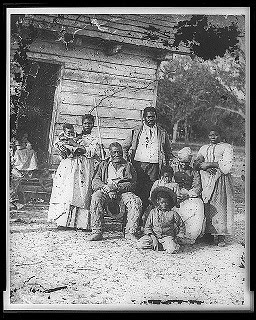 Family on Smith’s Plantation, Beaufort, South Carolina, circa 1862. Image courtesy of the Library of Congress.
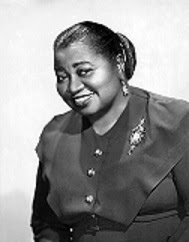 Promotional photograph of actor Hattie McDaniel (1939).
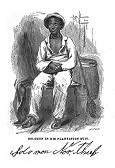 12 Years a Slave by Solomon Northrup. 1853.
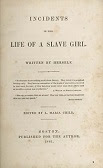 Incidents in the Life of a Slave Girl by Harriet Jacobs. 1861.
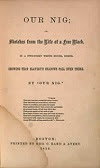 Our Nig: Sketches from the Life of a Free Black by Harriet Wilson. 1859.
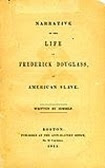 Narrative of the Life of Frederick Douglas, An American Slave by Frederick Douglass. 1845.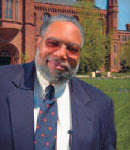
 Lonnie Bunch Director


You must be logged in to post a comment.