


From 1946, the poet and novelist Vita Sackville-West wrote a gardening column in the Observer. The columns were later collected into a set of books published between 1951 and 1958. Vita’s extensive gardening knowledge, her intense passion for her subject and her lively literary flair make these classics of garden writing essential for any serious gardener’s bookshelf. Volume 1 in a series of four anthologies reproducing the lively gardening columns by Vita Sackville-West. This volume covers 1946–1950.
Tag Archives: garden


The 7 Best Houseplants for Beginners
Plants You Can’t Kill
By Jon VanZile
These houseplants are the best place to start your collection. They are all easy to grow and can generally withstand erratic watering, uneven or bad light, and fluctuating temperatures. They’ll thrive in dorm rooms, offices and sometimes even dismal corners.
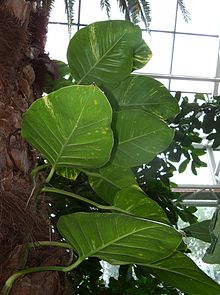 Golden pothos vine (Epipremnum pinnatum ‘aureum’)
There’s a reason this vine is one of the most popular hanging plants around. In its native habitat, golden pothos grows into a tree-swallowing monster with huge yellow and green leaves. As a houseplant, the plant will grow aggressively from pots or trailing baskets with minimal care. They will easily root in a simple glass of water. With better care, large, mottled, mature leaves may develop.
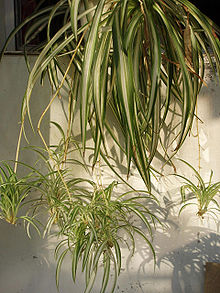 Spider plant (Chlorophytum)
A well-grown spider plant is a magnificent thing. The plant grows easily in baskets or atop columns, with arching leaves. The variegated variety is by far the most common. Over time, a mature plant will send out plantlets or offsets on long stems that form an impressive hanging display. These plantlets can be easily potted up to create new specimens. Spider plants are not picky about water, light or temperature.
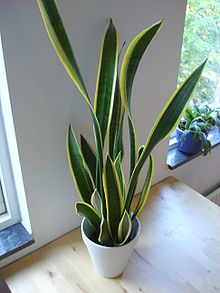 Snake plant and mother-in-law’s tongue (Sansevieria trifasciata and S. trifasciata laurentii)
Actually in the same family that includes dracaena and liriope, there are many varieties of sansevieria that are exceptionally tough. They like plenty of light, but they can handle less if necessary and they aren’t too particular about watering—providing there isn’t too much. When repotting is necessary, the main clump can be easily divided. These plants are striking additions to a collection. The snake plant features green on green bands on sword-like leaves, while the mother-in-law’s tongue has yellow leaf margins.
 Dracaena species
There are many varieties of dracaena suitable for home growth. The D. Draco and D. Marginata are wonderfully easy plants that tolerate a wide variety of conditions. These plants feature arching leaves from a woody stem. Dracaena leaves can be green, yellow and green, or even tri-colored. Also a member of the agave family, they like to be regularly watered in the summer and almost left dry throughout the winter. D. Fragrans is often used to make the popular Ti plants, or false palms.
 Succulents and Cacti
There are dozens of varieties of succulents and desert cacti flooding into garden centers and grocery stores. In general, succulents are desert plants with thick, fleshy leaves. Some of them have spines, and some none. Agave is an example of a popular succulent, along with aloe and popular echeveria rosettes. Cacti generally have spines and interesting leaf structures, including barrels, paddles and columns. As a class, succulents and cacti are slow growing and will withstand tremendous abuse. They do best with bright light, well-drained pots and little water. In the right placement, these are plants that truly thrive on neglect.
 Bromeliads
These plants have gained an unfair reputation, probably because of the difficulty required to coax a bloom from a bromeliad. It’s true that making these jungle plants bloom in the house is a tricky task. They require copious warmth and water, along with high humidity and filtered light, to produce their showy flower spikes. However, many species of bromeliads have beautiful leaves that are attractive by themselves. Bromeliads plants are usually watered by filling the central cup. They require little fertilizer, and when pups appear around the base of the plant, these can be potted up to increase your collection.
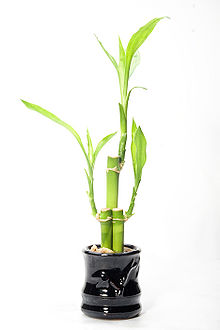 Lucky bamboo (Dracaena sanderiana)
Technically a dracaena species, lucky bamboo is the perennial office plant. Untold pots of these thrive in awful conditions, sporadically watered with bad lighting and poor air quality. Nevertheless, lucky bamboo lives on. These make wonderful gift plants, and many people believe they bring good luck and enhance the chi, or energy, of their surroundings.
Share this:


Climate-Friendly Gardening in Action … a repost
 UPDATED INFORMATION
Become a shareholder in Eden Place Farms and receive 20 weekly boxes of organic produce grown by local farmers right in Fuller Park. Half and full shares available.
Learn more.
Learn more.
A repost
Are you interested in creating a climate-friendly garden? These videos can help get you started. Follow UCS analyst Karen Perry Stillerman on her visit to Eden Place Nature Center in Chicago to see how the same practices used to create this urban oasis can transform the American agricultural landscape.
Composting
Use yard waste and table scraps to turn your garden into a global warming mitigation machine.
Urban Trees
They provide shade, lower air conditioning use, and store carbon.
Today the Backyard, Tomorrow the World
What we do in our gardens, farmers can do in their fields.

Protect Your Health—Keep Antibiotics Working!
Tell Congress to reduce the overuse of antibiotics in animal agriculture–a practice that can lead to increased antibiotic resistance in humans putting all of us at greater risk of more serious, prolonged illnesses.
Share this:

Tell Congress that sustainable agriculture is the right investment – repost
 Today the Backyard, Tomorrow the Farm!
Most gardeners will be planting bulbs for next spring and taking steps to protect perennials from harsh winter weather over the next few weeks. But did you know that actions you take now can also help in the fight against global warming?
The following advice from a gardening expert offers a simple step you can take this fall to be a climate-friendly gardener by increasing your soil’s ability to store carbon—a key component in the leading cause of global warming. After you read the tip, take action to call for the same kind of actions on our nation’s farms.
Tracey Payton, a horticulture educator from Norman, Oklahoma, offers this tip on how to be a climate-friendly gardener.
“Mulch is a great way to protect bare soil, and most importantly for the climate-friendly gardener, it can help prevent carbon loss. Uncovered soil is vulnerable to releasing more carbon than it stores. Mulch also has other benefits, such as protecting against temperature fluctuations that can damage plants, suppressing weeds, and reducing moisture loss and soil erosion. Using mulch can be as easy as an additional 2-3 inch layer of compost or straw in the garden; in the flower bed, cotton seed hulls, bark mulch, or wood mulch can be used. Do only keep mulch about 2-3″ deep and away from perennial plant stems to prevent rot and other moisture problems.”
More information about how healthy soil can lock up carbon may be found in The Climate-Friendly Gardener. This guide also contains more valuable tips and information on how to fight global warming in your own backyard. http://action.ucsusa.org/site/R?i=CbQwBKQYI1GwQMSDdIzNGA
On the Farm…
If gardeners can adopt practices to combat global warming on a small scale, think what could be accomplished if similar steps were taken on the millions of acres of farmland across the country!
Similar to mulching, one of the most effective farm practices to store carbon in the soil on a large scale—while building soil health and preventing erosion—is widespread planting of “cover crops” in the winter. A sort of living mulch, cover crops protect farm fields when other crops aren’t growing. They also have the benefit of releasing nitrogen—one of the main ingredients in fertilizers into the soil just in time for spring-planted crops, which can reduce the need for added fertilizer (another source of global warming emissions).
We can help expand the adoption of this practice by making sure that the next Farm Bill rewards farmers who plant cover crops. Voted on every five years, the Farm Bill helps determines what food farmers will grow and what practices they will employ. This bill includes programs to help farmers successfully adopt a wide array of sustainable agriculture practices, including the planting of cover crops.
Write to your members of Congress and demand farm policies that help farmers protect our water, air, and land while producing the food we need!
Take Action Today! www.ucsusa.org
Sincerely,
Jenn Yates
National Field Organizer
UCS Food & Environment Program

 Be a Seed for Change
You must be logged in to post a comment.