
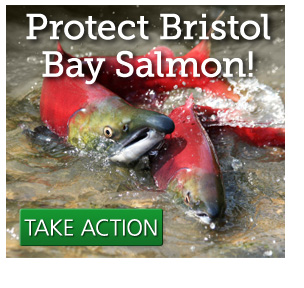

Bristol Bay is one of our most pristine national treasures, supporting tens of millions of returning wild salmon each year. This vibrant ecosystem is home to five salmon and trout species, which support over 14,000 fishing and tourism jobs from Alaska to Washington State.
But according to a draft report released by the Environmental Protection Agency that you may have seen in the news, a proposed large-scale Pebble Mine in the region could threaten our wild salmon and Washington jobs.
I’ve long said that protecting Bristol Bay salmon — and the thousands of jobs that rely on them — needs to be our top priority. We must base any future large-scale development decisions in the Bristol Bay watershed on sound science. With this new report, the evidence against the mine is mounting — and we need to speak out
Sign my petition today: Protecting Bristol Bay needs to be our top priority — too much is at stake! click on the link below

Bristol Bay’s significance cannot be understated. It is home to the world’s largest sockeye salmon population, the largest king salmon run in Alaska, and almost one third of Alaska’s salmon population. The sockeye salmon run alone supports almost half of all wild sockeye on the planet. Bristol Bay also supports abundant wildlife such as 35 fish species, over 190 birds and 40 animal species.
We need to do everything we can to protect the commercial, subsistence, and recreational fishermen who rely on this sustainable fishery.
The EPA has the authority under Section 404(c) of the Clean Water Act to block the mine if it poses an unacceptable adverse effect on natural resources, fisheries, wildlife, waters, or recreational areas. Last year, I became the first U.S. Senator to call on the EPA to use this power if the threat to Bristol Bay’s threat to our salmon fueled coastal economy is confirmed. Will you stand with me?
Take action in support of Bristol Bay: We need to stop Bristol Bay projects that would hurt Washington jobs!
While the EPA is continuing its comprehensive investigation of the potential impact of the mine, the picture painted in this draft watershed assessment is staggering. At a minimum, the proposed mine would likely eliminate or block at least 87 miles of salmon producing streams and destroy at least 2,500 acres of wetlands.
What’s more, the mine is estimated to produce 10 billion tons of toxic mine waste as a byproduct of its operation, and even a small chance that this waste could end up in Bristol Bay is an unacceptable risk
Will you join me in showing the widespread support for protecting our Bristol Bay salmon?
Sign my petition: Make it clear that Bristol Bay’s fish and wildlife need to come first!
So far, the evidence confirms what Alaska and Washington fishermen feared: that the world’s largest salmon fishery cannot co-exist with large-scale mining.
We need to do all we can to make sure the waters of Bristol Bay come first, and Washingtonian voices are heard in this process. Thanks for your help.
Sincerely,
Maria Cantwell U.S. Senator
P.S. After you’ve signed my petition, please forward this email to five friends so that they can take action in support of Bristol Bay, too!


 Be a Seed for Change
You must be logged in to post a comment.