

|
Tag Archives: Medicaid


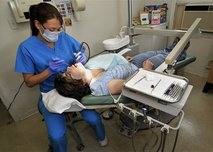
Medicaid enrollment spikes to 48M in weak economy…states are now cutting Medicaid to curb costs!
By RICARDO ALONSO-ZALDIVAR, Associated Press Writer Ricardo Alonso-zaldivar, Associated Press Writer – 1 hr 49 mins ago
WASHINGTON – A record number of Americans signed up for Medicaid last year, as the recession wiped out jobs and workplace health coverage.
A report released Thursday by the nonprofit Kaiser Family Foundation found that enrollment in the safety-net medical insurance program jumped to more than 48 million — a record 15.7 percent share of the U.S. population. With the economy barely improving, states are forecasting a 6 percent increase in the rolls next year, meaning another strain on their cash-depleted budgets.
The Medicaid numbers are the latest piece to emerge in a grim statistical picture of the recession’s toll. The ranks of the working-age poor climbed to the highest level since the 1960s last year, according to a recent Census report. Nearly 12 million households received food stamps, a record.
Rising Medicaid enrollment also underscores the growing role of the government in health care, a polarizing issue in this year’s midterm congressional elections after President Barack Obama and Democrats pushed through a massive overhaul of the nation’s health care system.
Since the start of the recession in December 2007, nearly 6 million people have signed up for Medicaid, according to Kaiser. That period includes the biggest 12-month increase since the program’s early days: 3.7 million new enrollees from December 2008 to December 2009.
“There seems to be no end in sight to the fiscal pressure on the Medicaid program,” said Vernon Smith, who co-authored the Kaiser report.
Starting in the fall of 2008, the federal government provided more than $100 billion in additional Medicaid funding to help states cover growing numbers of people in need.
The last of that money will run out in June of next year, and states will face a jump of 25 percent or more in their share of costs, although they are still likely to be financially strapped. If Republicans win control of Congress, they may find it difficult to turn down requests for more aid from the states.
With or without Obama’s overhaul, government is becoming the dominant player in health care. Federal, state and local government spending will overtake private sources in 2011, three years before the new law’s major coverage expansion, Medicare economists said in a recent report.
Medicaid is a federal-state partnership created with Medicare in 1965 under President Lyndon Johnson. It covers low-income families and many elderly in nursing homes, with Washington paying about 60 percent of the cost on average. Medicaid has also been assigned a major role under the new health care law, which expands the program to cover an estimated 18 million additional low-income adults starting in 2014.
For now, states are cutting Medicaid to try to curb costs.
Nearly every state — 48 in all — took some action to limit Medicaid spending this year, and most plan more cuts next year. Although they didn’t reduce eligibility, Kaiser found that states took steps to restrict the scope of coverage:
• A record 20 states placed restrictions on benefits, and 14 plan new restrictions next year. Arizona, California, Hawaii and Massachusetts eliminated some or all dental coverage. Other states limited medical imaging, therapies, supplies and personal care.
• Thirty-nine states cut or froze payments to hospitals, doctors and other service providers, and most plan another round next year. Medicaid payment rates are already so low that in many states it’s hard to find doctors who will accept the coverage. Yet 20 states lowered payments to doctors this year, and 12 plan to do so next year.
• Eighteen states placed limits on long-term care services, and 10 plan additional limits next year.
The recession officially ended in mid-2009, but the Kaiser study indicates its ill effects will take a while longer to wear off. Meanwhile, states will have to gear up for the major Medicaid expansion under the health care law.
“We’re on a teeter board,” said Carol Steckel, president of the National Association of Medicaid Directors, and head of Alabama’s program. “Every now and then that teeter board balances. But it’s going to be rare. There’s always something else.”
___
Online:
Kaiser Family Foundation: http://www.kff.org

 Be a Seed for Change