Tag Archives: New York Times

1872!? … Elijah Zarlin, CREDO Action


Tell Congress: Update the Mining Law of 1872!

Chicago Peak is located in Western Montana‘s Cabinet Mountains Wilderness Area, and is a holy place for the Salish and Kootenai native tribes.

In other words: It’s a terrible location for a massive proposed copper and silver mine.1

But under the shockingly antiquated General Mining Law of 1872, the National Forest Service says it has no choice but to approve the mine. Even worse, this relic of a law will hand nearly $20 billion dollars worth of publicly owned minerals to Canadian company Revett Minerals, totally for free.2 We get nothing.

This mine is only one example. Overall, Congress’s failure to update our 140-year-old mining law is one of the most egregious, expensive and destructive failures in federal land management.

Tell Congress: It is long past time to update the General Mining Law of 1872!

The General Mining Law of 1872 is literally an artifact of another era. In 1872, Women could not vote in America. There were only 37 States in the Union. And our government sought to settle the vast Western territories by handing out mining rights to fortune-seeking settlers.

Yet today, this relic continues to govern hard rock mining of metals like copper, uranium, silver and gold. The result is a massive giveaway to giant mining companies that rips off taxpayers to the tune of tens of billions of dollars. Under the law:3

• Mining leases can be purchased at 1872 prices of $2.50 – $5 an acre.
• Companies can mine publicly owned mineral resources without paying any royalties. We just give it away!
Federal land managers must prioritize mining over all other land uses.
• The law contains NO environmental protections — which has led to the pollution of more than 40% of Western U.S. watershed, and left us holding the bill for an estimated more than $30 billion in mine cleanup and reclamation.

Tell Congress: Update the Mining Law of 1872!

Tell Congress: Update the Mining Law of 1872! Click here to automatically sign the petition.

 In today’s world of giant, international mining conglomerates using massive pieces of equipment and polluting huge volumes of water to rip up the earth — as opposed to Wild West times of risk-taking prospectors and their pack mules seeking fortune – this law should be a page in history books, not our actual law books!

Congress has twice tried and failed to reform the law. But it’s long past time for an updated mining law that allows land managers to protect unique public lands from mining, implements strong environmental standards for mines, collects funds for mining reclamation, and puts a fair royalty on the extraction of these publicly owned resources.4

It is crazy that our mining law pre-dates the invention of the telephone and the light bulb. Tell Congress to update this massive giveaway, the General Mining Law of 1872.

1. “Big Mine. Bigger Trouble,” Rock Creek Aliance
2. “A Sacred Peak With Rich Ore Deposits,” New York Times, April 9, 2012
3. “General Mining Law of 1872,” Earthworks
4. “1872 Mining Law Reform Requirements,” Earthworks


I am NOT Alissa … Alissa via Change.org


Change.org
When I was 16, I was sold for sex against my will on a website called Backpage.com, the biggest website for child sex trafficking ads in America. Tell Village Voice Media, owners of Backpage, to shut down their sex ads now.                                          
      Sign the Petition


Thank you for taking the time to read my story.  I am one of many girls who have been exploited and sold for sex online. And I was sold for sex on a website called Backpage.com, which makes $22 million a year from ads for prostitution.

You should know that my name is not Alissa. I’m afraid that if I use my real name, the pimps who used to sell me for sex will hunt me down and kill me. I am also afraid that Village Voice Media (which owns Backpage) will ruin my life and come after me as they have others who have stood up for girls who have been sold on Backpage.

But I’m even more afraid that if I don’t tell my story, no one will rise up to stop the people who buy and sell girls like me.

Now, there’s a petition on Change.org asking Village Voice Media to shut down its sex ads. Click here to sign the petition.

I was 16 when I met my first pimp — he told me I was pretty, that he wanted me to be his girlfriend. I was just a kid, and I believed him. But soon he was selling me for sex every day: I was raped 365 days a year.

I was sold to other pimps, back and forth between them like an animal. One pimp gouged my cheek with a potato peeler as a warning not to run away, but after two years I worked up the courage and ran anyway. He tracked me down and beat me and stomped on me, breaking my ribs and jaw. That’s when I went to the police.

It’s still hard for me to believe that this web page exists, that it’s so easy for pimps to sell terrified, unwilling girls like me. Can you go buy a child at Wal-Mart? Of course not, but you can buy me on Backpage.

There is some hope, though: Craigslist used to host ads for girls like me, but after people started speaking out, Craigslist shut down their adult section. A new study says that prostitution ads as a whole have gone down by 50% since Craigslist got out of the business. 50%! If men can’t use sites like Backpage.com to buy and sell girls, maybe fewer girls will be bought and sold.

Now, I’m in college, and work at a nonprofit, FAIR Girls, where I help other girls like me — I even got to tell my story to Nick Kristof at The New York Times. I got out, which makes me one of the lucky ones. But Backpage is still making millions a year off the ones who aren’t so lucky. I see these teenage girls, some as young as 15, every day now in my work, and it breaks my heart.

Click here to tell Village Voice Media to shut down all prostitution ads on Backpage.com.

Thanks,

Alissa

The Beef With Ground Beef: Pink Slime …


Rob Melnychuk/Getty Images


The Beef With Ground Beef: Pink Slime

By , About.com Guide

On the face of it, Lean Finely Textured Beef (LFTB), doesn’t sound too alarming or even unappetizing, does it? How about its other name, Boneless Lean Beef Trimmings? No, not particularly scary, although “trimmings” might sound a little dubious to some. But pink slime, as it will now forever be known, is at the heart of the latest food fight, both because of what it is said to be, and the fact that about 70% of ground beef has it—but without it being declared on food labels. Boneless lean beef trimmings, or pink slime, has gained national attention because it has recently come to light that the U.S.

Department of Agriculture is buying seven million pounds of it to be used in school lunches (although this is hardly the first time).

In 2011, Celebrity English chef Jamie Oliver famously demonstrated his version of the how pink slime is created on his TV show, Jamie Oliver’s Food Revolution, triggering a collective shudder of revulsion. Adding to the negative publicity is the fact that even high-profile fast-food restaurants such as McDonald’s and Burger King no longer use it in their beef patties.

Made by Beef Products, Inc., boneless lean beef trimmings is essentially ground-beef “filler” made from mechanically separated meat that apparently contains not only small bits of otherwise inaccessible meat from the carcass, but also cartilage, connective tissue, and other undesirable animal parts—the parts that are most susceptible to bacterial contamination. These are ground up, sprayed with pathogen-destroying ammonium hydroxide (also used in processing other foods such as baked goods), and compressed into a paste. The end result is added to regular ground beef as a filler. The maximum amount allowed in ground beef is 15%.

Despite the cleansing process, which gives the beef its fresh-looking pink hue, there remain concerns that the potential for E.coli and salmonella contamination still exist, as this report from The New York Times discovered in 2009. Part of the pink-slime outrage is that ground beef containing lean beef trimmings need not be declared on meat labels, so consumers are led to believe that their ground beef contains nothing but ground chuck or sirloin. Yet others argue that beef trimmings don’t need to be listed because it’s still beef, albeit beef that’s been treated with a chemical, which is part of a production process, rather than an ingredient in itself.

The American Meat Institute maintains that these USDA-inspected trimmings are “absolutely edible,” that the process of mechanically separating beef from fat is “similar to separating cream from milk,” and that the end product is “nutritious, lean beef.” The AMI claims that the filler is “a sustainable product because it recovers lean meat that would otherwise be wasted.” Or, as critics say, that would otherwise go to the dogs. Literally.

How can you avoid pink slime?

Ground beef that is labeled Certified Organic does not contain pink slime, nor does Laura’s Lean Ground Beef and, according to ABC News, Costco, Publix, and Whole Foods do not use it. Krogersays that it carries both beef with and without LFTB.

What can you do to protest the use of LFTB in school lunches?

Sign this “Tell the USDA to Stop Using Pink Slime in Food” petition, started by blogger Bettina Siegel.

AFL – CIO – Can Apple be ethical and innovative ?


Apple is under intense scrutiny right now. But rather than genuinely addressing the problems in its supply chain, we believe the company is trying to stop the outcry by brushing its problems under the rug.We’re demanding that Apple do what it takes to ensure the people who manufacture its products are treated ethically.And we’re joining a global movement to deliver hundreds of thousands of petitions from activists worldwide at Apple’s annual shareholder meeting this Thursday.Sign our petition: Tell Apple to transform its industry by being ethical and innovative.

Not that long ago, I switched from a BlackBerry to an iPhone. It’s been a great switch. The iPhone is intuitive and powerful—it’s an incredible piece of machinery. If you don’t use an Apple product yourself, you probably have friends or family who do.

When it comes to technology, Apple has revolutionized its industry and set a standard other companies aspire to meet. The company has been richly rewarded for its success. It is now the biggest publicly traded company in the world, worth a whopping $465 billion. The company made $17.5 billion in the fourth quarter of 2011 alone—just shy of a 40 percent profit margin.(1,2)

But Apple’s record-breaking success comes at a back-breaking price. According to news reports, workers who assemble iPhones, iPads and iPods at Foxconn, Apple’s largest supplier in China, have needlessly suffered lifelong injuries and even died from avoidable tragedies, including suicides, explosions and exhaustion from 30- to 60-hour shifts. And there are stories of workers suffering such awful repetitive motion injuries that they permanently lose the use of their hands.(3)

Sign our petition to Apple’s CEO Tim Cook. Tell him to ensure that people integral to Apple’s success—workers who manufacture Apple’s electronics—are treated fairly.

Apple is under intense scrutiny right now. But rather than deal with that by genuinely addressing the problems in its supply chain, we believe the company is trying to stop the outcry by brushing its problems under the rug.

Recently, Apple joined the Fair Labor Association (FLA) to arrange for inspections of its factories. We believe these inspections will not expose—or begin to solve—Apple’s problems. The FLA is funded and controlled by the multinational corporations it oversees, which means it is not at all independent. As Scott Nova of the Worker Rights Consortium (WRC) recently said, independence “means an organization is not funded and governed by the companies it is charged with investigating.”(4)

A couple days ago, Foxconn also announced a recent raise for some of its workers. But we believe that, too, is a PR smokescreen. According to Students & Scholars Against Corporate Misbehavior, “The new basic wage…only applies to the workers in Shenzhen. In inland provinces, where two-thirds of production workers are based, basic salary remains meager. Given that the inflation in China is high, Foxconn is just following the trend of wage increase in the electronics industry in China.”

We call on Apple to immediately allow genuine unions, with truly independent factory inspections and worker trainings. Trying to brush this under the rug—or hide behind a front group like the FLA—only will make Apple’s PR problems worse.

Tell Apple’s CEO Tim Cook: Get to work to ensure people who manufacture Apple electronics are treated ethically.

One anonymous Apple executive told The New York Times there’s a trade-off between working conditions and innovation: “You can either manufacture in comfortable, worker-friendly factories,” or you can “make it better and faster and cheaper, which requires factories that seem harsh by American standards.”(5)

We disagree with the idea that Apple can’t be both ethical and innovative. Apple needs to ensure the quality of its working conditions matches the quality of its products.

As one anonymous Apple executive told The New York Times, “[s]uppliers would change everything tomorrow if Apple told them they didn’t have another choice.”(6)

Please sign our petition to Apple’s CEO, Tim Cook, urging him to treat all of the workers who make Apple’s electronics fairly—no matter where they live.

Thank you for standing in solidarity with our brothers and sisters in China.

In Solidarity,

Richard L. Trumka
President, AFL-CIO
Twitter: @richardtrumka

P.S. What leaders do matters. And Apple is now the leader in its industry. That’s why the AFL-CIO will be watching Apple closely to make sure the company does right by the workers who make its products—no matter where they live.

Apple has the resources it needs to do this right.
 Manufacturing costs are only a very small portion of Apple’s expenses: Workers are paid just $8 to manufacture a $499 iPad, for example, while Apple pockets $150 of the retail price. And the company is sitting on nearly $100 billion in cash.(7,1)

Sign our petition to Apple’s CEO Tim Cook, telling him to make Apple’s products ethically.

(1) www.google.com/finance?q=NASDAQ:AAPL&fstype=ii
(2) http://money.msn.com/top-stocks/post.aspx?post=f7428a06-dd15-4076-bec0-4204c437c814
(3) http://sumofus.org/campaigns/ethical-iphone/
(4) www.cnn.com/2012/02/17/opinion/nova-apple-foxconn/index.html
(5,6) www.nytimes.com/2012/01/26/business/ieconomy-apples-ipad-and-the-human-costs-for-workers-in-china.html
(7) www.forbes.com/sites/timworstall/2012/02/15/chinese-workers-get-only-8-from-each-apple-ipad-2/

LEGO says girls don’t like LEGOs … by Shelby Knox, Change.org


Change.org
Tell LEGO: Stop marketing sexist toys to girls
Sign the Petition

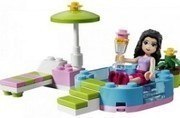
Iconic toy brand LEGO recently launched a new line of toys meant just for girls — but two young women, Bailey Shoemaker-Richards and Stephanie Cole, think the products are unfairly “dumbed down” for girls.

The new line is called LadyFigs, and it’s made up of busty, pastel-colored figurines that come with interests like shopping, hair-dressing, and lounging at the beach. The uninspired toys even come with pre-assembled environments — so there is no assembly (or imagination) required.

Bailey and Stephanie say they’re frustrated that LEGO is pushing outdated gender roles on girls and cheating them of the opportunity to build and discover. So they took to the internet, blogging about what they call the new “Barbielicious” LEGOs and petitioning the toy company to lose the sexist LadyFigs line and go back to empowering both boys and girls with its original products. Click here to sign Bailey and Stephanie’s petition today.

LEGO hasn’t always thought its toys were only for boys. In the 1980s, the company was actually celebrated for a major advertising campaign that spotlighted a young girl and her LEGO creation with the tagline “What it is is beautiful.” But since then, LEGO reversed course and decided to market its products only to boys.

The company claims its research shows girls just don’t appreciate the original LEGO line. But Bailey and Stephanie argue that with LEGO’s renewed emphasis on boys — featuring only boys in its ads and stocking products in the boys’ aisles of toy stores — it’s no wonder young girls wouldn’t think LEGOs were meant for them.

Bailey and Stephanie’s fight to get LEGO to return to its gender-neutral toys is already making waves, with the Wall Street Journal, New York Times, and Time weighing in on the issue. But LEGO is stubbornly holding its ground and told Business Week that the LadyFigs launch is a “strategic” move to “reach the other 50 percent of the world’s children,” as if girls have never been part of LEGO’s focus.

Public pressure can prove LEGO wrong. If enough people sign Bailey and Stephanie’s petition, it could convince LEGO that the new LadyFigs are bad business and the company should return its focus to empowering boys AND girls with toys that inspire creativity and innovation.

Tell LEGO to stop selling out girls — sign Bailey and Stephanie’s petition today.

Thanks for being a change-maker,

– Shelby and the Change.org team