
 |
 |
 |
||||||||
 |
|
|||||||||
|
CLIMATE CHANGE IS RUINING FOOTBALL AND 15 OTHER THINGS YOU LOVE |
|
|||||||||
 |
|
|||||||||
 |
 |
 |
|
|||||||
 |
 |
|
||||||||
Tag Archives: Pacific Ocean

John Hocevar, Greenpeace
 |
||
Endangered leatherback turtles migrate 6,000 miles across the Pacific each year, and at the end of their journey looms a deadly threat. Drift gillnets, known as “walls of death,” float just off the California coast. While their purpose is to catch swordfish, these nets ensnare and drown more than a hundred marine mammals a year. Rare sharks and endangered sea turtles are also among the casualties. Leatherback turtles can currently take refuge in a small conservation area, but not for much longer. The National Marine Fisheries Service (NMFS) is working to shrink this safe space—a move that threatens the survival of their species. NMFS has tried to rollback conservation areas before, and has only backed down when facing fierce public opposition. Together, we can stop NMFS again, and help leatherback turtles stave off extinction. Send a message to NMFS to tell them that conservation areas for endangered leatherback turtles should be expanded, not put in jeopardy. Around the world, the leatherback population is plummeting due to careless fishing practices. Even though leatherbacks have thrived for millions of years, scientists predict it won’t last another 20 years if we don’t act. At this point, even one leatherback killed is too many. And these nets are not just killers for leatherbacks. Whales, sea lions, dolphins, and other endangered species become entangled and die every year. For every one pound of swordfish caught by these gillnets, 27 pounds of other marine species die pointlessly. We must keep waging battles with those who plunder our fisheries rather than manage them—whether it is off the California coast, in the frigid waters of the Bering Sea or in the fisheries of the Atlantic—to secure our oceans’ future. Act now and tell NMFS that you want stronger protections for the leatherback turtle and other species near these dangerous fisheries. Overfishing, climate change, and ocean acidification threaten to turn our oceans into deserts. Greenpeace is working for a future where overfishing has ceased, while endangered species like the leatherback turtle can flourish in protected marine reserves. Every short-sighted and profit-driven decision we stop is another step towards true protection of the ocean ecosystems that nourish us. Let’s bring down these “walls of death.” For the oceans, John Hocevar |
||


Share this:


Somewhere in the North Pacific a Japanese whaling vessel is hunting a sperm whale mother and her calf.
We can’t let Japan block the creation of a whale sanctuary in the South Atlantic.
Tell President Obama’s IWC delegation to take the lead on the South Atlantic Whale Sanctuary proposal.
|

Somewhere in the North Pacific a Japanese whaling vessel is hunting a sperm whale mother and her calf.
It’s just one of the 120 minkes, 50 Brydes, 100 sei and 10 sperm whales they plan to kill during this year’s hunt. But the hunt is not what the Japanese whaling program is concerned about at the moment.
Instead, they’re busy buying votes from small countries like the Solomon Islands and Antigua and Barbuda to kill a proposal at the upcoming International Whaling Commission (IWC) meetings that would create a permanent whale sanctuary in the South Atlantic.
This proposal represents one of the best opportunities we’ve ever had to protect whale populations in the South Atlantic. We can’t let Japan kill it. And that means we need strong leadership from President Obama’s delegation to the IWC.
The proposed South Atlantic Whale Sanctuary stretches from the freezing waters of Antarctica to the warm waters of the equator. Most of the great whales are highly migratory, feeding in the nutrient rich waters of the Antarctic before traveling to tropical waters to give birth and suckle their young.
The establishment of the South Atlantic Whale Sanctuary would mean that the whales of the Southern Hemisphere could live their entire lives in an area free from the threat of commercial whaling.
I’ll be traveling to Panama for the IWC meetings this year as an official observer and will personally deliver your message to the US delegation. It’s critical that the US team knows there is widespread public support back home for this proposal. That’s why your message is so important.
Carmen, these whales have a right to live their lives without out the fear of being hunted. Take action now and tell the US delegation to the IWC to do everything in their power to make sure the South Atlantic Whale Sanctuary proposal passes.
I’ve been attending the International Whaling Commission (IWC) meetings as an observer for years now. And usually every year feels the same. This year is different. This year we have a real chance to take a giant step forward in terms of whale conservation in the South Atlantic.
I’ll be there. I hope you’ll join me by taking action.
Save the whales,
Phil Kline
Greenpeace Oceans Campaigner
Share this:

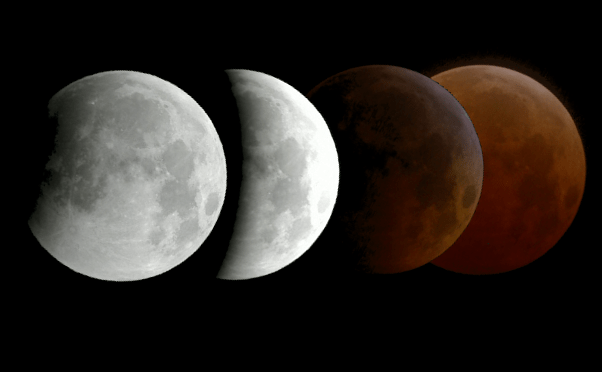
Solar Eclipse May 20

Annular Solar Eclipse of May 20
The first solar eclipse of 2012 occurs at the Moon’s descending node in central Taurus. An annular eclipse will be visible from a 240 to 300 kilometre-wide track that traverses eastern Asia, the northern Pacific Ocean and the western United States. A partial eclipse is seen within the much broader path of the Moon’s penumbral shadow, that includes much of Asia, the Pacific and the western 2/3 of North America (Figure 1).
The annular path begins in southern China at 22:06 UT. Because the Moon passed through apogee one day earlier (May 19 at 16:14 UT), its large distance from Earth produces a wide path of annularity. Traveling eastward, the shadow quickly sweeps along the southern coast of Japan as the central line duration of annularity grows from 4.4 to 5.0 minutes.
Tokyo lies 10 kilometres north of the central line. For the over 10 million residents within the metropolitan area, the annular phase will last 5 minutes beginning at 22:32 UT (on May 21 local time). The annular ring is quite thick because the Moon’s apparent diameter is only 94% that of the Sun. Traveling with a velocity of 1.1 kilometres/second, the antumbral shadow leaves Japan and heads northeast across the Northern Pacific. The instant of greatest eclipse [1] occurs at 23:52:47 UT when the eclipse magnitude [2] reaches 0.9439. At that instant, the duration of annularity is 5 minutes 46 seconds, the path width is 237 kilometres and the Sun is 61° above the flat horizon formed by the open ocean.
The shadow passes just south of Alaska’s Aleutian Islands as the central track slowly curves to the southeast. After a 7000 kilometre-long ocean voyage lasting nearly 2 hours, the antumbra finally reaches land again along the rugged coastlines of southern Oregon and northern California (Figure 2) at 01:23 UT (May 20 local time).
Redding, CA lies 30 kilometres south of the central line. Nevertheless, it still experiences an annular phase lasting 4 1/2 minutes beginning at 01:26 UT. It is already late afternoon along this section of the eclipse path. The Sun’s altitude is 20° during the annular phase and decreasing as the track heads southeast. Central Nevada, southern Utah, and northern Arizona are all within the annular path.
By the time the antumbra reaches Albuquerque, NM (01:34 UT), the central duration is still 4 1/2 minutes, but the Sun’s altitude has dropped to 5°. As its leading edge reaches the Texas Panhandle, the shadow is now an elongated ellipse extending all the way to Nevada. Seconds later, the antumbra begins its rise back into space above western Texas as the track and the annular eclipse end.
During the course of its 3.5-hour trajectory, the antumbra’s track is approximately 13,600 kilometres long and covers 0.74% of Earth’s surface area. Path coordinates and central line circumstances are presented in Table 1.
Partial phases of the eclipse are visible primarily from the USA, Canada, the Pacific and East Asia. Local circumstances for a number of cities are found in Table 2 (Canada, Mexico and Asia) and Table 3 (USA). All times are given in Universal Time. The Sun’s altitude and azimuth, the eclipse magnitude and obscuration are all given at the instant of maximum eclipse.
The NASA JavaScript Solar Eclipse Explorer is an interactive web page that can quickly calculate the local circumstances of the eclipse from any geographic location not included in Table 1:
eclipse.gsfc.nasa.gov/JSEX/JSEX-index.html
This is the 33rd eclipse of Saros 128 (Espenak and Meeus, 2006). The family began with a series of 24 partial eclipses starting on 0984 Aug 29. The first central eclipse was total and took place on 1417 May 16. After three more totals and four hybrid eclipses, the series changed to annular on 1561 Aug 11. Subsequent members of Saros 128 were all annular eclipses with increasing durations, the maximum of which was reached on 1832 Feb 01 and lasted 08 minutes 35 seconds. The duration of annularity of each succeeding eclipse is now dropping and will reach 4 minutes with the last annular eclipse of the series on 2120 Jul 25. Saros 128 terminates on 2282 Nov 01 after a string of 9 partial eclipses. Complete details for the 73 eclipses in the series (in the sequence of 24 partial, 4 total, 4 hybrid, 32 annular, and 9 partial) may be found at:
eclipse.gsfc.nasa.gov/SEsaros/SEsaros128.html
Additional details for the 2012 annular solar eclipse (including tables, maps and weather prospects) can be found at:
eclipse.gsfc.nasa.gov/SEmono/ASE2012/ASE2012.html
Share this:


The Wild West … John Hocevar, Greenpeace
 Tell the State Department that you care about the health of our oceans and urge them to either take the lead on establishing a network of marine reserves or to get out of the way this summer.
There’s almost no protection at all for the world’s oceans. And it shows… Companies like Chicken of the Sea are pushing some tuna and shark species to the brink of extinction in the Pacific Ocean with their destructive fishing practices.
Industrial fishing vessels are destroying the breathtaking coral habitats of the Bering Sea canyons and putting an entire ecosystem at risk.
Japanese, Icelandic and Norwegian whaling vessels continue to ignore international law and kill thousands of majestic whales from the Southern Ocean to the North Atlantic each year.
These challenges can be addressed together with a single solution — a network of fully protected marine reserves. So why is the State Department standing in the way?
It’s time they took action to protect our oceans. Urge them to take the lead in establishing a network of marine reserves before it’s too late.
Right now, less than one percent of the world’s oceans are set aside as marine reserves. That’s why we’re working on a global agreement which would allow the international community to establish a network of marine reserves on the high seas. Unfortunately, the US government seems to be standing in the way of these efforts by refusing to join along with other countries who are in favor of developing a new agreement to create a network of marine reserves.
The high seas are like the Wild West at the moment. It might be good for the companies that are making billions off the destruction, but it is killing our oceans. If we don’t start protecting and managing our oceans they aren’t going to survive. Marine reserves are a proven and cost effective tool for protecting biodiversity, rebuilding fish populations, and enhancing fisheries in surrounding areas.
The best chance we have to get the international community on the right path toward creating a network of protected areas is this summer in Brazil. The US delegation is developing their position right now. It’s the perfect time to let them know you are paying attention.
A global network of fully protected marine reserves would benefit sea turtles, whales, tuna, seals, narwhals and any other creature (including humans) that you can think of. We’ll be at the meetings this summer working hard for this outcome. Without your support, it won’t matter.
Send your letter to the State Department today and tell them that we need the US to join the G77, the European Union, and most of the rest of the world in standing up for marine reserves.
Thanks for your help.
John Hocevar Greenpeace USA Ocean Campaign Director

 Be a Seed for Change
You must be logged in to post a comment.