
Tag Archives: Republican

Nov. 17: UCS teams up with White House to talk climate


Join a special briefing on newly proposed limits to global warming emissions.

UCS and White House Talk Climate

Join the UCS president and staff from the White House and the EPA for a special national briefing on efforts to tackle climate change and increase our country’s use of clean, renewable energy like wind and solar.

EVENT INVITATION
November 17: Briefing from the White House and EPA on Tackling Climate Change


The Union of Concerned Scientists is teaming with the White House and the Environmental Protection Agency (EPA) for a special national briefing for UCS supporters about efforts to tackle climate change and increase our country’s use of clean, renewable energy like wind and solar.

Briefing from the White House and EPA on Efforts to Address Climate Change
Date: Monday, November 17
Time: 5:15 p.m. EST

button register today

UCS President Ken Kimmell and senior White House and EPA officials will discuss the EPA’s plan to limit global warming emissions from power plants, the single largest source of these emissions in the United States, and other administrative actions to address climate change.

Featured speakers include:

  • Ken Kimmell, president, UCS
  • Janet McCabe, acting assistant administrator, Office of Air and Radiation, EPA
  • Rohan Patel, special assistant to the president and deputy director of intergovernmental affairs, White House

Please join us for this unique opportunity to hear directly from top officials about important efforts to address climate change!

Sincerely,
Angela Anderson signature
Angela Anderson
Director, Climate & Energy Program
Union of Concerned Scientists

#IfTheySpe​akForMe


Rashad Robinson, ColorOfChange.org

Our voices are something that we sometimes take for granted. Could you imagine going about your day where little things such as how you get to work, the food that you eat, or even how you do your hair are decisions that are made for you?

Would you feel angry? Powerless? Disenfranchised?

Our guess — all of the above.

This is why ColorOfChange has launched a powerful national voting campaign #IfTheySpeakForMe focused on the inclusion of Black voices, specifically the voices of Black women. Using hidden cameras, we staged scenarios where people would have to come to terms with how it feels to not have a voice. Click below to see how Black women at a salon respond to a stranger making decisions about their hair.
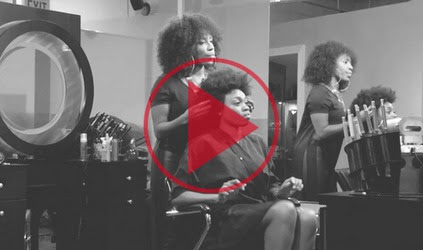
Black women at a salon respond to a man in a suit that tells the hair stylist to straighten their hair?

Isn’t this absurd? How dare some strange man invade your personal space and then determine what is going to happen to you and your body. Our fictional scenario may have been about hair but in the real world, the stakes are much higher. Political leaders are passing legislation about your right to reproductive healthcare, equal pay, the even the freedom to vote. As we prepare for mid-term elections, we cannot allow political leaders who do not have our best interests at heart to make decisions on issues that impact our daily lives. It’s simple — either you speak up or someone will speak for you.

Recently, Black women have emerged as the voting demographic to watch out for, achieving record-breaking turnout in the last few elections. Through the use of social media and powerful video content, #IfTheySpeakForMe gives Black women the opportunity to discuss key election issues and ensure that their voices are heard.

With so much on the line for our communities, voting in this year’s election has become more important than ever. On November 4, let’s get out to vote and speak up for our concerns.

Please, share this video with your family and friends and remember if we don’t speak up, someone else will.

Thanks and Peace,

–Rashad, Arisha, Matt, Aimée, Johnny, Kenneshea, Shani and the entire ColorOfChange.org team.
October 31st, 2014

Help support our work. ColorOfChange.org is powered by YOU—your energy and dollars. We take no money from lobbyists or large corporations that don’t share our values, and our tiny staff ensures your contributions go a long way.

Uncounted Votes


By

New Report Uncovers The Racially Discriminatory Effects of Provisional Ballots

Leading up to the election, there’s been important attention paid to new voting laws like those in Texas and North Carolina that are erecting more barriers to vote and could disenfranchise hundreds of thousands of eligible, and disproportionately non-white, voters. A new report released today looks at an election issue that generally gets far less attention, but could result in similar problems.

The Center for American Progress report, “Uncounted Votes: The Racially Discriminatory Effects of Provisional Ballots,” is a first-of-its-kind analysis of 2012 election data identifying states where the usage of provisional ballots directly correlated with communities of color and foreign language speaking populations. After looking at all 50 states, the reports identifies 16 states where there is a statistically significant positive relationship between provisional ballots cast and counties with higher minority populations.

What does this mean? It means that it in a good portion of the country during the 2012 election, minority communities were more likely to have to cast provisional ballots. Nearly 25 percent of the more than 2.7 million provisional ballots cast that year were outright rejected, meaning more than 500,000 voters did not have their voices heard. Rejections happen for many reasons, including cumbersome voter registration procedures, restrictive voting laws, poorly maintained voter lists, election office mismanagement, and voter error.

The use of provisional ballots often reflects other problems in the election administration process, though not always. In some case, like when Hurricane Sandy displaced voters in New York and New Jersey, provisional ballots can be used as a failsafe. However, in some situations, they appear to be a used in place of effective election administration. For instance, Philadelphia reported a large amount of provisional ballots cast in 2012 because of significant election administration errors—numerous polling locations did not have accurate polling books. And that disproportionately affected minority voters. Take a look at this comparison between Philadelphia County and Allegheny County (Pittsburgh), which have similar voting-age populations, but vastly different election performance outcomes with respect to provisional ballots:

The link between ballot problems and minority populations in Pennsylvania.

What can be done to improve a system that in some cases appears to have racially discriminatory effects? Because registration issues are such a big part of why provisional ballots are issued in the first place, the biggest thing that states or the federal government can do is to modernize voter registration. That could mean making registration permanent, regardless of where voters move. It could mean doing what a number of states have already done: allow same-day and online registration, which would dramatically reduce the need for provisional ballots because voters would have immediate solutions to most issues. Online registration would also help cut down on administrative errors associated with the paper registration system and make updating records easier.

BOTTOM LINE: Elections need to be free, fair, and accessible for all eligible voters. When there is evidence, like CAP’s new report lays out, that they are not due to potentially discriminatory aspects of voting laws and election administration, then legal experts and policy makers must take action to reform the process and make sure all voices can be heard.

Veterans running for Congress in 2014


VoteVets.org

We’ve sent you a lot of email lately about our campaign to make Mitch McConnell pay for his efforts to block $21 billion to improve veterans’ health care.

And you’re gonna get a few more messages over the next couple of weeks.

But it’s important to note that VoteVets was started in large part as an effort to elect progressive veterans, and that remains a core focus of our work. We have a chance to do just that this November, and we hope you’ll help us send a few of them to Washington, D.C.

They all have a shared FEC deadline tomorrow night – their last of the campaign – and I hope we can we count on you to split a small contribution to the full VoteVets slate to show your support.

Here are the list we’re supporting for federal office in 2014.


The four candidates in the picture that I’ve highlighted in yellow all won Democratic primaries for U.S. House seats this year. Which means we’ll hopefully have four new, progressive Iraq and Afghanistan veterans in Congress next year.

In addition to those, we’re backing statewide candidates like Lt. Governor Anthony Brown’s race for Governor of Maryland, and State Rep. Connie Pillich campaign for Treasurer in Ohio.

And our emerging leader program supports 20 veteran candidates running for County Council to State Senate seats and everything in between.

But today – please consider a small contribution to our federal candidates as a show of support ahead of tomorrow’s final quarterly FEC Deadline of the 2014 campaign.

Your commitment and support of VoteVets allows us to continually expand our electoral work.

Thank you,

Rick Hegdahl
Iraq War Veteran
VoteVets.org

San Diego for Scott Peters … #Midterm2014Matters


  •  DEMs …

We can fight back against Rove’s attacks — and win — but we must hit our grassroots goal before tomorrow night’s ad buy deadline.

Take a look at the ad for yourself. When you’re done, please chip in $5 or more to help expand our ad buy.

Thanks,

San Diego for Scott

PO Box 22074 San Diego, CA, 92192 | (858) 571-7424

Paid for by Scott Peters for Congress

This message was sent to: ynative77@gmail.com | Change or update your email address by clicking here. We believe that emails are a crucial way for our campaign to stay in touch with supporters. Click here if you’d like to unsubscribe from these messages. Thanks for your support!