
 |
||
|
|
||
| I just wanted to let you know that we are $4,500 dollars away from our goal! As Earth Day Network’s tree planting program coordinator I routinely hear stories of thanks and gratitude from the men, women, and children who are impacted by our plantings. Recently, I was told by Henry Kunduba, a farmer from Uganda, that the trees EDN helped him plant has already improved his crop yields – “I’m happy to have planted Calliandra trees as a fence on my land. I also use them to feed my goats. I need more Calliandra so that I can plant on all my land.” Through your support, we can continue to help people like Henry improve their livelihoods and provide for their families.
— John ——
We have some good news! An anonymous donor has pledged $15,000 to help us plant trees IF we can match that gift with another $15,000! Please help us reach that goal. Here’s what your donation will do right now: In Haiti: In the aftermath of the magnitude 7.0 earthquake that struck in 2010, Haiti has worked hard to rebuild and has made significant strides in agriculture, education and economic growth, but there’s much more work to be done. Erosion and a dependence on wood for cooking and heating have devastated the country’s tree canopy. Less than 2% of Haiti’s original forests remain, and most of its people are desperately poor. Earth Day Network works with local partners to integrate tree planting with farming and community training. Fruit trees and fast-growing plants provide food and biofuel, harvested through sustainable agroforestry practices. Each dollar donated helps Haiti feed its people. In Senegal: Since 1990, Senegal has lost over 675,000 hectares of pristine primary forest, the equivalent of cutting down a forest the size of Delaware. Each year more and more trees are cut to fuel timber and biofuel industries. As a result, Senegal’s soil has been destabilized and its thousands of species of flora and fauna are being threatened. By planting trees, The Canopy Project helps restore Senegal’s tree canopy, providing habitats for threatened animals, and fruits used to produce sustainable electricity to run homes, produce goods, and improve family livelihoods. But we need your help now! The tree planting season in Senegal must coincide with the short rainy season of July through September. Each dollar donated helps preserve biodiversity and adds trees in the most needy villages and farms of Senegal. Time is short and there is much work to be done. Please help us reach our goal today! — The Earth Day Network Team |
Tag Archives: Senegal


The Case For Action
 |
|
This week, the President gave a major speech on climate change policy, hosted a roundtable discussion with business leaders, named a new director of the FBI, and welcomed the next class of Presidential Innovation Fellows.
Click here to watch the latest installment of “West Wing Week.”
Senate Votes to Reform Our Nation’s Immigration System
Yesterday, 68 members of the U.S. Senate, Republicans and Democrats, came together and voted to reform our nation’s immigration system.
FLOTUS Travel Journal: Visiting Goree Island
After our visit to the Martin Luther King School, we boarded a ferry to Goree Island, a small island off Senegal’s coast. For roughly three hundred years until the mid-1840s, countless men, women and children from Africa were kidnapped from their homes and communities and brought to this island to be sold as slaves.
Landmark Treaty For The Visually Impaired
Today we mark another important achievement for equal rights, this time for over a million Americans — and over 340 million people worldwide — who are blind, visually impaired, or with other print disabilities.
Share this:


Stop the African hunger games …Baaba Maal – Avaaz.org
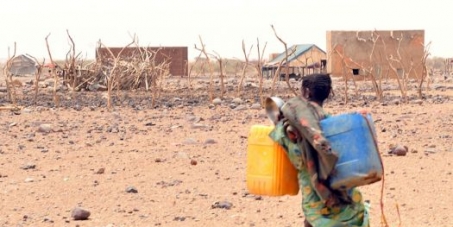 18 million people are desperate for food in Africa’s drought-struck Sahel, but urgent appeals for help are being met with deafening silence by governments worldwide. Senegalese musician Baaba Maal has started a petition to get the US, Japan, France and Germany to pledge their fair share of aid. Let’s join him— sign the urgent petition below and sound the massive alarm needed to shake these leaders into action: 18 million people are desperate for food in Africa’s drought-struck Sahel, but urgent appeals for help are being met with deafening silence by governments worldwide. Senegalese musician Baaba Maal has started a petition to get the US, Japan, France and Germany to pledge their fair share of aid. Let’s join him— sign the urgent petition below and sound the massive alarm needed to shake these leaders into action:
 |
My name is Baaba Maal …
I’m a Senegalese musician writing with a personal plea for help. I live in Africa’s drought-struck Sahel region where 18 million people are on the brink of disaster, including 1 million children at risk of starvation. But our urgent appeals for help are being met with deafening silence. Only a targeted and overwhelming demand for action can stop this catastrophe from turning deadly.
The UN says millions of lives could be destroyed unless $1.5 billion in aid is channeled in immediately, but governments have pledged less than half the required sum. The countries who can make all the difference are the US, Japan, France and Germany, but they’re stalling — that’s why I started a petition on Avaaz‘s Community Petitions website to appeal to the world for help.
In days, world leaders will gather in Brussels to discuss the Sahel — if they decide right there and then to pledge their fair share, we can avert disaster. Sign this urgent petition now — Avaaz, Africans Act 4 Africa, and Oxfam will deliver it in a coordinated stunt when we reach 1 million signatures:
http://www.avaaz.org/en/petition/The_grain_sacks_are_empty/?biEWLbb&v=15195
Terrible drought, political unrest, and sky high food prices have wreaked havoc on an area the size of the US, stretching from Senegal in the west all the way to Sudan in the east. People here are doing everything they can to survive, but the crisis has hit so hard that it’s difficult to stay hopeful. I’ve seen women and children trying to grow food in patches of land that are bone dry. They know that people are talking about what is happening in the Sahel, but they don’t know if aid will ever arrive.
The UN has only received 43 percent of the $1.5 billion needed — it’s a shortfall of gargantuan proportions. But this gap must be filled, and can be filled by the world’s richest countries, if there’s political will. We don’t have much time to avert mass suffering, and I’m determined to speak on behalf of the people here until they get the help they need.
The world has turned a blind eye to crises like this before, but this time we can make the difference between life and death by forcing our governments to respond. Sign this urgent petition now:
http://www.avaaz.org/en/petition/The_grain_sacks_are_empty/?biEWLbb&v=15195
Avaaz members have come together time and time again to respond to natural disasters, saving thousands of lives by ensuring that crucial aid was delivered to Burma, Haiti, Somalia and Pakistan. We have the power to force our leaders to stop idling away in the face of a crisis we can prevent. Let’s stand together now to demand that the world respond to the pleas of the millions living in the vast Sahel region.
With hope and determination,
Baaba Maal, with the Avaaz team
MORE INFORMATION
A distress call from Africa’s Sahel: Millions might starve (CNN)
http://www.cnn.com/2012/06/05/world/africa/sahel-hunger/index.html
UN: 18 Million in West Africa to Go Hungry in 2012 (The Associated Press)
http://news.yahoo.com/un-18-million-west-africa-hungry-2012-142100935.html
Meeting of like minds can save the hungry millions in Sahel (Sydney Morning Herald)
http://www.smh.com.au/opinion/political-news/meeting-of-like-minds-can-save-the-hungry-millions-in-sahel-20120529-1zgm8.html
Baaba Maal: people in the Sahel region need food and water now (The Guardian)
http://www.guardian.co.uk/global-development/poverty-matters/2012/may/25/baaba-maal-sahel-food-water
Coming weeks critical to tackle Sahel hunger – U.N. humanitarian chief (AlertNet)
http://www.trust.org/alertnet/news/coming-weeks-critical-to-tackle-sahel-hunger-un-humanitarian-chief

 Be a Seed for Change