McKinney Police Officer Eric Casebolt violently arrested and assaulted Dajerria Becton and other Black teens for attending a pool party.
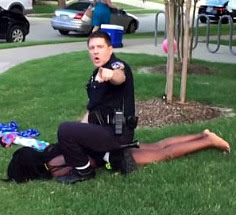
Urge local officials to immediately fire and charge Officer Casebolt with assault and battery:


McKinney Police Officer Eric Casebolt violently arrested and assaulted Dajerria Becton and other Black teens for attending a pool party.
Urge local officials to immediately fire and charge Officer Casebolt with assault and battery:
a repost
Like CAP Action on Facebook and follow us on Twitter!
Busy Months with minimum wage news: first, Senate Republicans in Washington, D.C. blocked increasing the federal minimum wage; then, a coalition of business, labor, and community leaders in Seattle, Washington announced a deal to increase the city’s minimum wage to $15.
But there have also been a number of positive developments in the states on other issues, including efforts to expand voting access. We’ve put together a run-down of some of the best from the last few weeks:
1. Wisconsin: Federal Judge Strikes Down Voter ID Law, Finds That ‘No Rational Person Could Be Worried’ About Voter Fraud. The April 29 decision, in an overwhelming win for plaintiffs who argued that the voter ID law suppresses ballot access in the state, could still be overturned on appeal before the U.S. Court of Appeals for the Seventh Circuit. But U.S. district judge Lynn Adelman did not hold back: he found not just that the law disproportionately deters minorities and low-income individuals from voting; but also that purported instances of voter impersonation are so infrequent, if they exist at all, that “no rational person could be worried about it.”
2. Hawaii: Aloha State Enacts Strong Voting Rights Law Including Same Day Registration. In 2012, even with its native son Barack Obama atop the ballot, just a paltry 44 percent of eligible Hawaii voters showed up to vote–the worst turnout rate in the country. On April 29, though, Hawaii lawmakers passed legislation to fix that, allowing citizens instead to register to vote when they show up to cast a ballot. Academic studies have found that allowing same-day registration increases turnout between 7 and 14 percentage points.
3. Minnesota: One Day After Judge Orders Online Voter Registration Shut Down, Legislature Passes Law To Revive It. This Monday, a district judge ordered Secretary of State Mark Ritchie to shut down the state’s online voter registration portal by Tuesday night because he lacked legislative authority when he launched it in September. On Tuesday, the Minnesota state legislature passed and Gov Mark Dayton signed into law a bill giving him that authority. Minnesota becomes the 23rd state to have online voter registration, which makes it easier for anybody with access to a computer to register and is simply common-sense for the 21st century.
4. Georgia: 12,000 Citizens Use New Online And Mobile Voter Registration System, More Than Double Than Expected. The new online system rolled out in the end of March, expecting around 5,000 users in the first month. Instead, more than 12,000 enrolled, including 7,000 newly registered voters, according to Secretary of State Brian Kemp.
And be sure to keep an eye out for…
5. Delaware: State Senate Set To Vote On Same Day Registration After Passing The House. The bill is an important step for expanding access to the polls in Delaware. But its not clear right now whether it’s a sure thing to pass.
BOTTOM LINE: Like we see with minimum wage legislation and so many other important issues for a more prosperous and just nation, cities and states are taking the lead while Congress stalls. When it comes to voting rights, at a time when some conservative-run swing states are doing whatever they can to roll back access, other states are showing the way forward for ensuring that voting is not a privilege, but a right.
President Obama is traveling to Alaska today to shine a spotlight on what Alaskans in particular have come to know: Climate change is one of the biggest threats we face, it is being driven by human activity, and it is disrupting Americans’ lives right now.
During his visit, the President will share his experience with people around the country first-hand.


It’s time to acknowledge that people impacted by global warming include the poor and disenfranchised, and they need a stake in policy decisions.
The rate increases approved Thursday by the Office of the Insurance Commissioner are lower than the insurance companies had requested.
Much to the (probable) chagrin of ACA opponents everywhere, more evidence that the law is working came out of census data released this morning. The number of uninsured Americans fell by 8.8 million last year alone, according to the census report. This new data adds to the recently released National Health Interview Survey that found as of early 2015, the national uninsured rate has fallen to a historic low of 9.2 percent bringing the total number of people who have gained insurance under the ACA to 15.8 million.
For a more detailed look at the census insurance data, check out this Center for American Progress column. For now, here are a few key facts from today’s report:

The results are clear: the Affordable Care Act is working in every state, but if the 20 states that have so far refused to expand Medicaid took this important step, the impact of the law would be even greater. This new evidence showing the ACA is working comes just in time for the second GOP presidential debate where each of the 11 candidates participating in the main event has promised to repeal the ACA. Be sure to tune into tonight’s debate and follow along with @CAPAction on twitter.
BOTTOM LINE: This most recent census data adds to the ever-growing stockpile of evidence proving that the Affordable Care Act has succeeded in bringing quality, affordable health insurance to millions of Americans. It also serves as further evidence of how out-of-touch the GOP presidential candidates–who still insist on repealing the ACA–remain.


 Be a Seed for Change
You must be logged in to post a comment.