
|
Tag Archives: United States Constitution
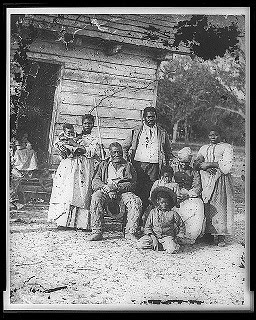 Family on Smith’s Plantation, Beaufort, South Carolina, circa 1862. Image courtesy of the Library of Congress.
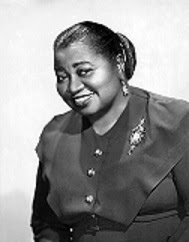 Promotional photograph of actor Hattie McDaniel (1939).
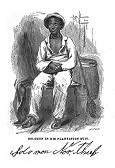 12 Years a Slave by Solomon Northrup. 1853.
 Incidents in the Life of a Slave Girl by Harriet Jacobs. 1861.
 Our Nig: Sketches from the Life of a Free Black by Harriet Wilson. 1859.
 Narrative of the Life of Frederick Douglas, An American Slave by Frederick Douglass. 1845.
 Lonnie Bunch Director
African Americans 15th Amendment and SCOTUS
|
Following the Civil War, Radical Republicans in Congress introduced a series of laws and constitutional amendments to try to secure civil and political rights for black people. This wing of the Republican Party was called “radical” because of its strong stance on these and other issues. The right that provoked the greatest controversy, especially in the North, concerned black male suffrage: the right of the black man to vote.
In 1867, Congress passed a law requiring the former Confederate states to include black male suffrage in their new state constitutions. Ironically, even though African American men began voting in the South after 1867, the majority of Northern states continued to deny them this basic right. In the North, the Republican’s once-huge voter majority over the Democratic Party was declining. Radical Republican leaders feared that they might lose control of Congress to the Democrats. One solution to this problem called for including the black man’s vote in all Northern states. Republicans assumed the new black voters would vote Republican just as their brothers were doing in the South. By increasing its voters in the North and South, the Republican Party could then maintain its stronghold in Congress. The Republicans, however, faced an incredible dilemma. The idea of blacks voting was not popular in the North. In fact, several Northern states had recently voted against black male suffrage. In May 1868, the Republicans held their presidential nominating convention in Chicago and chose Ulysses S. Grant as their candidate. The Republicans agreed that African-American male suffrage continued to be a requirement for the Southern states, but decided that the Northern states should settle this issue for themselves. Grant was victorious in the election of 1868, but this popular general won by a surprisingly slim margin. It was clear to Republican leaders that if they were to remain in power, their party needed the votes of black men in the North. The 15th AmendmentWhen the new year began in 1869, the Republicans were ready to introduce a constitutional amendment guaranteeing the black man’s right to vote. For two months, Congress considered the proposed amendment. Several versions of the amendment were submitted, debated, rejected and then reconsidered in both the House and Senate. Finally, at the end of February 1869, Congress approved a compromise amendment that did not even specifically mention the black man: Section 1: The right of citizens of the United States vote shall not be denied or abridged by the United States or by any State on account of race, color, or previous condition of servitude. Section 2: The Congress shall have the power to enforce this article by appropriate legislation. Once approved by the required two-thirds majorities in the House and Senate, the 15th Amendment had to be ratified by 28, or three-fourths, of the states. Due to the reconstruction laws, black male suffrage already existed in 11 Southern states. Since almost all of these states were controlled by Republican reconstruction governments, they could be counted on to ratify the 15th Amendment. Supporters of the 15th Amendment needed only 17 of the remaining 26 Northern and Western states in order to succeed. At this time, just nine of these states allowed the black man to vote. The struggle for and against ratification hung on what blacks and other political interests would do. The BlacksOnly days after General Lee surrendered at Appomattox in April, 1865, black abolitionist Frederick Douglass spoke before the Massachusetts Anti-Slavery Society. In his speech, Douglass explained why the black man wanted the right to vote “in every state of the Union”: It is said that we are ignorant; admit it. But if we know enough to be hung, we know enough to vote. If the Negro knows enough to pay taxes to support government, he knows enough to vote; taxation and representation should go together. If he knows enough to shoulder a musket and fight for the flag for the government, he knows enough to vote ….What I ask for the Negro is not benevolence, not pity, not sympathy, but simply justice. While Congress debated the 15th Amendment early in 1869, 150 black men from 17 states assembled for a convention in Washington, D.C. This was the first national meeting of black Americans in the history of the United States. Frederick Douglass was elected president of the convention. The delegates praised the Republicans in Congress for passing the reconstruction laws and congratulated General Grant on his election to the White House. They also pledged their continued support of the Republican Party. Those attending the convention also spent time meeting with members of Congress, encouraging them to pass a strong amendment guaranteeing black male suffrage nationwide. When the meeting adjourned, the delegates were confident that a new era of democracy for the black man was about to begin.
The DemocratsThe Democrats realized they were fighting for political survival. They feared ratification of the 15th Amendment would automatically create some 170,000 loyal black Republican voters in the North and West. In debates over the amendment, Democrats argued against the ratification by claiming that the 15th Amendment restricted the states’ rights to run their own elections. The Democrats also charged the Republicans with breaking their promise of allowing the states, outside the South, to decide for themselves whether to grant black male suffrage. Democrat leaders cited the low level of literacy in the black population and they predicted black voters would be easily swayed by false promises and outright bribery. Victory, Then TragedyDespite Democratic opposition, the Republicans steadily won ratification victories throughout 1869. Ironically, it was a Southern state, Georgia that clinched the ratification of the 15th Amendment on February 2, 1870. On March 30, President Grant officially proclaimed the 15th Amendment as part of the Constitution. Washington and many other American cities celebrated. More than 10,000 blacks paraded through Baltimore. In a speech on May 5, 1870, Frederick Douglass rejoiced. “What a country — fortunate in its institutions, in its 15th Amendment, in its future.” The jubilation over victory did not last long. While Republicans acquired loyal black voters in the North, the South was an entirely different matter. The Ku Klux Klan and other violent racist groups intimidated black men who tried to vote, or who had voted, by burning their homes, churches and schools, even by resorting to murder. When the election for president in 1876 ended with a dispute over electoral votes, the Republicans made a deal with the Southern Democrats. First, the Southerners agreed to support Republican candidate Rutherford B. Hayes for president. In turn, the Republicans promised to withdraw troops from the South and abandon federal enforcement of black’s rights, including the right to vote. Within a few years, the Southern state governments required blacks to pay voting taxes, pass literacy tests and endure many other unfair restrictions on their right to vote. In Mississippi, 67 percent of the black adult men were registered to vote in 1867; by 1892 only 4 percent were registered. The political deal to secure Hayes as president rendered the 15th Amendment meaningless. Another 75 years passed before black voting rights were again enforced in the South. For Discussion and Writing
For Further ReadingDouglass, Frederick. Frederick Douglass; selections from his writings, edited, with an introduction, by Philip S. Foner. New York International Press, 1964. Gillette, William. The Right to Vote: Politics and Passage of the Fifteenth Amendment. Baltimore: The John Hopkins Press, 1965. A C T I V I T YVoting Rights ConventionIn this activity, you will have a chance to re create history by going back to the year 1868 to participate in a voting rights convention. You will be assigned to a group that had a particular viewpoint on voting rights in 1868. Your group and four others at the convention will write a voting rights amendment to recommend to Congress. In this way, your class will have the opportunity to improve upon the original 15th Amendment that was passed by Congress early in 1869. For the purposes of this activity, it does not matter what your own sex or race is when you are assigned to one of the convention groups listed below. Voting Rights Convention Groups: Republicans, Blacks, Abolitionists, Woman Suffragists, Democrats
|


Share this:

Men, Women and Children of the San Carlos Apache tribe have been camped out at a place called Oak Flat


ABOUT an hour east of Phoenix, near a mining town called Superior, men, women and children of the San Carlos Apache tribe have been camped out at a place called Oak Flat for more than three months, protesting the latest assault on their culture.
Three hundred people, mostly Apache, marched 44 miles from tribal headquarters to begin this occupation on Feb. 9. The campground lies at the core of an ancient Apache holy place, where coming-of-age ceremonies, especially for girls, have been performed for many generations, along with traditional acorn gathering. It belongs to the public, under the multiple-use mandate of the Forest Service, and has had special protections since 1955, when President Dwight D. Eisenhower decreed the area closed to mining — which, like cattle grazing, is otherwise common in national forests — because of its cultural and natural value. President Richard M. Nixon’s Interior Department in 1971 renewed this ban.
Despite these protections, in December 2014, Congress promised to hand the title for Oak Flat over to a private, Australian-British mining concern. A fine-print rider trading away the Indian holy land was added at the last minute to the must-pass military spending bill, the National Defense Authorization Act. By doing this, Congress has handed over a sacred Native American site to a foreign-owned company for what may be the first time in our nation’s history.
The Apache are occupying Oak Flat to protest this action — to them, a sacrilegious and craven sell-off of a place “where Apaches go to pray,” in the words of the San Carlos Apache tribal chairman, Terry Rambler. The site will doubtless be destroyed for any purpose other than mining; Resolution Copper Mining will hollow out a vast chamber that, when it caves in, will leave a two-mile-wide, 1,000-foot-deep pit. The company itself has likened the result of its planned mining at Oak Flat to that of a nearby meteor crater.
The land grab was sneakily anti-democratic even by congressional standards. For more than a decade, the parcel containing Oak Flat has been coveted by Rio Tinto, Resolution’s parent company — which already mines on its own private land in the surrounding area — for the high-value ores beneath it.
The swap — which will trade 5,300 acres of private parcels owned by the company to the Forest Service and give 2,400 acres including Oak Flat to Resolution so that it can mine the land without oversight — had been attempted multiple times by Arizona members of Congress on behalf of the company. (Among those involved was Rick Renzi, a former Republican representative who was sent to federal prison in February for three years for corruption related to earlier versions of the land-transfer deal.) It always failed in Congress because of lack of support. But this time was different. This time, the giveaway language was slipped onto the defense bill by Senators John McCain and Jeff Flake of Arizona at the 11th hour. The tactic was successful only because, like most last-minute riders, it bypassed public scrutiny.
If Oak Flat were a Christian holy site, or for that matter Jewish or Muslim, no senator who wished to remain in office would dare to sneak a backdoor deal for its destruction into a spending bill — no matter what mining-company profits or jobs might result. But this is Indian religion. Clearly the Arizona congressional delegation isn’t afraid of a couple of million conquered natives.
The truth is that for Mr. McCain, Mr. Flake and others who would allow this precious public land to be destroyed, it’s not only the Indians who are invisible. The rest of us are also ghosts, remnants of a quaint idea of democracy.
Oak Flat may still be saved, albeit with difficulty, since the bill’s language stipulates quite simply that 60 days after the federal “environmental impact statement” is complete, the land will belong to Resolution — in other words, that the swap will occur no matter what the environmental study says. But, like all laws and pieces of laws, it can be reversed by new legislative language.
The deal is an impressive new low in congressional corruption, unworthy of our country’s ideals no matter what side of the aisle you’re on. It’s exactly the kind of cynical maneuvering that has taught the electorate to disrespect politicians — a disdain for government that hurts everyone. If ever there was a time for Congress to prove its moral mettle to the public, this is that time. The rider should be repealed.
Share this:

did you know … instant noodles
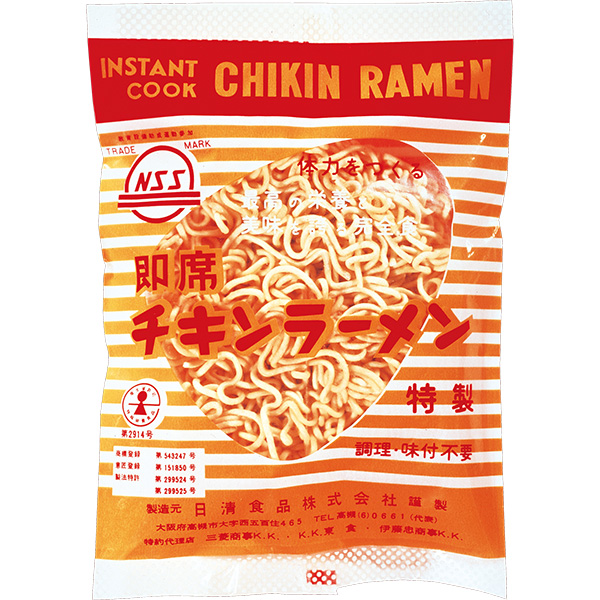
Instant noodles
Instant noodles have become quite popular in many countries around the world, including the United States. Apart from being relatively cheap and widely available, they are also easily prepared.
The instant noodle was invented by Momofuku Ando of Nissin Foods in Japan and was launched in 1958 under the brand name Chikin Ramen. The product proved to be quite profitable, but in 1971 Nissin introduced Cup Noodles, a dried noodle block in a polystyrene cup – this was a new beginning. 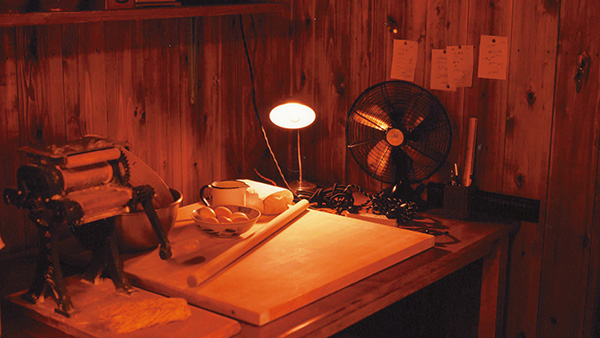

- A single serving of instant noodles is high in carbohydrates and fat, but low in fiber, vitamins and minerals.
- Instant noodles contain substances that reduce the body’s ability to absorb nutrients from healthy foods – affects the digestion process.
- Typical cup-type instant noodles contain 2,700 mg of sodium and the maximum sodium intake per day should be 2,400 mg.
- They are high in MSG (monosodium glutamate) which can trigger cancer.
- Instant noodles contain anti-freeze such as propylene glycol – affects the liver, heart and kidneys.
- Long term consumption can affect the body’s metabolism.
- Instant noodles are a major cause of obesity.
Apart from these health risks, instant noodles are also low in nutritional value – certainly not the best food to prepare for yourself or your family.
Source: Nissin.com
Share this:

Step away from the lightener – reminder summer so brightener
just another ongoing rant


So, the heat is turnt all the way up over the country, and this is about the time when some folks start to do stuff to themselves… right? What seems to be a great vehicle for both comedy and exposure of an awful practice that non-white men and women do is back in the news ~~ skin whitening. What made me sad among the obvious is how comical it is but, Comedian and risk-taker, Nick Cannon created a new character named, “Connor Smallnut.” I have to admit, seeing him in White Face was concerning as I heard myself gasp! Why? We don’t like folks in “blackface,” and felt this cannot be good, but it actually exposes what seems to be a growing practice in the US … skin whitening, specifically by non-whites.
Here we are in 2022, come on people, and those pictures above are from 2/11/2018! I saw a picture of Sammy Sosa in a cowboy outfit …no problem but looking at the photo, and I am totally open to any corrections, his skin is still being bleached and though I am not an expert it doesn’t look like the skin is holding up …
My problem, as stated again and again, years ago is that the industry often promotes lighter, brighter, whiter as being better and more likely to get you more work.
In October 2013, disturbing news regarding skin whitening popped up, and now, I find myself having to update my post from 5/28. I get a lot of digital news and while going through it, out pops an article … not the first, this was an attempt to voice a personal experience, knowledge of Skin Whitening products, how widespread it is, and who may be using it to improve their careers. I admit… Not only that, but I wondered what Century are we in and will common sense prevail. I welcome all those willing to shine a light on this terrible practice and maybe a jab or two at those promoting this awful practice. However, I did find that folks continue to pull MJ into the skin whitening practice, and I would like to say and clear up something ~~ MJ did have vitiligo … the end.
In 2009, reports were that Asians spent an estimated $18 billion a year to appear pale. Today, this Billion-dollar business is … in my opinion taking advantage of women of all races, and their personal insecurities in an industry that has created among other things bobble heads, eating disorders, height/weight anxiety, liquid diets, long hair syndrome and many more creative ways that make folks unsure, doubtful, hesitant, self-conscious, making them reactive not proactive. Apparently, otherwise, reasonably smart folks believe lighter brighter, and whiter is more likely to increase your status as well. I will say it again, it is sad and very disturbing
I have to ask why, after reading that in the year 2013, well-known entertainers are using Skin Whitening products to cross over for more acceptance or work. It would be easy to say … FYI, you’re still who you were before bleaching your skin, but the practice begs the question … are you getting more work, more hits on your site and more folks are hitting on you … what?
Because …
No matter how light you go, your personality is only as good as your authenticity …
~ Nativegrl77

 Be a Seed for Change
You must be logged in to post a comment.