African American journalist and anti-lynching crusader Ida B. Wells (1862-1931) was born to slaves at Holly Springs, Missouri. Following the Civil War, as lynchings became prevalent, Wells traveled extensively, founding anti-lynching societies and black women’s clubs.
The Pumice Plain in southwest Washington’s Mount St. Helens National Volcanic Monument is one of the most closely studied patches of land in the world. Named for the type of volcanic rock that dominates it, it formed during the mountain’s 1980 eruption. Since then, ecologists have scrutinized it, surveying birds, mammals and plants, and in general cataloging the return of life to this unique and fragile landscape.
Now, the depth of that attention is threatened, but not due to the stirrings of the most active volcano in the Pacific Northwest. The problem is a large lake two miles north of the mountain: Spirit Lake. Or, more specifically, the Spirit Lake tunnel, an artificial outlet built out of necessity and completed in 1985.
After nearly four decades, the tunnel is in need of an upgrade. At issue is the road the Forest Service plans to build across the Pumice Plain despite the scientific plots dotting the plain’s expanse. In this, Spirit Lake and its tunnel have become the de facto headwaters of a struggle over how best to manage research and risk on a mountain famous for its destructive capabilities.
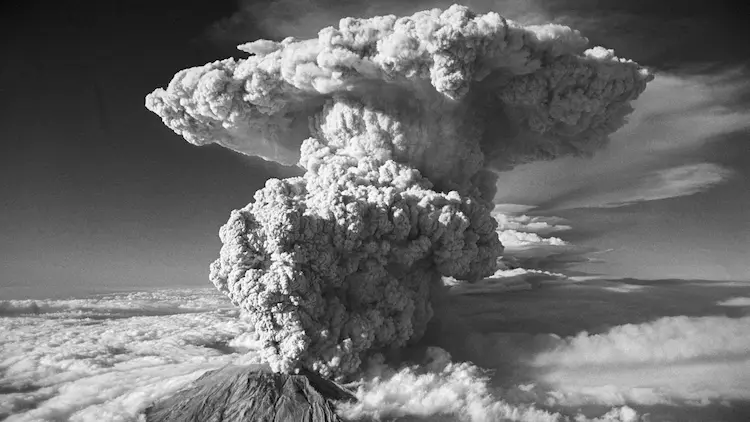
THE ENTANGLEMENT OF THE LAND, the lake and the tunnel began 40 years ago, when Mount St. Helens erupted on May 18, 1980. At 8:32 a.m., a strong earthquake caused the mountain’s summit and north flank to collapse in one of the largest landslides in recorded history. Some of the debris slammed into Spirit Lake, but most of it rumbled 14 miles down the North Fork Toutle River Valley. Huge mudflows rushed down the Toutle and Cowlitz rivers, destroying hundreds of bridges, homes and buildings.
The eruption killed 57 people and caused millions of dollars in damages. Mount St. Helens shed more than 1,300 feet of elevation, hundreds of square miles of forest were buried or flattened, and Spirit Lake was left a steaming black broth full of logs, dead animals, pumice and ash. Its surface area nearly doubled to about 2,200 acres, and its sole outlet, to the North Fork Toutle River, was buried under up to 600 feet of debris.
Having no outlet, and with rain and snowmelt still flowing in, Spirit Lake began to rise. The situation was dangerous: If the basin filled, the lake could overtop the debris field and radically destabilize it, unleashing another devastating mudflow that would send millions of tons of sediment toward the towns of Toutle, Castle Rock and Longview, Washington
This book is an ethnographic witness to the everyday lives and suffering of Mexican migrants. : Migrant Farm workers in the United States (California Series in Public Anthropology)
Based on five years of research in the field (including berry-picking and traveling with migrants back and forth from Oaxaca up the West Coast), Holmes, an anthropologist and MD in the mold of Paul Farmer and Didier Fassin, uncovers how market forces, anti-immigrant sentiment, and racism undermine health and health care. Holmes’ material is visceral and powerful—for instance, he trekked with his informants illegally through the desert border into Arizona, where they were apprehended and jailed by the Border Patrol. After he was released from jail (and his companions were deported back to Mexico), Holmes interviewed Border Patrol agents, local residents, and armed vigilantes in the borderlands. He lived with indigenous Mexican families in the mountains of Oaxaca and in farm labor camps in the United States, planted and harvested corn, picked strawberries, accompanied sick workers to clinics and hospitals, participated in healing rituals, and mourned at funerals for friends. The result is a “thick description” that conveys the full measure of struggle, suffering, and resilience of these farm workers.
Fresh Fruit, Broken Bodies weds the theoretical analysis of the anthropologist with the intimacy of the journalist to provide a compelling examination of structural and symbolic violence, medicalization, and the clinical gaze as they affect the experiences and perceptions of a vertical slice of indigenous Mexican migrant farm workers, farm owners, doctors, and nurses. This reflexive, embodied anthropology deepens our theoretical understanding of the ways in which socially structured suffering comes to be perceived as normal and natural in society and in health care, especially through imputations of ethnic body difference. In the vehement debates on immigration reform and health reform, this book provides the necessary stories of real people and insights into our food system and health care system for us to move forward to fair policies and solutions.
New York University History Professor Linda Gordon argues that there were few controversies regarding birth control until political pressure for women’s suffrage began 175 years ago. She gives a brief history of the controversies, including the re-emergence of birth control as an issue during the 2012 Republican Presidential nomination process. This interview was recorded at the annual meeting of the Organization of American Historians. More Info »
American Artifacts: Alice Paul & the Women’s Suffrage Movement Sunday, December 12, 2010 Washington, DC
Women in Politics and the 1970s Thursday, July 5, 2012 Denver, Colorado
Democrat Pat Schroeder of Colorado served in the U.S. Congress for 24 years. When she was first elected in 1972, she was a 32-year-old mother of two young children. When she arrived in Washington, she was one of only fourteen women in the House. In this speech at the History Colorado Center in Denver, she talks about the obstacles that women and other minorities faced in the 1970s, and describes her work as a representative at the height of the women’s movement. More Info »

 b. 7/16/1862



 This book is an ethnographic witness to the everyday lives and suffering of Mexican migrants. : Migrant Farm workers in the United States (California Series in Public Anthropology)


 Be a Seed for Change
You must be logged in to post a comment.