Tag Archives: World Bank

Do you know about Indigenous rights? – ran


First posted seven years ago

We are not myths of the past, ruins in the jungle, or zoos. We are people and we want to be respected, not to be victims of intolerance and racism.” —Rigoberta Menchu, Guatemala Nobel Peace Prize Winner, 1992

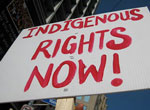
The United Nations Declaration on the Rights of Indigenous People has now been endorsed by 161 countries around the world. It is time for all countries to walk this talk. Here are some of the ways you can join RAN in doing just that.
Table of Contents
**Stand for Justice
**Reclaim Ancestral Lands
**Honor Sacred Sites
**Respect Traditional Territories
**Recognize Free, Prior & Informed Consent
**Protect-An-Acre
**RAN Recommends

~~~~~~~~~~~~~~~~~~~~

Stand For Justice

Chevron’s massive oil disaster in the Ecuadorean Amazon has affected the health, culture and communities of five Indigenous nationalities: the Cofan, Siona, Secoya, Kichwa, and Huaorani. Chevron has now been found guilty by a court of law but, unsurprisingly, is refusing to pay. Stand with the Indigenous peoples of the Amazon. Stand up to Chevron. Join us

~~~~~~~~~~~~~~~~~~~~~~~

Reclaim Ancestral Lands

Right now the Indigenous people of Long Teran Kanan in Malaysian Borneo are standing up to the palm oil industry and its unchecked expansion into their rainforest home. After more than a decade of struggle, the Long Teran Kanan community peacefully reclaimed part of their ancestral lands from the palm oil giant IOI Group, one of Cargill’s key suppliers.

~~~~~~~~~~~~~~~~~~~

Honor Sacred Sites

Rainforest Action Network‘s headquarters in San Francisco, CA is located on the traditional land of the Ohlone people. Segorea Te a.k.a. Glen Cove is a shellmound, a sacred burial site of the Ohlone people, and it is currently being threatened by proposed development. The recreation department of Vallejo, CA wants to pave trails and parking lots over this sacred site. Tell City of Vallejo officials to respect sacred sites now.

~~~~~~~~~~~~~~~~~~~~~~~~

Respect Traditional Territories

While Disney’s image is built on fairy tales, much of Disney’s manufacturing is built on nightmares. Lab results have shown that Disney, the leading publisher of children’s books worldwide, uses paper created from the destruction of Indonesia’s rainforests. The paper industry’s destruction of rainforests causes Indigenous communities to be pushed off their land, and plant and animal species to be driven further towards extinction. This month RAN activists gave Disney execs a huge wake-up call. So can you.

~~~~~~~~~~~~~~~~~~~~~~~~

Recognize Free, Prior & Informed Consent
To many the World Bank is known as a human rights bulldozer blindly implementing policies around the world that erode the rights, culture, ecosystems and economies of rural and Indigenous peoples. That’s why it may surprise some that the IFC, the private lending arm of the World Bank, recently announced revisions to its policy for projects proposed on Indigenous lands—the IFC now recognizes the principle of Free, Prior, and Informed Consent (FPIC). Will the World Bank walk its talk? Will other banks follow suit? The world is watching.

~~~~~~~~~~~~~~~~~~~~~~~~

Protect-An-Acre
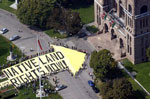
Since 1993, RAN’s Protect-An-Acre (PAA) program has distributed more than one million dollars in grants to over 150 Indigenous-led organizations, frontline communities, and allies around the world working to regain control of and sustainably manage their traditional territories. PAA is one of the most direct and effective ways you can stand in solidarity with Indigenous communities and contribute to the protection of our world’s forests.

~~~~~~~~~~~~~~~~~~~~~~~~

RAN

ENVIRONMENT Climate Consensus In Cancun


In the early hours of Saturday morning, the nations of the world rediscovered consensus on addressing global warming pollution at the international climate convention in Cancun, Mexico. The top challenge for negotiators has been to figure out a successor framework to the Kyoto Protocol, which failed to set limits on the pollution of the United States (because the Senate refused to ratify the treaty) and nations like China and India (as developing countries, they are exempt from Kyoto‘s binding targets). As a result, the Kyoto Protocol now restricts less than 30 percent of global warming pollution. In Copenhagen, nearly all the nations tried to forge a new framework for cleaning their economies, but w ere not able to achieve global consensus because of the objections of five countries. As hosts of the 2010 conference, the Mexican government had to not only bring parties together to come to agreement on policy, but also to restore trust in global governance — the concept that the world’s nations can work together as one on the problems that face all of humanity. With a roar of applause overwhelming Bolivia’s sole dissenting voice, they strongly endorsed the Cancun Agreements, a series of building blocks that will allow the United States and China — the world’s top economies and top polluters — to join the fight against global warming.

CLIMATE DESTRUCTION: A new report from humanitarian organization Dara projects that there will be a million climate deaths per year by 2030, nearly all of them in the least developed nations. The deaths are preventable if a sufficient international adaptation effort is funded. The destruction from a polluted climate is already here, as can be seen from the global events during the two weeks of the Cancun conference. High-temperature records were broken in California, Oregon, Idaho, Nevada and Arizona; heavy rainfall set “records across the Pacific Northwest,” and Arctic winds “brought intense cold to the Midwest and eastern United States.” The worst wildfires in Israel’s history, fueled by record warmth and drought, “have destroyed large sections of Israel’s northern area” and killed 41 people. Floods hit Albania, Bosnia and Herzegovina, Croatia, Montenegro and Serbia after “three weeks of torrential rains,” forcing the evacuation of tens of thousands of people. Nearly 30 people froze to death in Poland, and thirty more were killed in the rest of Europe. “The death toll from the incessant rains in Venezuela has risen to 34,” with “more than 70,000 people who have been affected” by the catastrophic floods. In India, “more than 150 people have died following heavy rains in the coastal districts of Tamil Nadu over the past few days.” Devastating flooding in Colombia that “left at least 176 people dead and 225 injured, as well as 1.5 million people homeless nationwide” forced Colombia’s president, Juan Manuel Santos, to cancel his scheduled trip to the talks. A “massive wildfire in Tibet‘s Sichuan province killed 22 people.” In a demonstration of solidarity in the climate crisis, Palestinian firefighters were some of the first to help Israel fight the unprecedented wildfires in the divided nation. Speaking at the funeral of a wildfire victim, Israeli President Shimon Peres said the wildfire “disaster taught us that all of us, Jews, Arabs, Druze, and other peoples, share the same fate.”

CLIMATE AGREEMENTS: The Cancun Agreements are the first real step toward building an international system that involves all global warming pollution — not just that produced by the rich nations governed by the Kyoto Protocol. One agreement allows for the future development of the Kyoto Protocol system. The other establishes an international Green Climate Fund, and enacts mechanisms to fight deforestation and deploy clean technology in the developing world. The agreements & quot;established a temperature target for mitigation, a system of MRV [measurement, reporting, and verification], an agreement on forestry and land use, technology transfer, adaptation, and the architecture for a climate fund that apply to all parties and not just developed countries,” summarizes Center for American Progress Senior Fellow Andrew Light. “A lot is left unanswered, most critically the gap between the national pledges for reductions in carbon pollution under the Copenhagen Accord and the now-confirmed 2ºC target in the Cancun Agreements.” The agreements require the parties to take up this issue at their next meeting in Durban, South Africa in 2011. “Looking forward, countries now have to deliver on the commitments to the systems they’ve designed,” writes Center for American Progress expert Richard Caperton. “With the structure of a climate fund decided, the next step is figuring out how the fund will operate, and where its money will come from. With the rules for monitoring carbon emissions reductions in place, the next step is to move forward with deciding how much emissions need to be reduced to make the world safe for future generations.”

CLIMATE EXTREMISTS: Bolivian President Evo Morales used the conference as a stage to solidify his position with the populist left in Latin America. On Thursday, Morales came to Cancun and rallied with representatives of the world’s indigenous peoples and the peasant movement Via Campesina, a global coalition representing 150 million small farmers, who fear the United Nations’ market-based approach to solving global warming. Bolivia’s posturing against international consensus included a passionate defense of small island states and African nations, who are most threatened by global warming — even though those nations unanimously supp orted the Cancun Agreements. Bolivia’s position that no progress is better than insufficient progress rang false to those who had the most at stake. Back in the United States, oil-funded conservatives attacked the climate negotiations, using similarly extreme arguments to appeal to the right. “I know for a fact that global warming, climate change, whatever term they attach to it,” declaimed Rush Limbaugh, “is nothing more than an attempt to create socialist nations as far around the world as they can and to separate us from our money.” Sen. Jim Inhofe (R-OK) led a group of Republican senators attacking the scientific basis for protecting the most vulnerable people in the world from global warming. Fox News, owned by billionaire Rupert Murdoch and Saudi prince Alwaleed bin Talal, ran multiple segments arguing the United Nations wants to destroy free-market capitalism in the name of climate change. The Koch Industries tea-party group Americans For Prosperity claimed climate scientists “never met a regulation on mankind they didn’t like.”

Google


Official Google Blog


–Posted: 16 Oct 2010 11:37 AM PDT–

**This is one of a regular series of posts on search experience updates. Look for the label This week in search and subscribe to the series. – Ed.

Search is always evolving, and we’re excited to share the latest this week—from Google Auto complete to our fun homepage doodles—as well as a glimpse at what the U.S. is searching for. Here’s this week’s round up of updates:

A birthday surprise
Because doodles are such a fun part of the search experience, we thought we’d share a fun little way Google will help celebrate your birthday. When you include your date of birth on your Google profile, you may notice a special treat on the Google homepage on your birthday (be sure to sign in). Click on the doodle for another birthday surprise!

Renaming Google Suggest
We first launched Google Suggest in 2004 in Labs to help people enter their searches faster. Suggest has been a very popular feature, and some people have been asking what happened to it. Never fear, it hasn’t gone anywhere—we just renamed it to “Google Autocomplete.” As part of our launch of Google Instant, we thought “Autocomplete” fit better with the new functionality—automatic queries and automatic results.

Google Instant in new countries across Asia
We’ve been rapidly expanding Google Instant around the globe. Last week we launched Instant in Australia, India, Korea, New Zealand and Singapore. Now that it’s been a few weeks since our initial release, we’ve been finding that people are really learning how to get the most out of Instant. For example, in just two weeks, we saw an increase in the fraction of searches performed without hitting enter or clicking search. This is a very demanding launch for our infrastructure and we’re expanding around the globe as soon as we can.

Eurostat data in search
We’ve also rolled out some improvements our public data search features. We’ve been working closely with Eurostat to surface some really useful and interesting data about unemployment rates, government debt, minimum wage and broadband penetration across Europe. Try searching for [arbeitslosenstatistik deutschland], [smic france] or [deuda publica españa] to see examples of this data visualisation in action. The data is available across 34 languages. We’ve also internationalized data from the World Bank. You can learn more on our European policy blog.

The week in searches
Curious to know what Google Searches skyrocketed in the U.S. this week? Check out the Google Beat, where you’ll find an inside look into what people are clicking on Google. This week, we cover everything from Columbus Day to Brett Favre and the buzz around “Cigar Guy.”

We hope you find these updates useful. Stay tuned for more next week.

Posted by Johanna Wright, Director, Search Product Management