
Monthly Archives: July 2012

Is this the best Greenpeace video ever?
We’ve teamed up with Radiohead and actor Jude Law to make what could be the best Greenpeace video ever.
The message in the video is clear: We have to act now if we hope to save the Arctic and the polar bears that call it home. Take a minute to watch it yourself and then spread the message by sharing it with your friends and family.
 (click here to watch the video)
Oil companies are using melting sea ice to drill for more of the oil that is causing global warming in the first place. In fact, Shell’s Arctic fleet will be arriving any day now to begin exploratory drilling off the coast of Alaska this summer. That’s just madness. It’s time for us to take back sanity from those who have lost the plot.
We have to spread the word about saving the Arctic before it’s too late. This video can help, because when people find out about this scandal they act.
Click here to watch and then share it with your friends and family.
Already seen the video? Great! Click here to share it directly on Facebook to make sure others do too.
Save the Arctic,
Dan Howells Greenpeace Deputy Campaigns Director
Share this:

Death sentence for seahorses? … Pulin Modi, Change.org
| Tell the National Marine Fisheries Service to protect delicate dwarf seahorses. |
 |
|
Sign the Petition
|
Help Protect Delicate Dwarf Seahorses
Started by: Center for Biological Diversity, AZ.
In response to a petition from the Center for Biological Diversity, the National Marine Fisheries Service has agreed that the dwarf seahorse may warrant protection under the Endangered Species Act and is accepting comments until July 3 before making a decision. The smallest seahorse in America, the dwarf seahorse faces big problems: water quality degradation in the Gulf of Mexico, pollution from the Deepwater Horizon oil spill and cleanup and, most importantly, loss of their seagrass habitat.
Dwarf seahorses are habitat specialists, so as seagrasses disappear, the seahorses vanish with them. More than 50 percent of Florida seagrasses have been destroyed since 1950, and in some areas losses are as steep as 90 percent. These one-inch-long fish are not the only wildlife that depends on seagrass to survive, but they are the cutest.
Dwarf seahorses form monogamous pair bonds, and every morning they meet to perform a greeting dance. As with other seahorses, females place scores of eggs inside the males’ pouches, and the males then give birth to even tinier versions of adults. Boat propellers, shrimp trawlers and ocean acidification are all harming the seagrass these delicate animals need to survive.
Share this:

Tell the EPA: Keep Diesel Out of Our Drinking Water
 Hydraulic fracturing, or “fracking,” is a dangerous drilling technique threatening water, air, wildlife and public health all over the United States. It’s done by blasting millions of gallons of a chemical-water-sand mixture deep into the Earth to break up rock formations to harvest oil and gas.
In 2005, in a law known as the “Halliburton loophole,” Congress exempted from the Safe Drinking Water Act all fracking chemicals except one: diesel fuel. The Environmental Protection Agency has just asked for public comment on how it should regulate the use of diesel fuel in fracking.
Evidence is mounting throughout the country that fracking chemicals are making their way into aquifers and drinking water, and diesel contains the toxic substances benzene, toluene, ethylbenzene and xylene. Risking more chemical contamination of our drinking water is a no-go.
Take action to tell the EPA to ban fracking with diesel without delay.
Share this:

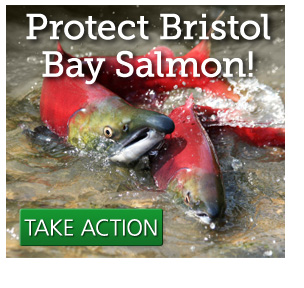
Protect Bristol Bay … Please sign the Petition

Bristol Bay is one of our most pristine national treasures, supporting tens of millions of returning wild salmon each year. This vibrant ecosystem is home to five salmon and trout species, which support over 14,000 fishing and tourism jobs from Alaska to Washington State.
But according to a draft report released by the Environmental Protection Agency that you may have seen in the news, a proposed large-scale Pebble Mine in the region could threaten our wild salmon and Washington jobs.
I’ve long said that protecting Bristol Bay salmon — and the thousands of jobs that rely on them — needs to be our top priority. We must base any future large-scale development decisions in the Bristol Bay watershed on sound science. With this new report, the evidence against the mine is mounting — and we need to speak out
Sign my petition today: Protecting Bristol Bay needs to be our top priority — too much is at stake! click on the link below

Bristol Bay’s significance cannot be understated. It is home to the world’s largest sockeye salmon population, the largest king salmon run in Alaska, and almost one third of Alaska’s salmon population. The sockeye salmon run alone supports almost half of all wild sockeye on the planet. Bristol Bay also supports abundant wildlife such as 35 fish species, over 190 birds and 40 animal species.
We need to do everything we can to protect the commercial, subsistence, and recreational fishermen who rely on this sustainable fishery.
The EPA has the authority under Section 404(c) of the Clean Water Act to block the mine if it poses an unacceptable adverse effect on natural resources, fisheries, wildlife, waters, or recreational areas. Last year, I became the first U.S. Senator to call on the EPA to use this power if the threat to Bristol Bay’s threat to our salmon fueled coastal economy is confirmed. Will you stand with me?
Take action in support of Bristol Bay: We need to stop Bristol Bay projects that would hurt Washington jobs!
While the EPA is continuing its comprehensive investigation of the potential impact of the mine, the picture painted in this draft watershed assessment is staggering. At a minimum, the proposed mine would likely eliminate or block at least 87 miles of salmon producing streams and destroy at least 2,500 acres of wetlands.
What’s more, the mine is estimated to produce 10 billion tons of toxic mine waste as a byproduct of its operation, and even a small chance that this waste could end up in Bristol Bay is an unacceptable risk
Will you join me in showing the widespread support for protecting our Bristol Bay salmon?
Sign my petition: Make it clear that Bristol Bay’s fish and wildlife need to come first!
So far, the evidence confirms what Alaska and Washington fishermen feared: that the world’s largest salmon fishery cannot co-exist with large-scale mining.
We need to do all we can to make sure the waters of Bristol Bay come first, and Washingtonian voices are heard in this process. Thanks for your help.
Sincerely,
Maria Cantwell U.S. Senator
P.S. After you’ve signed my petition, please forward this email to five friends so that they can take action in support of Bristol Bay, too!

 Be a Seed for Change
You must be logged in to post a comment.