Winter Weather Advisory


Event:Winter Weather Advisory
Alert:…WINTER WEATHER ADVISORY IN EFFECT FROM 10 PM THIS EVENING TO 10 PM PST TUESDAY… * WHAT…Snow showers expected. Total snow accumulations of a trace to 2 inches for most locations. Isolated areas may receive 2 to 3 inches where heavier or more persistent snow showers develop. * WHERE…The lowlands of western Washington. * WHEN…From 10 PM this evening to 10 PM PST Tuesday. * IMPACTS…Plan on slippery road conditions. * ADDITIONAL DETAILS…The heaviest snowfall may occur between 6 to 10 AM Tuesday which could affect the Tuesday morning commute.
Instructions:Slow down and use caution while traveling. For the latest road conditions in Washington state, call 5 1 1.
Target Area:Admiralty Inlet Area
Bellevue and Vicinity
Bremerton and Vicinity
Central Coast
East Puget Sound Lowlands
Eastern Strait of Juan de Fuca
Everett and Vicinity
Hood Canal Area
Lower Chehalis Valley Area
North Coast
San Juan County
Seattle and Vicinity
Southwest Interior
Tacoma Area
Western Skagit County
Western Strait of Juan De Fuca
Western Whatcom County

NOAA-NWS-ALERTS-WA126637817608.WinterWeatherAdvisory.12663BE88BA0WA.SEWWSWSEW.6a9dd98eb340c1f4e1e4e268bf71bd8c from w-nws.webmaster@noaa.gov

The Rick Scott Squeeze … repost! Remember when he was a gov. remember what he did and compare contrast this to gov desantis


By CAP Action War Room

Rick Scott’s Policies Are Failing Floridians, And They’re Not Happy

Ahead of Florida’s first gubernatorial debate on Friday, Governor Rick Scott is on the hot seat.

From failing to expand Medicaid and opposing an increase to the minimum wage, to ignoring climate change as a central threat to his state, Scott has hurt the lives and livelihoods of millions of Floridians—many of whom are from communities of color. A new Center for American Progress Action Fund report details Scott’s failure to act on behalf of his state’s residents. Accompanying the report, a new survey shows how Floridians disagree with his harmful positions.

The CAP Action report highlights several ways that Gov. Scott is failing Floridians:

  • Gov. Scott has opposed raising the minimum wage, even though 55 percent of Floridians support raising it to $10.10 per hour and a whopping 79 percent don’t think they could support their family on the current minimum wage. His opposition to raising the wage to $10.10 means that 1.7 million Floridians—including 357,000 African Americans and 536,000 Hispanics—are being denied fair wages. While Scott says efforts to raise the minimum wage make him “cringe,” workers are losing out on $2.1 billion in wages and Florida forgoes $1.3 billion in economic growth. Additionally, raising the minimum wage would save the state money. By putting more money into the pockets of working Floridians, 195,000 people would no longer need food stamps, saving the state $295.1 million each year.
  • Gov. Scott also now refuses to expand access to health coverage for Floridians through Medicaid, despite the facts that Florida has the third-highest uninsured rate in the nation. Gov. Scott’s failure to act means 764,000 working Floridians fall into the Medicaid coverage gap, including 214,000 African Americans and 200,000 Hispanics. This failure is costing the state 63,000 jobs, $66 billion in additional federal funds, and $20 billion in Florida taxpayer money that is going to other states to fund their expanded Medicaid programs.
  • Gov. Scott refuses to address climate change. Initially a climate denier, Gov. Scott now says he is “not a scientist,” a new talking point for conservatives who are trying to skirt the issue. This is despite the fact that Florida is one of the most at-risk states from the damaging effects of climate change and Florida voters are less likely to support a candidate who denies that man-made climate change is real. His failure to act means most of South Florida will be completely washed away by the end of the century, according to current forecasts, and risks $9 billion in lost tourism by 2025 and $40 billion by 2050. Hispanics in particular will feel the effects of climate change, since about half of the state’s Hispanic population lives in South Florida counties.

Floridians are recognizing these failures. By a 12-point margin in the latest survey, voters are less likely to vote to for Scott because of his position opposing a minimum wage increase. Voters are less likely to support Scott by an 11-point margin based on his refusal to expand Medicaid to cover the state’s 1 million low- and moderate-income Floridians. And by a 16-point margin, Florida voters are less likely to vote for a candidate — like Scott — who denies that man-made climate change is real.

BOTTOM LINE: Florida Governor Rick Scott’s policies on the minimum wage, Medicaid expansion, and climate change are failing to create an economy that works for every Floridian, not just the wealthiest. Voters in the state disagree with these positions, and they are taking notice.

Like CAP Action on Facebook and follow us on Twitter!

USDA February 2023 Safety Alerts Previous Month & last day of prior month updates


** Daiso Issues Allergy Alert for Prepackaged Snacks

Daiso California LLC of La Mirada, CA is recalling the below listed snacks due of undeclared allergen ingredients. People who have an allergy or severe sensitivity to soybeans and milk run the risk of serious or life-threatening allergic reaction if they consume these products.

These prepackaged snacks were sold in Daiso stores in California, Washington, Nevada, Texas, New York, and New Jersey.

There have been no reported cases of allergic reaction to these products. The recall was initiated after it was discovered that packaging did not adequately disclose the presence of all allergens. Sale of the products have been suspended, and Daiso California has pulled the products from store shelves

**

** Jan Fruits Inc. of VERNON, CA is recalling all its cases of its 200g/7.05oz packages of ENOKI MUSHROOM (Product of Taiwan) because it has the potential to be contaminated with Listeria monocytogenes an organism which can cause serious and sometimes fatal infections in young children, frail or elderly people, and others with weakened immune systems. Although healthy individuals may suffer only short-term symptoms such as high fever, severe headache, stiffness, nausea, abdominal pain and diarrhea, Listeria infection can cause miscarriages and stillbirths among pregnant women.

The recalled Enoki Mushroom product was distributed in CA to small local produce distributors or wholesalers for further distribution to retail stores within CA and HI.

The Enoki Mushroom comes in a 200g/7.05oz clear plastic package with the following description “Taiwan Best Quality Enoki Natural Mushroom***Manufacturer: Changhua County Mushrooms Production Cooperative” in English. There is a green lettered “Premium” Printed with two QR scan codes and UPC 8 51084 00835 8 on the back side of a package There is a Lot Code #3779 outside of box.

No illnesses have been reported to date in connection with this problem. The distribution of the product is suspended.

The recall was the result of a routine sampling program by the State of Hawaii which revealed that the finished products contained Listeria monocytogenes. We have ceased the production and distribution of the product as we continue our investigation as to what caused the problem.

This recall is being made with the knowledge of the U.S. Food and Drug Administration and CDPH.

Although safety measures were taken to prevent the following risk, the safety of consumers is our top priority. We urge to return enoki package to the place of purchase for a full refund. Consumers with question may contact the company at 323-923-2879 Ext. 3. Monday – Friday 7:00am – 3:00pm.

** February 23, 2023, Global Pharma Healthcare is voluntarily recalling Batch No. H29 of Artificial Eye Ointment, distributed by Delsam Pharma to the consumer level, due to possible microbial contamination. Additionally, some product packaging is leaking or may otherwise be compromised.

Risk Statement: Use of contaminated eye ointment may cause adverse events, including infection in the eye that could lead to blindness. To date, Global Pharma Healthcare has not received any reports of adverse events related to this product.

Artificial Eye Ointment (mineral oil 15%, white petrolatum 83%, 3.5 grams / 1/8 oz.) is used as an eye lubricant and to relieve dryness of the eyes. The affected product is packaged in a white aluminum tube within a paper carton. The product can be identified by the photos provided below. The product was distributed nationwide in the United States, and by Delsam through internet retail sites. Delsam Pharma’s NDC for this product is 72570-122-35, and its UPC code is 3 72570 012235 3.

Global Pharma Healthcare is notifying the brand owner and importer of this product, Delsam Pharma, about this recall, and is requesting that wholesalers, retailers, and customers who have the recalled product should stop any use and discard the product safely and appropriately.

Consumers with questions regarding this recall can contact the distributor Delsam Pharma, LLC by phone at 1-866-826-1306 or by e-mail at delsampharma@yahoo.com from Monday to Friday from 11am to 4pm EST.

Consumers should contact their physician or healthcare provider if they have experienced any problems that may be related to using these over-the-counter drug products.

** Kawasho Foods USA Inc. of New York, NY, is voluntarily recalling one lot of canned GEISHA Medium Shrimp 4oz. because of reported swelling, leaking, or bursting cans. There is a possibility that the product has been under processed, which could lead to the potential for spoilage organisms or pathogens.

The Product was distributed to retail stores (Walmart, Associated Food Stores, Stater Bros Markets, Safeway, Albertsons) in California, Utah, Arizona, and Colorado.

The GEISHA Medium Shrimp is packaged in a 4oz. metal can, with UPC 071140003909. The one lot being recalled is LGC12W12E22; BEST BY: MAY/12/2026 and this code appears on the bottom of the product can.

Consumers should not use this product, even if it does not look or smell spoiled. No illnesses or other adverse consequences have been reported to date in connection with this product.

Consumer who have purchased this product are urged to return to place of puchase for a full refund. If you have any question regarding this recall, please contact us at (212)841-7400 (Monday to Friday, 9:00 a.m. to 5 p.m. EST) or via email at info@geishabrand.com.

** Bindle Bottle LLC of Carlsbad, CA, is recalling its Bindle Bottles because they may contain an area of exposed lead located in the bottom storage compartment of the bottle. Unpackaged food stored in the bottom storage compartment of the bottle may have been adulterated by the lead and could pose health problems to people or animals eating that adulterated food. People with high blood levels of lead may show no symptoms, but the condition may cause damage to the nervous system and internal organs. Acute lead poisoning may cause a wide range of symptoms, including abdominal pain, muscle weakness, nausea, vomiting, diarrhea, weight loss, and bloody or decreased urinary output. Children are particularly vulnerable to lead poisoning. If a child is exposed to enough lead for a protracted period of time (e.g., weeks to months) permanent damage to the central nervous system can occur. This can result in learning disorders, developmental defects, and other long-term health problems. Clinical signs in dogs with acute lead poisoning may include lethargy, anorexia, behavioral changes, ataxia (wobbly gait), tremors, and seizures.

The recalled Bindle Bottles were distributed nationwide via bindlebottle.com, amazon.com, promotional distributors, and in retail stores.

The product comes in four sizes: 32 oz, 24 oz, 20 oz, and 13 oz. Bindle Bottle is also recalling the 24 oz bottle that is part of the Puppy Pack.

No illnesses have been reported to date in connection with this problem.

Reports by Lead Free Mama and Consumer Reports led the firm to have the bottle tested. The recall was initiated after analytical results revealed that the small, 0.4” diameter soldering dot in the bottom storage compartment contained lead. Subsequent investigation indicates the problem was caused by a lack of a cover or barrier to the exposed soldering dot.

Production of Bindle Bottles has been suspended and will be overhauled going forward, eliminating the presence of exposed lead anywhere on future products.

As part of the recall, consumers who purchased a Bindle Bottle are eligible to receive at-home repair kits to rectify the issue. These repair kits can be obtained by filling out a form at bindlebottle.com/pages/recallExternal Link Disclaimer. Consumers with questions may contact the company at product_safety@bindlebottle.com

** Delight Foods USA LLC Recalls Ineligible Frozen Siluriformes Products Imported from India

Delight Foods USA LLC, a distributor and the Importer of Record located in Jersey City, N.J., and Delight Foods LLC, a distributor and the Importer of Record located in San Jose, Calif.,  is recalling approximately 2,961 pounds of imported frozen Siluriformes (catfish) products. The products were imported from India, a country ineligible to export Siluriformes products to the United States.

** Edgewell Personal Care Issues Voluntary Nationwide Recall of Banana Boat Hair & Scalp Sunscreen Due to the Presence of Benzene UPDATED

In the news release dated July 29, 2022, and titled, Edgewell Personal Care Issues Voluntary Nationwide Recall of Banana Boat Hair & Scalp Sunscreen Due to the Presence of Benzene, one additional lot code (“20301CF”) has been added to the recall. The modified announcement follows:

SHELTON, Conn., January 27, 2023 Edgewell Personal Care Company (NYSE: EPC) today expanded its voluntary nationwide recall of three batches of Banana Boat Hair & Scalp Sunscreen Spray SPF 30 to the consumer level as outlined in the table below. One additional batch has been added to the original recall announced on July 29, 2022. A review found that some samples of the product contained trace levels of benzene. While benzene is not an ingredient in any Banana Boat products, the review showed that unexpected levels of benzene came from the propellant that sprays the product out of the can.

**

**  The U.S. Department of Agriculture’s Food Safety and Inspection Service (FSIS) is issuing a public health alert for frozen chicken products due to misbranding and an undeclared allergen. The product contains cashews, a known allergen, which is not declared on the product label. FSIS is issuing this public health alert to ensure that consumers with allergies to cashews are aware that these products should not be consumed. A recall was not requested because it is believed that the products are no longer available for consumers to purchase.

The frozen products are labeled as Chicken Korma with Basmati Turmeric Rice but may contain Vegetable Tikka Masala with Turmeric Rice. This item was produced on November 8, 2022. The following product is subject to the public health alert [view labels]:

  • 10-oz. containers of “Wegmans Chicken Korma with Basmati Turmeric Rice” with Best By 08 NOV 2023.

The products subject to the public health alert bear establishment number “P-34641” inside the USDA mark of inspection. These items were shipped to retail locations in New York and Pennsylvania.

The problem was discovered when the producing establishment notified FSIS that they received consumer complaints reporting that product labeled as chicken korma actually contained vegetable tikka masala. The vegetable tikka masala contains cashews not declared on the chicken korma product label.

There have been no confirmed reports of adverse reactions due to consumption of these products. Anyone concerned about an injury or illness should contact a healthcare provider.  

FSIS is concerned that some product may be in consumers’ freezers. Consumers who have purchased these products are urged not to consume them. These products should be thrown away or returned to the place of purchase.

Consumers and members of the media with questions about the public health alert can contact Giovanni Gomez, Director of Business Development, Cafe Spice, at 845-863-0910 or Giovanni@cafespice.com.

** FSIS Issues Public Health Alert for Frozen, Not-Ready-To-Eat Signature Select Breakfast Bowl Products Due to Possible Temperature Abuse at Distribution Center

The U.S. Department of Agriculture’s Food Safety and Inspection Service (FSIS) is issuing a public health alert due to concerns that not-ready-to-eat meat products were subject to temperature abuse during storage at a distribution center prior to delivery to retailers, which may have resulted in the growth of spoilage organisms or pathogens. FSIS is issuing this public health alert to ensure that consumers are aware that these products should not be consumed. A recall was not requested because the products are no longer available for purchase.

** Fresh Ideation Food Group LLC Recalls Sandwiches and Other Products Because of Possible Health Risk

Fresh Ideation Food Group LLC of Baltimore, MD is recalling products sold from January 24, 2023 through January 30, 2023 because the products have the potential to be contaminated withListeria monocytogenesan organism which can cause serious and sometimes fatal infections in young children, frail or elderly people, and others with weakened immune systems. Although healthy individuals may suffer only short-term symptoms such as high fever, severe headache, stiffness, nausea, abdominal pain and diarrhea,Listeriainfection can cause miscarriages and stillbirths among pregnant women.

Products have been distributed in Connecticut, District of Columbia, Maryland, Massachusetts, New Jersey, New York, North Carolina, Pennsylvania, South Carolina, and Virginia. Recalled Products were sold in retail locations, vending machines, and during travel with transportation providers. The products include sandwiches, salads, snacks, yogurt, wraps and related products. A listing of the relevant product information is provided at the bottom of this press release.

** Conagra Brands, Inc., a Fort Madison, Iowa establishment, is recalling approximately 2,581,816 pounds of canned meat and poultry products due to a packaging defect that may cause the products to become contaminated without showing any outward signs of contamination, the U.S. Department of Agriculture’s Food Safety and Inspection Service (FSIS) announced today.

The meat and poultry products were produced between December 12, 2022, and January 13, 2023. The following products are subject to recall: [view spreadsheet] [view labels].

The products subject to recall bear establishment number “P4247” on the product cans. These items were shipped to retail locations nationwide.

The problem was discovered when the establishment notified FSIS after observing spoiled and/or leaking cans from multiple production dates at the establishment’s warehouse.

Subsequent investigation by the establishment determined that the cans subject to recall may have been damaged in a manner that is not readily apparent to consumers, which may allow foodborne pathogens to enter the cans.

There have been no confirmed reports of adverse reactions due to consumption of these products. Anyone concerned about an injury or illness should contact a healthcare provider.  

FSIS is concerned that some product may be on retail shelves or in consumers’ pantries. Consumers who have purchased these products are urged not to consume them. These products should be thrown away or returned to the place of purchase.

FSIS routinely conducts recall effectiveness checks to verify recalling firms notify their customers of the recall and that steps are taken to make certain that the product is no longer available to consumers. When available, the retail distribution lists will be posted on the FSIS website at www.fsis.usda.gov/recalls.

Members of the media with questions about the recall can contact Dan Hare, Senior Director of Communications, ConAgra Brands, at 312-549-5355 or daniel.hare@conagra.com. Consumers with questions about the recall can call 800-289-6014, Monday-Friday 9 a.m. to 5 p.m. CST or email consumer.care@conagra.com.

HISTORICAL FIGURES YOU DIDN’T KNOW …


Might be or WERE part of that…one drop rule – BLACK
Booker T. WashingtonBooker T. Washington born in 1856 of an unknown white father and black mother, was an example of miscegenation. He was an influencing educator and advisor to the president of the United States in his lifetime.
J. Edgar Hoover  Image result for was j edgar hoover biracial

Hitler’s Jewish ancestry isn’t the strangest twist in racial history. FBI director J. Edgar Hoover — the man who plagued the black liberation movement from Marcus Garvey to the Black Panther Party — was known by his peers as a passing black man.

His childhood neighbor, writer Gore Vidal famously quoted, “It was always said in my family and around the city that Hoover was mulatto.  And that he came from a family that passed.”

And apparently, that was a closely-guarded secret. Millie McGhee, author of Secrets Uncovered: J. Edgar Hoover Passing For White, said,

“In the late 1950’s, I was a young girl growing up in rural McComb, Mississippi. A story had been passed down through several generations that the land we lived on was owned by the Hoover family. My grandfather told me that this powerful man, Edgar, was his second cousin, and was passing for white. If we talked about this, he was so powerful he could have us all killed. I grew up terrified about all this.”

The Medici Family 
It’s hard to get through any school lesson about the Italian Renaissance without talking about the Medici family. What history doesn’t like to talk about is that the financial ruler of the western world — Alessandro de Medici, Duke of Penne and Duke of Florence and commonly called “Il Moro” (Italian for Moor — a term commonly used to describe anyone with dark skin) — was born to an African-Italian mother (a servant) and a white father (who would later become Pope Clement VII).

It was not until the 19th and early 20th centuries that discussion of Alessandro’s “race” came into its own—and then not in a good way. Scientific racism provided the intellectual backdrop against which historians of the Medici judged Alessandro’s rule. But Alessandro also attracted the attention of scholars seeking to challenge racism. In 1931, in the United States, Arturo Alfonso Schomburg, co-founder of the Negro Society for Historical Research and creator of one of the most important collections of sources for African history, wrote an article about him for The Crisis, the magazine of the US-based National Association for the Advancement of Colored People. Still, while the story may have been known in the USA, it was far from visible to me as a traveller to Florence, which I had visited three times before I heard it. When I did, I found it not in the city’s galleries, but in an academic book chapter in the University of London library. In the museums of Florence itself there was scanty evidence even for Alessandro’s existence. A few years ago, when I visited the Uffizi Gallery, his portrait was not on display. To prove to friends that he was real, I was reduced to apologetic leafing through old exhibition catalogues in the gallery bookshop. A friend who had spent a decade studying sociology at the University of Florence knew nothing of the tales of Alessandro’s ethnicity. Nor did my Florentine landlady, who had lived in the city for years. She smelt a conspiracy. In the past ten years or so, there has been greater acknowledgement—both in academic literature and in the art world—of the likelihood that Alessandro was mixed-race. Yet he is still very far from a well-known historical figure.

For a very long time, the city of Florence has been mythologized as the symbolic heart of European culture, the cradle of western civilization. It abounds with the images and stories of great men: Dante, Botticelli, Lorenzo de’ Medici, Michelangelo, Galileo. The Renaissance was the first period—so the traditional history went—in which we could truly speak of the great individual, of the “Renaissance man.” Alessandro’s story reminds us that Renaissance men may not always have been white. Alongside the art and poetry, the scheming, intriguing, bloody side of Renaissance politics is well known too. As Orson Welles famously riffed, “In Italy for 30 years under the Borgias they had warfare, terror, murder, and bloodshed, but they produced Michelangelo, Leonardo da Vinci, and the Renaissance.” To terror, murder, and bloodshed, Alessandro’s story adds slavery and the seeds of racism.

Merle Oberon as Anne Boleyn

In Hollywood’s Golden Age, studios not only anglicized the names of actors but also expected them to downplay their ethnic origins. As such, several movie stars who weren’t solely of European heritage worked to adjust their appearances so they ​passed for white in film, their personal lives, or both. Fast forward to modern days, and many actors today are bi-racial but still pass for white.

 Clark Gable Image result for clark gable

Gable did not try to hide his black and Native-American heritage, although it wasn’t widely publicized either. When his Gone with the Wind costar Hattie was not permitted to attend the premiere in Atlanta, Georgia, he threatened to boycott it. When he saw “colored” and “white” bathrooms on the set, he refused to continue working until all of the cast were treated equally.

 Jackie Kennedy 

If you thought Michelle Obama was the first black first lady, surprise! Jackie Onassis’ ancestor John van Salee De Grasse was the first black American formally educated as a doctor. Her father was nicknamed “Black Jack” Bouvier because of his dark complexion.

 Alexander Hamilton 

was the first secretary of the treasury whose face adorns the U.S. 10-dollar bill. Alexander Hamilton’s mother, Rachel Fawcett Lavain, was said to be of “mixed blood.” Alexander’s older brother was dark-skinned and treated as black. Even though his mother was half-black, both she and Alexander were light skinned enough to pass as white.

For black history buffs, it’s really all about the Hamiltons. Alexander Hamilton isn’t just the man on the $10 bill, he was the United States’ first Secretary of the Treasury. His mother, Rachel Fawcett Lavain, was said to be of “mixed blood” and his father was the son of a Scottish Duke. Alexander’s older brother was dark-skinned and treated as black. But Alexander was light enough to pass and went on to establish the first national bank in the American colonies, founded the U.S. mint and wrote most of the Federalist Papers. Hamilton was born as the illegitimate son of Rachel Fawcett Lavien on a Carribean island the size of the town of Kirkland called Nevis. His mother was divorced for infidelity long before Hamilton was born, casting question onto Hamilton’s father. Some claim that it was James Hamilton, the man who lived with Rachel. Others claim it was Nicolas Cruger, a Carribean merchant with connections in New York who employed an eleven year old Alexander Hamilton after his alleged father left him and his mother died. Some claim that Hamilton’s mother had affairs with her slaves. Additionally, many claim that Hamilton’s mother was herself part black, newspapers record Hamilton being called a mustee (implying his mother was a quarter black) by political enemies.

 Ludwig Van Beethoven 
Even though paintings of the composer depict him as very Caucasian, his death mask highlights his African features

The famous classical composer’s mother was a moor. It’s a fact that became popular again after this cast of his African facial features contradicted the “idealized” paintings of the man history likes to re-imagine.
The question was brought to modern science, but recent DNA evidence was inconclusive. For more information, please refer to the related link from the Washington Post.  The research team also said that future DNA analysis might answer lingering questions about Beethoven’s ethnicity. As a young man, the dark-complexioned Beethoven sometimes was called “the Moor,” and some historians have questioned whether he had African blood. Walsh said his analysis of the hair strands showed “no wrinkles or bends” typical among people of African descent, but that more tests may be conducted.

So, the latest info 8/4/2023 certainly leaves the info above as a possibility

Saint Nicholas 

the real story of Santa Claus begins with Saint Nicholas who lived from 270 to 343 A.D.,a village of Patara is the saint upon whom the legend of Santa Claus is based. St. Nicholas lived in what was once Greek, is now Turkey, which was at that time a hub for people of African descent. Ancient pictures of St. Nicholas depict him as a dark-skinned man with African features, in contrast to his modern whitewashing as the rosy-cheeked Santa Claus. He was born to wealthy parents, who died in an epidemic while Nicholas was still young. Nicholas used his entire inheritance to assist the needy, the sick, and the suffering.

 Queen Charlotte of Great Britain Charlotte of Mecklenburg-Strelitz

was descended from Madragana, a Moor (a north African), and Portugal’s King Alfonso III. She was queen when America declared independence from Britain. Charlotte’s parentage makes Queen Elizabeth II, Prince Charles and Prince William technically mixed race.  This 18th century painter got into hot water when he painted Queen Charlotte’s features a little too realistically. The painting stirred up long-standing rumors about King George III’s wife’s African heritage. And those rumors turned out to be true. Queen Charlotte was the member of a Portuguese royal family begun by Alfonso III and his lover Madragana “a moor“. Because this makes Queen Elizabeth II, Prince Charles and Prince William technically mixed race, many historians have tried to cast doubt on the nature of Queen Charlotte’s heritage. But her personal physician has noted her “true mulatto face” and the public report released before Queen Elizabeth II’s coronation in 1953 acknowledges the monarchy’s African heritage. It is a great “what if” of history. “If she was black,” says the historian Kate Williams, “this raises a lot of important suggestions about not only our royal family but those of most of Europe, considering that Queen Victoria’s descendants are spread across most of the royal families of Europe and beyond. If we class Charlotte as black, then ergo Queen Victoria and our entire royal family, [down] to Prince Harry, are also black … a very interesting concept.

 Alexander Pushkin Alexander Pushkin by Orest Kiprensky

The man considered the father of Russian literature was he great-grandson of an Ethiopian prince. Among Pushkin’s more famous unpublished works (left after his death in a duel) is an unfinished novel about his Ethiopian great-grandfather. Ossip Abramovich Gannibal’s father, Pushkin’s great-grandfather, was Abram Petrovich Gannibal (1696–1781), a Black African page kidnapped and brought to Russia as a gift for Peter the Great.

Bettmann/Getty Images    Fredi WashingtonFredi Washington in "Imitation of Life"
With her fair skin, green eyes, and flowing hair, actress Fredi Washington possessed all the traits needed to pass for white. In 1934’s “Imitation of Life,” Washington plays a light-skinned black woman who denies her black mother to cross the color line, posing as white.
In real life, Washington refused to deny her heritage, advocating for blacks in entertainment. Married for a time to black trombonist Lawrence Brown, the only time Washington reportedly passed for white is to buy snacks from the establishments that refused to serve her husband and his bandmates because of their skin color.

See the source image
Carol Channing  Clint Eastwood And Carol Channing In 'The First Traveling Saleslady'

Enduring comic legend Carol Channing didn’t reveal to the world that her father was black until 2002, when she was over 80 years old.

When Broadway sensation Carol Channing was 16, her mother let her in on a secret: Channing’s paternal grandmother was black. Known for being a gay rights advocate, Channing didn’t reveal her African American ancestry to the world until 2002, when she released her memoir, “Just Lucky I Guess,” at the age of 81.

Channing said she never felt ashamed of her black roots. Rather, she believed her black ancestry made her a good performer because of the common stereotype about blacks being naturals at singing and dancing. “I thought I had the greatest genes in showbiz,” Channing remembered.

Channing went on to win accolades for her performances in “Hello Dolly!” and “Gentleman Prefer Blondes.”

Merle Oberon (1911–1979)

Actress Merle Oberon
Hulton-Deutsch Collection/CORBIS/Corbis/Getty Images

Merle Oberon earned an Oscar nod for her acting in 1935’s “The Dark Angel” and earned additional recognition for playing Cathy in 1939’s “Wuthering Heights.” But off-screen, Oberon feared that her secrets would be exposed. She wasn’t solely white nor was she born in Tasmania like actor Errol Flynn, as she told people.

Instead, she was born in India to an Indian mother and an Anglo father. Rather than disown her mother, Oberon passed her parent off as a servant. When the actress visited Tasmania later in life, the press hounded her for details about her upbringing, forcing her to admit that she wasn’t born there. Still, Oberon did not confess to being Indian.

The 2002 documentary “The Trouble with Merle” examines Oberon’s deceit about her origins.

 Anatole Broyard   

Famous New York Times book reviewer Anatole Broyard was born to light-skinned black parents in New Orleans and passed himself off as white once he grew up and moved out of his predominantly black Brooklyn neighborhood. The truth wasn’t revealed until his daughter Bliss wrote the book One Drop: My Father’s Hidden Life — A Story of Race and Family Secrets.

American writer Anatole Broyard passed as white his entire life. It wasn’t until his daughter, Bliss, published One Drop: My Father’s Hidden Life — A Story of Race and Family Secrets was the truth revealed: The famous New York Times book reviewer was born to light-skinned black parents in New Orleans and started passing once he grew up and moved out of his predominantly black Brooklyn neighborhood.

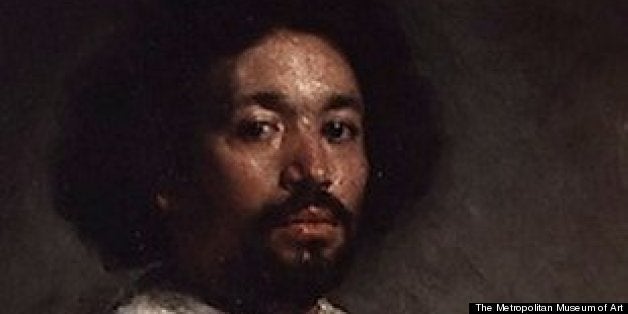
Juan de Pareja      
A Spanish painter, Juan de Pareja was described as a “Morisco,” which means “of mixed parentage and strange color.” He was born into slavery, the son of an enslaved mixed-race woman and Spanish father. Pajera is known primarily as a member of the household and workshop of painter Diego Velazquez, who freed him in 1650.
SAINT AUGUSTINE Augustine

No course covering Philosophy 101 is complete without referencing Christian theologian Saint Augustine.

What’s less commonly covered is his African origins and birth place of (modern-day) Souk Ahras, Algeria. He was the eldest son of Saint Monica of Saint Augustine. Aurelius Augustinus (his birth name) was born in Africa, educated in Rome, and a Milanese by baptism. He spent his early years in what is now know as Souk-Ahras, Algeria. Often called Augustine of Hippo, “The knowledgeable one,” by the Roman Catholic Church, he was considered by Evangelical Protestants to be (together with the Apostle Paul and the Bible) the theological fountainhead of the Reformation teaching on salvation and grace.

the fact that Augustine has African origins and was born in what is now Algeria. Later medieval depictions made him look Caucasian.

King Tutankhamen See the source image

The boy pharaoh King Tutankhamen is sometimes described as fair skinned, but artifacts found at his tomb identify him as a black African.

Tut was heralded as a mixed race but he is basically 94 black in terms of DNA matching (including East African and 93% without East African), which means he was indisputable black with likely some DNA matches with other groups (from being human) or contamination.

The Boy Pharaoh of Ancient Egypt is often depicted as fair-skinned. But these images recovered from his tomb (in addition to several other artifacts) have identified him as a black African. The panelists believe the Egyptians of Tut’s time had, for the most part, very dark skin, like people from sub-Saharan Africa. Charles Finch is the director of International Health at Morehouse School of Medicine in Atlanta. “Whenever ancient writers, Hebrew or Greek, make any reference to ancient Egyptians’ color, it’s always black,” Finch said. “There was no issue back then. There was no discussion. There was no debate. It only became a debate in the last 200 years.”

 Joseph Boulogne Image result for joseph boulogne

also known as Le Chevalier de Saint-George or the “Black Mozart.” He was the son of an enslaved African woman and a father who was a wealthy planter. Boulogne climbed the ladder of French society because of his mastery of European music and sword-fighting.

  Alexandre Dumas  Alexandre Dumas

A French writer ,the author of The Three Musketeers and The Count of Monte Cristo. He was born to a white father, a general and rival of Napoleon Bonaparte, and an enslaved mother.

Alexandre Dumas was the son of the General Dumas born in 1762 to a white father and an enslaved mother. General Dumas was such a good general that he made his rival — Napoleon Bonaparte — nervous. Thanks to Napoleon’s machinations, the General ended up imprisoned in a dungeon for years — the story that inspired Alexandre to write The Count of Monte Cristo about his father.

 King Piye See the source image

A Nubian King invaded Egypt around 730 B.C. and united the nation for over seven decades under his rule and then his son’s. Nubia would become modern-day Sudan. For years bigoted archaeologists suppressed the fact that a black man conquered the fair-skinned Egyptians.

Hannibal of Carthage  See the source image

— one of the greatest military strategists in history is often depicted with much… narrower features. But these coins depicting Hannibal and his famous army of elephants leave little doubt in the minds of many historians of his African ancestry. Here, the focus is the Mediterranean world in antiquity — things were different then. Hannibal came from an area we refer to as northern Africa, from a Carthaginian family. The Carthaginians were Phoenicians, which means that we would conventionally describe them as a Semitic people. The term Semitic refers to a variety of people from the ancient Near East (e.g., Assyrians, Arabs, and Hebrews), which included parts of northern Africa. [See Semitic Languages in Their Original Homelands Map.] The world view was very different.

 Juan Latino, born Juan de Sessa, Image result for juan latino

was a notable Spanish black scholar at the University of Granada in 16th-century Spain. He was the son of black slaves of the duke consort of Sessa and was educated with his master’s son. Latino was eventually freed, easily assimilated into Spanish society due to his education, and enjoyed an interracial marriage.

George Bridgetower  See the source image

George Augustus Polgreen Bridgetower was an Afro-Polish virtuoso violinist who lived in England for the majority of his life, which enabled him to easily navigate white high society. He was the son of Frederich Bridgetower, an African prince, and a Polish woman of German descent named Mary Ann.

Resources

trinilulz

madamenoire.com 

lithub.com

wiki