Thank you so much for your generous support as a Member of the Director’s Circle of the National Museum of African American History and Culture.
We are pleased to offer a limited number of exclusive Director’s Circle passes to our next community day.
This day-long series of events is inspired by director Ava DuVernay’s cinematic installation, August 28: A Day in the Life of the People, which looks at African American history through the lens of six significant historical events that all transpired years apart on August 28th.
A Day in the Life of a People
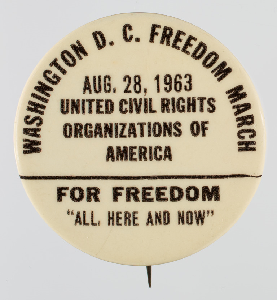
1833: Escaping Enslavement Capture history in this hands-on timeline activity for all ages1955: Because of Emmett Till Learn from this mixed media presentation1961: Mr. Postman Delivers and Other Hits! Enjoy DJ music celebrating this landmark Motown album and more1963: Why Do We March? Create your own sign in this activity for all ages Outside the Museum and thus available without passes2005: When Disaster Strikes Participate in this group building activity based upon re-building the Lower Ninth Ward after Hurricane Katrina
2008: We Are the Change Share your thoughts on a message board for everyone in the Museum to read and contemplate
Photo credit: Pin-back button for the 1963 March on Washington for Jobs and Freedom, Collection of the Smithsonian National Museum of African American History and Culture.
South Carolina Senator Strom Thurmond begins what was then the longest filibuster speech in Senate history, orating for 24 hours and 18 minutes against the Civil Rights Act of 1957. In all, senators spent 57 days filibustering, unsuccessfully, against the law.
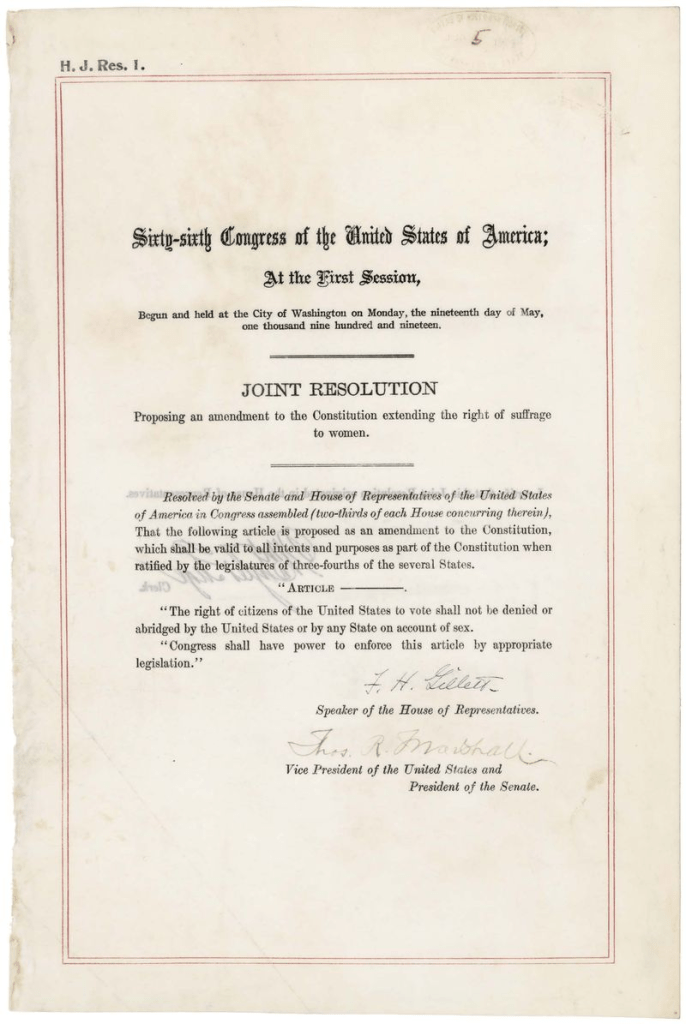
The 19th Amendment, guaranteeing women the right to vote, is formally adopted into the U.S. Constitution by proclamation of Secretary of State Bainbridge Colby. The amendment was the culmination of more than 70 years of struggle by woman suffragists. Its two sections read simply: “The right of citizens of the United States to vote shall not be denied or abridged by the United States or by any State on account of sex” and “Congress shall have power to enforce this article by appropriate legislation.” Despite the passage of the amendment, poll taxes, local laws and other restrictions continued to block women of color from voting for several more decades.
At an NFL preseason game on August 26, 2016, San Francisco 49ers quarterback Colin Kaepernick remains seated as other players stand to observe the national anthem. This simple action, which Kaepernick makes no attempt to broadcast to the public, gives rise to a controversy that will bring to light the racial tensions within American sports, determine the fate of Kaepernick’s football career, and reverberate across the sporting world for years to come.
source: internet
Despite having significantly better credentials than many other free agent quarterbacks, Kaepernick was not offered another NFL contract. For several years, he continued to train as if he were in the league while attempting to find a new team, eventually filing a grievance alleging that the league’s owners—many of whom were vocally opposed to the protests he began—had blackballed him.
2016 NFL San Francisco 49ers quarterback Colin Kaepernick kneels in protest during the US national anthem before pre-season game against the Chargers at San Diego’s Qualcomm Stadium, objecting to racial injustice and police brutality in the US






You must be logged in to post a comment.