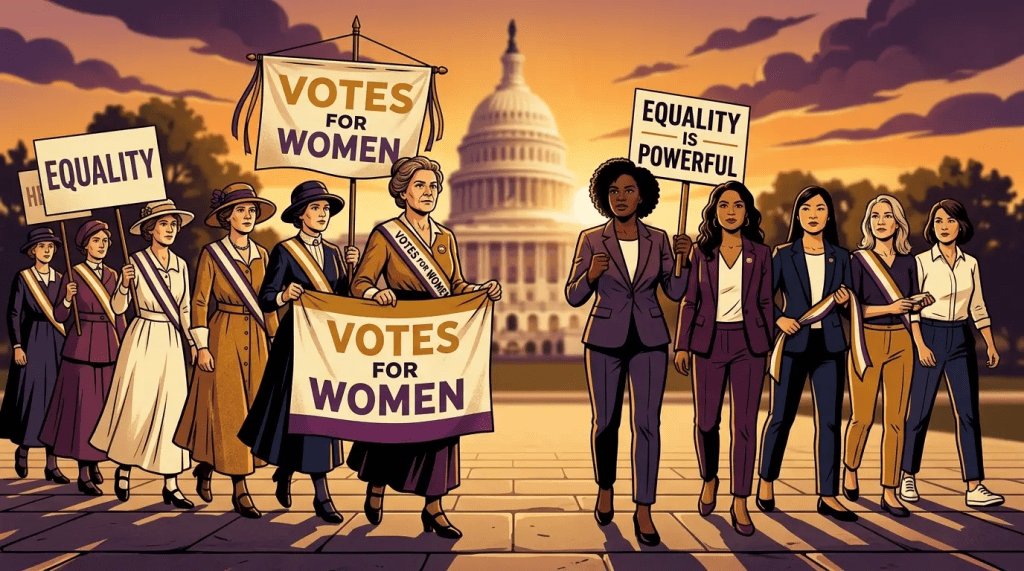
Source: calendarena.com

The 19th Amendment gave women the right to vote nationally on August 18, 1920, so why is Women’s Equality Day on August 26th each year?
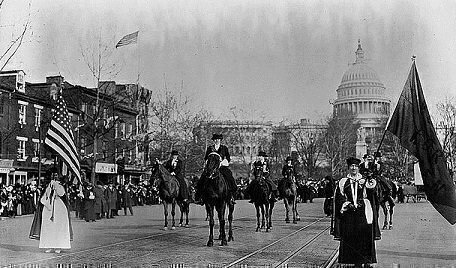
The simple answer is that even when a constitutional amendment has been ratified it’s not official until it has been certified by the correct government official. In 1920, that official was U.S. Secretary of State Bainbridge Colby.
On August 26, 1920, Colby signed a proclamation behind closed doors at 8 a.m. at his own house in Washington, D.C, ending a struggle for the vote that started a century earlier.
The New York Times ran the story about the document’s signing on its front page and noted the lack of fanfare for the historic event.
Colby had been asked by women’s suffrage leaders Alice Paul and Carrie Chapman Catt to allow groups in Colby’s office for the document’s signing and to film the event. Instead, Colby told reporters that “effectuating suffrage through proclamation of its ratification by the necessary thirty-six States was more important than feeding the movie cameras.”
The Times explained that Colby was concerned about the rivalry between Paul and Catt and wanted to avoid a public scene at the signing.
“Inasmuch as I am not interested in the aftermath of any of the friction or collisions which may have been developed in the long struggle for the ratification of the amendment, I have contented myself with the performance in the simplest manner of the duty devolving upon me under the law,” Colby said.
A package of documents from the state of Tennessee had arrived by train in Washington around 4 a.m. It included the official ratification document from the state legislature.
How Tennessee became the 36th state to ratify the amendment on August 18, 1920, was a story in itself. Congress had passed the proposed amendment a year earlier, and it was supported by President Woodrow Wilson.
By the middle of 1920, 35 states had voted to ratify the amendment, but four other states—Connecticut, Vermont, North Carolina and Florida—refused to consider the resolution for various reasons, while the remaining states had rejected the amendment altogether.
So, Tennessee became the battleground to obtain the three-fourths of states needed to ratify the amendment. Harry T. Burn, a 24-year-old legislator, was set to vote against the amendment, but switched his vote on the Tennessee state house floor at the urging of his mother, assuring the 19th amendment’s ratification.
Yet, even after Burn’s deciding vote, anti-suffrage legislators tried desperately to nullify the previous vote.
In 1971, Representative Bella Abzug championed a bill in the U.S. Congress to designate August 26 as “Women’s Equality Day.” The bill says that “the President is authorized and requested to issue a proclamation annually in commemoration of that day in 1920, on which the women of America were first given the right to vote.”
As a footnote, the amendment certification process has changed since 1920. Now, the Archivist of the United States, who heads the National Archives and Records Administration (NARA), is responsible for finalizing the ratification process.
Back in 1920, Secretary Colby’s attorney reviewed the documents that arrived from Tennessee. Today, NARA’s Office of the Federal Register reviews the documents and writes the proclamation for the Archivist of the United States to sign.
Section 106(b) of the United States Code spells out the finality of the process:
“The Archivist of the United States shall forthwith cause the amendment to be published, with his certificate, specifying the States by which the same may have been adopted, and that the same has become valid, to all intents and purposes, as a part of the Constitution of the United States.”
Filed Under: 19th Amendment
resource: constitutioncenter.org

AUG 26 1936
Suffragist Susan B. Anthony appears on a U.S. postage stamp that soon becomes controversial. Some critics call it an election-year ploy for women’s votes, while others claim it shows a cigarette in her lips.
Source: history.com
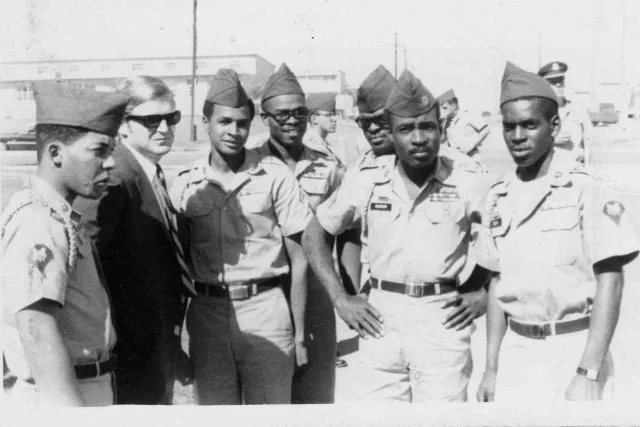
On the morning of August 23, 1968, a group of Black soldiers at Fort Hood, Texas stage one of the largest acts of civil disobedience ever recorded among members of the United States military. Adopting the non-violent tactics of the civil rights movement, the soldiers stage a sit-in to protest their impending deployment to Chicago to defend the Democratic National Convention from protesters.
By 1968, sit-ins were a well-established, peaceful way to protest segregation and demand racial equality. But even as the war in Vietnam escalated and more Americans were sent to fight there, dissent by active-duty military personnel remained rare. Tensions all over the country were peaking in August of 1968 in the wake of the assassinations of the Rev. Dr. Martin Luther King Jr. and Sen. Bobby Kennedy, who was seeking the Democratic nomination. As protesters headed to Chicago to demand aggressive action on civil rights and an anti-war plank in the Democratic Party’s platform, law enforcement geared up for what would turn out to be a brutal crackdown.
The convention had not yet begun when the troops at Fort Hood received word that they would be deployed to Chicago. The night before they were slated to ship out, 60 Black soldiers sat down at an intersection on the grounds of the fort and began their sit-in. “The people we are supposed to control, the rioters, are probably our own race,” one of them reportedly said. “We shouldn’t have to go out there and do wrong to our own people.” Others stated that they had served honorably and done everything the Army asked, but drew the line at a treating their fellow citizens as “hostiles.”
Source: for the complete article, go to history.com


You must be logged in to post a comment.