Category Archives: Black History

Pioneers, Activists, Black People, Black History

In memory … Jimi – Black History/Indigenous


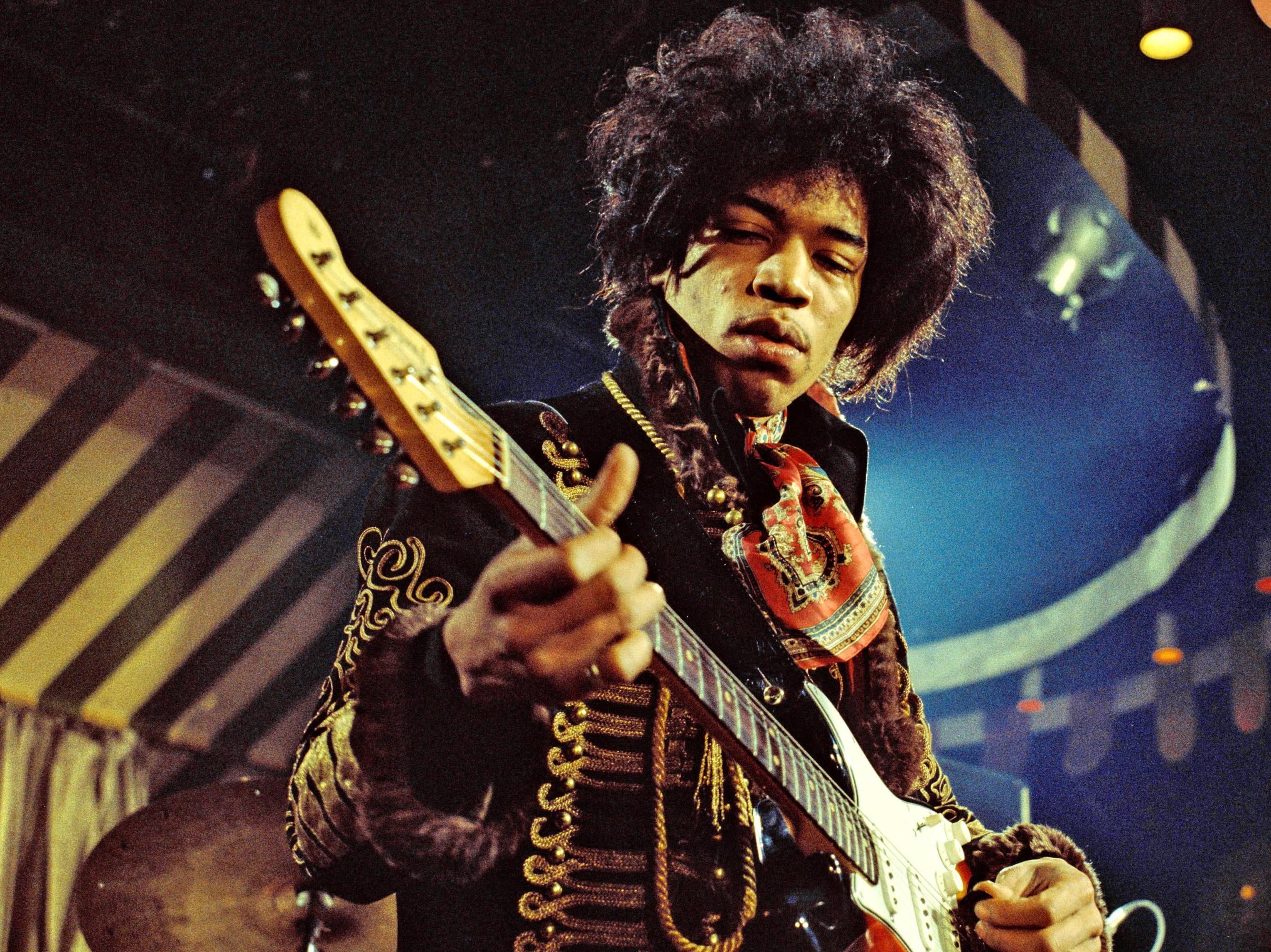
Jimi Hendrix

See the source image

Born: 1942 | Died: 1970  

More than 40 years after his mysterious death,

music legend Jimi Hendrix is still widely considered the greatest guitarist in the history of rock ‘n’ roll.

Born on November 27, 1942, in Seattle, Washington, Jimi Hendrix learned to play guitar as a teenager, and grew up to become a rock guitar legend who excited audiences in the 1960s with his innovative electric guitar playing.

One of his most memorable performances was at Woodstock in 1969, where he performed “The Star Spangled Banner.”

Hendrix died in 1970 from drug-related complications, leaving his mark on the world of rock music and remaining popular to this day.

For more information on Jimi, go to www.bio.com

Bio.com

if you see any errors please comment…

Nativegrl77

1968 – Black Soldiers stage sit-in at Fort Hood – Black History


https://t.co/yiqd1TS7TG

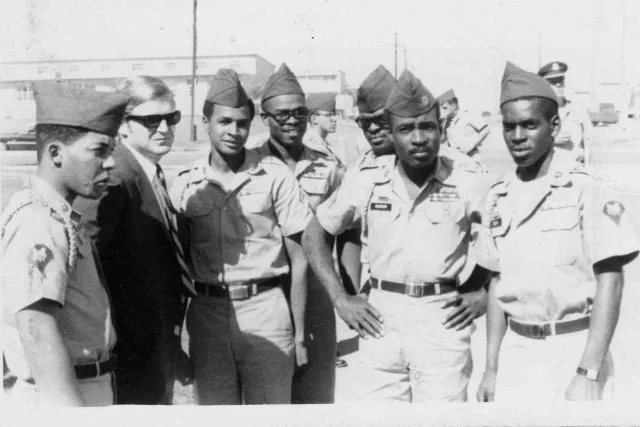
On the morning of August 23, 1968, a group of Black soldiers at Fort Hood, Texas stage one of the largest acts of civil disobedience ever recorded among members of the United States military. Adopting the non-violent tactics of the civil rights movement, the soldiers stage a sit-in to protest their impending deployment to Chicago to defend the Democratic National Convention from protesters.

By 1968, sit-ins were a well-established, peaceful way to protest segregation and demand racial equality. But even as the war in Vietnam escalated and more Americans were sent to fight there, dissent by active-duty military personnel remained rare. Tensions all over the country were peaking in August of 1968 in the wake of the assassinations of the Rev. Dr. Martin Luther King Jr. and Sen. Bobby Kennedy, who was seeking the Democratic nomination. As protesters headed to Chicago to demand aggressive action on civil rights and an anti-war plank in the Democratic Party’s platform, law enforcement geared up for what would turn out to be a brutal crackdown.

The convention had not yet begun when the troops at Fort Hood received word that they would be deployed to Chicago. The night before they were slated to ship out, 60 Black soldiers sat down at an intersection on the grounds of the fort and began their sit-in. “The people we are supposed to control, the rioters, are probably our own race,” one of them reportedly said. “We shouldn’t have to go out there and do wrong to our own people.” Others stated that they had served honorably and done everything the Army asked, but drew the line at a treating their fellow citizens as “hostiles.”

Source: for the complete article, go to history.com

Black&Women’s History Month …Madam C.J. Walker


Madam C.J. Walker’s Secrets to Success

Madam C. J. Walker—entrepreneur, philanthropist, activist, patron of the arts—was born Sarah Breedlove in 1867 on the same Delta, Louisiana plantation where her parents had been enslaved. Orphaned at seven, married at 14 and widowed at 20 with a two-year-old daughter, she moved to St. Louis where three older brothers owned a barbershop. Throughout the 1890s—in the neighborhood where ragtime music was born—she worked as a laundress, sang in her church choir and began to aspire to a better life as she observed the educated, civic-minded women at St. Paul African Methodist Episcopal Church.

BLACK HISTORY MONTH

Ida B. Wells-Barnett Marched over 100yrs ago for – Women’s voting rights- Black History is American history


T437487_06 b. 7/16/1862
1913
100 years ago
Social activist Ida B. Wells-Barnett marches in Washington, D.C., with 5,000 suffragettes in a protest supporting women’s voting rights.

African American journalist and anti-lynching crusader Ida B. Wells (1862-1931) was born to slaves at Holly Springs, Missouri. Following the Civil War, as lynchings became prevalent, Wells traveled extensively, founding anti-lynching societies and black women’s clubs.

THE DOVER EIGHT: FUGITIVE SLAVES BETRAYED BY BLACK UNDERGROUND RAILROAD CONDUCTOR


Black History…

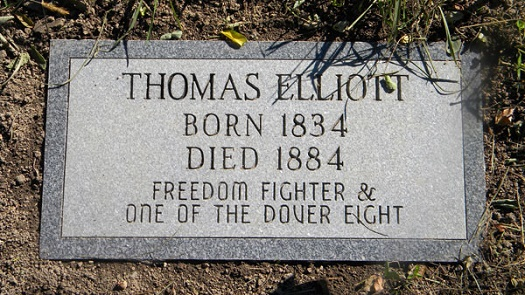
In March 1857, eight slaves from Dorchester County, Maryland, escaped following a route provided by Harriet Tubman, who also previously escaped from Dorchester County.

Tubman had told the fugitives to contact Thomas Otwell, a free black man and underground railroad conductor in Dover, Delaware. Unfortunately, instead of guiding them North to the next step of the railroad, Otwell led them to the Dover jail in expectation of collecting a $3,000 reward. However, despite the betrayal, the “Dover Eight” were able to escape the jail. All of them eventually made their way to freedom.

The slaves were discovered when a man approached Sheriff Green with the information about eight runaway slaves. The man arranged to have the slaves with him in Dover that night.

At about 4 o’clock on a Tuesday morning, the man along with the slaves appeared at the jail. While the sheriff was getting dressed, they all entered the jail and went upstairs. The eight slaves found an open room. The sheriff, knowing the group was upstairs, headed up there to dead bolt the room and seize them.

However, the sheriff found them in the entry way. He turned around and went back to retrieve his revolver, but the slaves followed him down to his room. The slaves entered the room where the sheriff’s wife and children were sleeping before he could seize his revolver.

elliott71

One of the slaves reportedly became suspicious of the sheriff. The law enforcement officer quickly seized the man and, while in a struggle, the other slaves burst through a window and escaped. They made a fire scatter across the floor, which resulted in awakening the sheriff’s family. The sheriff released the slave for a split second, which allowed him to escape as well.

POSTED BY JAE JONES

Six of the eight slaves were later tracked down to a house in Camden, but the officers could not enter the home because they did not have a proper warrant. Later, the six men were moved through the country by the forest woods, which was later known as the “underground railroad.” The other two escaped slaves were seen heading north right after they escaped.

source:

http://aasc.oupexplore.com/undergroundrailroad/#!/event/slave-escape-dover

THE DOVER EIGHT