All posts by Nativegrl77

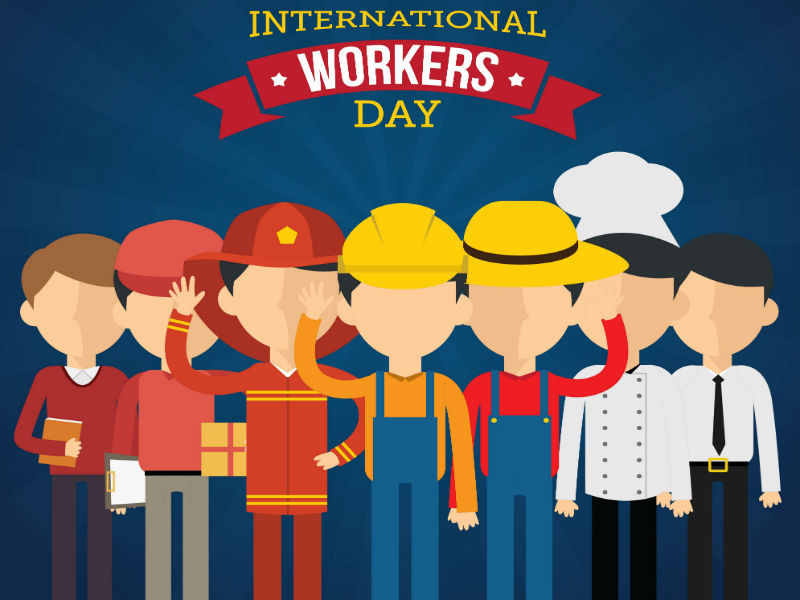
MAY 1st … International Workers’ Day


International Workers‘ Day, also known as Workers‘ Day, Labour Day in some countries and often referred to as May Day, is a celebration of labourer’s and the working classes that is promoted by the international labour movement which occurs every year on May Day (1 May), an ancient European spring festival.

See the source image

In the Library: “Einstein on Race and Racism” by Jerome and Taylor


TumblrAlbertEnsteina0630a335c22bfc39dac14f5bdde1dfd Did Einstein speak about racism at Lincoln University?

Here is the text of the email:   Here’s something you probably don’t know about Albert Einstein.

In 1946, the Nobel Prize-winning physicist traveled to Lincoln University in Pennsylvania, the alma mater of Langston Hughes and Thurgood Marshall and the first school in America to grant college degrees to blacks.

At Lincoln, Einstein gave a speech in which he called racism “a disease of white people,” and added, “I do not intend to be quiet about it.” He also received an honorary degree and gave a lecture on relativity to Lincoln students.
In fact, many significant details are missing from the numerous studies of Einstein’s life and work, most of them having to do with Einstein’s opposition to racism and his relationships with African Americans.

Einstein continued to support progressive causes through the 1950s, when the pressure of anti-Communist witch hunts made it dangerous to do so. Another example of Einstein using his prestige to help a prominent African American occurred in 1951, when the 83-year-old W.E.B. Du Bois, a founder of the NAACP, was indicted by the federal government for failing to register as a “foreign agent” as a consequence of circulating the pro-Soviet Stockholm Peace Petition. Einstein offered to appear as a character witness for Du Bois, which convinced the judge to drop the case.
In the wake of the monumental effort to digitize Einstein’s life and genius for the masses, let’s hope that more of us will acknowledge Einstein’s greatness as a champion of human and civil rights for African-Americans as one of his greatest contributions to the world.

Origins:   The e-mail reproduced above is an excerpt from a 2007 Harvard University Gazette article about a talk given by Fred Jerome and Rodger Taylor, authors of the 2006 book Einstein on Race and Racism. As related in that article, Jerome and Taylor undertook their effort in order to “recognize and correct many significant details missing from the numerous studies of Einstein’s life and work, most of them having to do with Einstein’s opposition to racism and his relationships with African Americans:

Nearly fifty years after his death, Albert Einstein remains one of America’s foremost cultural icons. A thicket of materials, ranging from scholarly to popular, have been written, compiled, produced, and published about his life and his teachings. Among the ocean of Einsteinia — scientific monographs, biographies, anthologies, bibliographies, calendars, postcards, posters, and Hollywood films — however, there is a peculiar void when it comes to the connection that the brilliant scientist had with the African American community. Virtually nowhere is there any mention of his relationship with Paul Robeson, despite Einstein’s close friendship with him, or W.E.B. Du Bois, despite Einstein’s support for him.
This unique book is the first to bring together a wealth of writings by Einstein on the topic of race. Although his activism in this area is less well known than his efforts on behalf of international peace and scientific cooperation, he spoke out vigorously against racism both in the United States and around the world.

In May 1946, Einstein made a rare public appearance outside of Princeton, New Jersey (where he lived and worked in the latter part of his life), when he traveled to the campus of Pennsylvania’s Lincoln University, the United States’ first degree-granting black university, to take part in a ceremony conferring upon him the honorary degree of doctor of laws. Prior to accepting that degree, he delivered a ten-minute speech to the assembled audience in which he called upon the United States to take a leading role in preventing another world war and denounced the practice of segregation. Because mainstream U.S. newspapers reported little or nothing about the event, a full transcript of Einstein’s speech that day does not exist — the only existing record of his words is a few excerpts pieced together from quotes reproduced in coverage by the black press:

The only possibility of preventing war is to prevent the possibility of war. International peace can be achieved only if every individual uses all of his power to exert pressure on the United States to see that it takes the leading part in world government.
The United Nations has no power to prevent war, but it can try to avoid another war. The U.N. will be effective only if no one neglects his duty in his private environment. If he does, he is responsible for the death of our children in a future war.
My trip to this institution was in behalf of a worthwhile cause.

There is a separation of colored people from white people in the United States. That separation is not a disease of colored people. It is a disease of white people. I do not intend to be quiet about it.
The situation of mankind today is like that of a little child who has a sharp knife and plays with it. There is no effective defense against the atomic bomb … It can not only destroy a city but it can destroy the very earth on which that city stood.

As the authors of “Einstein on Race and Racism” noted, Einstein’s comments about segregation at Lincoln University reflected his own experiences in both his native Germany and his adopted home in the United States and were part of a pattern of his attempting to ameliorate the effects of discrimination:

According to Jerome and Taylor, Einstein’s statements at Lincoln were by no means an isolated case. Einstein, who was Jewish, was sensitized to racism by the years of Nazi-inspired threats and harassment he suffered during his tenure at the University of Berlin. Einstein was in the United States when the Nazis came to power in 1933, and, fearful that a return to Germany would place him in mortal danger, he decided to stay, accepting a position at the recently founded Institute for Advanced Study in Princeton, N.J. He became an American citizen in 1940.

But while Einstein may have been grateful to have found a safe haven, his gratitude did not prevent him from criticizing the ethical shortcomings of his new home.
“Einstein realized that African Americans in Princeton were treated like Jews in Germany,” said Taylor. “The town was strictly segregated. There was no high school that blacks could go to until the 1940s.”
Einstein’s response to the racism and segregation he found in Princeton (Paul Robeson, who was born in Princeton, called it “the northernmost town in the South”) was to cultivate relationships in the town’s African-American community. Jerome and Taylor interviewed members of that community who still remember the white-haired, disheveled figure of Einstein strolling through their streets, stopping to chat with the inhabitants, and handing out candy to local children.
One woman remembered that Einstein paid the college tuition of a young man from the community. Another said that he invited Marian Anderson to stay at his home when the singer was refused a room at the Nassau Inn.

The word “citizen” has several meanings and uses, including:


Source: Merriam-Webster, Oxford English Dictionary, finesentence.com

history… april 30


0030 – Jesus of Nazareth was crucified.

0313 – Licinius unified the whole of the eastern empire under his own rule.

1250 – King Louis IX of France was ransomed for one million dollars.

1527 – Henry VIII and King Francis of France signed the treaty of Westminster.

1725 – Spain withdrew from Quadruple Alliance.

1789 – George Washington took office as first elected U.S. president.

1803 – The U.S. purchased the Louisiana Territory from France for $15 million.

1812 – Louisiana admitted as the 18th U.S. state.

1849 – The republican patriot and guerrilla leader Giuseppe Garabaldi repulsed a French attack on Rome.

1864 – Work began on the Dams along the Red River. The work would allow Union General Nathaniel Banks’ troops to sail over the rapids above Alexandria, Louisiana.

1889 – George Washington’s inauguration became the first U.S. national holiday.

1900 – Hawaii was organized as an official U.S. territory.

1900 – Casey Jones was killed while trying to save the runaway train “Cannonball Express.”

1930 – The Soviet Union proposed a military alliance with France and Great Britain.

1938 – Happy Rabbit appeared in the cartoon “Porky’s Hare Hunt.” This rabbit would later evolve into Bugs Bunny.

1939 – The first railroad car equipped with fluorescent lights was put into service. The train car was known as the “General Pershing Zephyr.”

1939 – Lou Gehrig played his last game with the New York Yankees.

1940 – Belle Martell was licensed in California by state boxing officials. She was the first American woman, prizefight referee.

1943 – The British submarine HMS Seraph dropped ‘the man who never was,’ a dead man the British planted with false invasion plans, into the Mediterranean off the coast of Spain.

1945 – Adolf Hitler and Eva Braun committed suicide. They had been married for one day. One week later Germany surrendered unconditionally.

1945 – Arthur Godfrey began his CBS radio morning show “Arthur Godfrey Time.” It ran until this day in 1972.

1947 – The name of Boulder Dam, in Nevada, was changed back to Hoover Dam.

1948 – The Organization of American States (OAS) held its first meeting in Bogota, Colombia. The institution’s goal was to facilitate better relations between the member nations and to help prevent the spread of communism in the Western Hemisphere.

1952 – Mr. Potato Head became the first toy to be advertised on network television.

1953 – The British West Indian colonies agreed on the formation of the British Caribbean Federation that would eventually become a self-governing unit in the British Commonwealth.

1964 – The FCC ruled that all TV receivers should be equipped to receive both VHF and UHF channels.

1968 – U.S. Marines attacked a division of North Vietnamese in the village of Dai Do.

1970 – U.S. troops invaded Cambodia to disrupt North Vietnamese Army base areas. The announcement by U.S. President Nixon led to widespread protests.

1972 – The North Vietnamese launched an invasion of the South.

1973 – U.S. President Nixon announced resignation of Haldeman, Ehrlichman, and other top aides.

1975 – Communists North Vietnamese troops entered the Independence Palace of South Vietnam in Saigon. 11 Marines lifted off of the U.S. Embassy were the last soldiers to evacuate.

1980 – Terrorists seized the Iranian Embassy in London.

1984 – U.S. President Reagan signed cultural and scientific agreements with China. He also signed a tax accord that would make it easier for American companies to operate in China.

1991 – An estimated 125,000 people were killed in a cyclone that hit Bangladesh.

1993 – CERN put the World Wide Web software in the public domain.

1993 – Monica Seles was stabbed in the back during a tennis match in Hamburg, Germany. The man called himself a fan of second- ranked Steffi Graf. He was convicted of causing grievous bodily harm and received a suspended sentence.

1998 – NATO was expanded to include Poland, Hungary and the Czech Republic. The three nations were formally admitted the following April at NATO’s 50th anniversary summit.

1998 – United and Delta airlines announced their alliance that would give them control of 1/3 of all U.S. passenger seats.

1998 – In the U.S., Federal regulators fined a contractor $2.25 million for improper handling of oxygen canisters on ValuJet that crashed in the Florida Everglades in 1996.

2002 – Pakistani President Pervez Musharraf was overwhelmingly approved for another five years as president.

2012 – One World Trade Center became the tallest structure in New York when it surpassed the height of the Empire State Building.

2015 – NASA’s Messenger spacecraft crashed into the surface of Mercury. The space probe sent back more than 270,000 pictures to earth.

on-this-day.com

DID THOMAS JEFFERSON TRY TO ABOLISH SLAVERY IN THE DECLARATION OF INDEPENDENCE?


POSTED BY BLACKTHEN – APRIL 29, 2021 – LATEST POSTS, SLAVERY

Jefferson_Thomas

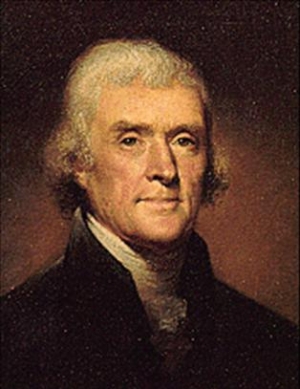
Of all his writings, Thomas Jefferson’s most famous and far-reaching was undoubtedly his draft of the Declaration of Independence.

Although the issue of slavery was widely debated — both the chattel slavery of Africans in America and the civil slavery that fired patriot rhetoric — it is conspicuously absent from the final version of the Declaration. Yet in his rough draft, Jefferson railed against King George III for creating and sustaining the slave trade, describing it as “a cruel war against human nature.”

Although Jefferson’s description of the slave trade was as much an indictment of the colonies as of Britain and the king, the issue that most distressed the patriots stemmed from Lord Dunmore’s 1775 proclamation that offered freedom to slaves who joined the British cause: “…he is now exciting those very people to rise in arms among us, and to purchase that liberty of which he has deprived them, by murdering the people on whom he also obtruded them…”

When the document was presented to the Continental Congress on July 1, 1776, both northern and southern slaveholding delegates objected to its inclusion, and it was removed. The only remaining allusion to the original paragraph on slavery is the phrase “He has excited domestic Insurrections among us,” included in a list of grievances against the king.

Original Article Found At http://www.pbs.org/wgbh/aia/part2/2h33.html

Source: blackthen.com