All posts by Nativegrl77

April 8 1864 – The U.S. Senate passed the 13th Amendment (S.J. Res. 16) by a vote of 38 to 6. — remember


The 13th Amendment:

Image result for 13th amendment

· After the decisive battle of Antietam in September, 1862, when the Union beat the Confederate troops, President Lincoln issued the Emancipation Proclamation, declaring that all slaves in the rebelling states were free as of January 1, 1863. Lincoln’s speech changed the tone of the Civil War from a battle about the rights of states versus the rights of the central government. The Civil War became about ending slavery once and for all. Lincoln realized that the Emancipation Proclamation was symbolic. He began lobbying Congress to amend the U.S. Constitution to end slavery.

· April 8, 1864 – The Senate passed the Thirteenth Amendment

· June 15, 1864 – The House of Representatives initially defeated the 13th Amendment by a vote of 93 in favor, 65 opposed, and 23 not voting, which is less that two-thirds majority needed to pass a Constitutional Amendment.

· January 31, 1865 – The House of Representatives passed the 13th Amendment by a vote of 119 to 56.

· February 1. 1865 – President Abraham Lincoln signed a Joint Resolution submitting the proposed 13th Amendment to the states.

· December 18, 1865 – Secretary of State William Seward issued a statement verifying the ratification of the 13th Amendment.

· The first bill introducing the anti-slavery 13th Amendment was introduced into the House of Representatives by James Mitchell Ashley (Ohio), on December 14, 1864, nearly a year after President Lincoln issued the final executive order for the Emancipation Proclamation.

· The Senate Judiciary Committee drafted the final language for the 13th Amendment. The language of the amendment is simple. It is written in two sections.

· Section I of the 13th Amendment states; “Neither slavery nor involuntary servitude, except as a punishment for crime whereof the party shall have been duly convicted, shall exist within the United States, or any place subject to their jurisdiction.”

· Section II of the 13th Amendment states; “Congress shall have the power to enforce this article by appropriate legislation.”

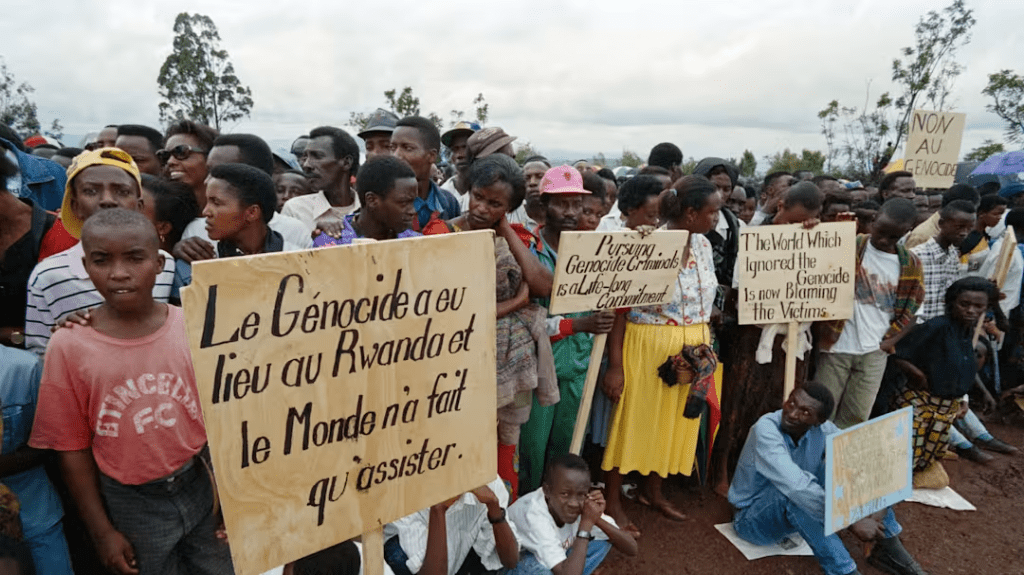
1994 – Violence erupts in Rwanda, foreshadowing Genocide


On April 7, 1994, violence fuels the launch of what would become the worst episode of genocide since World War II: the massacre of an estimated 500,000 to 1 million innocent civilian Tutsis and moderate Hutus. Following the first wave of massacres, Rwandan forces manage to discourage international intervention with the murder of 10 Belgian peacekeeping officers. The Tutsis, a minority group that made up about 10 percent of Rwanda’s population, received no assistance from the international community, although the United Nations later conceded that a mere 5,000 soldiers deployed at the outset would have stopped the wholesale slaughter.

The immediate roots of the 1994 genocide dated back to the early 1990s, when President Juvenal Habyarimana, a Hutu, began using anti-Tutsi rhetoric to consolidate his power among the Hutus. Beginning in October 1990, there were several massacres of hundreds of Tutsis. Although the two ethnic groups were very similar, sharing the same language and culture for centuries, the law required registration based on ethnicity. The government and army began to assemble the Interahamwe (meaning “those who attack together”) and prepared for the elimination of the Tutsis by arming Hutus with guns and machetes. In January 1994, the United Nations forces in Rwanda warned that larger massacres were imminent.

For the complete article… use the link below

Source: history.com

Citation Information

Article Title

Violence erupts in Rwanda, foreshadowing genocide AuthorHistory.com Editors

Website Name

HISTORY URL

https://www.history.com/this-day-in-history/civil-war-erupts-in-rwanda

Date April 7, 2023 Publisher A&E Television Networks Last Updated

April 7, 2022

Original Published Date

November 24, 2009

1961 – JFK lobbied Congress to help save historic sites in Egypt


On April 7, 1961, President John F. Kennedy sends a letter to Congress in which he recommends the U.S. participate in an international campaign to preserve ancient temples and historic monuments in the Nile Valley of Egypt. The campaign, initiated by UNESCO, was designed to save sites threatened by the construction of the Aswan High Dam.

JFK believed that America’s participation in the project would reflect “the interests of the United States,” as well as the country’s interest in ancient Egyptian culture “from which many of our own cultural traditions have sprung” and the U.S.’s “deep friendship for the people who live in the valley of the Nile.” Kennedy possessed a personal interest in the sciences and history and, from the beginning of his presidency, set out to promote American scholarship in these areas. His administration also wanted to develop diplomatic ties with the Arab nations in the Middle East and North Africa.

Citation Information

Article Title: JFK lobbies Congress to help save historic sites in Egypt

Author: History.com Editors

Website Name: HISTORY

URL: https://www.history.com/this-day-in-history/jfk-lobbies-congress-to-help-save-historic-sites-in-egypt Date April 7, 2023

Publisher A&E Television Networks

Last Updated April 5, 2022

Original Published Date November 16, 2009

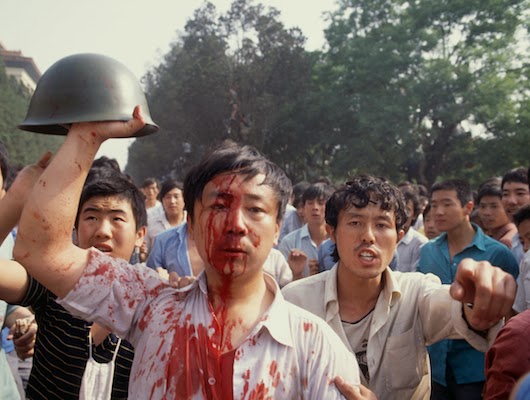
1989 – In memory … Student protestors took over Tiananmen Square in Beijing ~( April – June 4)


See the source image

Six days after the death of Hu Yaobang, the deposed reform-minded leader of the Chinese Communist Party, some 100,000 students gather at Beijing’s Tiananmen Square to commemorate Hu and voice their discontent with China’s authoritative communist government. The next day, an official memorial service for Hu Yaobang was held in Tiananmen’s Great Hall of the People, and student representatives carried a petition to the steps of the Great Hall, demanding to meet with Premier Li Peng. The Chinese government refused such a meeting, leading to a general boycott of Chinese universities across the country and widespread calls for democratic reforms.

Ignoring government warnings of violent suppression of any mass demonstration, students from more than 40 universities began a march to Tiananmen on April 27. The students were joined by workers, intellectuals, and civil servants, and by mid-May more than a million people filled the square, the site of communist leader’s Mao Zedong’s proclamation of the People’s Republic of China in 1949. On May 20, the government formally declared martial law in Beijing, and troops and tanks were called in to disperse the dissidents. However, large numbers of students and citizens blocked the army’s advance, and by May 23 government forces had pulled back to the outskirts of Beijing.

On June 3, with negotiations to end the protests stalled and calls for democratic reforms escalating, the troops received orders from the Chinese government to reclaim Tiananmen at all costs. By the end of the next day, Chinese troops had forcibly cleared Tiananmen Square and Beijing’s streets, killing hundreds of demonstrators and arresting thousands of protesters and other suspected dissidents. In the weeks after the government crackdown, an unknown number of dissidents were executed, and communist hard-liners took firm control of the country.

The international community was outraged at the incident, and economic sanctions imposed by the United States and other countries sent China’s economy into decline. However, by late 1990, international trade had resumed, thanks in part to China’s release of several hundred imprisoned dissidents.

Citation Information
Article Title
Chinese students begin protests at Tiananmen Square
Author
History.com Editors
Website Name
HISTORY

On June 4, 1989, however, Chinese troops and security police stormed through Tiananmen Square, firing indiscriminately into the crowds of protesters. Turmoil ensued, as tens of thousands of the young students tried to escape the rampaging Chinese forces. Other protesters fought back, stoning the attacking troops and overturning and setting fire to military vehicles. Reporters and Western diplomats on the scene estimated that at least 300, and perhaps thousands, of the protesters had been killed and as many as 10,000 were arrested.

The savagery of the Chinese government’s attack shocked both its allies and Cold War enemies. Soviet leader Mikhail Gorbachev declared that he was saddened by the events in China. He said he hoped that the government would adopt his own domestic reform program and begin to democratize the Chinese political system.

history.com