All posts by Nativegrl77

on this day 11/14 1960 – U.S. marshals and parents escorted four Black girls to two New Orleans schools. blackfacts.com


1832 – The first streetcar went into operation in New York City, NY. The vehicle was horse-drawn and had room for 30 people.

1851 – Herman Melville’s novel “Moby Dick” was first published in the U.S. 

1881 – Charles J. Guiteau’s trial began for the assassination of U.S. President Garfield. Guiteau was convicted and hanged the following year.

1889 – New York World reporter Nellie Bly (Elizabeth Cochrane) began an attempt to surpass the fictitious journey of Jules Verne’s Phileas Fogg by traveling around the world in less than 80 days. Bly succeeded by finishing the journey the following January in 72 days, 6 hours and 11 minutes.

1922 – The British Broadcasting Corporation (BBC) began domestic radio service.

1935 – U.S. President Franklin D. Roosevelt proclaimed the Philippine Islands a free commonwealth after its new constitution was approved. The Tydings-McDuffie Act planned for the Phillipines to be completely independent by July 4, 1946. 

1940 – During World War II, German war planes destroyed most of the English town of Coventry when about 500 Luftwaffe bombers attacked.

1950 – Lydia M. Holmes St. Augustine, Florida Patent No. 2,529,692 on November 14, 1950 are the plans for several easily assembled wooden pull toys including a bird, a truck and dog. blackfacts.com

1951 – The first telecast of a world lightweight title fight was seen coast to coast. Jimmy Carter beat Art Aragon in Los Angeles.

1956 – The USSR crushed the Hungarian uprising.

1960 – U.S. marshals and parents escorted four Black girls to two New Orleans schools. blackfacts.com

1968 – Yale University announced it was going co-educational.

1969 – Apollo 12 blasted off for the moon from Cape Kennedy, FL. 

1969 – During the Vietnam War, Major General Bruno Arthur Hochmuth, commander of the Third Marine Division, became the first general to be killed in Vietnam by enemy fire.

1972 – The Dow Jones Industrial Average closed above the 1,000 (1,003.16) level for the first time.

1972 – Blue Ribbon Sports became Nike.

1973 – Britain’s Princess Anne married a commoner, Capt. Mark Phillips, in Westminster Abbey. They divorced in 1992, and Princess Anne re-married.

1979 – U.S. President Carter froze all Iranian assets in the United States and U.S. banks abroad in response to the taking of 63 American hostages at the U.S. embassy in Tehran, Iran.

1983 – The British government announced that U.S.-made cruise missiles had arrived at the Greenham Common air base amid protests.

1988 – Israeli President Chaim Herzog formally asked Prime Minister Yitzhak Shamir to form a new government.

1989 – The U.S. Navy ordered an unprecedented 48-hour stand-down in the wake of a recent string of serious accidents. 

1990 – Simon and Schuster announced it had dropped plans to publish Bret Easton Ellis novel “American Psycho.”

1991 – After 13 years in exile Cambodian Prince Norodom Sihanouk returned to his homeland.

1994 – U.S. experts visited North Korea’s main nuclear complex for the first time under an accord that opened such sites to outside inspections.

1995 – The U.S. government instituted a partial shutdown, closing national parks and museums while most government offices operated with skeleton crews. 

2012 – The game Candy Crush Saga was released as a mobile app for iPhones.

On this Day … Moby Dick Published


On this day in 1851, Moby-Dick, a novel by Herman Melville about the voyage of the whaling ship Pequod, is published by Harper & Brothers in New York. Moby-Dick is now considered a great classic of American literature and contains one of the most famous opening lines in fiction: “Call me Ishmael.” Initially, though, the book about Captain Ahab and his quest for a giant white whale was a flop.

Herman Melville was born in New York City in 1819 and as a young man spent time in the merchant marines, the U.S. Navy and on a whaling ship in the South Seas. In 1846, he published his first novel, Typee, a romantic adventure based on his experiences in Polynesia. The book was a success and a sequel, Omoo, was published in 1847. Three more novels followed, with mixed critical and commercial results. Melville’s sixth book, Moby-Dick, was first published in October 1851 in London, in three volumes titled The Whale, and then in the U.S. a month later. Melville had promised his publisher an adventure story similar to his popular earlier works, but instead, Moby-Dick was a tragic epic, influenced in part by Melville’s friend and Pittsfield, Massachusetts, neighbor, Nathaniel Hawthorne, whose novels include The Scarlet Letter.

After Moby-Dick‘s disappointing reception, Melville continued to produce novels, short stories (Bartleby) and poetry, but writing wasn’t paying the bills so in 1865 he returned to New York to work as a customs inspector, a job he held for 20 years.

Melville died in 1891, largely forgotten by the literary world. By the 1920s, scholars had rediscovered his work, particularly Moby-Dick, which would eventually become a staple of high school reading lists across the United States. Billy Budd, Melville’s final novel, was published in 1924, 33 years after his death.

history.com

1789 – Benjamin Franklin wrote a letter to a friend in which he said, “In this world nothing can be said to be certain, except death and taxes.”


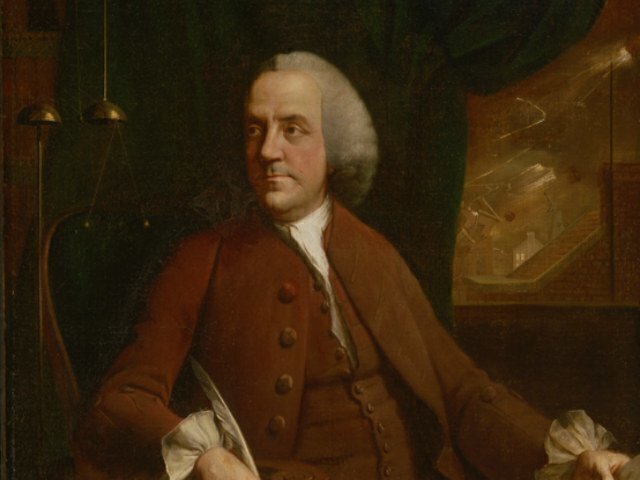
It was on this day in 1789 that Founding Father Benjamin Franklin wrote what was probably his last great quote, a saying about the Constitution and life that became true about five months later. Benjamin_Franklin_(1762)
In his time, Franklin may have been the most-quoted public figure of his generation. A publisher, entrepreneur and diplomat, Franklin became known for sayings or “proverbs” that appeared in Poor Richard’s Almanack and his newspaper, the Pennsylvania Gazette. In particular, Franklin wrote, or used other sources of content, for a 25-year period for his Almanack, as “Richard Saunders.”

To this day, there are discussions about the origins of some of these quotes. For example, one of the most-popular sayings attributed to Franklin is, “a penny saved is a penny earned.” This appears to be a combination of two Franklin proverbs.

Other famous Franklin quotes are well-documented. In “Advice To A Young Tradesman,” Franklin writes that, “Remember that time is money.”

But Franklin was also authored quotes in public documents from his involvement with the Declaration of Independence and the Constitutional Convention, and in a huge volume of personal correspondence.

And one of his last great quotes came as Franklin knew his life was near its end.

In November 1789, Franklin wrote French scientist Jean-Baptiste Le Roy, concerned that he hadn’t heard from Le Roy since the start of the French Revolution. Franklin wrote in French and the letter was later translated for the 1817 printing of his private correspondence.
After asking about Le Roy’s health and events in Paris for the past year, Franklin gives a quick update about the major event in the United States: the Constitution’s ratification a year before and the start of a new government under it.

“Our new Constitution is now established, everything seems to promise it will be durable; but, in this world, nothing is certain except death and taxes,” Franklin said. He concluded with a note about his own mortality to his friend: “My health continues much as it has been for some time, except that I grow thinner and weaker, so that I cannot expect to hold out much longer.”

Franklin would succumb to a combination of illnesses at the age of 84 in Philadelphia on April 17, 1790. In what thought to be his last known letter, Franklin wrote to Secretary of State Thomas Jefferson on April 8, responding to an earlier inquiry about a boundary dispute involving an area between the Bay of Fundy in Canada and Maine.
“Your Letter found me under a severe Fit of my Malady, which prevented my answering it sooner, or attending indeed to any kind of Business. I now can assure you that I am perfectly clear in the Remembrance that the Map we used in tracing the Boundary was brought to the Treaty by the Commissioners from England,” Franklin replied, asking Jefferson to speak with John Adams about the boundary.

“I have the Honor to be with the greatest Esteem and Respect Sir, Your most obedient and most humble Servant,” Franklin said in his last letter.

While the concept of a “death and taxes” quote existed before Franklin, the publication of his papers in 1817 made the proverb a staple in American popular culture.

resource: constitutioncenter.org

So, what does Packing and Cracking mean to you as a voter? …


Redistricting or

~ Packing~  opposition voters into districts (concentrate as many voters of one type – (maybe party&race ) means they already win 

~ Cracking~  the remainder among districts where they are moved into the minority (increasing votes for eventual losers), the number of wasted votes among the opposition can be maximized. Similarly, with supporters holding narrow margins in the unpacked districts, the number of wasted votes among supporters is minimized.

So, the question is … what will help all American voters against redistricting Black Folks outta their communities

: paper ballots, digital voting, touchID, passcodes … something has to change!

How obvious is it to note that it’s time to deal with old outdated, complicit relationships that conflict with ethics morality democracy …oh separation of powers, church and state, lest we talk about the Constitution 

 Time to wipe up the Congressional floor with Republican ideologies.

The things that are on my mind while Congress continues to take a few days here there making it a whole less than the 270-365 days at work usually required by the rest of us… called a congressional recess? seriously

It would be great if Voters who believe in Equality in all its forms would vote for Ds …  Those of us Must Stand up to congressional redistricting & continue to Stay in LINE for our democracy … please use our most powerful weapon as Americans and that is our right to VOTE

Mid-term Elections Matter, and thanks to checks and balances, voters can see the bs through the lies and fascist actions which are needed in this era of trump … but is it enough? The guy still seems outta control, and people who either worked during the era of trump or know folks who work there are trying to warn us the guy is suffering from something on some level … why is his health and behavior being ignored by MAGA congressional members ?

~~ Nativegrl77

Friday the 13th ~ History


Long considered a harbinger of bad luck, Friday the 13th has inspired a late 19th-century secret society, an early 20th-century novel, a horror film franchise and not one but two unwieldy terms—paraskavedekatriaphobia and friggatriskaidekaphobia—that describe the fear of this supposedly unlucky day.

Just like walking under a ladder, crossing paths with a black cat or breaking a mirror, many people hold fast to the belief that Friday the 13th brings bad luck. Though it’s uncertain exactly when this particular tradition began, negative superstitions have swirled around the number 13 for centuries.

While Western cultures have historically associated the number 12 with completeness (there are 12 days of Christmas, 12 months and zodiac signs, 12 labors of Hercules, 12 gods of Olympus and 12 tribes of Israel, just to name a few examples), its successor 13 has a long history as a sign of bad luck.

The ancient Code of Hammurabi, for example, reportedly omitted a 13th law from its list of legal rules. Though this was probably a clerical error, superstitious people sometimes point to this as proof of 13’s longstanding negative associations.

Fear of the number 13 has even earned a psychological term: triskaidekaphobia.

According to biblical tradition, 13 guests attended the Last Supper, held on Maundy Thursday, including Jesus and his 12 apostles (one of whom, Judas, betrayed him). The next day, of course, was Good Friday, the day of Jesus’ crucifixion.

The seating arrangement at the Last Supper is believed to have given rise to a longstanding Christian superstition that having 13 guests at a table was a bad omen—specifically, that it was courting death.

Though Friday’s negative associations are weaker, some have suggested they also have roots in Christian tradition: Just as Jesus was crucified on a Friday, Friday was also said to be the day Eve gave Adam the fateful apple from the Tree of Knowledge, as well as the day Cain killed his brother, Abel.

In the late-19th century, a New Yorker named Captain William Fowler (1827-1897) sought to remove the enduring stigma surrounding the number 13—and particularly the unwritten rule about not having 13 guests at a dinner table—by founding an exclusive society called the Thirteen Club.

The group dined regularly on the 13th day of the month in room 13 of the Knickerbocker Cottage, a popular watering hole Fowler owned from 1863 to 1883. Before sitting down for a 13-course dinner, members would pass beneath a ladder and a banner reading “Morituri te Salutamus,” Latin for “Those of us who are about to die salute you.”

Four former U.S. presidents (Chester A. Arthur, Grover Cleveland, Benjamin Harrison and Theodore Roosevelt) would join the Thirteen Club’s ranks at one time or another.

An important milestone in the history of the Friday the 13th legend in particular (not just the number 13) occurred in 1907, with the publication of the novel Friday, the Thirteenth written by Thomas William Lawson.

The book told the story of a New York City stockbroker who plays on superstitions about the date to create chaos on Wall Street, and make a killing on the market.

The horror movie Friday the 13th, released in 1980, introduced the world to a hockey mask-wearing killer named Jason, and is perhaps the best-known example of the famous superstition in pop culture history. The movie spawned multiple sequels, as well as comic books, novellas, video games, related merchandise and countless terrifying Halloween costumes.

On Friday, October 13, 1307, officers of King Philip IV of France arrested hundreds of the Knights Templar, a powerful religious and military order formed in the 12th century for the defense of the Holy Land.

Imprisoned on charges of various illegal behaviors (but really because the king wanted access to their financial resources), many Templars were later executed. Some cite the link with the Templars as the origin of the Friday the 13th superstition, but like many legends involving the Templars and their history, the truth remains murky.

In more recent times, a number of traumatic events have occurred on Friday the 13th, including the German bombing of Buckingham Palace (September 1940); the murder of Kitty Genovese in Queens, New York (March 1964); a cyclone that killed more than 300,000 people in Bangladesh (November 1970); the disappearance of a Chilean Air Force plane in the Andes (October 1972); the death of rapper Tupac Shakur (September 1996) and the crash of the Costa Concordia cruise ship off the coast of Italy, which killed 30 people (January 2012).

“The Origins of Unlucky Friday the 13th,” Live Science.
“Friday the 13th: why is it unlucky and other facts about the worst day in the calendar,” The Telegraph.
“13 Freaky Things That Happened on Friday the 13th,” Live Science.
“Here’s Why Friday the 13th is Considered Unlucky,” Time.
“Friggatriskaidekaphobes Need Not Apply,” New-York Historical Society.

history.com

There are Three Friday 13th days in 2026 !!!!